

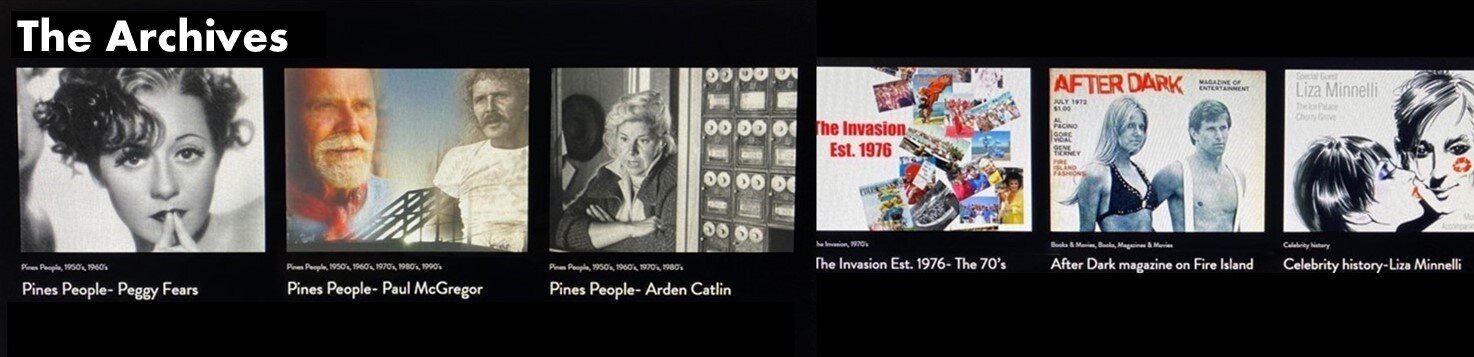
Archives

Pines Profile - Gary Clinton (b. 1951) & Don Millinger (b. 1954)
In 1972, two young men fell in love and made a quietly radical decision: they would live openly and on their own terms. More than fifty years later, Gary Clinton and Don Millinger have built an extraordinary life together—one that changed institutions, strengthened communities, advanced LGBTQ+ equality and ultimately gave them an answer when Chief Justice John Roberts asked, “Just who do we think we are?” Theirs is a story for the ages.

Trailblazers Park (est. 2022)
Fire Island Pines has always sought to be a place of welcome. It has also benefitted from the work of LGBTQ+ trailblazers, some of whom never set foot on its boardwalks. Trailblazers Park is a visible celebration of these people and a symbol that all people are welcome. Public art, Trailblazers Park’s biggest role is to keep the conversations alive about who are trailblazers were and who is blazing a trail today.

Pines Profile - Douglas E. Harris (b. 1950)
Doug Harris has spent his life doing something both rare and invaluable -- building worlds where people can thrive. Whether helping shape the regulatory architecture of the global capital markets, elevating LGBTQ+ elders through SAGE, or steering the Pines towards becoming a more open and welcoming community, Doug’s legacy is defined by brilliance, perseverance, risk taking, and an extraordinary gift for connection.

CoBE (est. 2020)
The murder of George Floyd murder spawned a global reckoning on race. Within the Pines, the property owners association (FIPPOA), who are essentially the community’s leaders, created the Committee on Black Equality (CoBE). its goals were to make recommendations on how the Pines could be more diverse and welcoming to people of color.