

Pines Profile - Gary Clinton (b. 1951) & Don Millinger (b. 1954)
Activism: A Love Story
By Virun Rampersad, October 2026
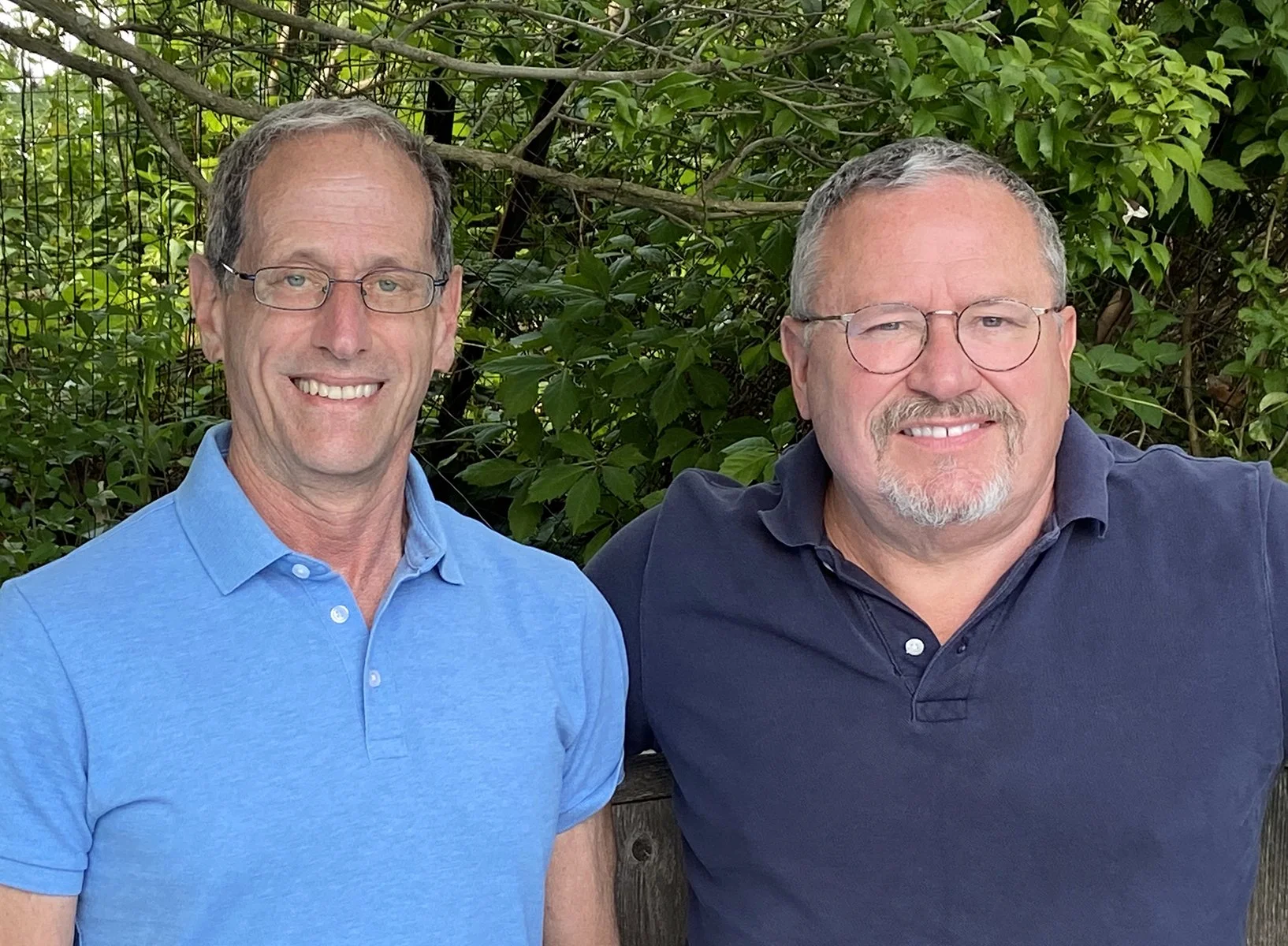
Don Millinger and Gary Clinton, Fire Island 2026. Photo courtesy of Gary Clinton and Don Millinger.
Gary Clinton and Don Millinger met at the University of Rochester in 1972, fell in love and, within a short time, moved in together. While college lovers shacking up was nothing new, two gay men living openly as a couple was another matter entirely. Gary and Don were not trying to make a political statement. They were simply in love and unwilling to hide their relationship or themselves.
More than fifty years later, perhaps the most remarkable thing about their story is not simply that the relationship endured, but what it made possible. By choosing to live authentically, they became activists whose impact can be found almost everywhere they have gone—in the institutions they strengthened, the advances in LGBTQ+ equality they helped achieve, the communities they helped build and the generations of people they continue to mentor, support, and befriend.
When you ask people about Gary or Don, the first response you typically get is: “It’s hard to talk about one without talking about the other.” This is not because they are joined at the hip. Quite the opposite—they are very much their own men. But from a remarkably young age, they made each other their North Star. Far from constraining them, that decision was empowering. It gave them the confidence to take chances, pursue different careers and interests, build independent friendships, and engage deeply with the world around them. Their relationship did not make their individual worlds smaller. It made them bigger—and amplified their impact wherever they went.
Finding Each Other
Gary and Don arrived at Rochester from vastly different worlds. Don grew up on Long Island in an upper-middle-class, liberal Jewish family where education, politics and civic involvement were part of everyday life. His parents had a strong marriage based on love and mutual respect and created a family in which each person had room to be an individual. When he was growing up, Don’s mother was an active volunteer with Planned Parenthood and the League of Women Voters. In many ways, his background provided a model for the relationship he and Gary would build.
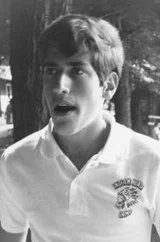
Don’s activism began as a sophomore in high school. On November 15, 1969, as part of a nationwide Moratorium to End the War in Vietnam, he was a member of the student organizing group that led protests and teach-ins at Roslyn High School, resulting in cancelled classes. He continued to engage in anti-war protests, picket the local draft board, organize high school activities for the first Earth Day in 1970, and went door-to-door with gun control petitions.
Don Millinger in 1969. Photo courtesy of Don Millinger.
Gary’s childhood in Brooklyn was considerably rougher. His father was a mechanic and his mother a keypunch operator. Neither had gone beyond the eighth grade. However, his mother believed strongly in education and regularly took her children to the library. Gary read voraciously. Books opened worlds beyond his immediate circumstances and helped instill an idea that became central to his life: where you begin does not have to determine where you end.
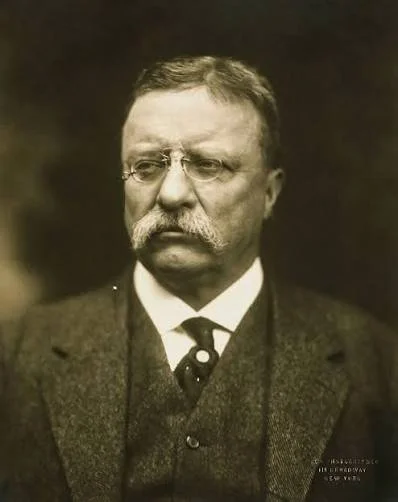
No historical figure captured Gary’s imagination more than Theodore Roosevelt. What began as a childhood fascination became a lifelong passion, an important collection of Roosevelt books and artifacts and deep involvement with organizations devoted to Roosevelt’s history.
Gary was particularly drawn to Roosevelt’s energy, intellectual curiosity, and capacity to reinvent himself—the idea that a person could take control of his life rather than simply allow things to run their course.
Teddy Roosevelt. Photo courtesy Wikimedia Commons.
At Rochester, Gary began doing exactly that.
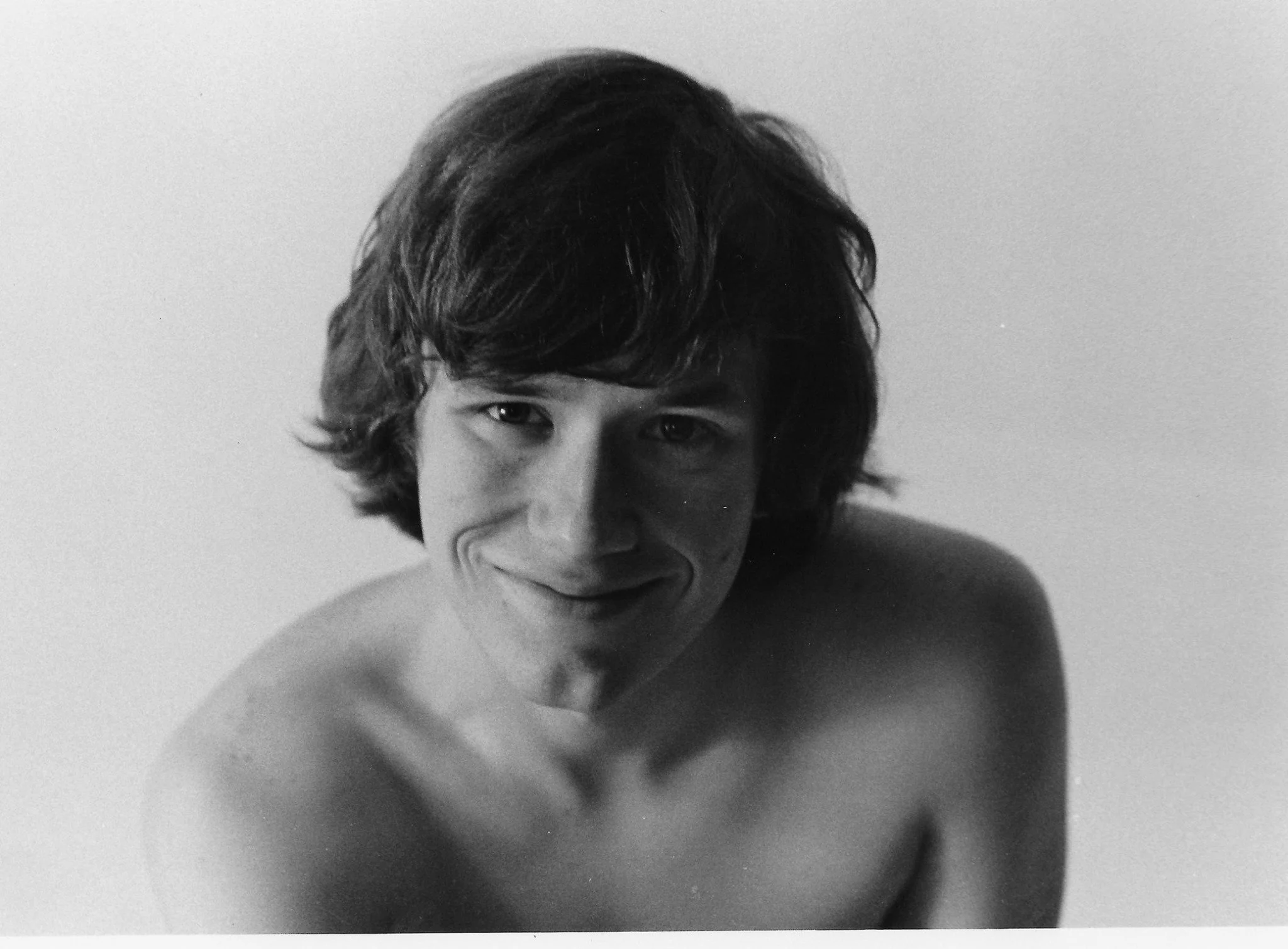
In May 1970 he saw a notice in the student newspaper: “Take Heart Brothers, Gay Lib is coming.” He went to a meeting and found something that had largely been missing from his life—a sense of belonging. He began embracing life as a young gay man without guilt or reservation.
Gary Clinton, circa 1972. Photo courtesy of Don Millinger and Gary Clinton
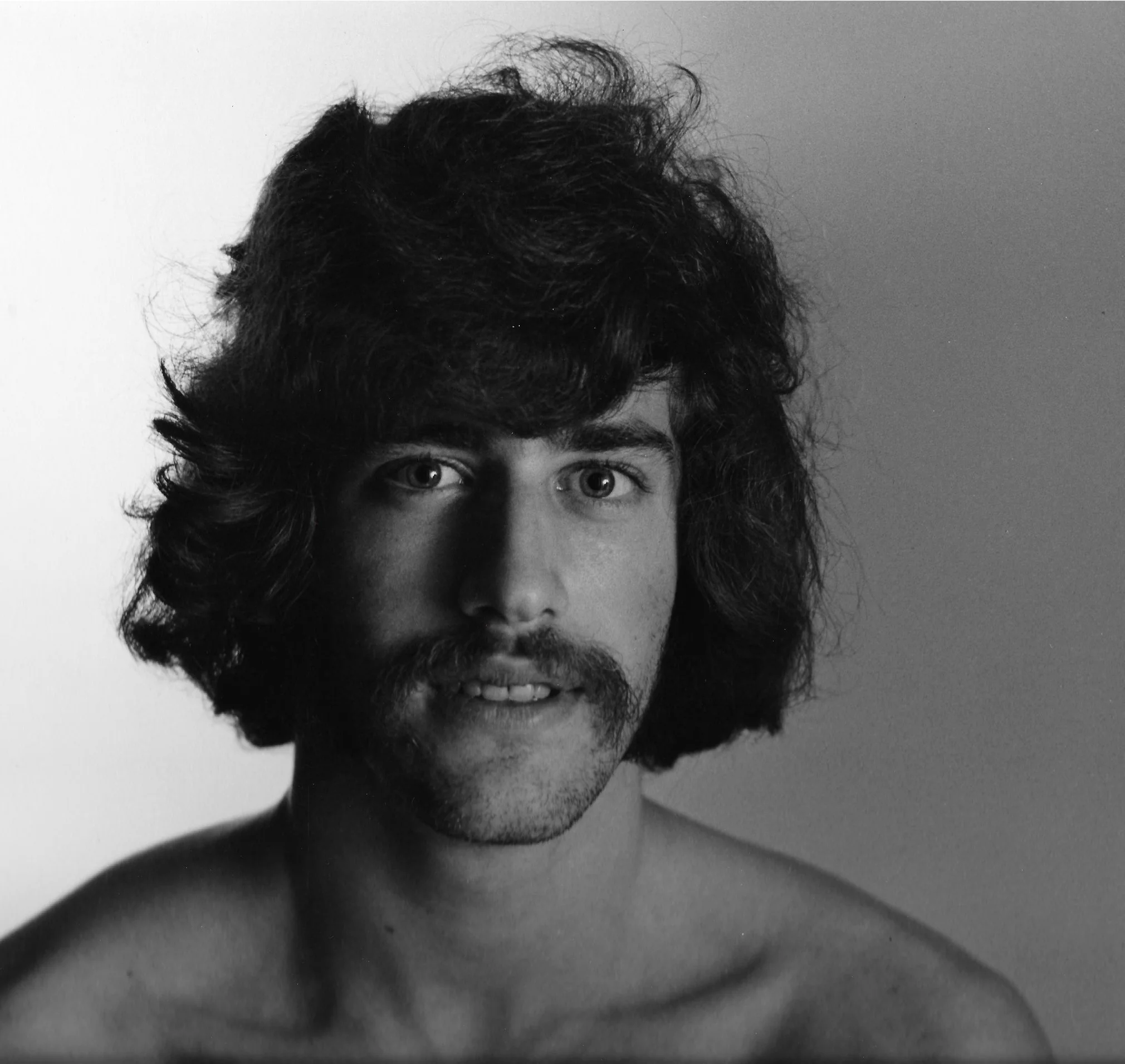
Don came to college with a clearer sense of himself. He had known he was gay from a relatively young age, had experienced romances and had even ventured into Julius’, the legendary gay bar in Greenwich Village, while still in high school. He was comfortable with his sexuality and eager to embrace all that college life had to offer.
Don Millinger circa 1972. Photo courtesy of Don Millinger and Gary Clinton.
Don attended the University of Rochester and began going to Gay Liberation Front meetings on campus his freshman year in 1972. In his sophomore year he was part of a small group that founded the University’s first LGBTQ+ organization which then secured student activities funding, developed programming, and established an office and drop-in space in the student union that included a library, peer counseling, and a speakers bureau.
When Don first met Gary in September 1972, he thought he was intriguing and wanted to know him better. Gary, however, was more certain. After their first date in October, Gary wrote in his journal: “I just met the man I am going to spend the rest of my life with.”
At Rochester, Gary and Don’s openness, intelligence and work ethic got the attention of Professors Jay Wilson and Tom Smith. They befriended the young couple and introduced them to a wider world of art, architecture, literature, and culture. Through them they met Henry Berg, Deputy Director of the Guggenheim Museum, who became another important mentor. Together these men gave Gary and Don something enormously valuable: a sense of possibility. At a time when most successful gay professionals were closeted, Jay and Tom showed that they could build rich, interesting lives and do meaningful things. They also demonstrated that friendships did not have to be bounded by age, a lesson that Gary and Don never forgot.
Making Their Mark
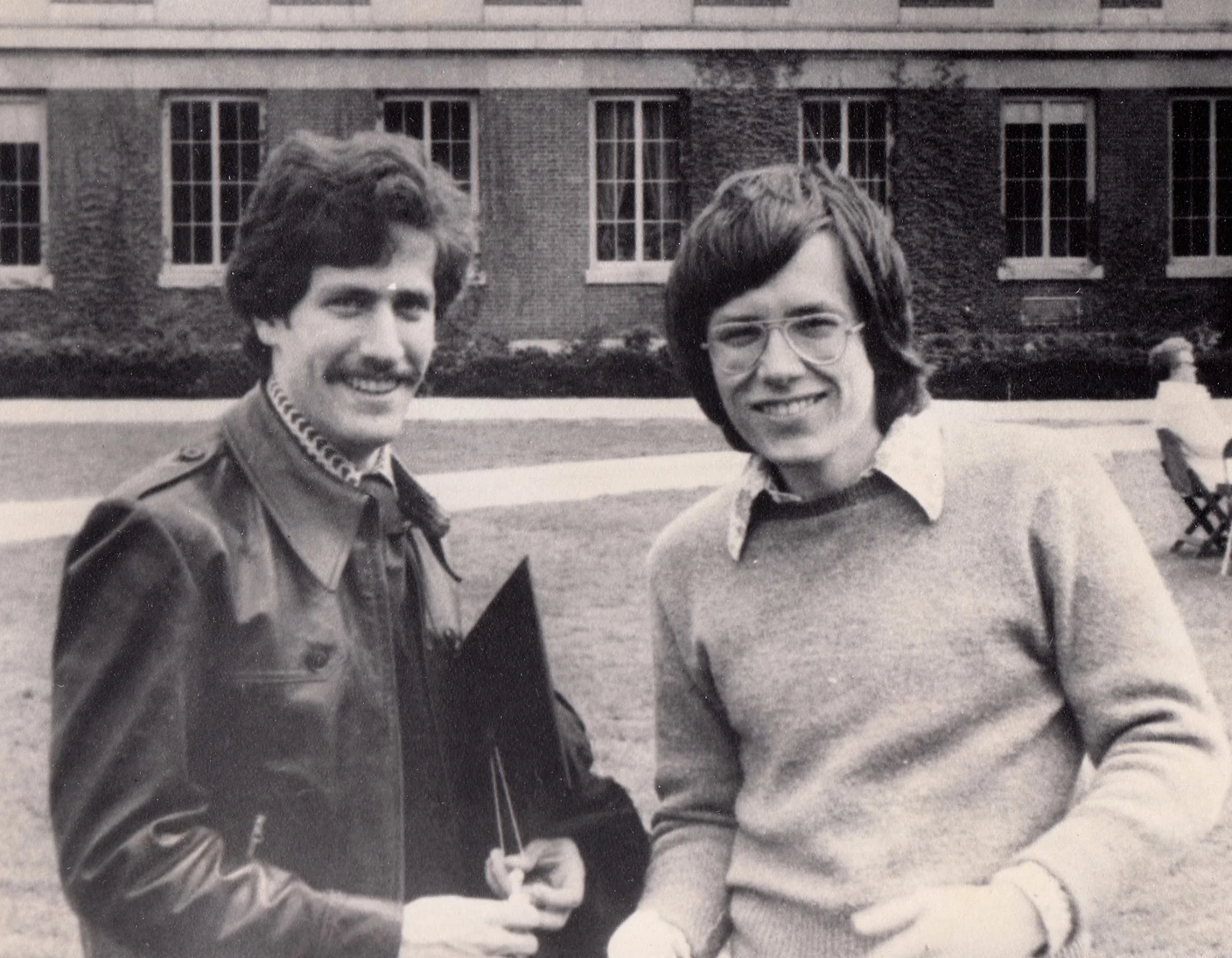
After Rochester, Gary and Don moved to Philadelphia, where Don attended the University of Pennsylvania Law School. Their professional paths would be very different, but each found a way to turn his natural strengths into impact.
Don and Gary at Don’s graduation from the University of Rochester in 1976. Photo courtesy of Don Millinger and Gary Clinton.
When Don started at Penn Law in 1976, he was the first openly gay man to attend the Law School; three women in his class were the first open lesbians to attend, and for their three years there, they were the only out LGBTQ+ students. Gary was the first openly LGBTQ+ person on staff, and together they were the school’s first openly LGBTQ+ couple.
Gary’s path at the Law School began almost accidentally. Having completed a Master of Divinity degree, he considered pursuing a doctorate but instead took a job stacking books in the Penn Law library while studying library science at Drexel University. One night at work, Gary heard someone being assaulted and intervened.
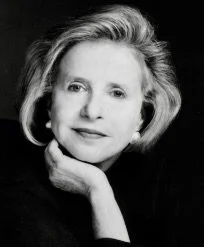
The incident led to a meeting with Vice Dean Phyllis Beck, who had already noticed something special in him. Now she also knew he was a man of character. She suggested a possible career path: Assistant Registrar, Registrar and perhaps, one day, Dean of Students.
Phyllis Beck. Photo courtesy of University of Pennsylvania Law School.
To a young library assistant, Phyllis’s vision seemed fantastical. But that is essentially what happened. Gary became Assistant Registrar in 1979, Registrar in 1982 and Dean of Students in 1995. As Penn Law’s first openly gay administrator, he went on to become one of the school’s most beloved and respected figures, helping shape a student culture that became widely admired.

What set him apart was not simply intellect or hard work. As his longtime Penn colleague Professor Tobias Wolf observed, those qualities were plentiful at Penn and at other top-tier law schools. Gary’s particular gift was people. He listened. He remembered. He asked questions. He was genuinely interested in who people were and what mattered to them. He moved easily among students, professors, administrators, alumni, and parents, somehow leaving each with the sense that the conversation—and they themselves—mattered.
Professor Tobias Barrington Wolff. Photo University of Pennsylvania Law School.
Gary’s mantra to students was “Own Your Education.” He wanted them to see themselves not as customers passing through a law school but as participants in a community they could help shape. He expanded student organizations, encouraged relationships across institutional boundaries, and helped create spaces that brought people together.
Gary’s success brought opportunities from Harvard, Columbia, and NYU, which he explored. Penn understood his interest but were dismayed at the prospect of losing him. One day, after he received an offer from NYU, students and faculty snuck into his office and covered it with red hearts and messages begging him not to leave. When Don’s mother heard the story, she cut through the deliberation with a simple question: “How many hearts do you think you will get at NYU?”
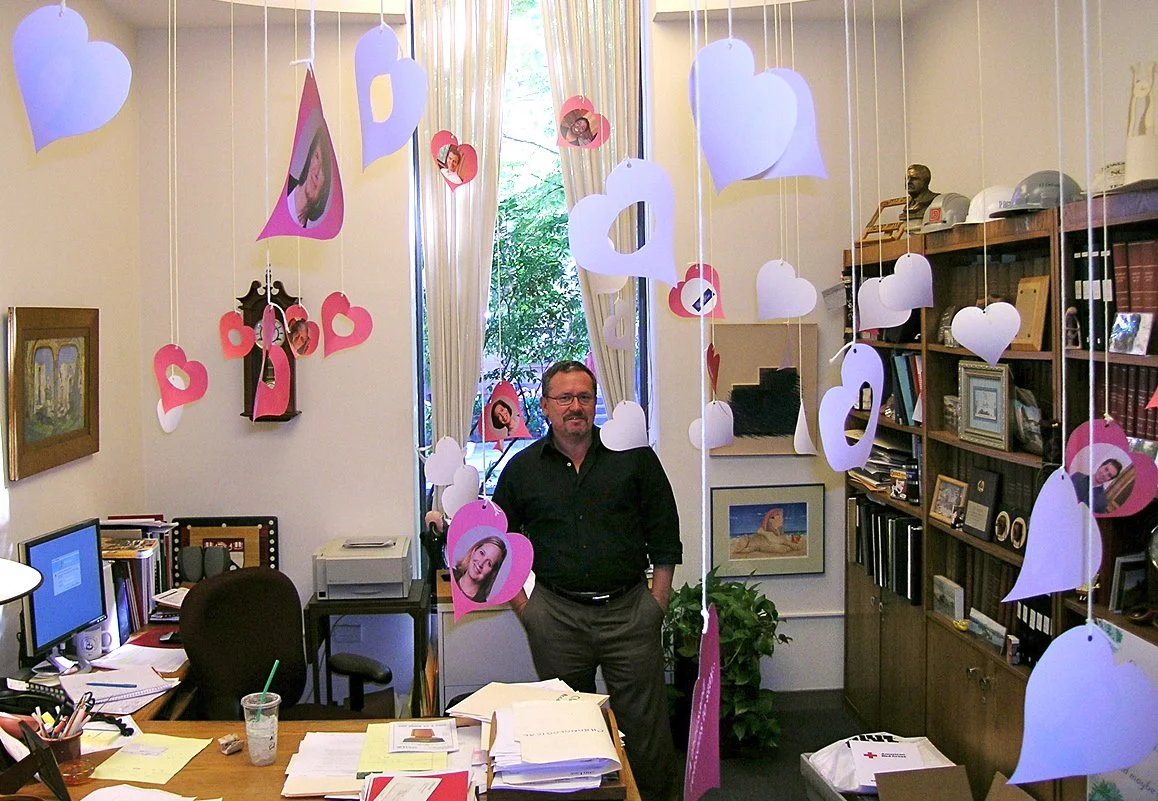
Gary’s office, strewn with hearts from students and colleagues imploring him to stay at Penn Law in 2010. Photo courtesy of Don Millinger and Gary Clinton.
By contrast, Don’s career took him many places. He began in commercial law at Wolf Block and later worked as corporate in-house counsel in Philadelphia. Along the way, he devoted considerable time to pro bono work, helping to establish and maintain theater and dance companies, supporting emerging artists and assisting AIDS organizations. He helped with fundraising, contracts and board service and supported the creation of shows that would become major Broadway hits such as Floyd Collins, Parade, and Gospel at Colonus.
From 1995 to 2002, Don served on the Board of Directors of Lambda Legal, as well as on its Executive Committee and, for two years, as a National Chair, during a critical period in the fight for LGBTQ+ civil rights. One case became particularly personal.
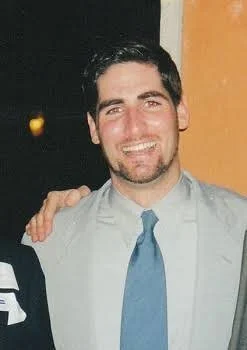
When James Dale challenged the Boy Scouts’ policy excluding gay people, Don became both an advocate and a friend. When the case reached the Supreme Court in April 2000, he sat beside James during oral arguments and held his hand. When the Court ruled against him 5–4, Gary and Don brought James to the Pines and gave him the time and space to recover.
James Dale, circa 1990. Photo courtesy of Study.com
With embarrassment and gratitude, James later noted he was a terrible houseguest that weekend, but Gary and Don were patient and understanding. They appreciated the toll the case had taken on him and did not judge or complain.
In 2016 Don joined the Board of Directors of the ACLU of Pennsylvania. He continues to serve on that Board as well as on multiple committees. His effectiveness made a particular impression on Reggie Shuford, a former Executive Director.
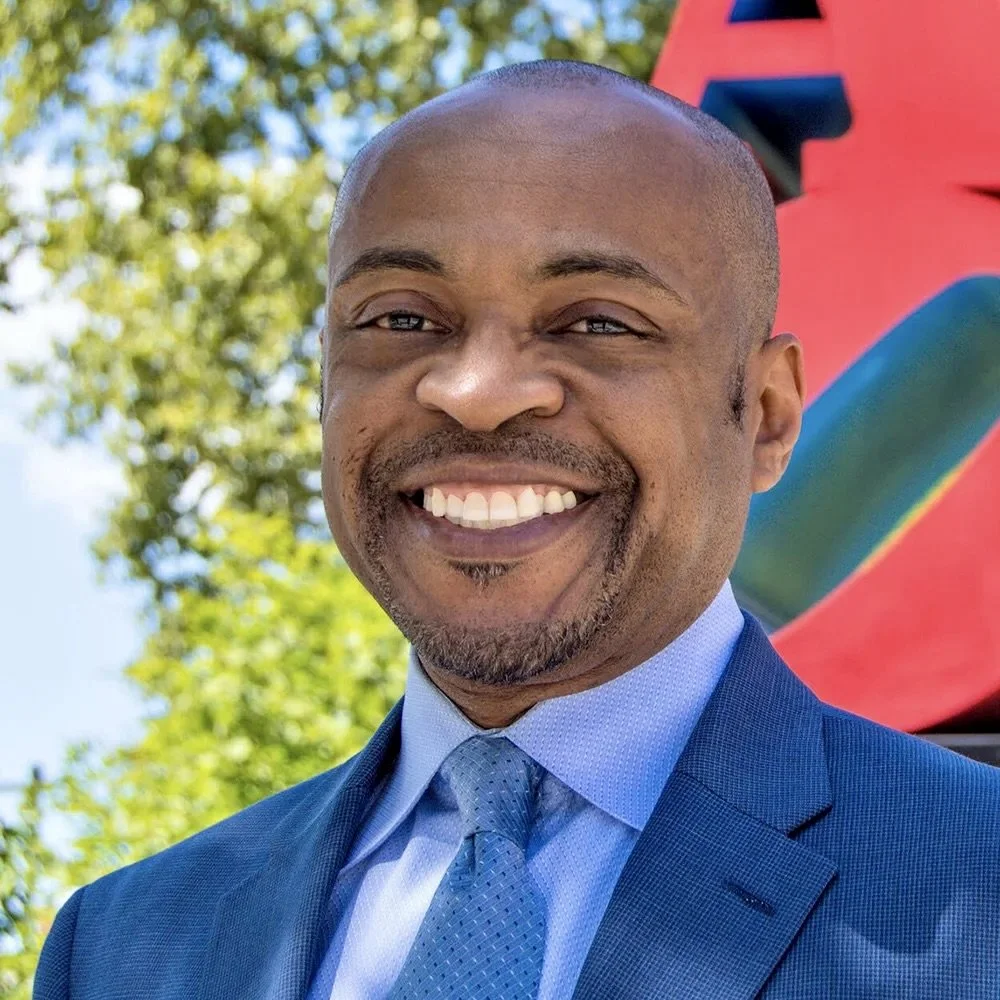
As Shuford recalls, Don was not interested in sitting around a board table simply offering opinions. He read the materials, understood the problem, asked hard questions, took responsibility, and followed through. He became the person Shuford and his team turned to when something actually needed to get done. It was clear to all, Don made things happen.
Reggie Shuford. Photo courtesy 21Hundred.org.
All the while Don was deeply engaged in nonprofit activism, he was also building a thriving career as a corporate lawyer. Then in 2001 he took a chance and made a major career shift by joining the Guggenheim Museum. Here he worked on special projects, international alliances and expansion. The move brought together many of the threads that had shaped his life—law, art, culture, international affairs and public purpose—and, unexpectedly, had him following in the footsteps of their friend and mentor, Henry Berg.
After eight years he left with Guggenheim Director Thomas Krens to establish an international consulting firm advising on developing new museums of contemporary art around the world. His projects took him around the world, including Abu Dhabi, Baku, Beijing, Changsha, Doha, Frankfurt, Guadalajara, Istanbul, Moscow, Quanzhou, Rio de Janeiro, St. Petersburg, Taichung, and Vilnius.
Don’s most exciting project was helping to create a new cultural district in Abu Dhabi. Here he collaborated with architects Tadao Ando, Frank Gehry, Zaha Hadid, and Jean Nouvel on proposals and designs for various cultural institutions. This was followed by working through design development and managing a project implementation plan for a new Guggenheim in Abu Dhabi designed by Gehry. Nouvel’s Louvre Abu Dhabi opened in 2017, and the Guggenheim Abu Dhabi opens in 2026. The daily commute between Philadelphia and New York, and international travel, were demanding, but the work energized him and opened another chapter in a career driven by curiosity and a desire to accomplish something tangible.
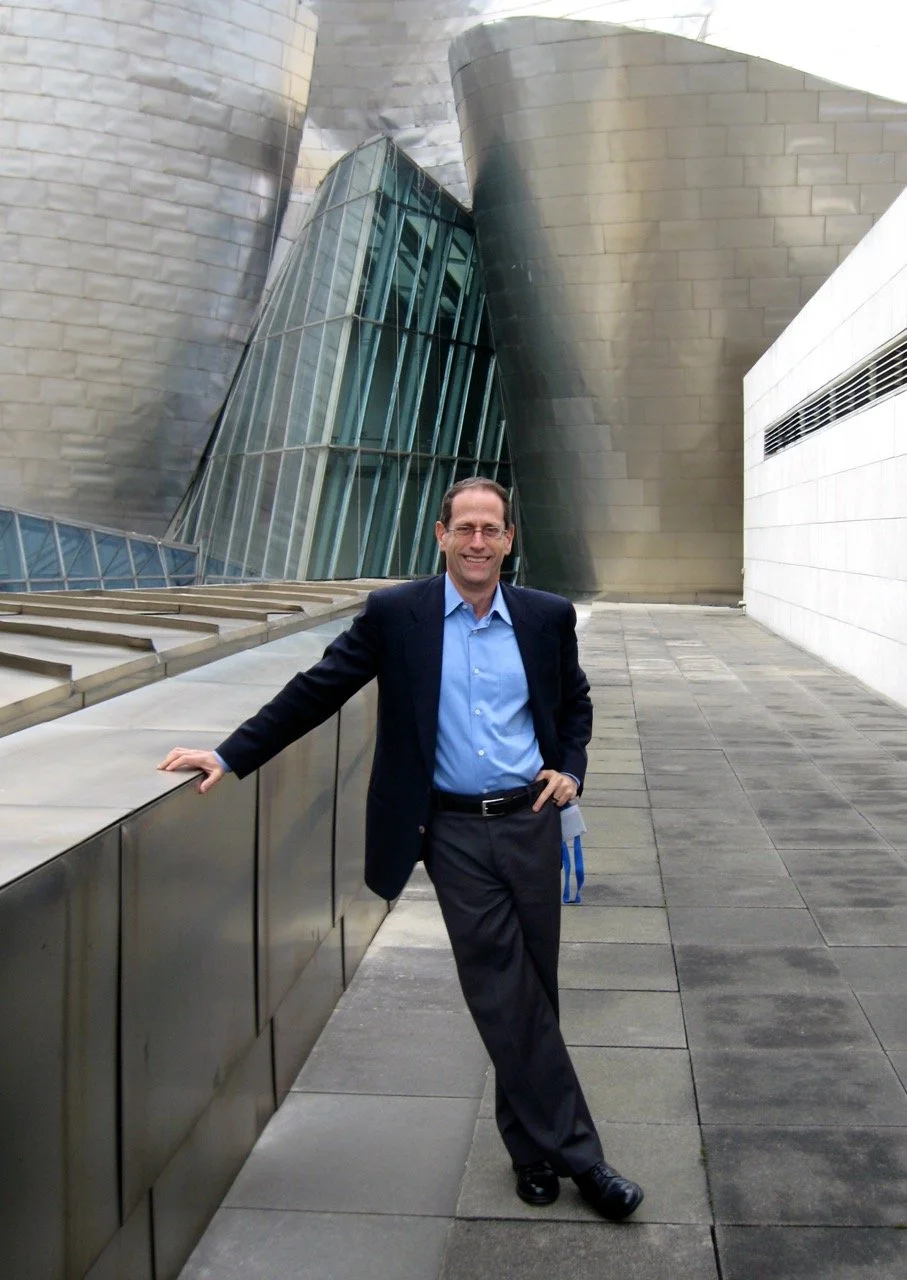
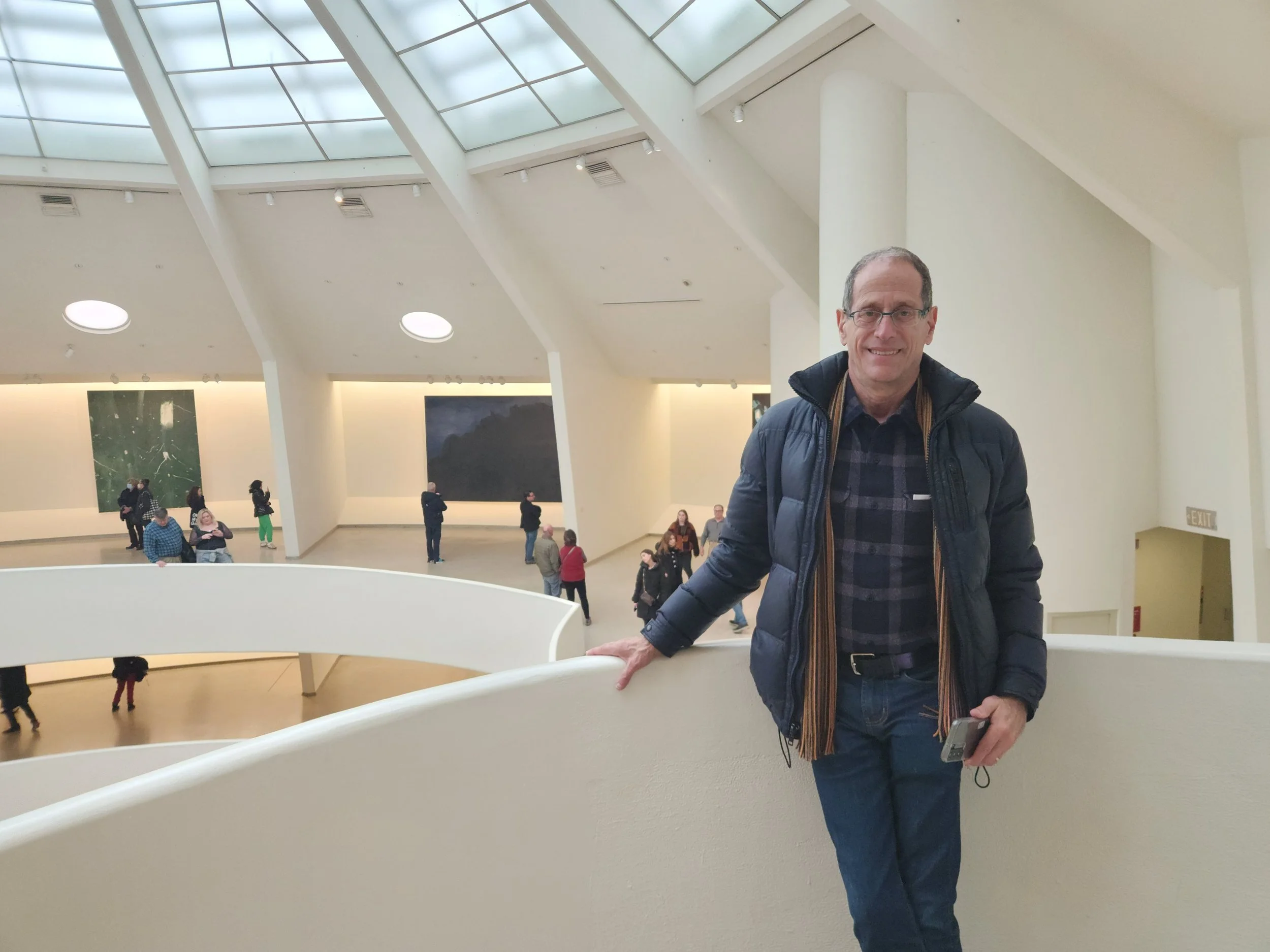


(L-R): Don on the roof of the Guggenheim Bilbao; Don inside the Guggenheim New York; on a business trip to St. Petersberg; and with Zaha Hadid, Thomas Krens, and Frank Gehry in Abu Dhabi. Photos courtesy of Don Millinger and Gary Clinton.
The Pines: Paradise, Loss, and Responsibility
When Henry Berg first introduced Gary and Don to Fire Island Pines in 1974, they felt as if they had discovered another world. Here were gay people living openly and joyfully, building careers and homes, forming relationships, making friends, dancing, entertaining, having sex and creating lives on their own terms. They were smitten. As the ferry pulled away after their first visit, Gary was in tears, convinced they had discovered paradise and would never be invited back. It was one of those rare occasions he got it wrong.
Don and Gary began renting a house in the Pines in 1980. Quickly it became their happy place, a source of friendship, freedom and fun, and a community in which they could be completely themselves.
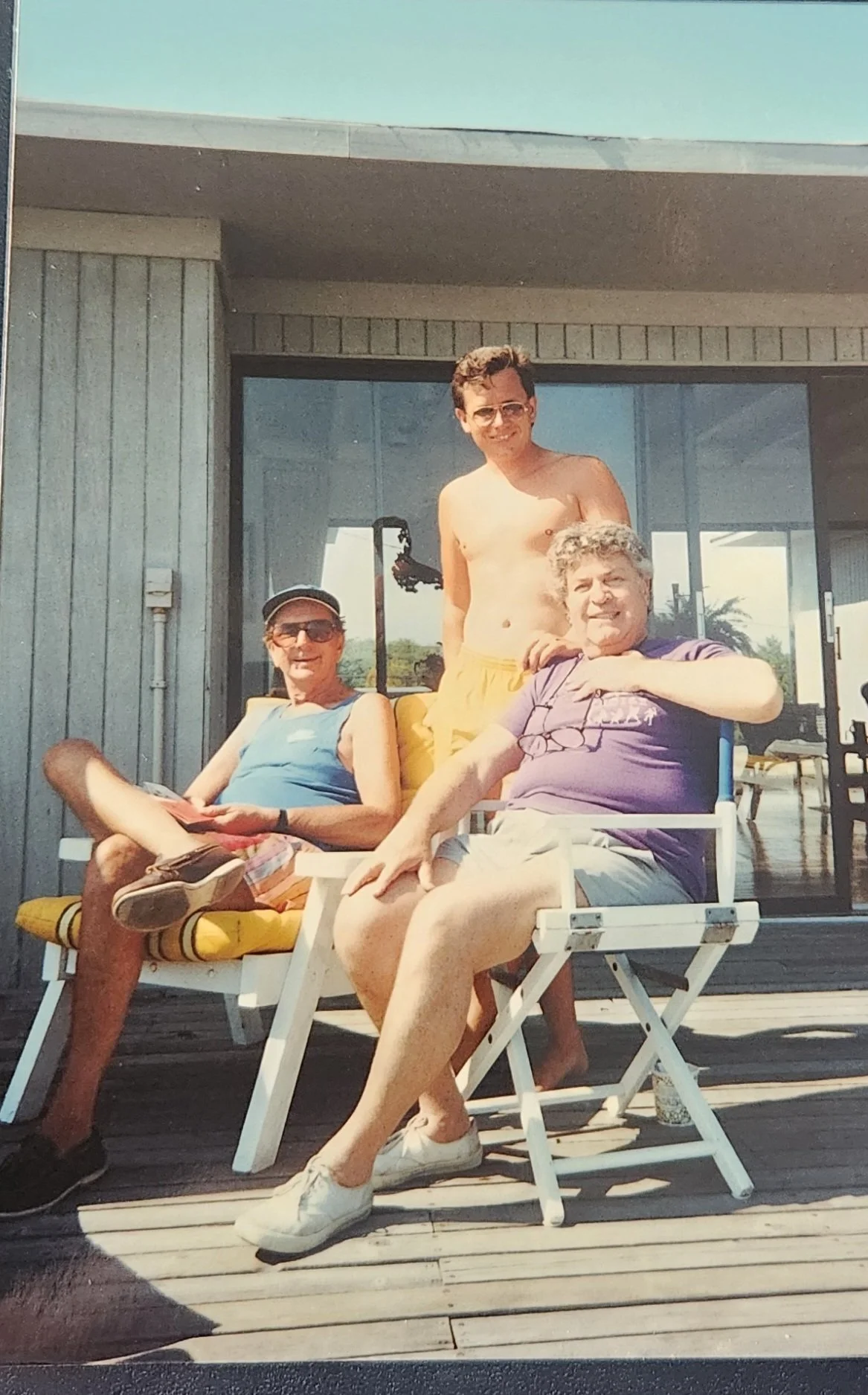
In these early years their friends Howard Morse and Monty Morgan played an influential role. They were long time Fire Island people, starting off in Cherry Grove in the 1950s before moving to the Pines where they built a house on Ocean Walk in the 1960s. Don and Gary rented that house for a week or two during the 17 summers before they bought their own house in 1997. They became close friends over those years, frequently being their guests in the Pines, and spending time together over the winter.
Howard Morse, Gary Clinton and Monty Morgan circa 1985. Photo courtesy of Don Millinger and Gary Clinton.
It was Howard and Monty who introduced Gary and Don to the concept of the Pines as a community, spending time with other homeowners, and bringing them to parties, the property owners’ association (FIPPOA) meetings, and other events including their first SAGE and Lambda Legal benefits in the Pines.
Sadly, early on in their Pines journey AIDS struck, its arrival heralded by the New York Times Article on July 3rd, 1981. Almost overnight their paradise became a place where friends and neighbors got sick and died. The losses became so overwhelming that they stopped counting after roughly thirty-five.
Don and Gary stepped up and did their part to make things better. They helped their friends and took part in protests and rallies. Don used his legal skills and board experience to support organizations responding to AIDS, while Gary counseled and advocated for students living with HIV. He pushed Penn to include HIV care in its health coverage and publicly put himself first in line when HIV testing came to the law school, helping confront the stigma surrounding it.


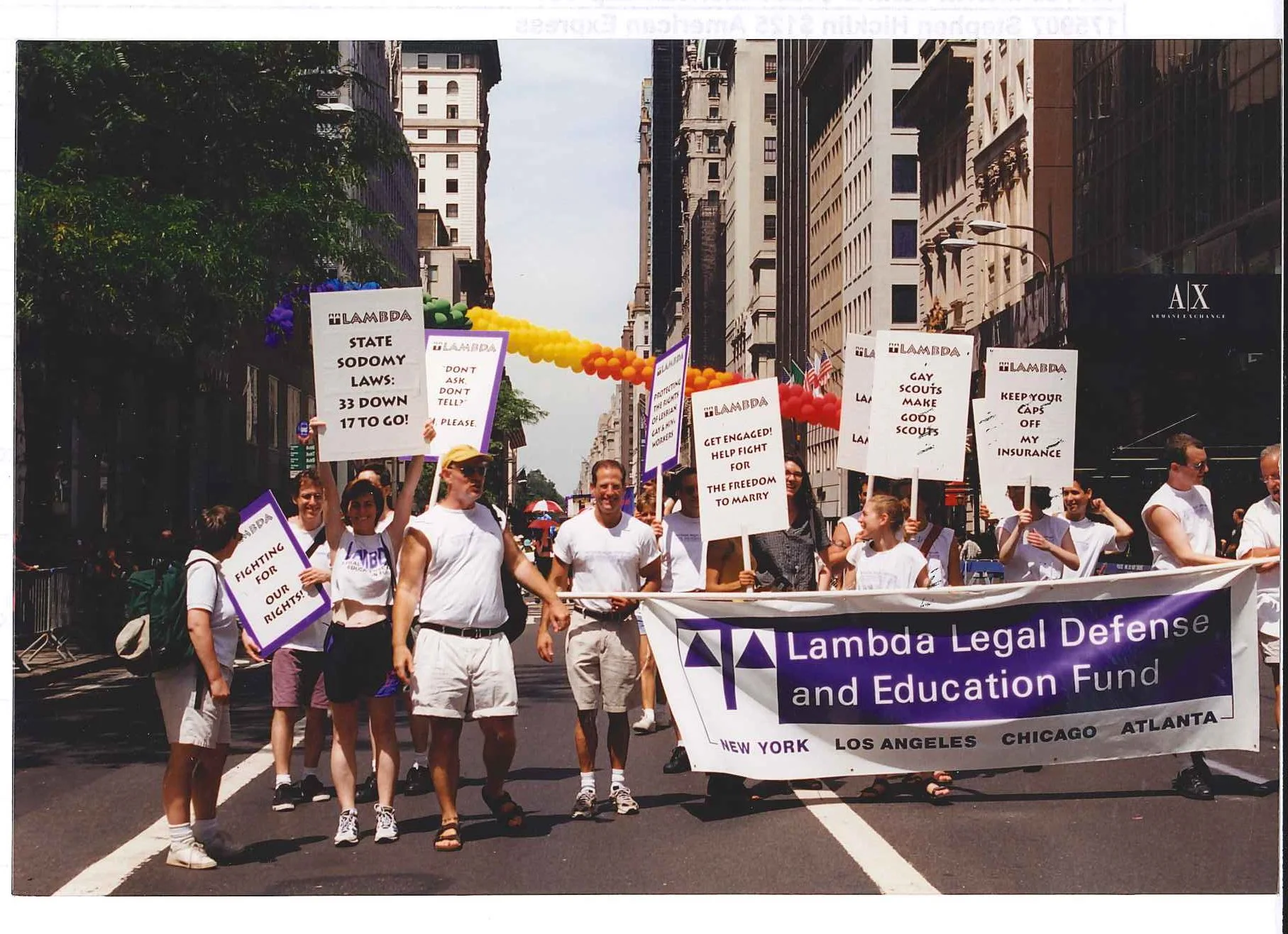
Marching for Gay Rights: (L-R): NY Pride late 1990s; March on Washington 1993; March on Washington 1993; NYC Pride late 1990s; Photos courtesy of Don Millinger and Gary Clinton.
Despite the grief and loss, Don and Gary never stopped coming to the Pines. If anything, it became even more important—a refuge where they could grieve, recharge and find the strength to keep moving forward.
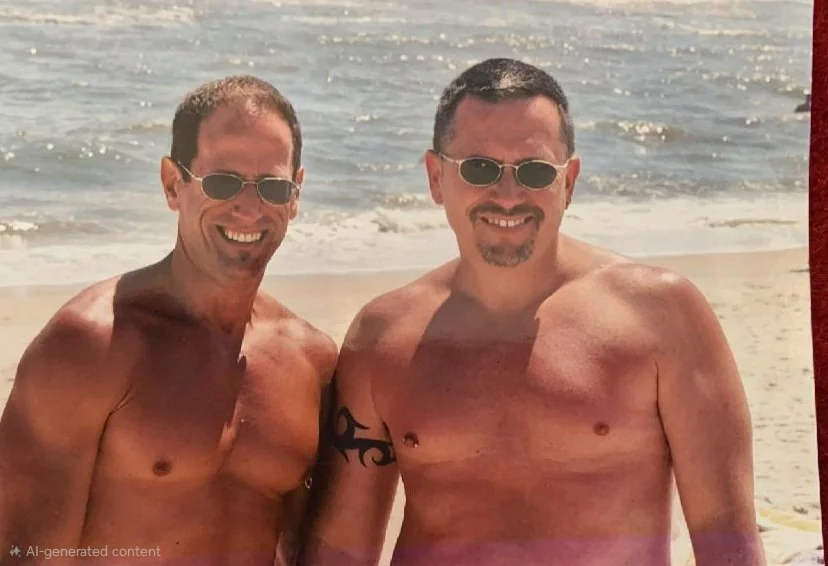
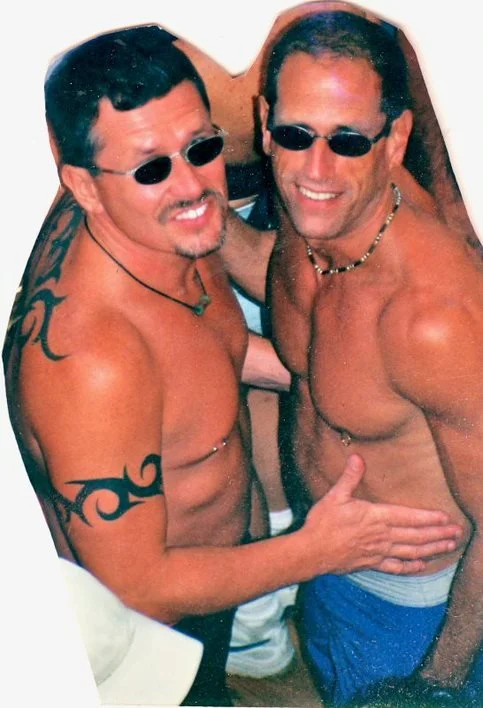
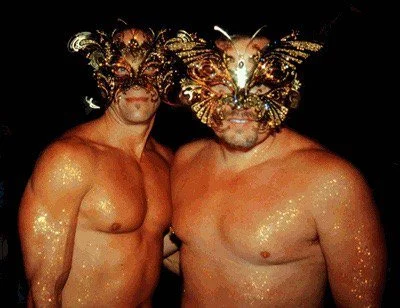
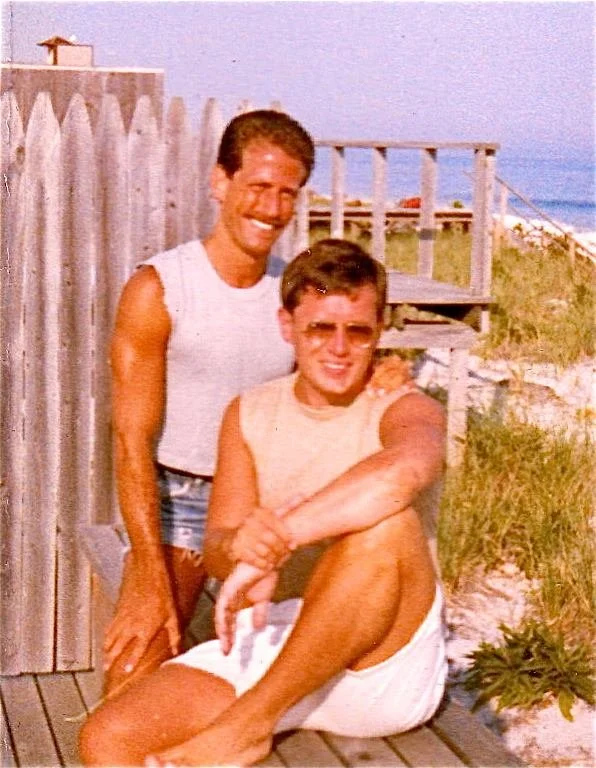
Pines Life: (L-R): On the beach; dancing; at the Gold Party; on the deck. Photos courtesy of Don Millinger and Gary Clinton.
Over time their relationship with the Pines evolved. The place that had given them so much became a place they felt responsible for giving back to. For Gary, that instinct led him to FIPPOA, which he had been fascinated by ever since learning about it from Howard and Monty. He saw it as an organization where people came together to take responsibility for their community. After becoming a homeowner, he ran for the Board and unexpectedly won handily on his first try. He started with decidedly unglamorous assignments—membership and the wagon rack. But that was never the point. You showed up. You did the work. This approach, combined with his extraordinary people skills, served the organization well.
Over the years, while he never stopped working on the wagon rack, Gary went on to lead the way in preserving and interpreting FIPPOA’s historical records, helping develop the Brockman Grant program and conceiving the idea for Trailblazers Park. By his side, Don frequently provided pro bono legal support as ideas developed. As current FIPPOA President Henry Robin put it:
“I frequently pay homage to ‘the Oracle of Gary Clinton.’ Because of his keen sense of judgment and professional experience honed as Dean of Students at Penn Law, he is often my go-to person for perspective and advice, particularly when faced with difficult or controversial decisions.”
Board member Russell Saray had this to say:
“The gift of people like Gary and Don is they don’t simply participate in a community—they leave it richer, stronger and more meaningful for those who follow.”
The Pines has been equally enriching for them. They have made a large number of friends and come to appreciate new sides of gay life. They became regulars at Tea Dance and at the Pavilion and could always be counted on to see daybreak from the Pines Party dance floor. Generous and always keen to share experiences, they continuously invite friends to stay, giving them a chance to experience its magic personally, while spending the kind of extended, unhurried time together that deepens relationships.
The Pines began as paradise. It sustained them through devastating loss, gave them a community to serve, and became a place where they could bring people together. Ultimately, it became something even more important. It became home.
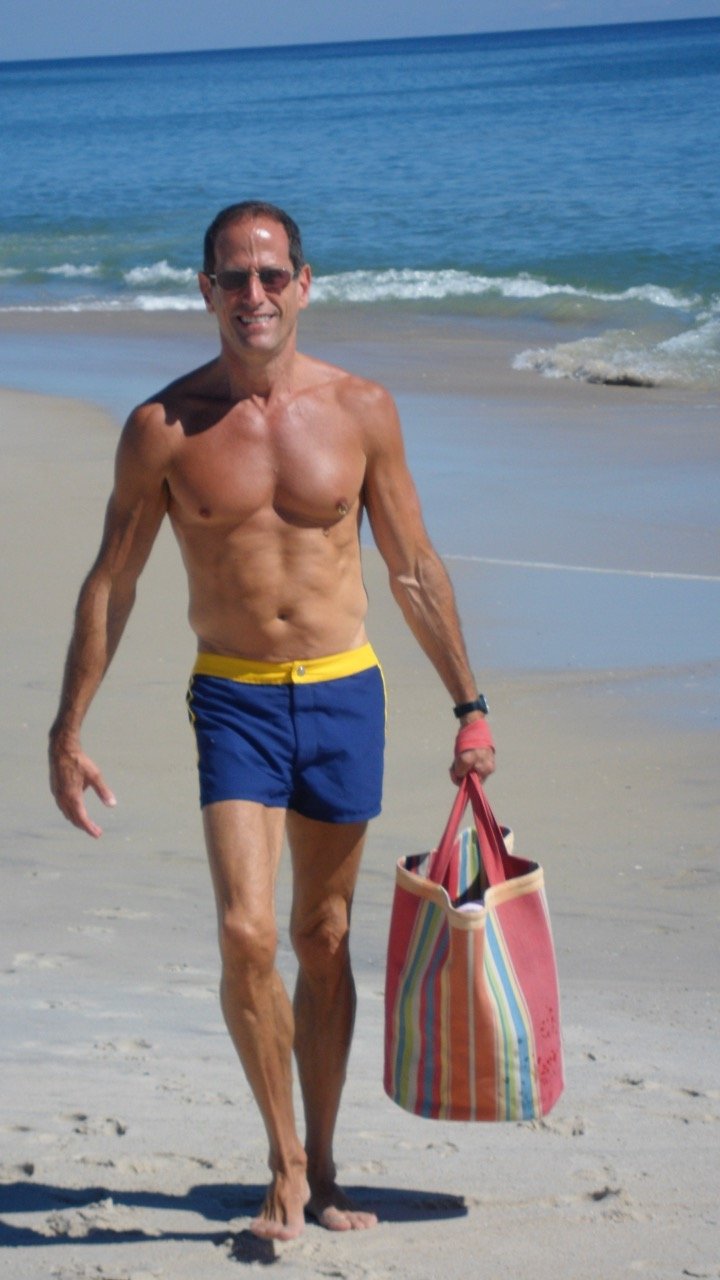
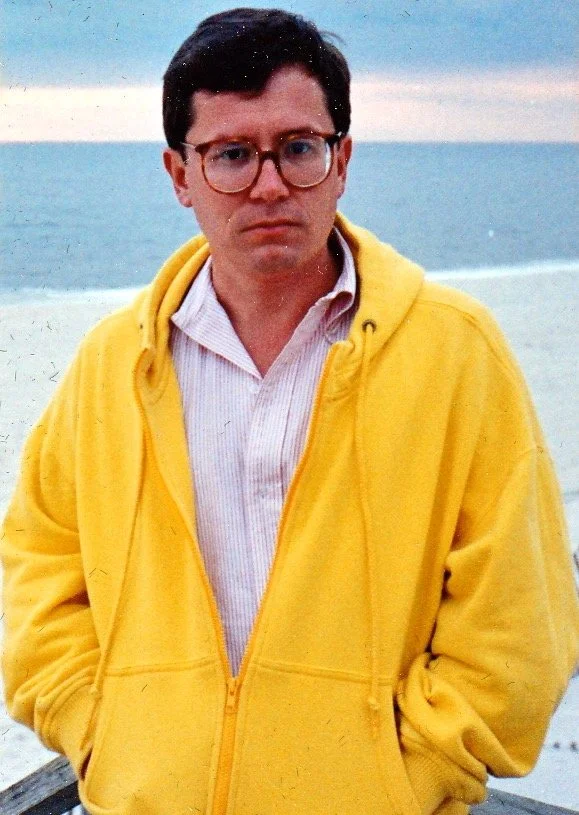
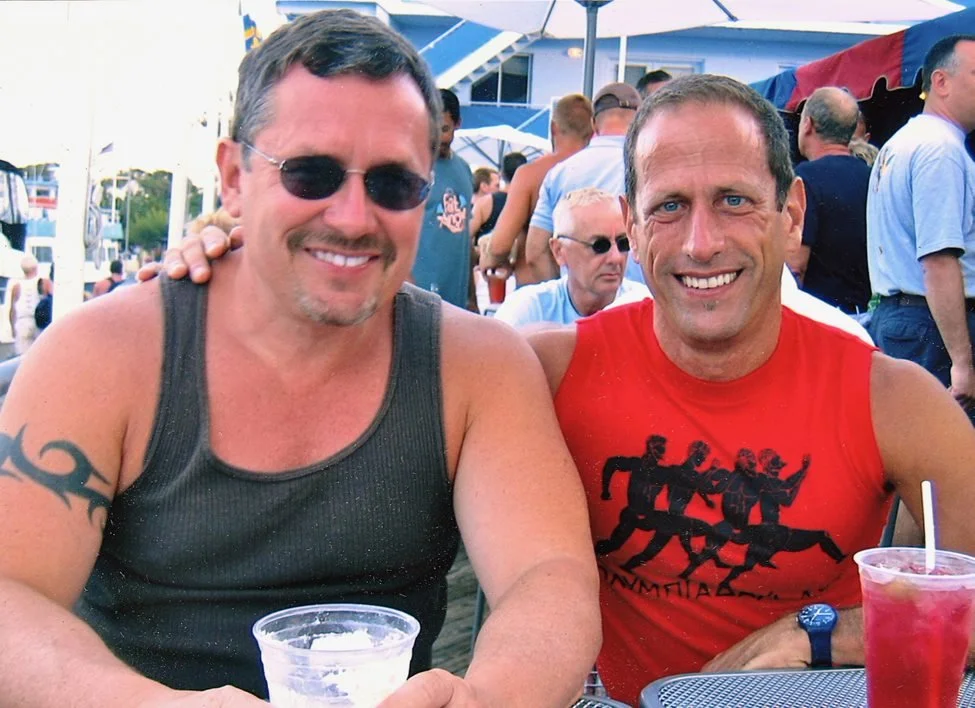
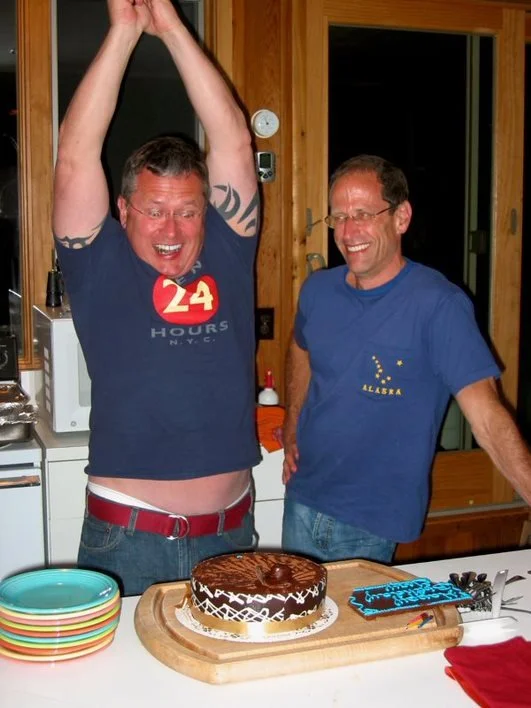
Pines life: Don on the beach in summer; Gary on the beach in Spring; at Tea; celebrating Gary’s birthday. Photos courtesy of Don Millinger and Gary Clinton.
Chosen Family
If their careers show what Gary and Don accomplished and their activism reveals their values, their chosen family reveals another dimension of their lives: their extraordinary ability to build and sustain relationships. And that begins with the relationship they built with each other.
From the beginning, Gary and Don understood that a lasting relationship required more than love. It required commitment, attention, and a willingness to take responsibility for what they had created. Don had seen that modeled by his parents, and he and Gary adopted much the same approach. They understood that when problems arose, they belonged to both of them to resolve, and they consistently reinvested in their relationship in ways great and small.
Gary and Don’s commitment to each other did not close them off from others. Rather, it allowed them to open their lives to the world. Over the decades, they’ve built a vast and vibrant network that crosses generations, genders, sexualities, race, and geography—and it continues to grow. They are genuinely curious about people without being intrusive, generous with their time and quick to welcome others into their lives. As their close friend (and surrogate son) Greg Schanuel noted, because they complement each other so well, a relationship that begins with one frequently becomes a relationship with both. Don can bring people together around a great meal, Gary can captivate a room with a story, and their wit ensures the laughter is nonstop. Orlando Reece put it this way: “Time spent with them is time well spent indeed!”
Gary Bramnick experienced this firsthand. When he met them through Don’s pro bono work in Philadelphia, he was a young, shy gay man uncertain of where he fit in the world. Gary and Don embraced him and showed him that life as a gay man could be more than okay—it could be rich and rewarding. Like Schanuel, Bramnick considers them surrogate parents. Of the many qualities he admires, however, it is their relationship itself that stands out: “With Gary and Don, the whole is greater than the sum of the parts.”

Three generations of Chosen Family. (Clockwise): Tom Smith, Greg Schanuel, Gary Clinton Gary Bramnick, Don Millinger and James Dale in 2003. Photo courtesy of Don Millinger and Gary Clinton.
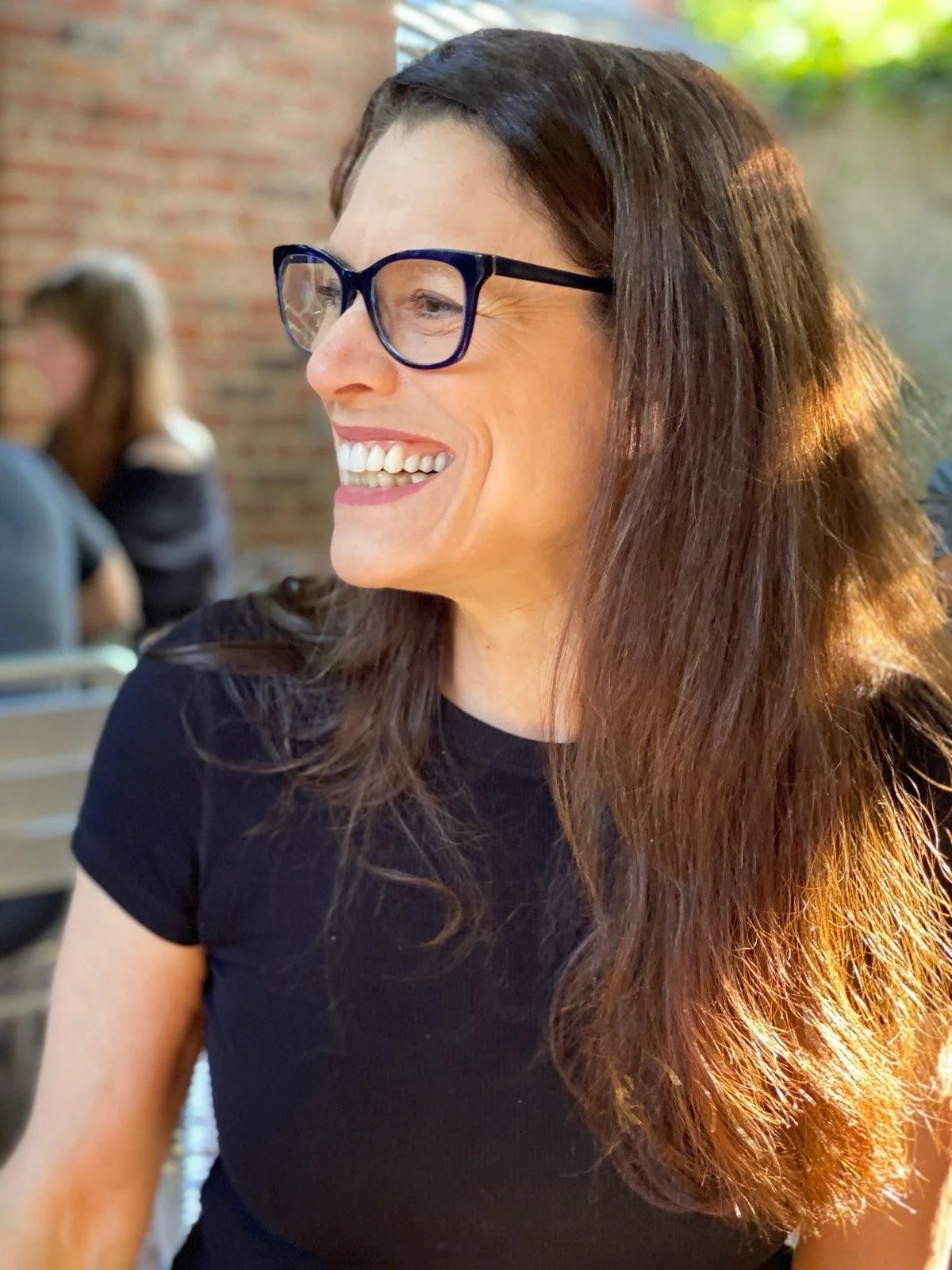
Claudia Levine, who Don has known since high school, has been in their lives since college. Along with her family, she has shared holidays, dinners, and outings with them and their gay friends.
Claudia Levine. Photo courtesy of Don Millinger and Gary Clinton.
For their part, Gary and Don took their role in the lives of her sons Julian and Bennett Kosma seriously. Indeed, when Julian, the older brother, was born, they assembled eighteen gifts—one for each of his first eighteen birthdays—chosen to encourage his interest in literature, art, and education.
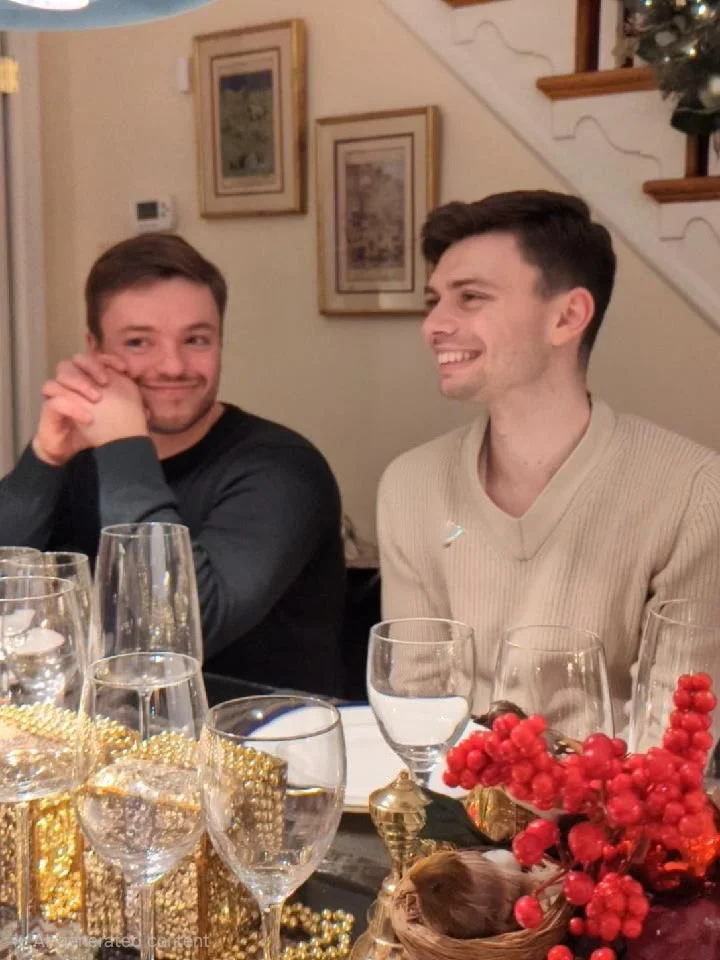
When both Julian and Bennett later came out, it added another dimension to relationships already grounded in years of trust. Gary and Don became people with whom they could talk candidly about gay life and, as the brothers grew older, share experiences and perspectives as gay men. Today, all four count the relationship among their most cherished and make a conscious effort to keep it fresh and current.
Bennett and Julian Kosma. Photo courtesy of Don Millinger and Gary Clinton.
The Kosmas are part of a much larger pattern. One of the most telling qualities of Gary and Don’s lives is not simply the number of friendships they have formed, but their durability. They have sustained relationships across decades, life stages, and generations, allowing them to deepen and evolve over time. And there is a sense of paying something forward. What people like Tom Smith, Jay Wilson and Henry Berg gave Gary and Don early in their lives—support, friendship, and a sense of possibility—they have, in turn, given to others. More than a decade after Gary’s retirement, they remain engaged with Penn Law students, and wherever they go they continue to form friendships across generations. Bringing people into their lives—and keeping them there—has been a defining characteristic of the life they have built together.
Perhaps nothing captures the spirit of community and inclusion better than the legendary, annual Chili Party they started while Don was at Penn. Created to bring LGBTQ+ law students together and build a sense of community, it grew far beyond its beginnings. Decades later, the party continues—now open to all and held in a larger venue to accommodate an ever-growing crowd. What began as a simple way to forge connections became an enduring tradition and a community of its own, long after Gary and Don stopped hosting it on Gary’s retirement.
Their chosen family and vast network of friends are perhaps the most personal expression of the authentic lives Gary and Don have built together. The same instinct to support people and help them grow that shaped so much of their professional and volunteer lives extends naturally to the people closest to them. While Gary and Don have made their mark on some big stages, that was never what drove them. They simply wanted to live their lives on their own terms. Their impact—large and small—has been a natural outgrowth of doing that well.
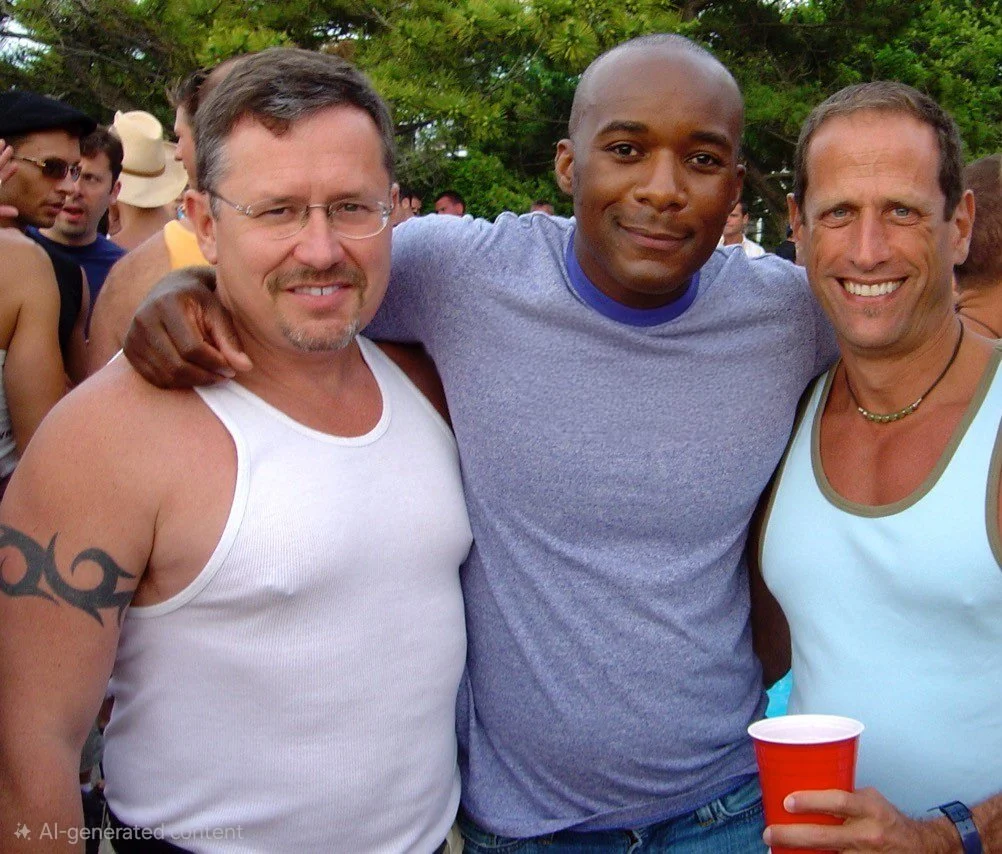
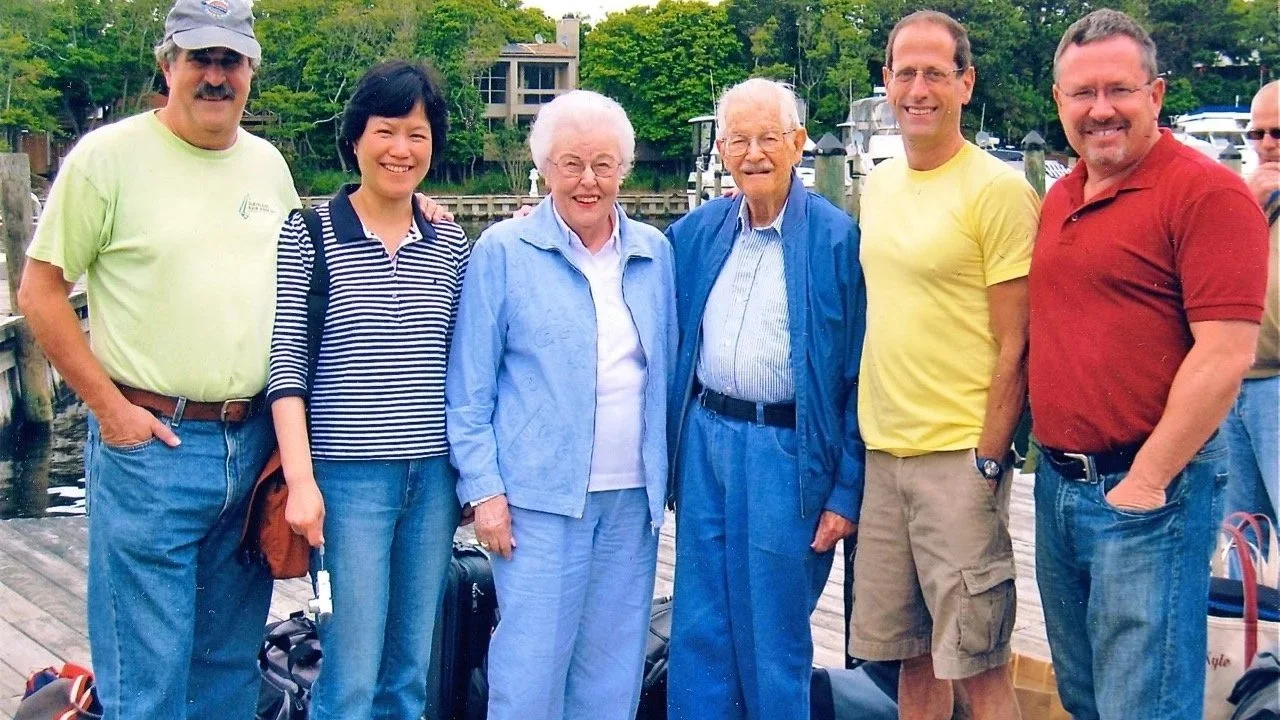
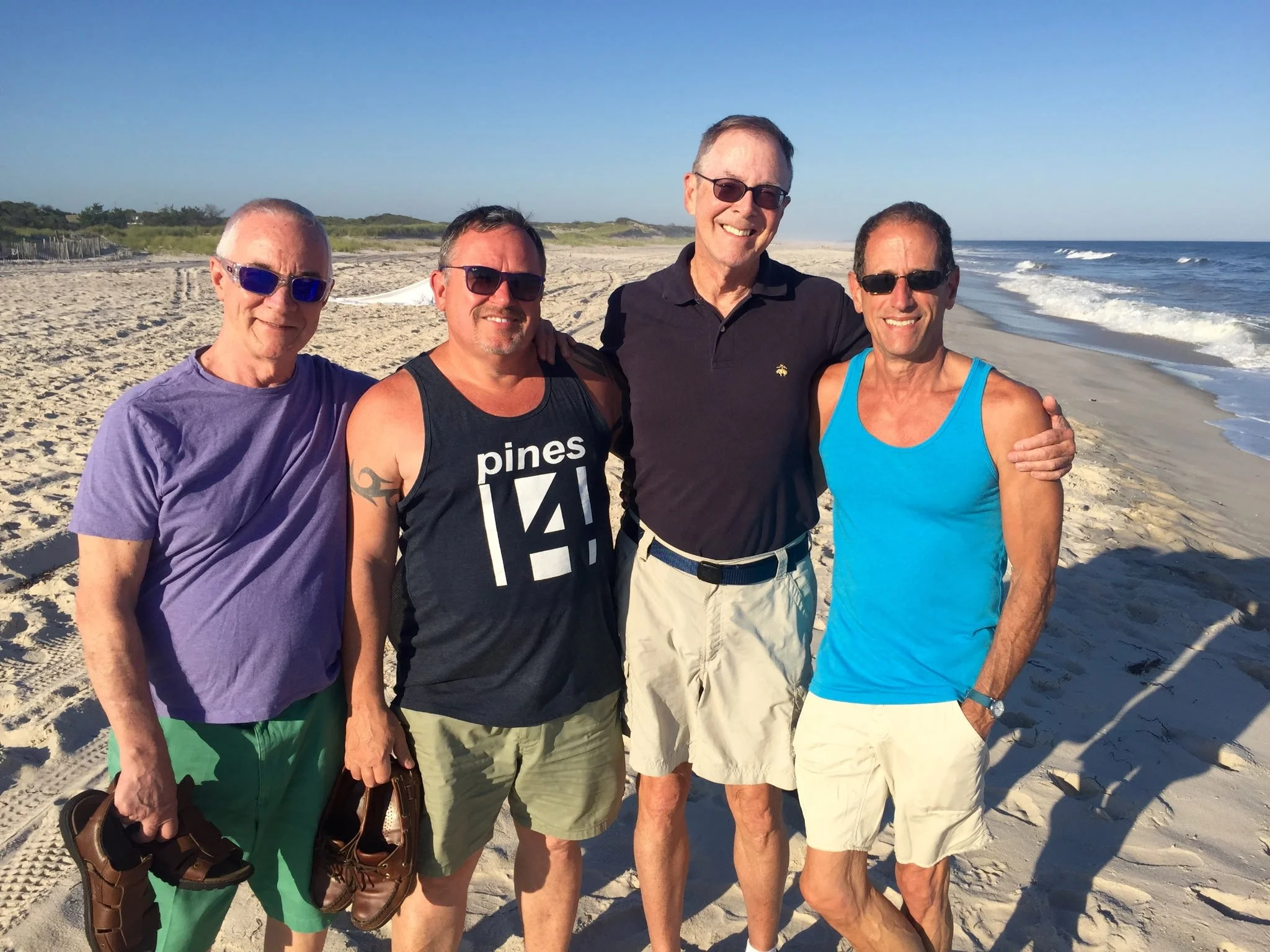
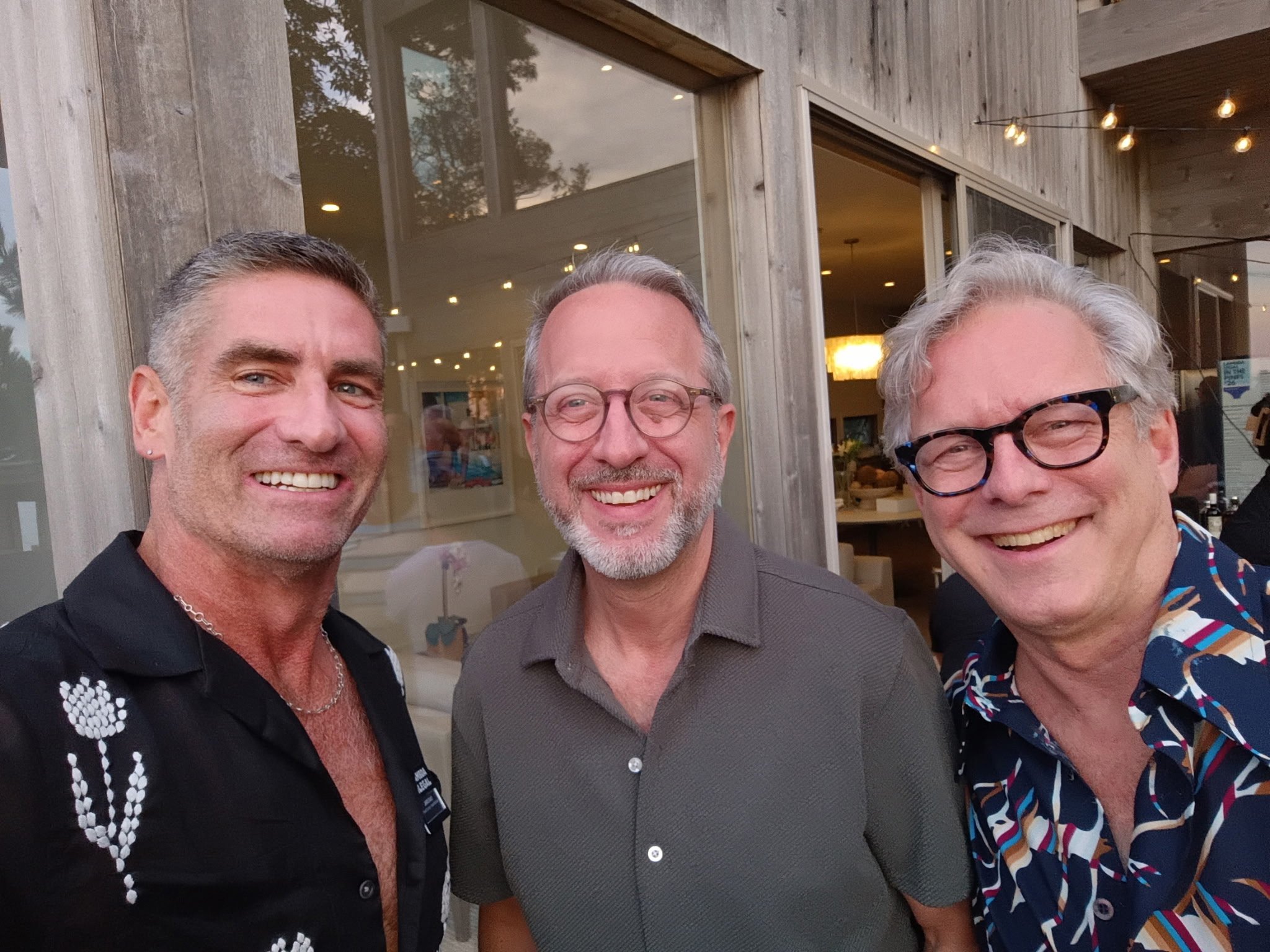
Family in all forms (L-R): Gary, Orlando Reece and Don; Don’s brother Bruce and his wife Xiao-Fang, his parents Sylvia Dee and Harvey, Don and Gary; Tom Smith, Gary, Jay Wilson and Don; James Dale, Gary Bramnick and Greg Schanuel.
The Power of Example
In 2015, after the Supreme Court established marriage equality nationwide, Chief Justice John Roberts asked in dissent, “Just who do we think we are?”
Gary answered in a letter to The New York Times. He described himself as an American, a seminary graduate, a law school dean of students, a taxpayer, and a voter—and as the husband of the man he had met and fallen in love with forty-two years earlier, and as one who had waited for America to simply do the right thing.
It was an answer more than four decades in the making. Gary and Don had come of age when living openly as gay men required courage and when the legitimacy of relationships like theirs was routinely questioned. Rather than accept those judgments, they built their lives on their own terms. They lived openly, pursued their ambitions, and fought for causes they believed in. And they had succeeded. Their relationship had endured. Their careers had flourished. The communities they touched were stronger because they had been part of them.
So, when Chief Justice Roberts questioned who those demanding marriage equality thought they were, Gary did not need to search for an answer. His life with Don had already provided it. And having answered the Chief Justice, Gary turned the question back on him:
“That’s who I am, Chief Justice Roberts. Who are you?”
The power of this audacious challenge came from its credibility. Gary was not arguing an abstract principle. He and Don had spent more than forty years living it. This, probably more than anything else, is what makes Gary and Don such effective activists. They do not simply argue for the world they believe in. They help create it.
Gary’s challenge to the Chief Justice distilled a lifetime of doing exactly that—activism grounded in authenticity, strengthened by commitment and proven through action.
And perhaps that is the paradox at the heart of their story.
Theirs is a life of activism. But at its heart, it has always been a love story.