

There’s No Place Like Home
By Virun Rampersad. October 2026
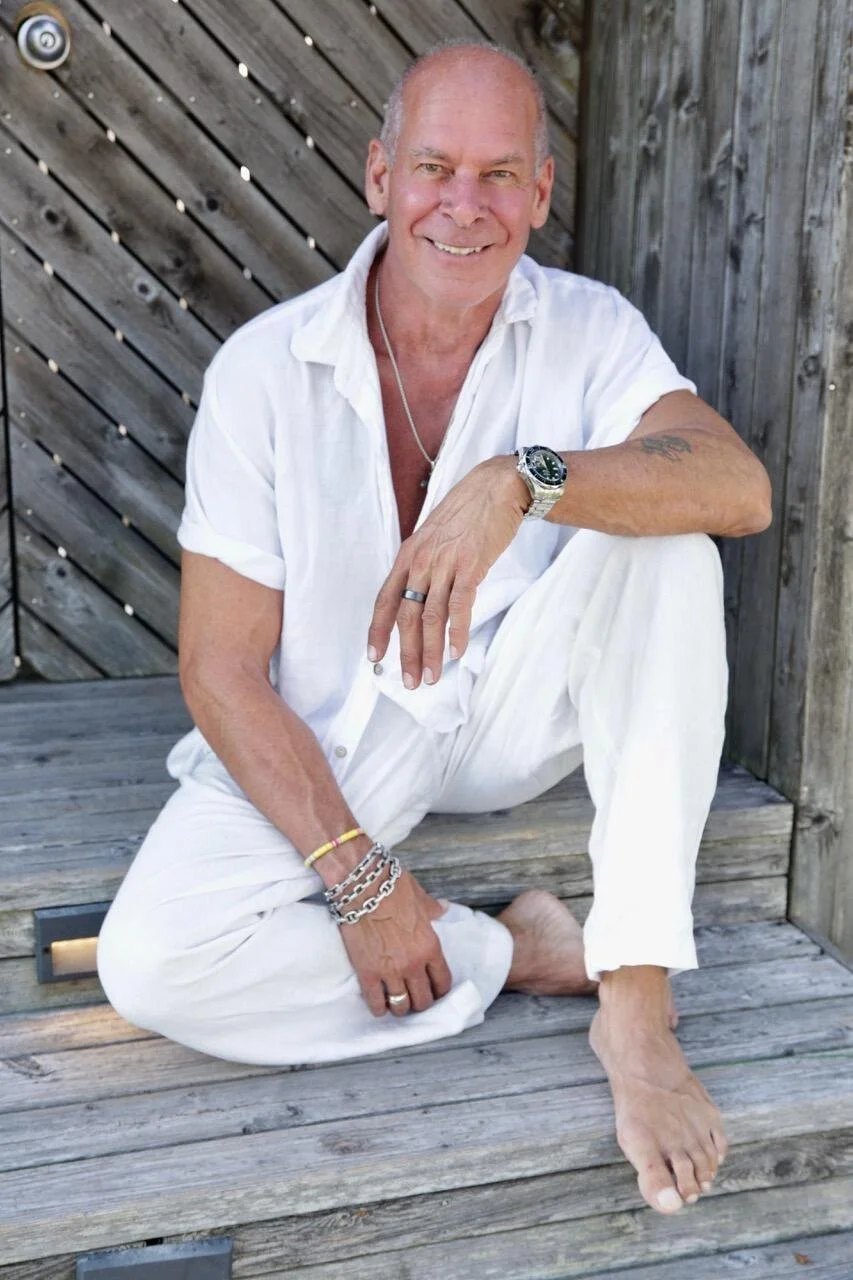
Chris Lovito in Fire Island Pines circa 2025. Photo courtesy of Chris Lovito
At first glance, Chris Lovito and Fire Island Pines seem an unlikely match. Straight, married and unmistakably Type-A, Chris hardly fits the mold of a resident of one of the world’s most renowned gay communities. Yet for fifty years the Pines has been a vital part of his life. In turn, he has played an important, sometimes unseen role in preserving and strengthening it. His is the story of a man who remained distinctly different from the community around him yet became undeniably part of it.
The Early Years
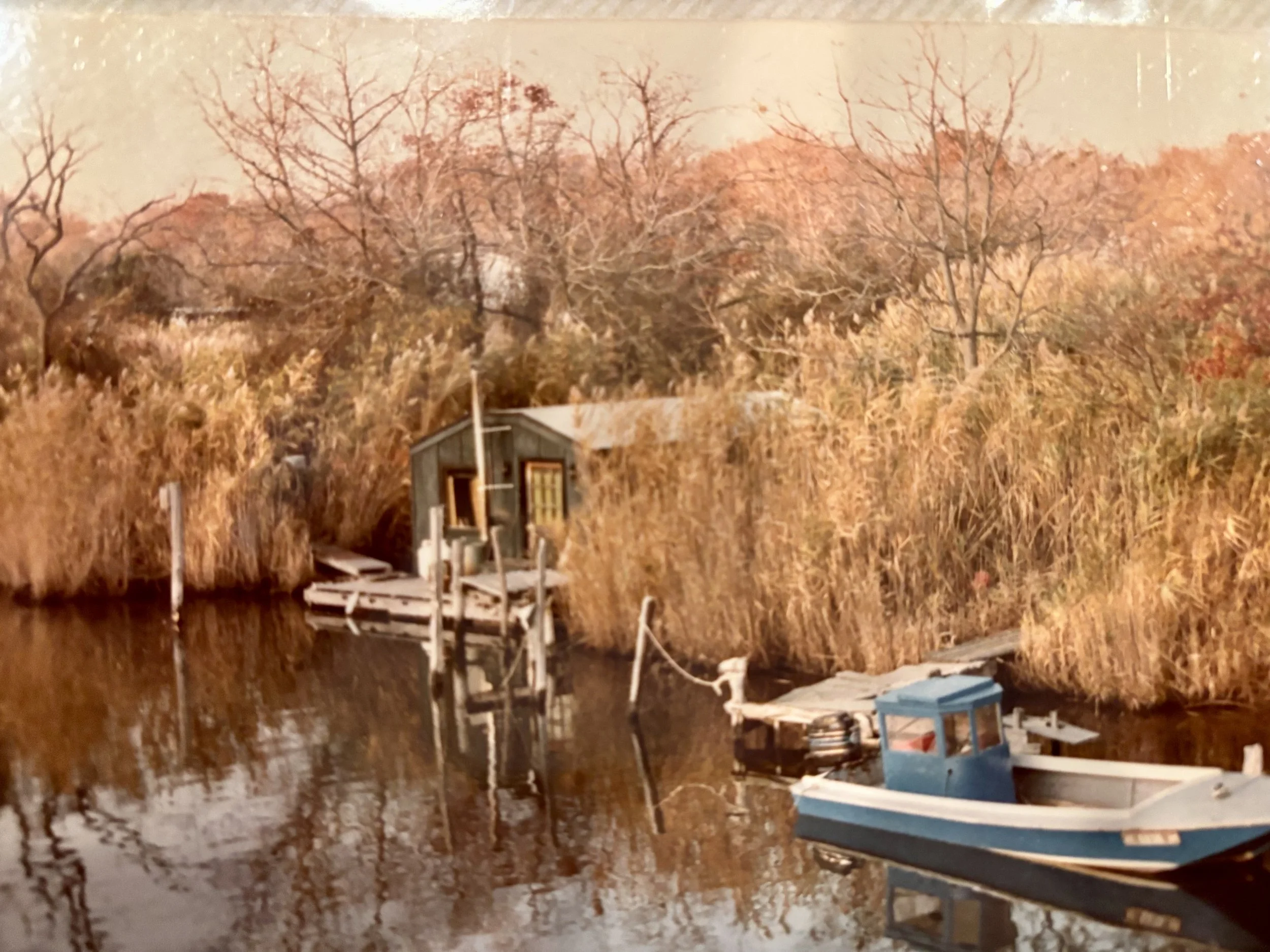
When Chris first arrived in the Pines, he felt sure it wasn’t for him. It was 1976 and he was a 16-year-old kid from Long Island, working a summer job as a clam digger.
Chris’s clam boat circa 1976. Photo courtesy of Chris Lovito.
One night he and a friend came to the Pines in search of what they had heard was the coolest music around.
What they found at the Sandpiper, predecessor of the Pavilion nightclub, was a shock. As Chris later described it, the club looked like a scene out of the movie Cruising—men in leather and jeans, music pounding, the acrid smell of poppers in the air. The moment they stepped into the room, it seemed every head turned toward them.
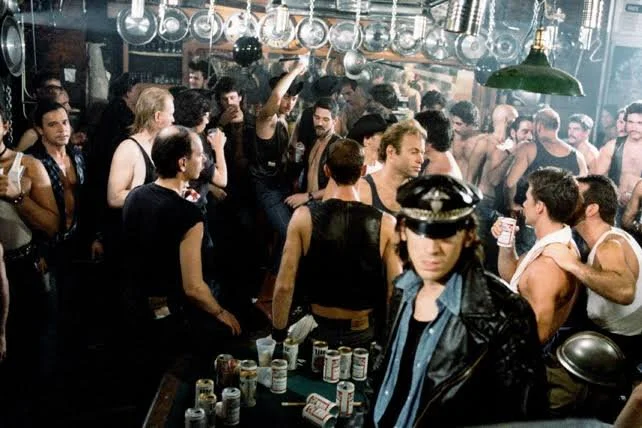
Scene from the movie Crusing. Photo courtesy of United Artists.
The boys beat a hasty retreat to their boat.
Undaunted, Chris’s friend insisted they had simply come at the wrong time. They needed to return for something called Tea Dance at the Blue Whale. Always game, Chris went back the following weekend.
This time it was different.
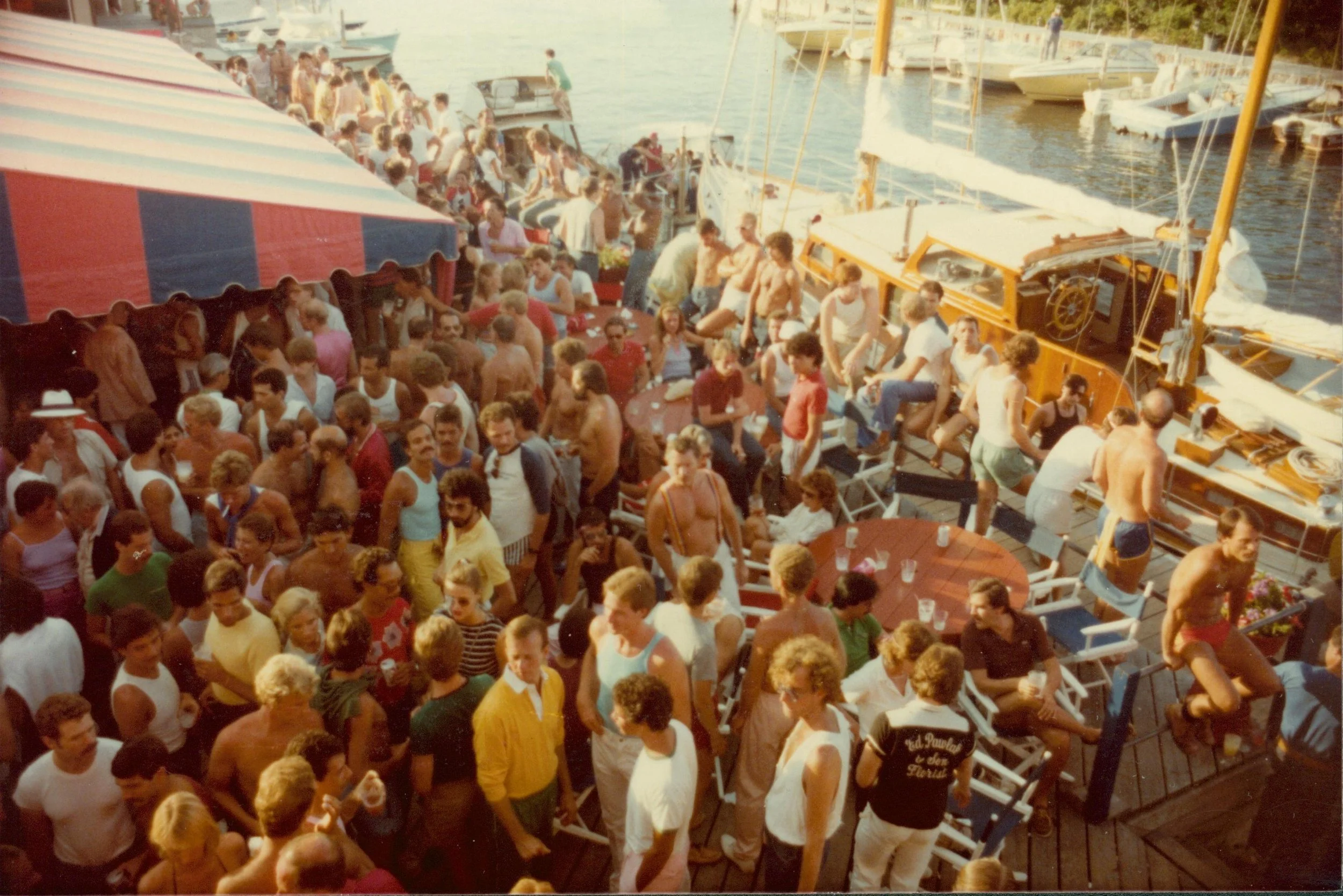
Tea Dance at the Blue Whale. Photo credit unknown.
The music was unlike anything he had heard, and the energy of the crowd drew him in. People danced, laughed and talked easily with one another and there were no visible cliques. He had left the Sandpiper certain he was in the wrong place. Now he wanted to stay.
Chris began coming back to the Pines to hang out by the pool, work out and then head over to Tea to soak up the atmosphere. One afternoon at the Blue Whale, an attendant threatened to throw his girlfriend out over a misunderstanding. Chris immediately got in his face. They were doing nothing wrong, he argued, and they were staying. The head of security, Greg ‘Julio’ Benoff, noticed the exchange and had an idea. He introduced Chris to the owner John Whyte.
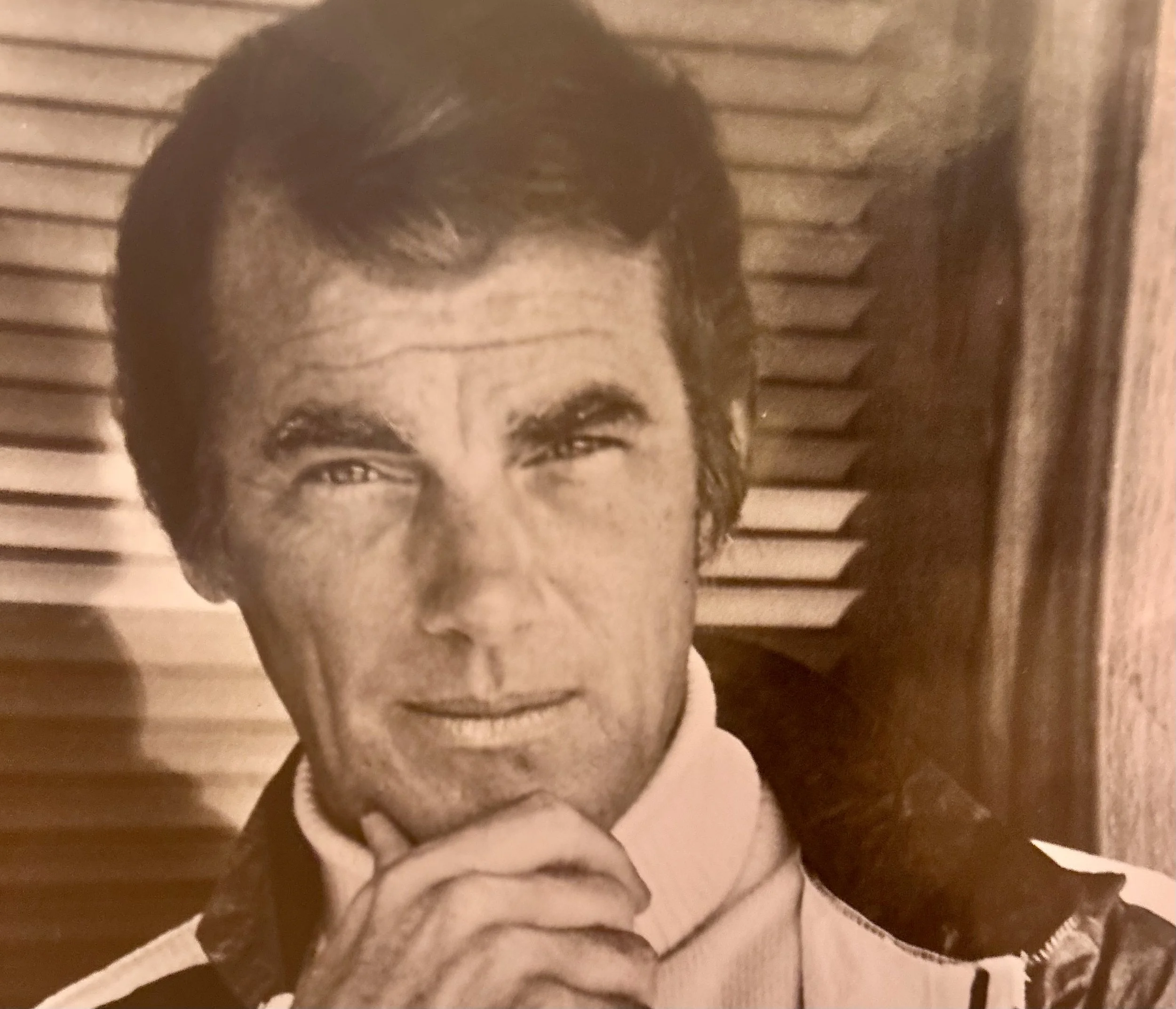
John Whyte. Photo courtesy of Chris Lovito.
Always one to spot an opportunity Whyte offered Chris a job as a bouncer at Tea.
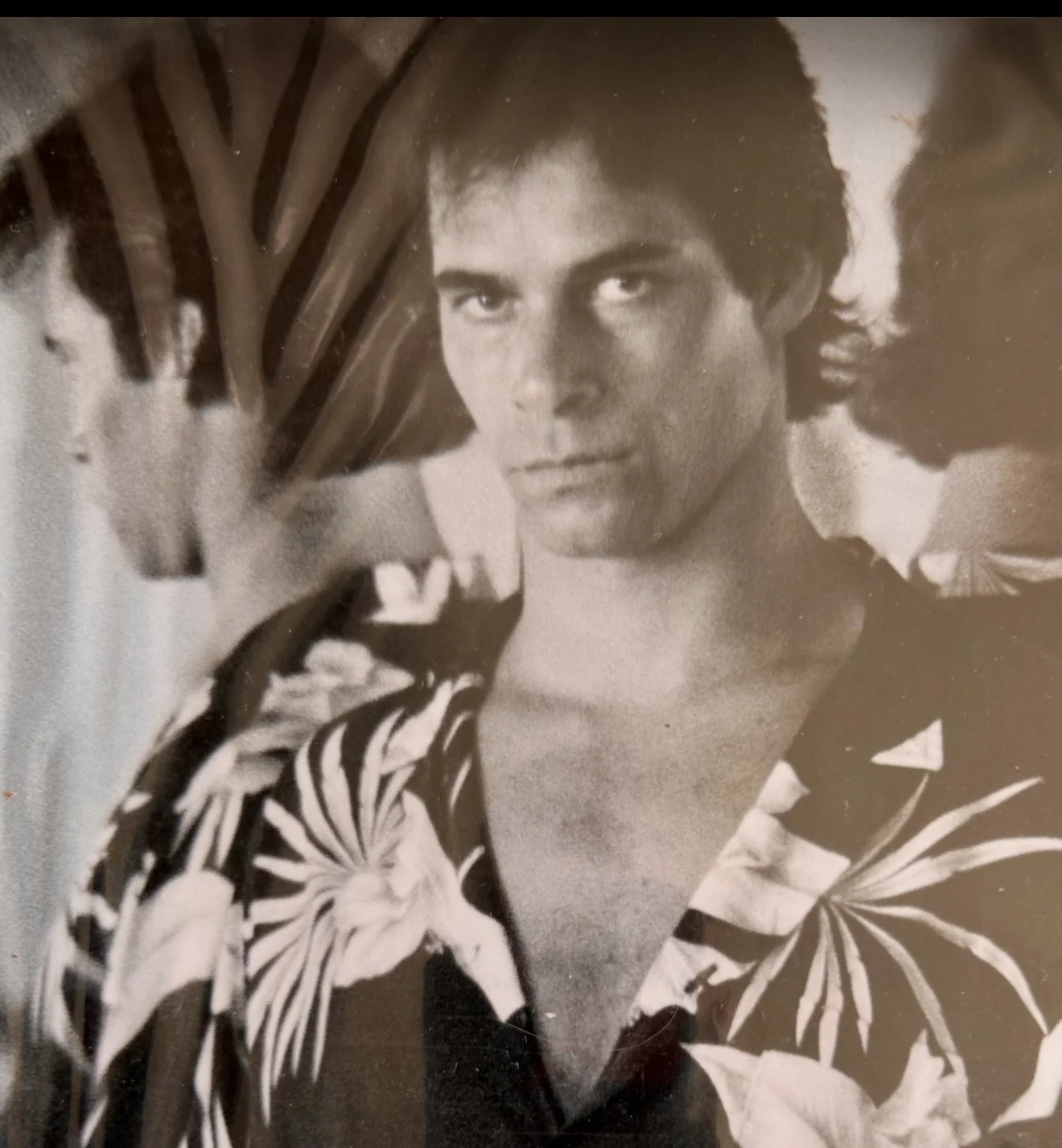
Young, handsome, and muscular Chris quickly became the subject of fascination and speculation:
Where did he come from?
Was he really straight? Did he really have a girlfriend?
Was John Whyte sleeping with him?
It was just the sort of buzz that could captivate a Pines crowd.
Chris Lovito in mid-1970s in the Pines. Photo courtesy of Chris Lovito
Chris let the gossip roll off his back. He liked the work, the music, the crew and most of all the anticipation of who he would see at Tea. Soon he began to feel a sense of belonging that had not always come easily. He had started working young and had been something of a loner in school. In the Pines, he stood out. Yet he made friends. People accepted him for who he was and he never felt pressure to conform.
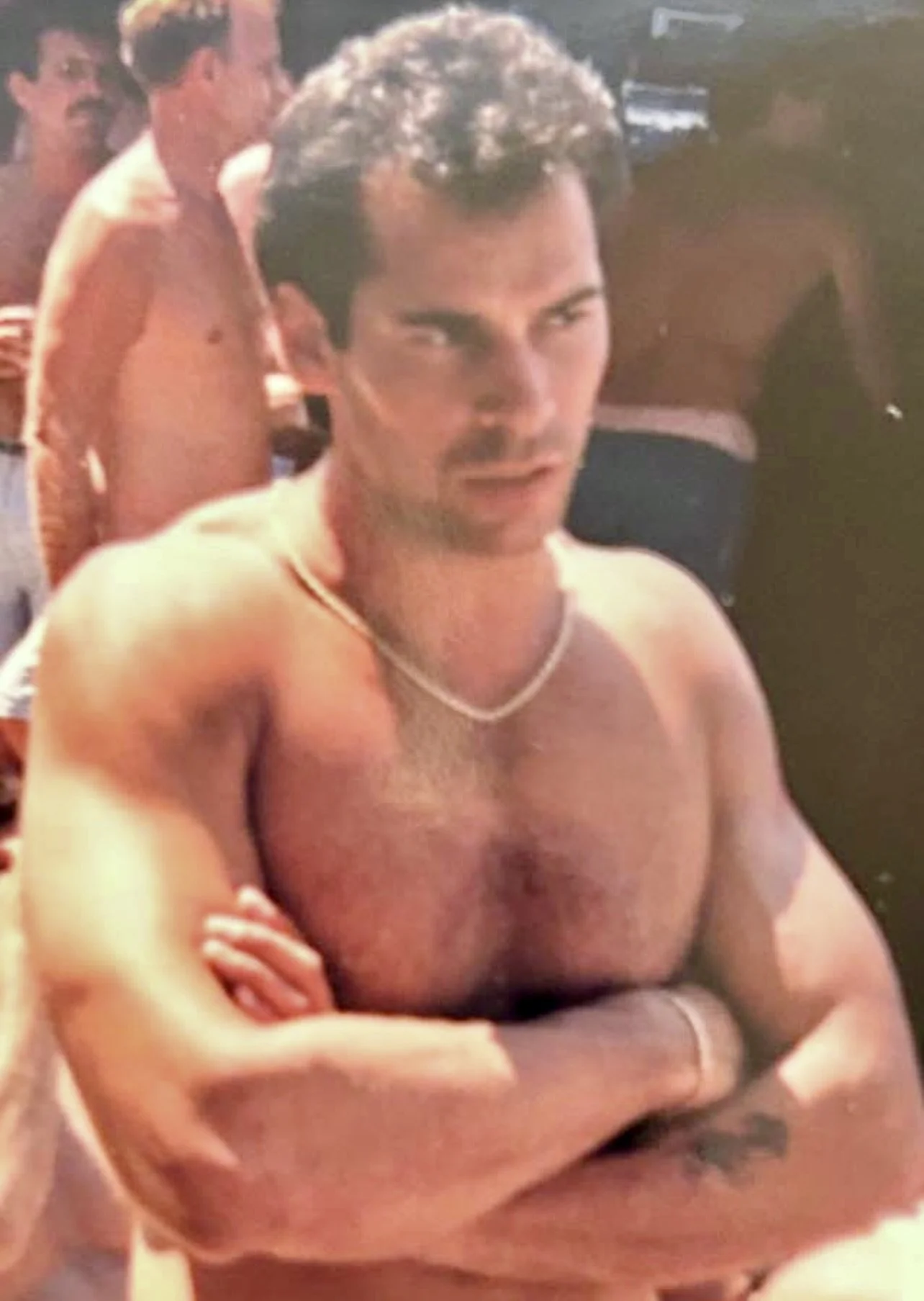
Chris Lovito in the Pines circa 1980. Photo courtesy of Chris Lovito
Whyte became a mentor and father figure to Chris, taking him under his wing and teaching him how to navigate the Pines. He knew men would hit on Chris and gave him a simple rule: Always be polite. Chris learned to take an advance as a compliment, answer honestly and leave the other person’s dignity intact.
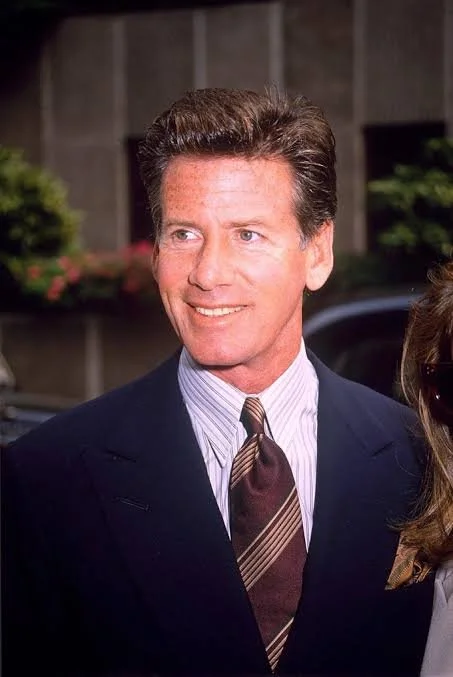
From the Blue Whale, Chris had a front-row seat to a world he had only heard about growing up. The Pines of the late 1970s was filled with people from theater, fashion, design, television and business. He was dazzled by the glamour, but even more by the ease with which people connected. He was once several minutes into a conversation with Calvin Klein before he realized who he was.
Calvin Klein. Photo courtesy of Hollywood Life.
Chris was drawn to Whyte. He was particularly fascinated by his lifestyle and how his businesses shaped the rhythm of an entire community. Perhaps nothing resonated more with the poor but ambitious young man than Whyte’s view of wealth:
“There’s three types of money: Old Money, which you don’t have, New Money, which you may be able to get with hard work and lots of luck, and Gay Money, which you can get by creating experiences.”
Chris wanted Gay Money, but he instinctively understood that as long as he worked for Whyte, theirs could never be a relationship of equals. He first needed to create something of his own. Hence, upon graduating from Dowling College, he entered the electronics industry, where he persevered through setbacks and eventually prospered using lessons he had learned in the Pines.
The 80s
Over time, Chris’s relationship with Whyte deepened. Whyte, however, was mercurial by nature and unafraid to exercise his considerable power in the Pines. Chris sometimes disagreed with him and, true to form, spoke his mind. That did not always sit well with Whyte, and their arguments could be serious. But the bond they had formed was strong, and whatever their differences, they always found their way back to each other.
One of their biggest disagreements involved the Annual Invasion of the Pines. The first Invasion had occurred on July Fourth in 1976 as a protest against Whyte’s refusal to serve drag queens. As it grew into a community tradition, Whyte continued to resent it. Chris saw things differently and urged him to change course.
“Surprise them!” he said. “Welcome them! People will love it and it will be good for business!”
Whyte resisted, but Chris persisted. Eventually in 1982 he relented and greeted the invaders with roses and champagne when they arrived on the Fourth. It wasn’t a complete change of heart, but it was a step forward. A tradition he had once resisted became one he helped celebrate.
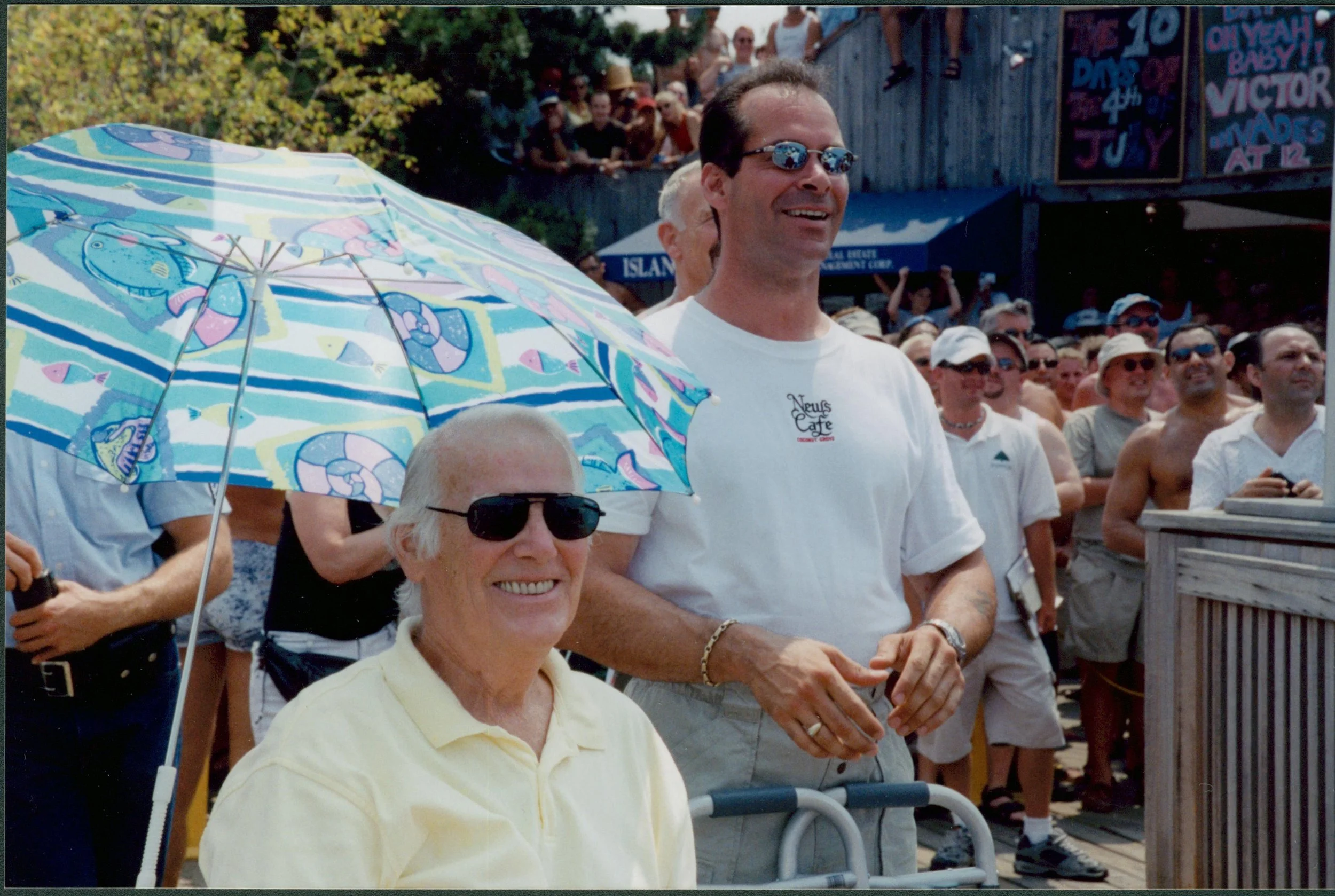
John Whyte (L) and Chris Lovito at the Annual Invasion of the Pines. Photo courtesy of Chris Lovito
The 1980s also brought something far more sinister: AIDS.
It hit the Pines hard, fast and without mercy. Working at the Blue Whale, Chris saw the effects firsthand. People who had been in peak health one summer were gravely ill the next. Some simply never returned. Soon he was attending beach memorials, watching ashes scattered into the ocean and rose petals floating in the surf.
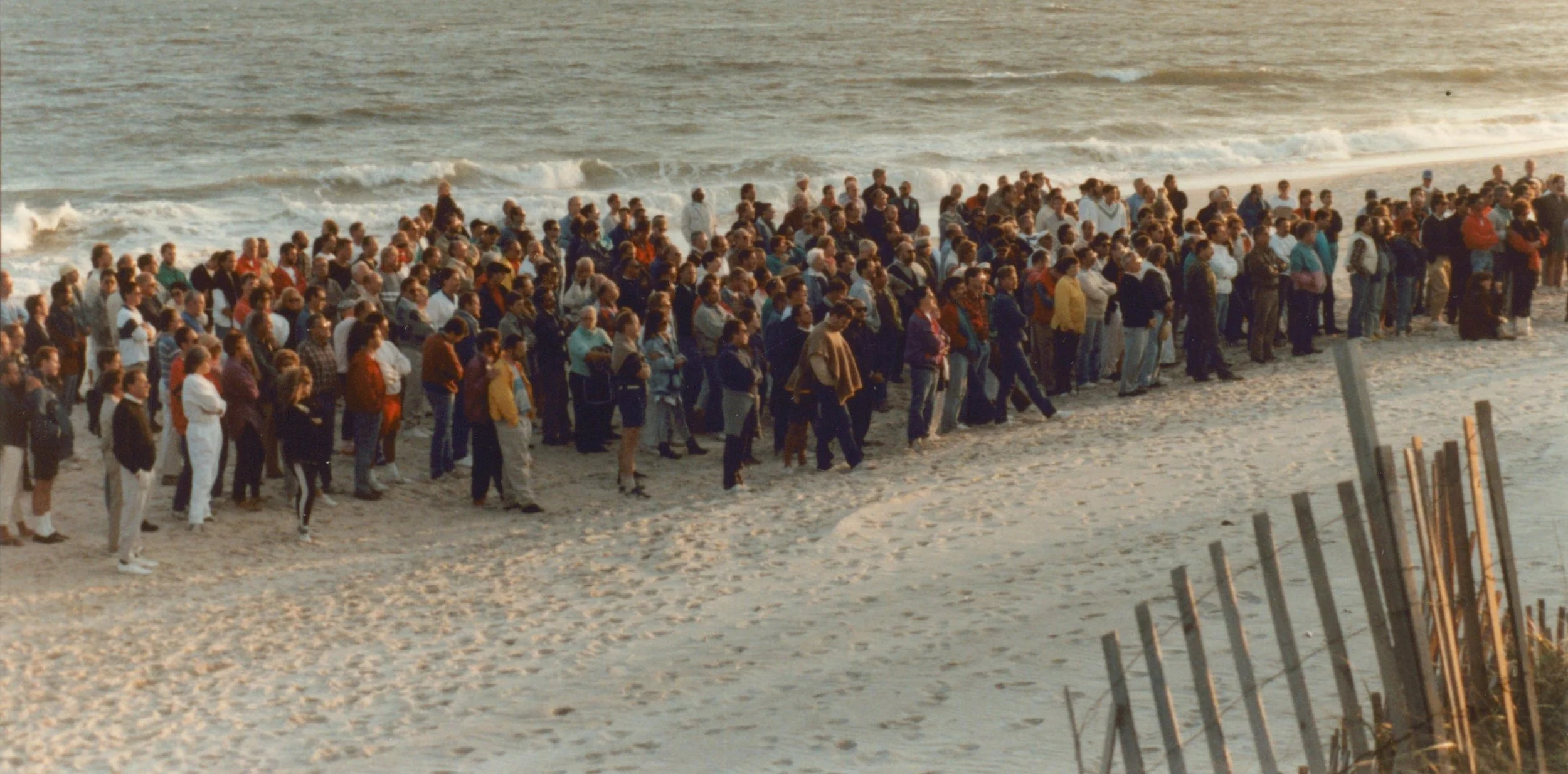
AIDS Memorial in 1987. Photo credit unknown.
AIDS also created tension with his family. With little known about transmission in the early years, Chris’s father urged him to stay away from the Pines for fear of contagion.
At a time when many people—especially straight residents—were fleeing the Pines, Chris took a different course: he stayed. A community he now considered his own needed help. He joined Whyte in supporting AIDS organizations, particularly God’s Love We Deliver where he volunteered at benefits providing security and support for performers that included Joan Rivers, Peter Allen, Dionne Warwick and Melba Moore.
Saving Tea Dance
As AIDS took hold, the Pines lost people summer after summer. For a few hours each afternoon, Tea Dance offered something the community desperately needed: music, company and the opportunity to experience joy.
Then one summer the music stopped.
When the Pines Pantry changed hands in 1989, its new owners began allowing water taxis from all Fire Island communities, not just Cherry Grove, to use their dock. Soon visitors from Davis Park, Ocean Beach and elsewhere were arriving at Tea. They were overwhelmingly straight and sometimes rowdy. Pines residents were appalled. They complained that Whyte was “selling out to the straights” and threatened a boycott. Enraged, Whyte closed Tea Dance.
Chris felt the loss personally. Tea had drawn him to the Pines at sixteen. He had worked there, made friends there and watched people find joy on its dance floor. That summer he sat on his boat playing tapes of earlier Tea Dances. Across the harbor, the Blue Whale was silent. At a time when AIDS had already taken so much, Chris believed the community had lost another important part of itself. He began pushing Whyte to bring it back. However, the Pines crowd had migrated to High Tea that Whyte held at the Pavilion and he was dug in. Summer ended with no change.
That winter, Whyte showed Chris a letter from a man dying of AIDS. The man thanked him for Tea Dance—for the freedom and happiness he had found there and the music, the magic and memories he would carry through his remaining days. Chris seized on it. Tea had given the community something precious and magical, he argued. Now more than ever they needed that. Whyte needed to bring it back.
The following summer, Whyte reopened the Blue Whale for what he called Classic Tea. The straight visitors did not return, but Pines residents came back in droves. Architect Scott Bromley who had watched the situation from a distance nicknamed Chris ‘The Negotiator’ for his role in bringing Tea Dance back.

Tea Dance at The Blue Whale in 1990. Photo credit unknown.
Whyte was credited for what many perceived as an altruistic act — sacrificing revenue by closing Tea Dance to preserve the Pines as a gay haven, and then restoring it once the straight influx subsided. For Chris what mattered was that the music had returned and an important Pines tradition had been saved.
A Community Man
Over the years, Chris became a fixture in the Pines, while remaining unmistakably himself. Longtime Pines resident Randy Lauwasser noted:

“Chris can come across as tough and direct, but he is fair minded and genuinely takes the time to listen to everyone. He gives you a candid perspective on things, and while it may not be what you want to hear, it is always a point of view worth considering.”
Randy Lauwasser. Photo courtesy of Randy Lauwasser and Jim Sticki.
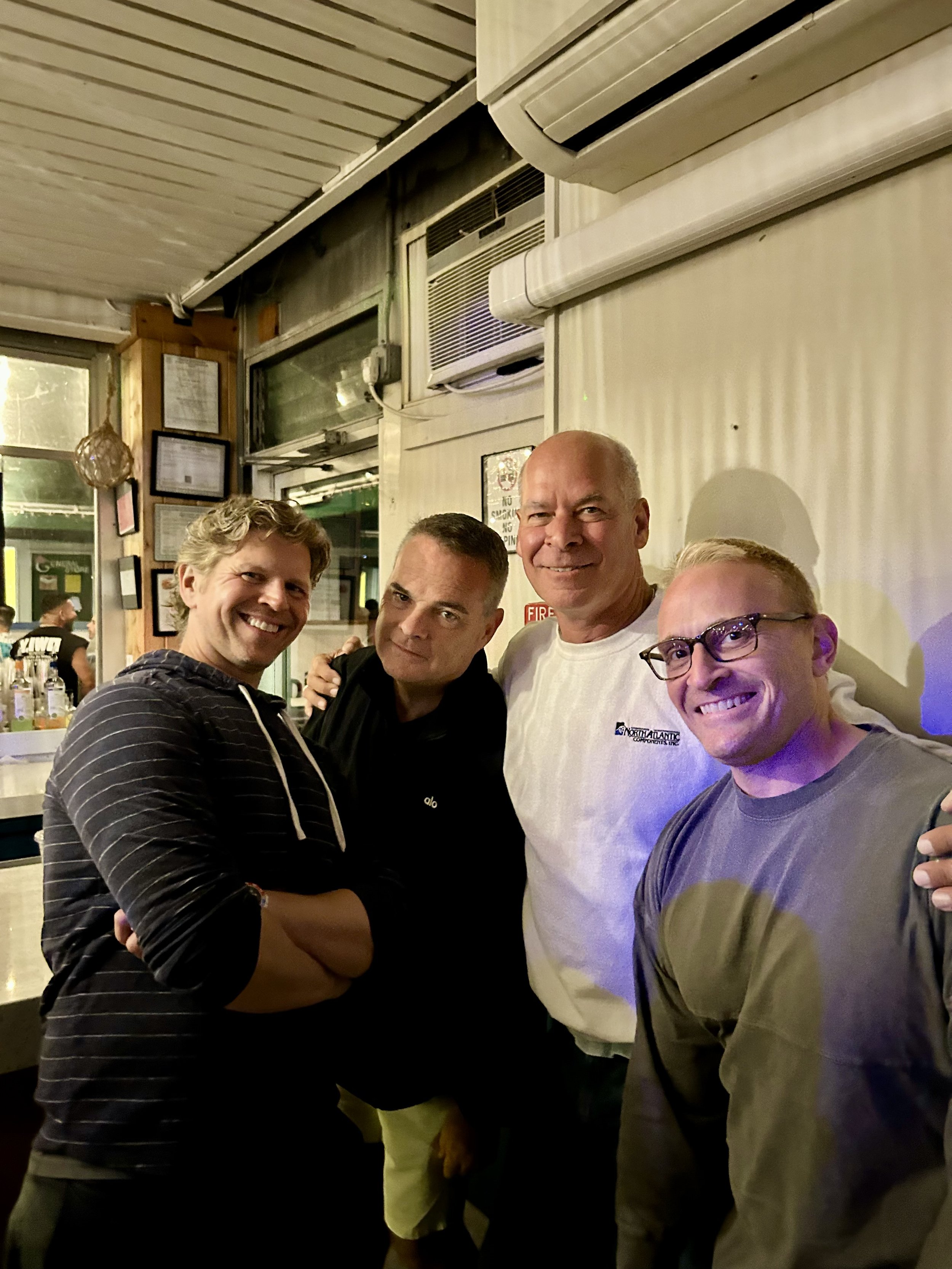
In addition to Tea Dance, Chris enjoyed entertaining and spending time with friends he made in the Pines. Scott Bromley recalls many good times over his legendary ‘Margaritas from Hell’ and at his New Year’s Eve parties. Chris also earned a reputation as someone who showed up when friends needed help. Indeed, after major storms, when properties were often swamped, he would routinely arrive unasked to friends’ houses, ready to pitch in.
Chris and friends. (L-R): David Reilly, PJ McAteer, Chris Lovito and Jordan Cohen. Photo courtesy of Chris Lovito
For the most part, Chris kept the Pines separate from his life on Long Island, with one exception: women he was serious about. Their response to the Pines told him something about whether the relationship had a future.
When he met Teresa Rinehart at the US Open, he knew she was special and introduced her to the Pines the following summer. For Teresa, who was working on Wall Street and used to diverse groups, seeing Chris there confirmed something she had already sensed. He was a man of substance who accepted people for who they were without judgment. Watching him mingle easily with a crowd of largely gay men, exchanging banter, handshakes and hugs, she mentally took a step forward in their relationship.
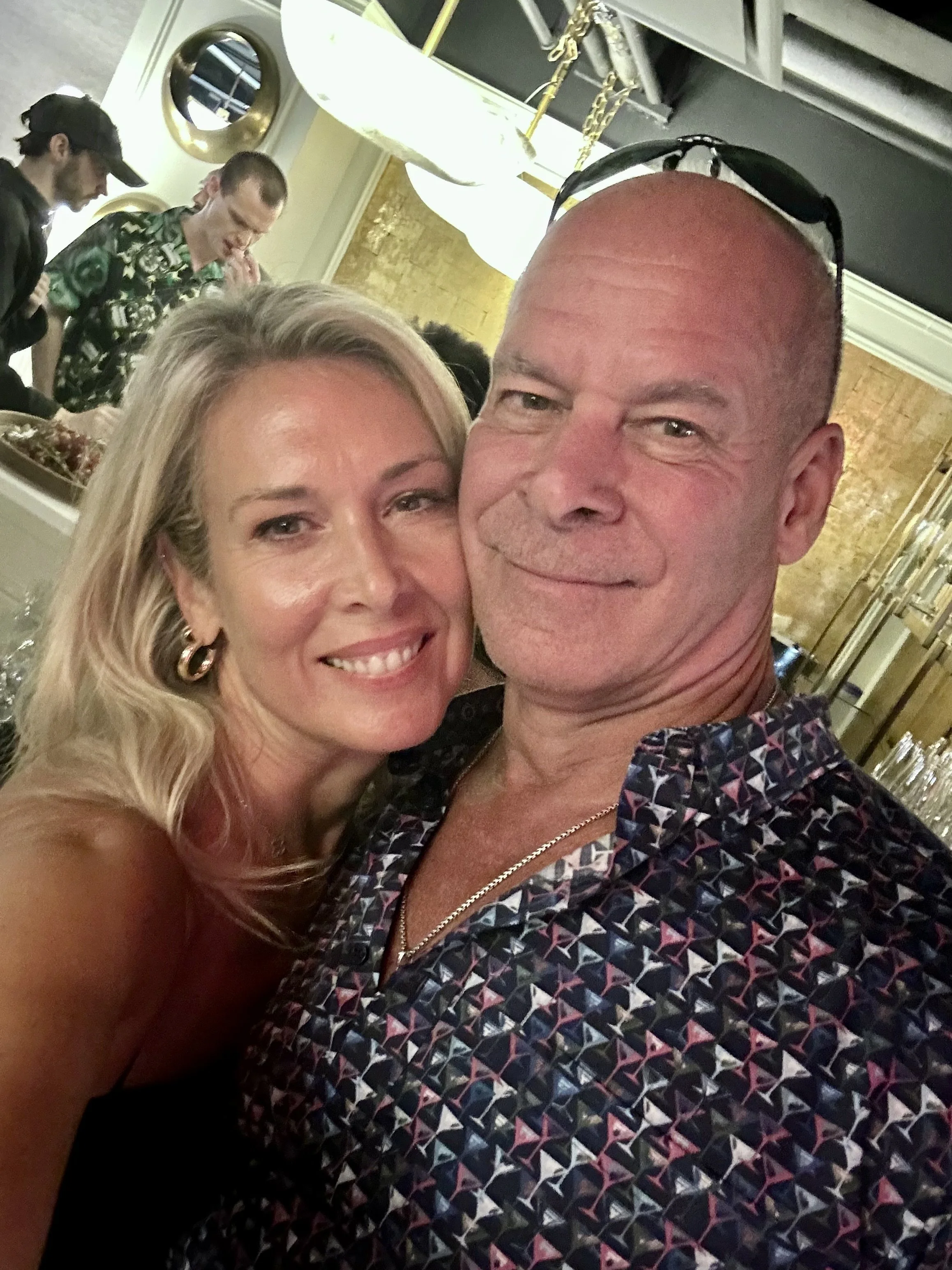
Teresa Rinehart Lovito and Chris Lovito. Photo courtesy of Chris Lovito.
A Bitter Disappointment
As the new millennium dawned, Chris’s relationship with Whyte entered its third decade. They had been employer and employee, mentor and student, occasional adversaries and enduring friends. Over the years, Whyte had spoken with Chris about taking over his businesses one day. Chris had worked hard and built the means to make an offer. When Whyte developed cancer and decided to sell, Chris was invited to go to Acapulco where he was staying and make his pitch.

The meeting was direct, almost clinical. Whyte told Chris he would not be getting the business. Instead, he was selling it to another community member, Eric Von Kuersteiner. The reason: Chris was straight and Whyte wanted the businesses to remain gay owned.
Eric Von Kuersteiner. Photo courtesy of Eric Von Kuersteiner.
After years of discussing Chris taking over one day, Whyte’s decision and rationale came as a blow. He had always known Chris was straight. Now, after more than a quarter century at his side, it had suddenly become a disqualifier. To Chris it seemed cruel and unfair.
Then Whyte did something unexpected. He urged Chris not to leave the Pines. He told him he was proud of how far he had come and the place he had made for himself. The community needed him, he said, and it was important that he stay.
Chris was speechless. He left Acapulco the next day.
When he returned to New York, he made a decision that would shape the rest of his life: he bought a house in the Pines.
If there had ever been a question whether Chris’s attachment was to John Whyte or to the Pines itself, he had answered it. The Pines had become home, and he was staying.
A Post-Whyte World
Now homeowners, Chris and Teresa increased their involvement in the community. Their daughters, Carley and Christie, grew up spending summers there, selling lemonade and trinkets in the harbor and dancing at Tea. Chris wanted them to experience the place that had taught him so much about friendship, care and acceptance.
In this time, Chris’s father, Andy, finally came to understand his son’s attachment to the Pines.
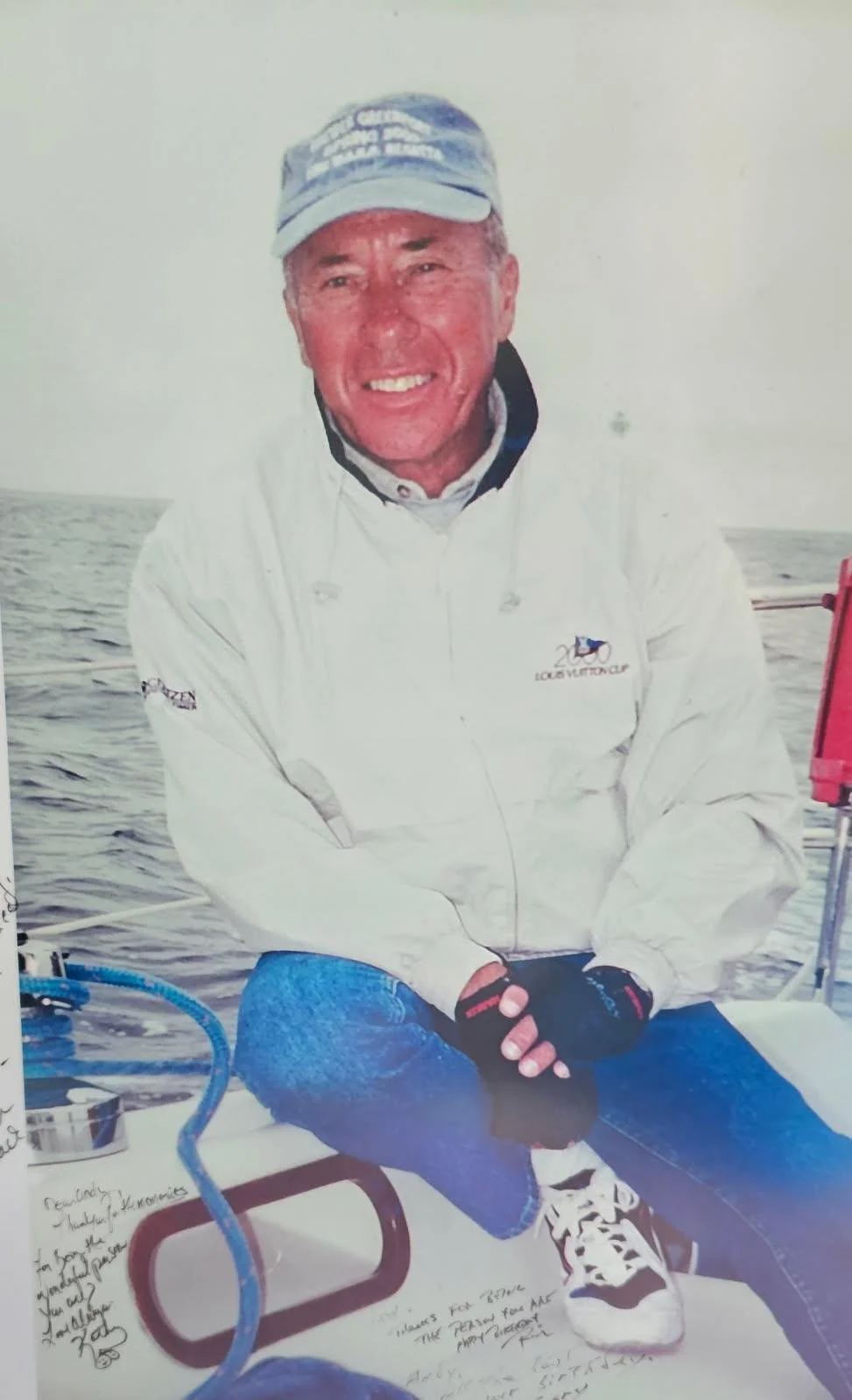
During a birthday dinner for him at the Pines Bistro, the entire restaurant joined in singing “Happy Birthday” to him. Chris watched his father take in the voices and affection surrounding their table and saw the penny drop. Finally, he understood. This was a place of love and belonging. These people were family. He could see now that far from being a detriment, the Pines had expanded and enhanced Chris’s life.
Andy Lovito on his boat. Photo courtesy Chris Lovito.
In 2008 the community elected Chris to the property owners’ association (FIPPOA) Board. One of his most lasting contributions was helping strengthen the Pines’ relationship with the Town of Brookhaven, that oversaw the community. This relationship had declined over the years for various reasons, including a widening partisan divide -- the Pines was a liberal bastion in an overwhelmingly Republican constituency. Chris believed that this made finding common ground more important, not less. In what some initially considered a fool’s errand Chris used his skills and personal relationships to build a bridge that eventually produced regular dialogue between FIPPOA and local officials. Former FIPPOA President Jay Pagano recalled:

“Chris was a very hardworking member of the board. He was not afraid to share his opinion and challenge the status quo to make progress. Nowhere was this more apparent than in the role he played in strengthening our relationships with our elected representatives on the mainland. It’s work that continues to pay dividends for us today.”
Jay Pagano. Photo courtesy of Jim Cox
The relationships Chris helped forge were instrumental in FIPPOA securing a lease on the dirt access road known as Burma Road, enabling the association to begin improving its condition and appearance—work that continues today.

In 2011, a devastating fire destroyed the Pavilion and Danikki buildings in the Pines commercial district. Chris was on the scene the next day.
Post- Fire rubble. Photo courtesy of Nicole LaFountaine.
Surveying the destruction, he noticed something extraordinary: a pane of glass from the Pavilion with a hole blown through it in the shape of a heart. For Chris, it was a powerful symbol of the love and perseverance that characterized the Pines and he resolved to do whatever he could to help the businesses recover.
Leveraging his relationships with town officials, Chris helped to expedite the petitions to secure approvals for Nicole LaFountaine and PJ McAteer to rebuild the Danikki Building. Defying expectations, they reopened on July 4th, 2012 — just seven months after the fire — allowing the Annual Invasion of the Pines to take place. Fittingly, Chris stood alongside them on the newly constructed balcony at Sip N Twirl as Nicole kicked off the celebrations by singing the National Anthem.

Nicole LaFountaine sings the National Anthem on July 4th 2012 from the rebuilt Danikki Building with Chris Lovito (left) and PJ McAteer (right). Photo courtesy of Nicole LaFountaine.
As with so many of Chris’s contributions to the Pines, much of his work on FIPPOA took place behind the scenes, invisible to most. When he later lost reelection to the Board by a single vote, he was disappointed. But he continued to serve the community, maintaining and strengthening its relationships with local officials. The position had ended. His commitment had not.
Still Here
At sixteen, Chris fled the Sandpiper certain he didn’t belong. A week later the music and the energy drew him back. Fifty years down the road, he still doesn’t fit the mold, but the fact that he belongs here has never been more certain.
Chris didn’t carve out his place in the Pines by hiding his true self. Quite the contrary, he did it by being uncompromisingly authentic and demonstrating, again and again, how deeply he cared about the community and the people in it. His style wasn’t for everyone – and by his own admission sometimes he got things wrong -- but those who knew him understood what lay behind his actions. When Chris loves a person, a place or an institution, he shows up for it and, when necessary, fights for it. That authenticity and loyalty earned him respect, appreciation and friendships that have endured for decades. Nicole LaFountaine, who is a third generation member of one the Pines’ pioneering families, had this to say:

“Chris Lovito has been instrumental over the years in important aspects of the Pines community that often go unnoticed. Whether it be as a liaison between FIPPOA and the Town of Brookhaven, or the go to person for security for The Invasion, Chris brings a level of knowledge that can only be developed by spending decades in The Pines and understanding how things began, how they have changed and how they need to evolve. There are few people in our community who bring that to the table.”
Nicole LaFountaine. Photo courtesy of Nicole LaFountaine.
On one level, Chris’s story is about the importance of making room for difference. As a conservative, heterosexual man with a strong personality, Chris is clearly outside the mainstream of the predominantly gay and liberal Pines. However, there was enough openness on both sides to accept what set them apart and recognize each other’s value.
But Chris never came to the Pines to advocate for a cause. Like a lot of teenagers, he was simply looking for meaningful friendships, a sense of possibility and a feeling of belonging. Unexpectedly, he found all three in one of the world’s most renowned LGBTQ+ communities. What allowed him to make his place in the community was that beneath their obvious differences, Chris and the Pines shared the same core values: respect, authenticity, loyalty and showing up for one another.
Perhaps that is why a place he once fled became somewhere he stayed, built a life and today calls home. What is certain is that Chris is richer for having found the Pines—and the Pines is richer for having found Chris.