

A House and Its Boys
By Virun Rampersad, October 2026
In Fire Island Pines, houses are much more than places to stay. They are central to how people experience the community, build friendships, entertain, and create memories. Perhaps that is why, after the obligatory "How was your winter?", one of the first questions exchanged at the beginning of each season is about the house. For renters, it's "Where's your house?"— establishing where they'll spend their summer. For homeowners, it's more likely to be "How did your house winter?"— a knowing acknowledgment of the responsibilities, surprises, and occasional indignities of owning property on a barrier island.
There is another curious feature of Pines houses: in many ways, they seem to choose their residents as much as their residents choose them. Not every match works. Some people discover that the location, layout, upkeep, or lifestyle doesn’t quite work and move on. But when the fit is right, something remarkable can happen. A house becomes more than a property. It becomes a long-term relationship that evolves over time, shaping its occupants' Pines experience, ultimately becoming part of who they are.
Few stories illustrate this relationship more vividly than that of Marc Blackwell and Eric Reinitz and their extraordinary Horace Gifford-designed house at 529 Sail Walk. Perched high above the landscape at the far eastern end of the Pines, it is one of Gifford's most unusual creations. Marc and Eric fell in love with it in 1997, spent twenty years making it their own, and then reluctantly sold it. Five years later, they bought it back. What brought them back says as much about the relationship between people and their homes as it does about this remarkable house.

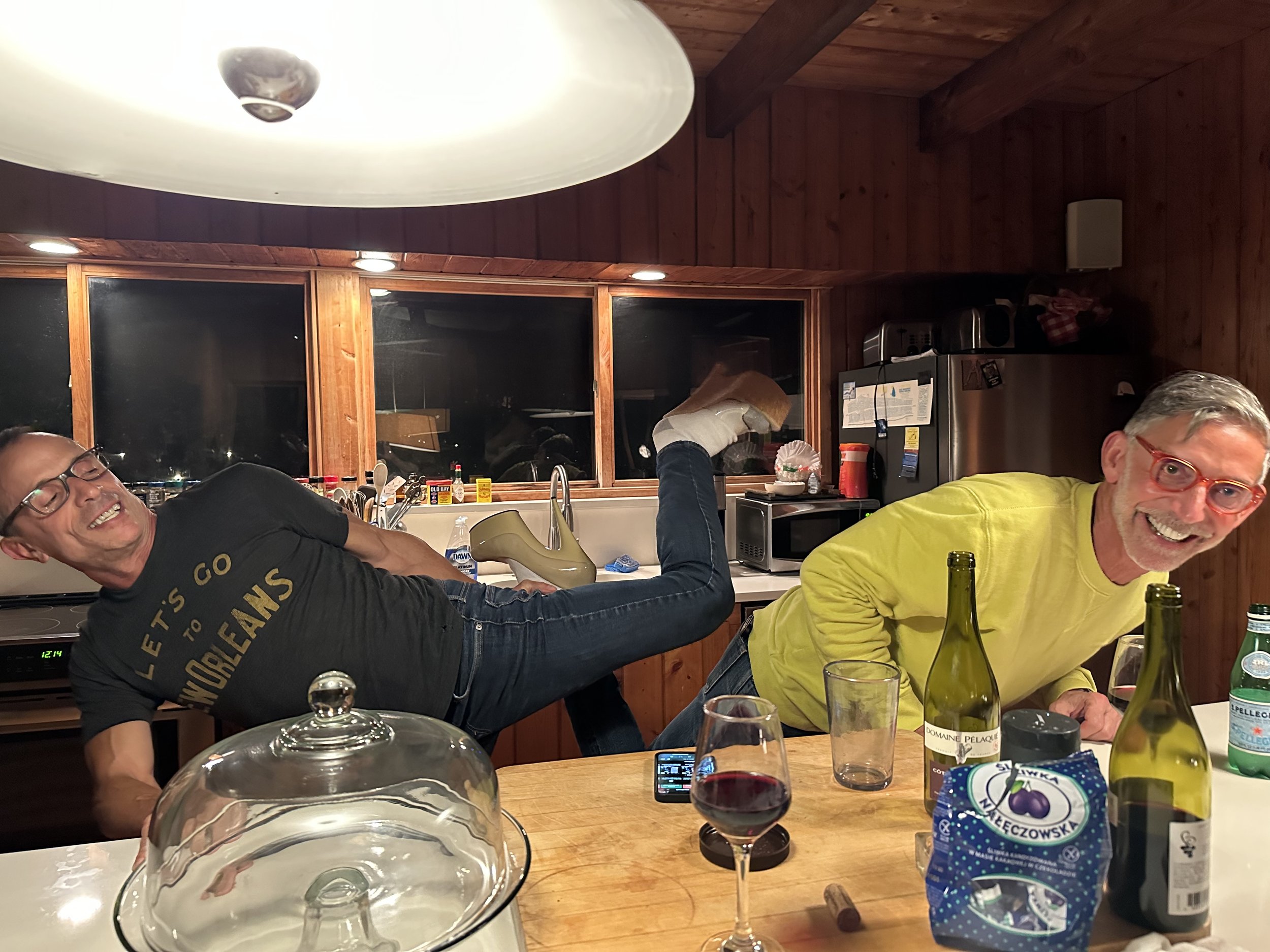
Eric Blackwell (L) and Marc Reinitz (R) in the kitchen of 529 Sail Walk in 2009. Photo courtesy of Coastal Living.
A Tree House at the Edge of the Pines
In 1975, Lawrence Bonaguidi commissioned architect Horace Gifford to design a house on a remote parcel at the eastern edge of Fire Island Pines. Bonaguidi was already familiar with Gifford's work, having commissioned another house at 205 Pine Walk in 1968. This time, however, the result would be something altogether different.
Gifford, one of the architects most responsible for shaping the Pines' distinctive modernist character, was known for challenging conventional ideas of domestic living. His designs emphasized openness, intimacy, and the relationship between people and their surroundings. At 529 Sail Walk, he took those ideas to extraordinary lengths.
The architectural significance of the house is beautifully documented in Christopher Rawlins's seminal book, Fire Island Modernist: Horace Gifford and the Architecture of Seduction, which explores Gifford's extraordinary contribution to the architecture and culture of Fire Island Pines.
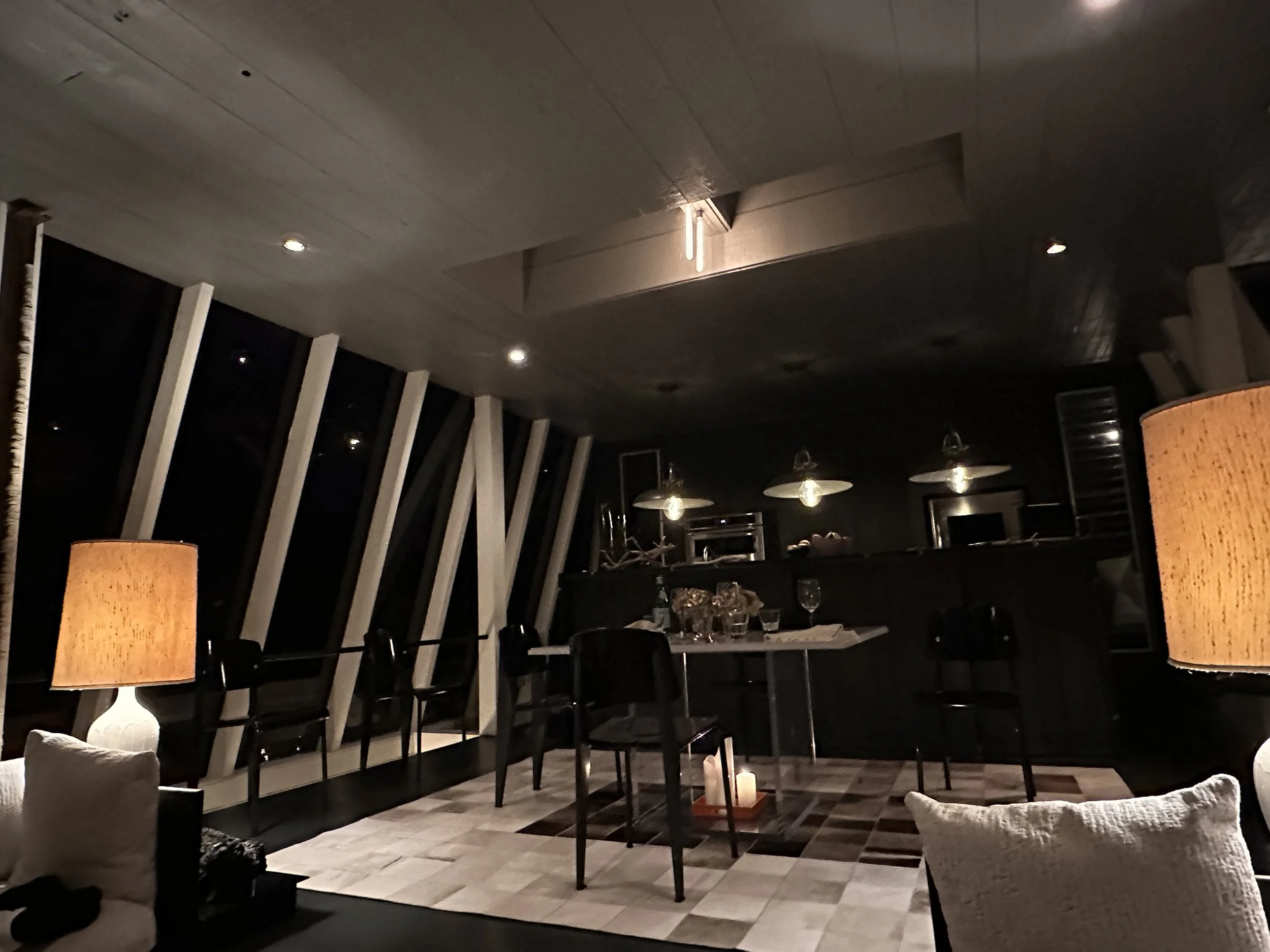
Conceived as a tree house, the building rises dramatically above the landscape, seemingly suspended among the treetops. Its soaring, sloping glass walls dissolve the boundaries between indoors and outdoors, drawing the surrounding landscape into the living spaces. Staircases connect rooms at different elevations, creating an unfolding experience of discovery. At its heart is a magnificent living room, with towering glass walls, a fireplace, and sunken seating that invite occupants to settle in and become immersed in the natural world around them.
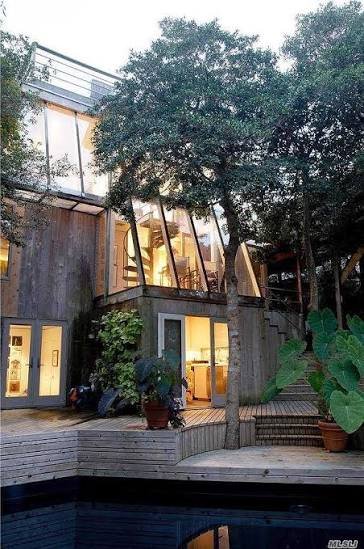
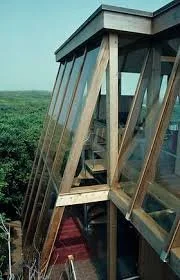
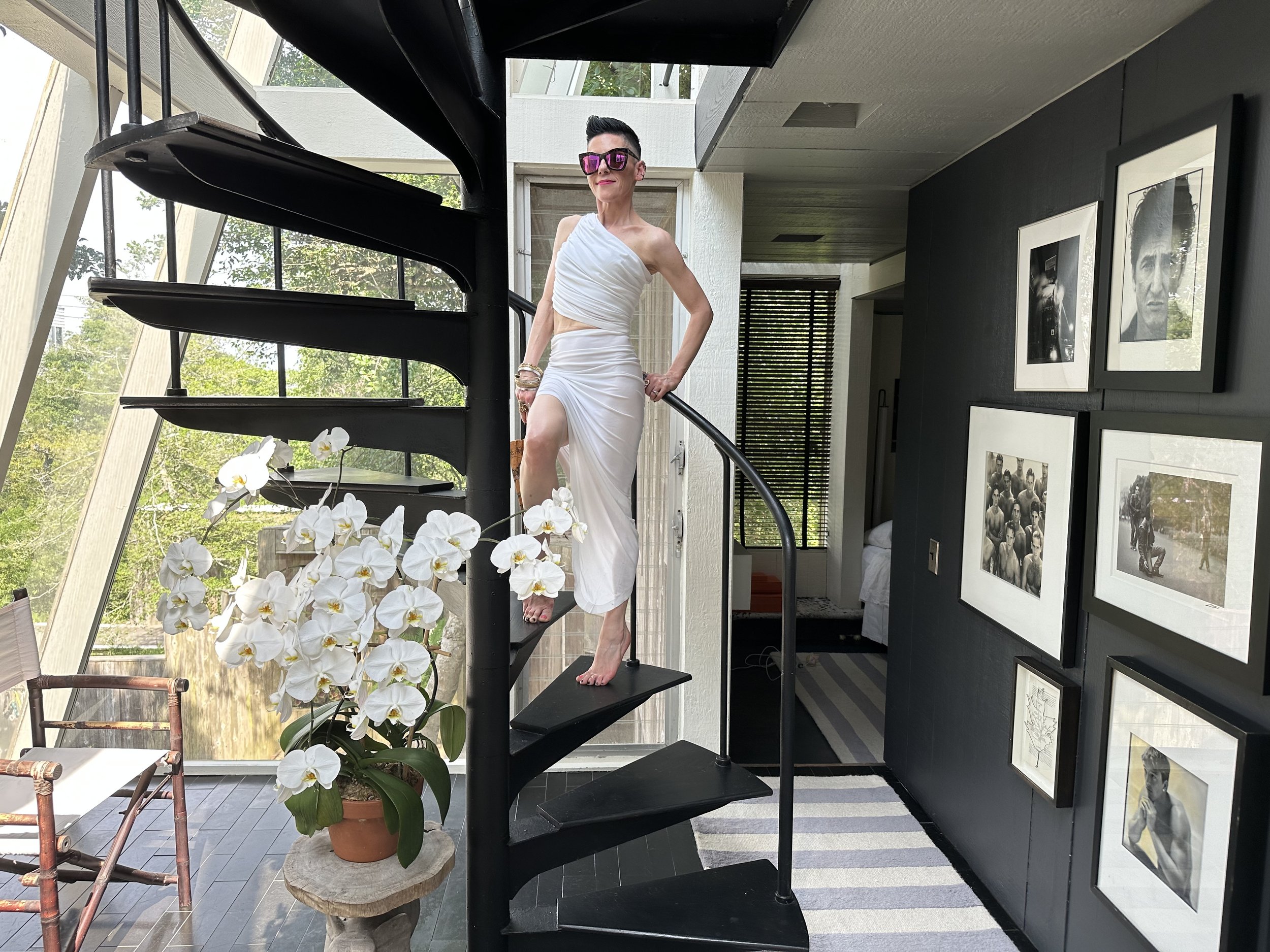
529 Sail Walk (L-R): Outside Walls; Living room; Pool deck; Roof Deck Photos courtesy of Pines Modern (Christopher Rawlins), and Marc Blackwell and Eric Reinitz.
Gifford's ingenuity extended beyond the visual drama. An innovative ventilation system allows cool air to enter beneath the angled glass walls and escape through a central skylight. Unexpected sightlines between rooms reflect his characteristic playfulness and willingness to challenge conventional notions of privacy. The result is a house that is intimate, expansive, sophisticated — and deeply connected to nature.
The house itself is surprisingly modest. Its approximately 1,000 square feet of interior living space is distributed across multiple levels, but its decks and outdoor areas more than double the usable space. And while the architecture is remarkable, its setting is perhaps even more extraordinary. From the elevated living room, the landscape unfolds in every direction. Beyond the treetops lie the waters of the Great South Bay and the Atlantic Ocean, framed by sandy beaches, low-lying vegetation, and an immense expanse of sky. Throughout the day, changing light transforms the interior, making the natural surroundings an ever-present part of life inside.
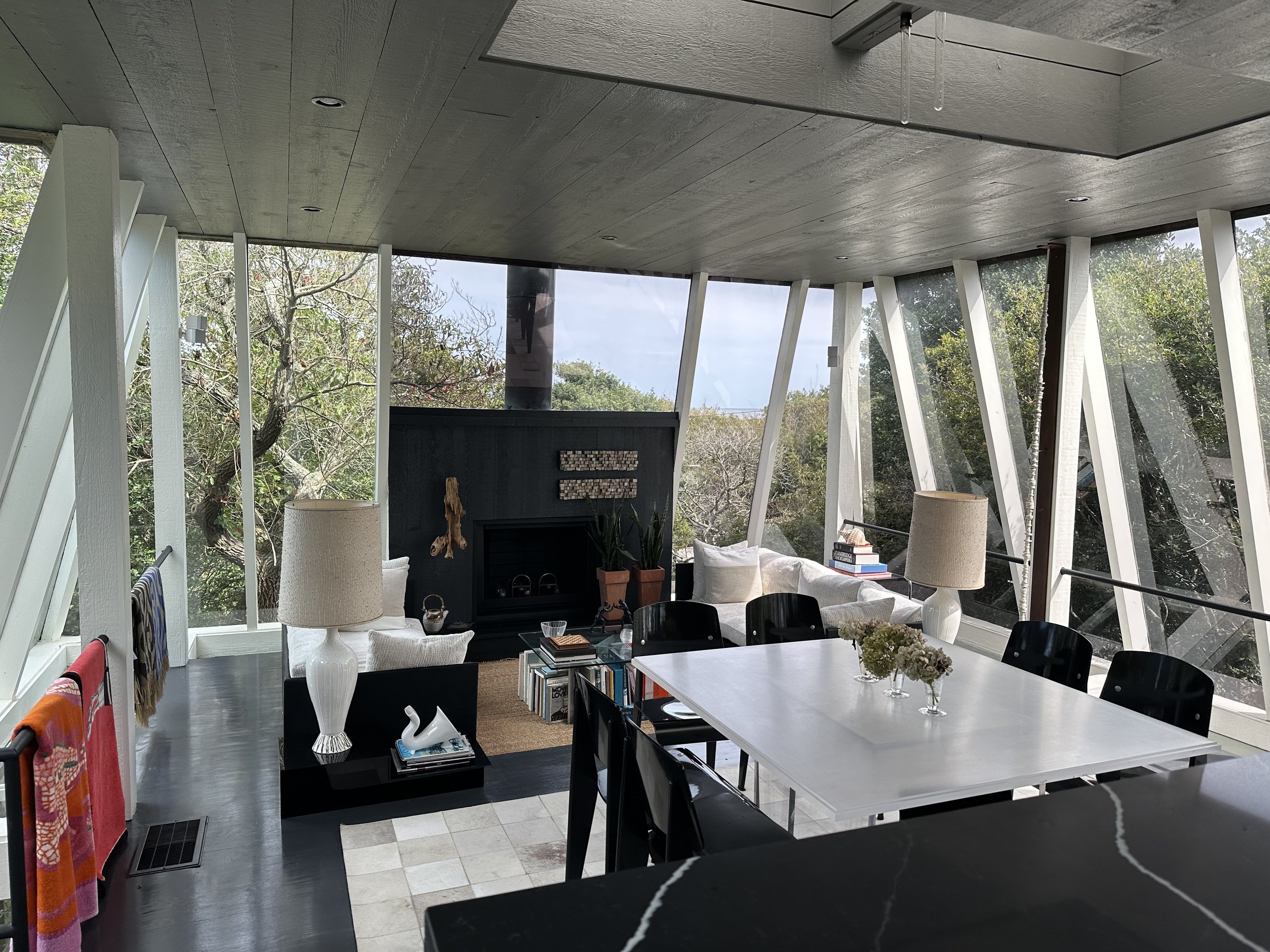
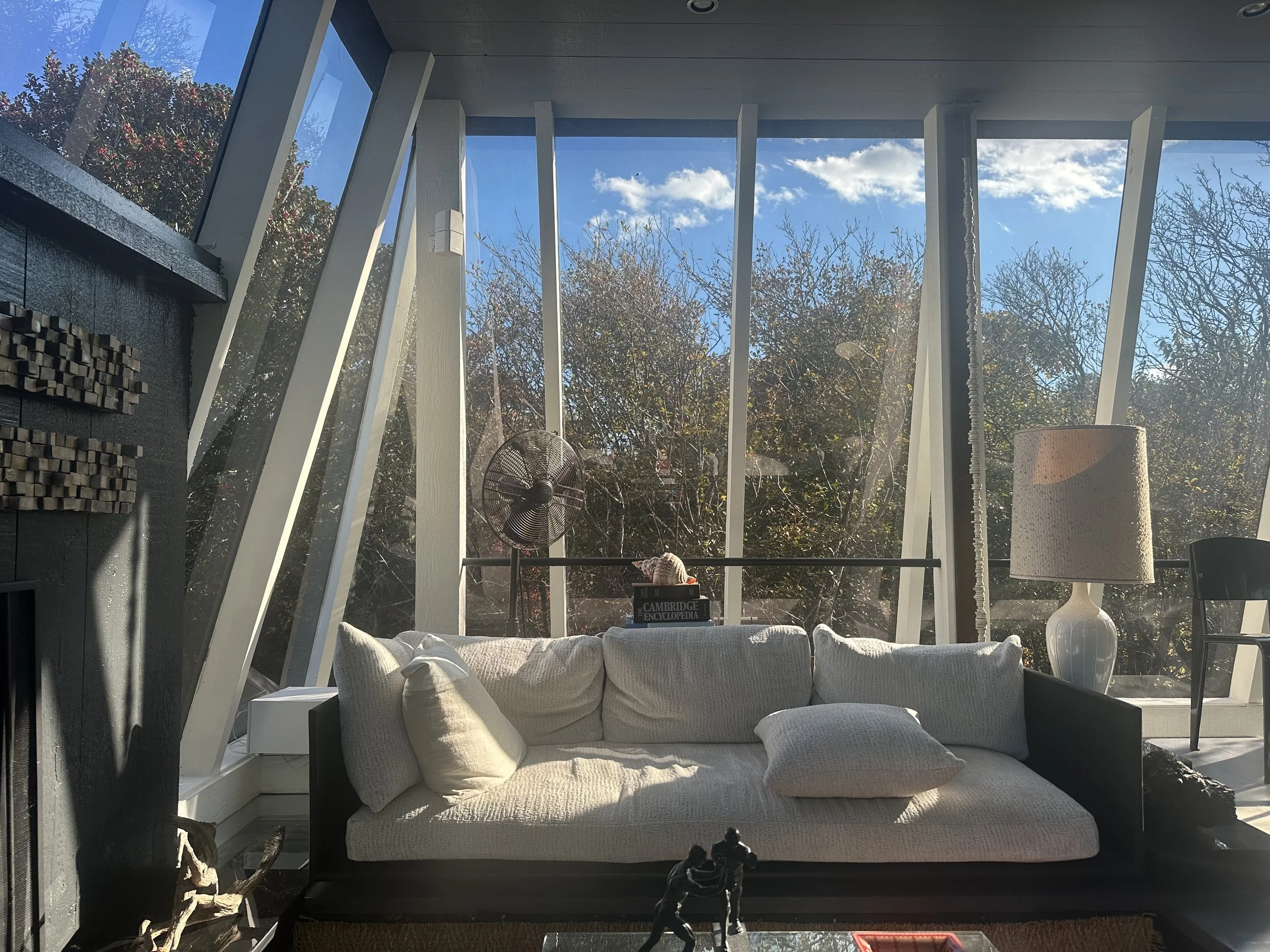
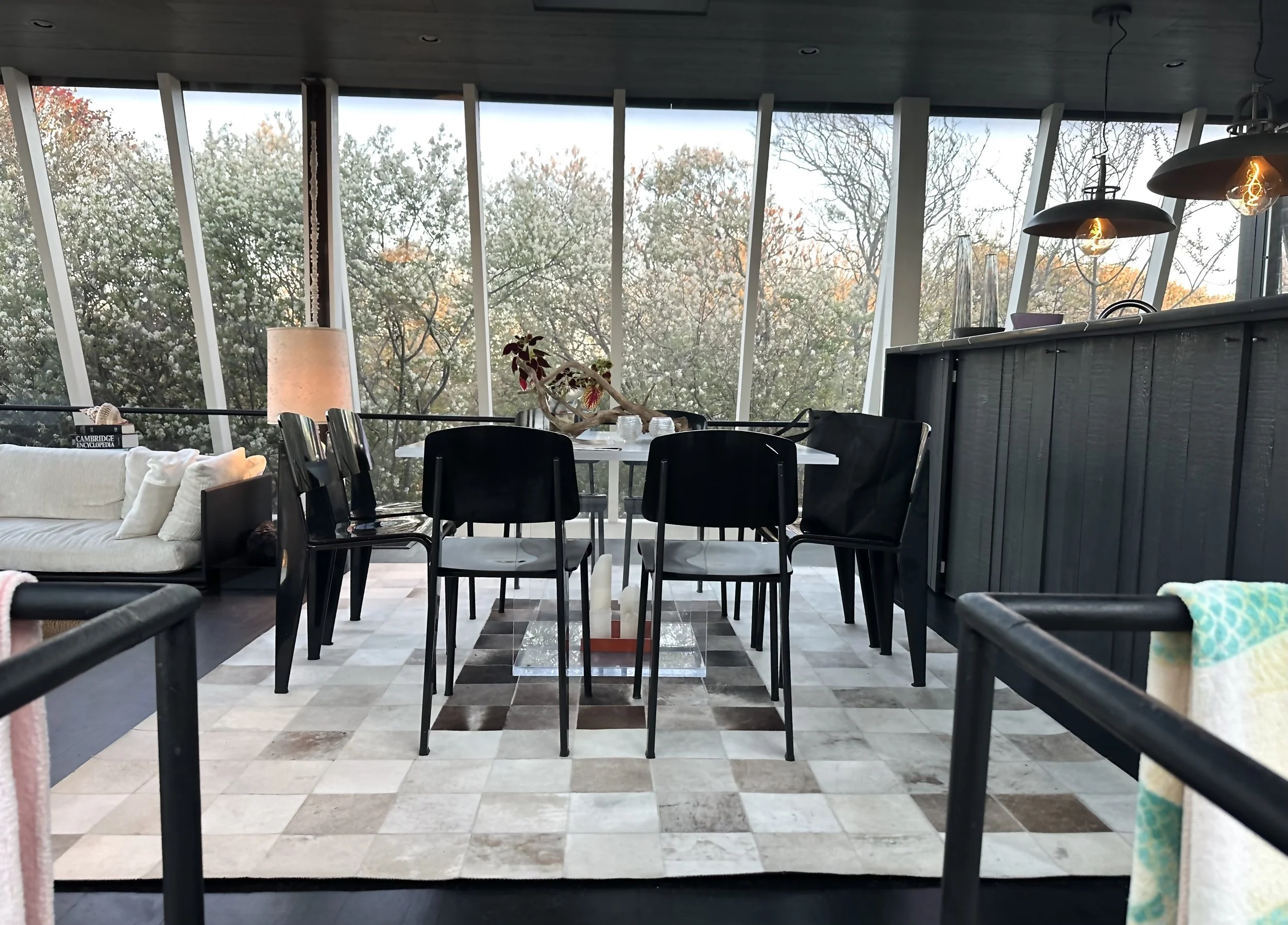
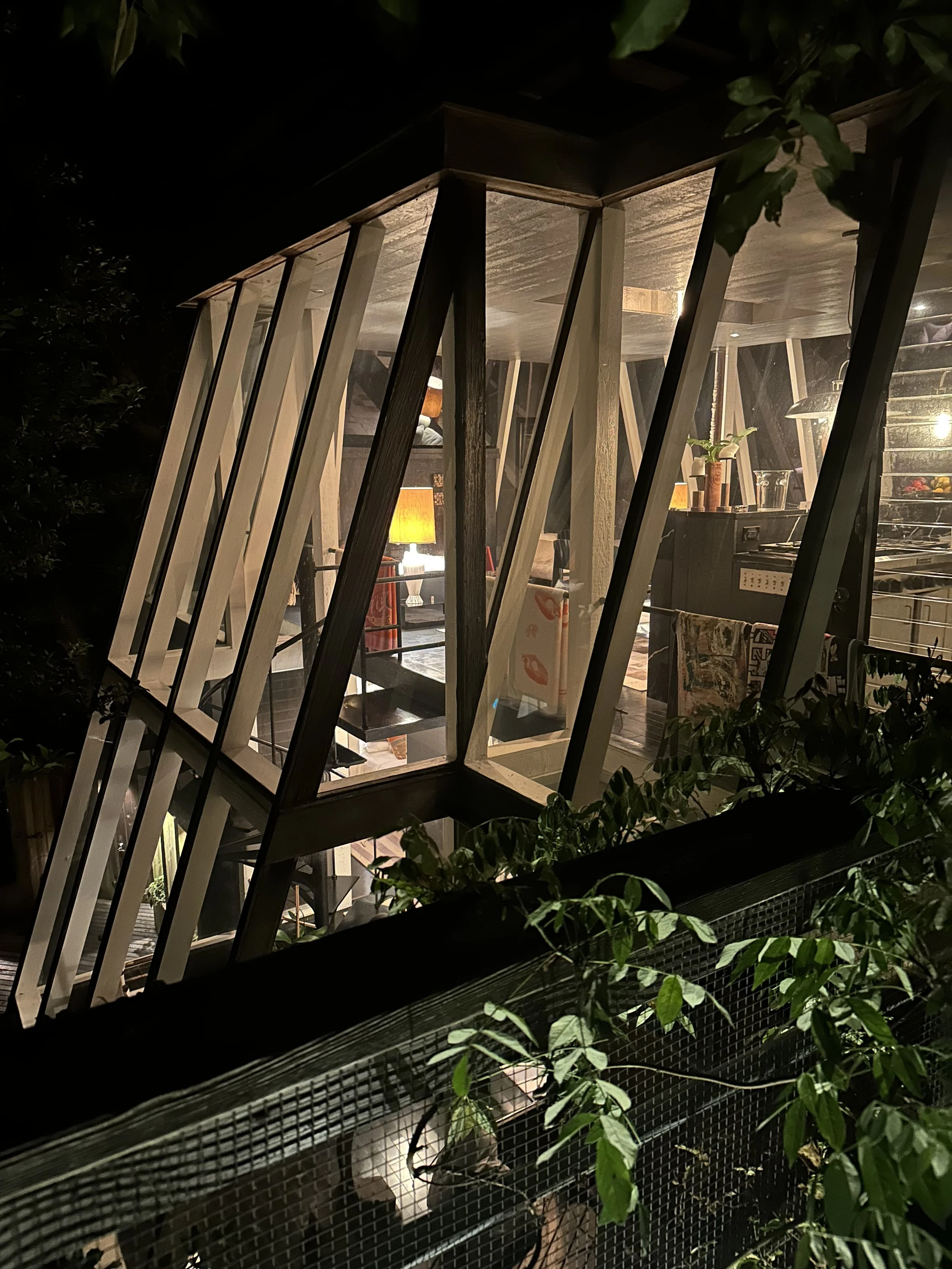
The upstairs living and dining room at 529 Sail Walk in the morning, afternoon, early evening and night. Photos courtesy of Marc Blackwell and Eric Reinitz.
The rooftop terrace offers an even more extraordinary perspective. To the east, unobstructed views stretch across pine-covered dunes toward Water Island, conveying a sense of wilderness and isolation. To the west, the Pines unfolds in a sweeping panorama, its houses nestled among the trees. And across the Great South Bay, sunsets transform the sky and water into a spectacle of light and color.
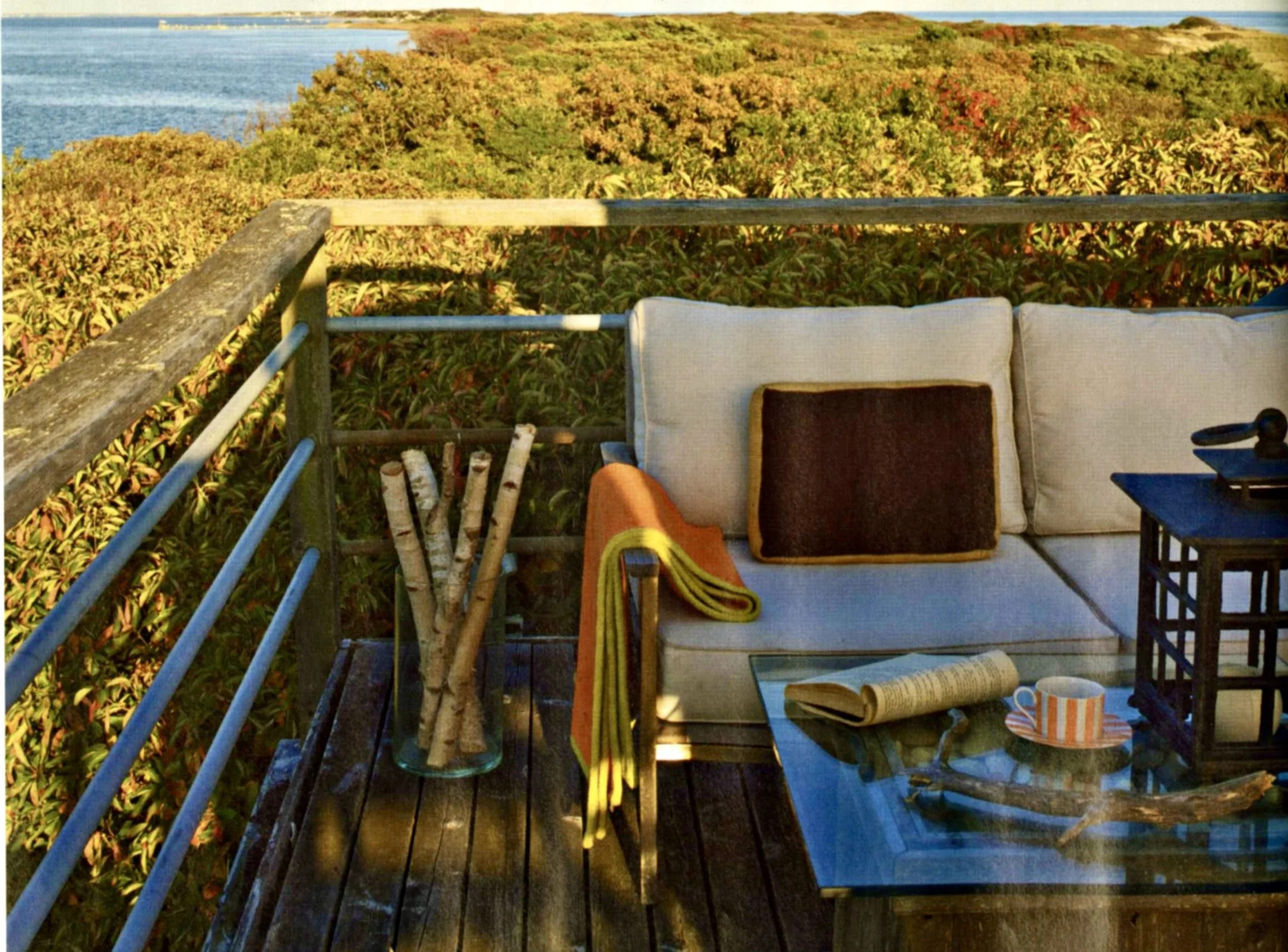
Roof deck looking East. Photo courtesy of Coastal Living.

Sunset. Photo courtesy of Virun Rampersad.
Two Lives, One Pines
Marc and Eric came to the Pines by different routes.
Originally from New York, Eric attended Rochester Institute of Technology, where he trained in high-end printing technologies. He built his career in the industry, ultimately becoming a media and printing executive. Marc grew up in North Carolina and attended North Carolina State University. He moved to New York shortly after college and established himself as a prominent interior and product designer, eventually founding the luxury lifestyle brand Marc Blackwell New York.
They met in Manhattan in 1996 and quickly discovered that, like so many gay men in the city, they had both found their way to Fire Island Pines. Their relationship took off, and the following summer, they shared a house together with friends. Happily ensconced in a rental near the harbor, they enjoyed the Pines to its fullest.
For both, weekends offered a welcome escape from their demanding professional lives. They filled them with beach time, Tea Dance, house parties, late-night dance clubs, and the camaraderie of the Pines community. It was everything they wanted, and they had no plans to change it.
Then, one September afternoon that year, they went to lunch at their friend Henry DeNome's house in the Pines.
Love at First Sight
Henry worked in Pines real estate and also owned All American Boy, the iconic West Village clothing store that had a small Pines outlet. Over a leisurely, wine-filled lunch, Henry mentioned that an unusual house, 529 Sail Walk, was about to come onto the market and insisted they see it. Marc and Eric had no intention of buying, but they agreed to humor Henry and made the trek to the far eastern edge of the Pines.
Although they had walked past the property several times, neither had really seen it. Tucked away from the boardwalk, the house was largely hidden from view. Getting in, Marc recalls, required navigating overgrown tree limbs.
What they discovered astonished them.
They explored separately, discovering one surprise after another. When they met again on the other side, both were thinking the same thing: This is something truly special.
What might have discouraged other buyers — a small, neglected house in the furthest reaches of the Pines — only added to its appeal. They saw its potential immediately, and neither wanted to let it go.
Finding a Different Pines
For two socially active young men accustomed to living near the harbor, moving to the far eastern end of the Pines might have seemed a sacrifice. Instead, it opened up an entirely different way of experiencing the community.
They discovered the East End neighborhood — a Pines within the Pines — with its own friendships and distinctive social fabric. Their Pines lives evolved accordingly. While they continued to enjoy Tea Dance and nights at the Pavilion, entertaining at home became an increasingly important pleasure.
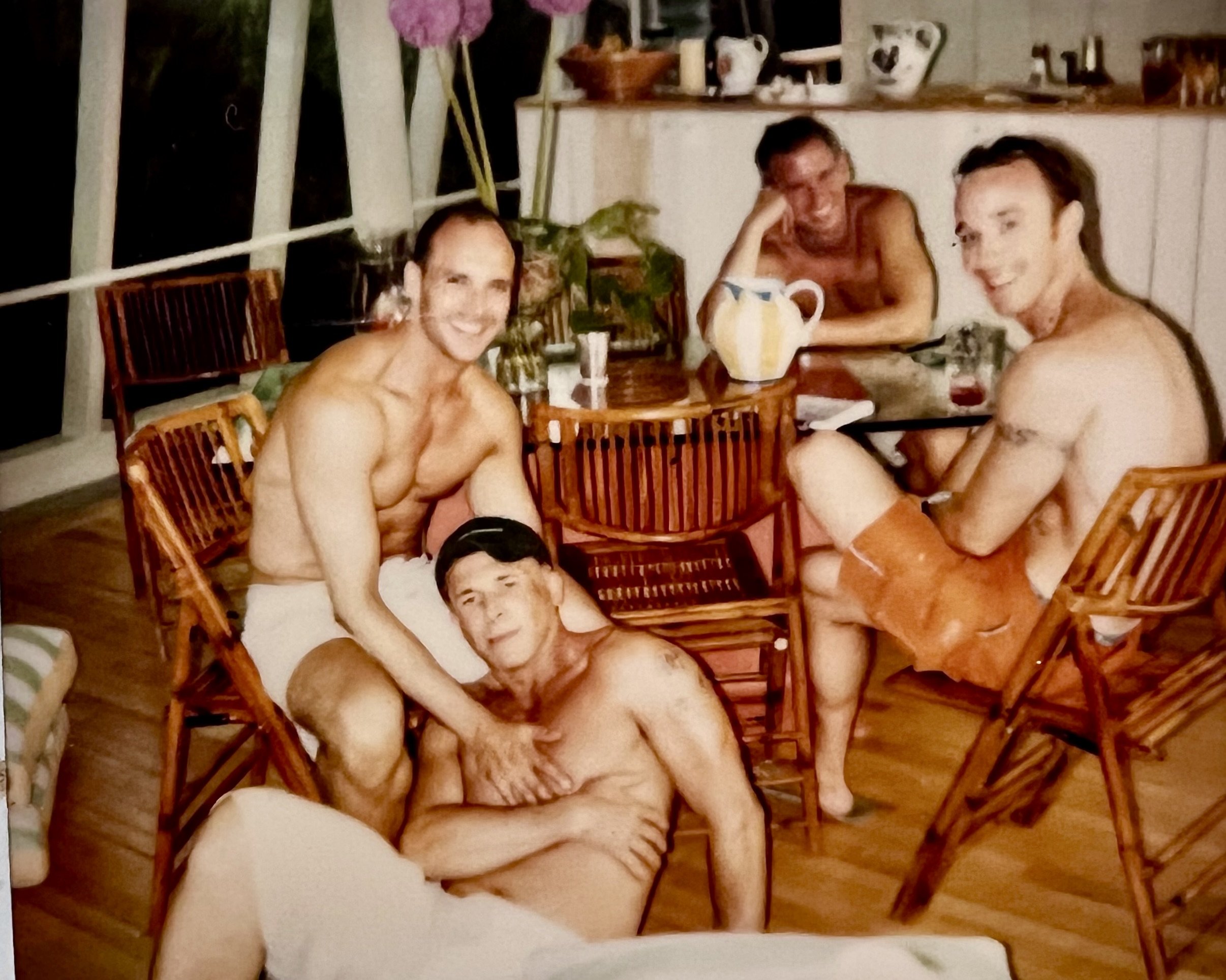
Marc Blackwell and friends in the late 1990s at 529 Sail Walk. Photo courtesy of Marc Blackwell and Eric Reinitz.
The house was ideally suited to intimate gatherings of six or eight friends, whether enjoying cocktails by the pool, sunset from the rooftop terrace, or dinner on one of the decks. It wasn’t that they withdrew from Pines life; rather they began to explore another dimension of it that the house opened for them.
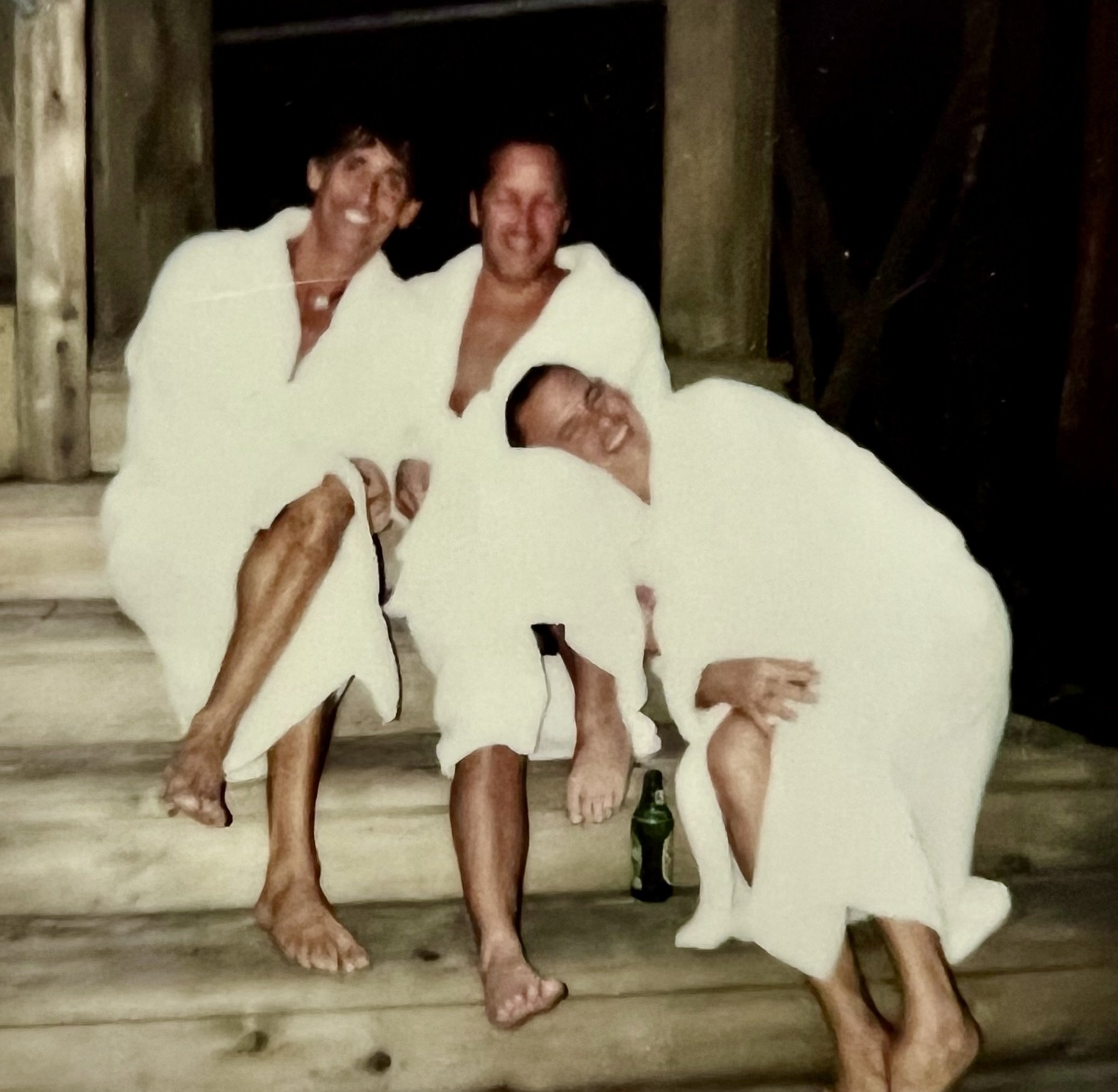
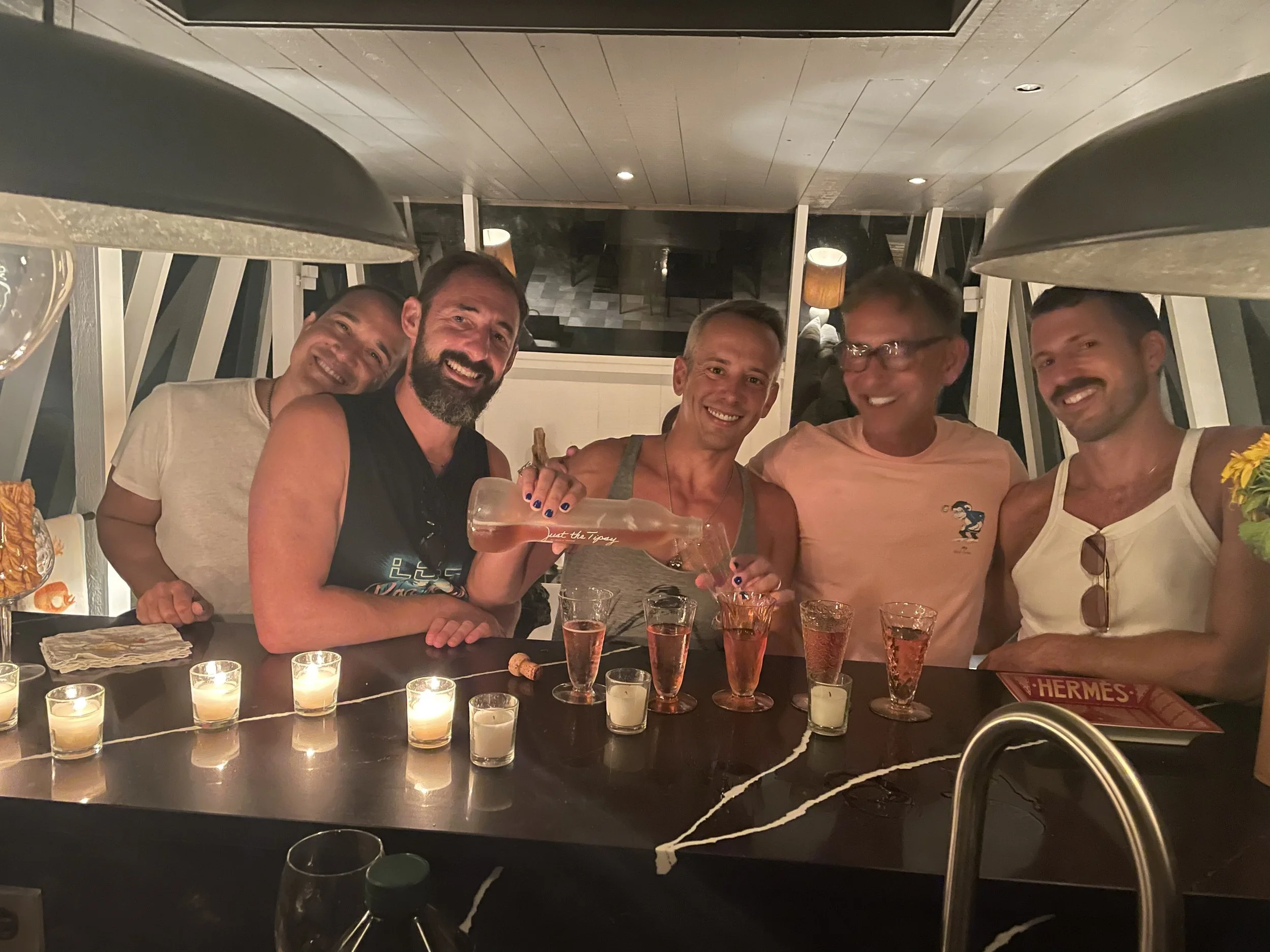
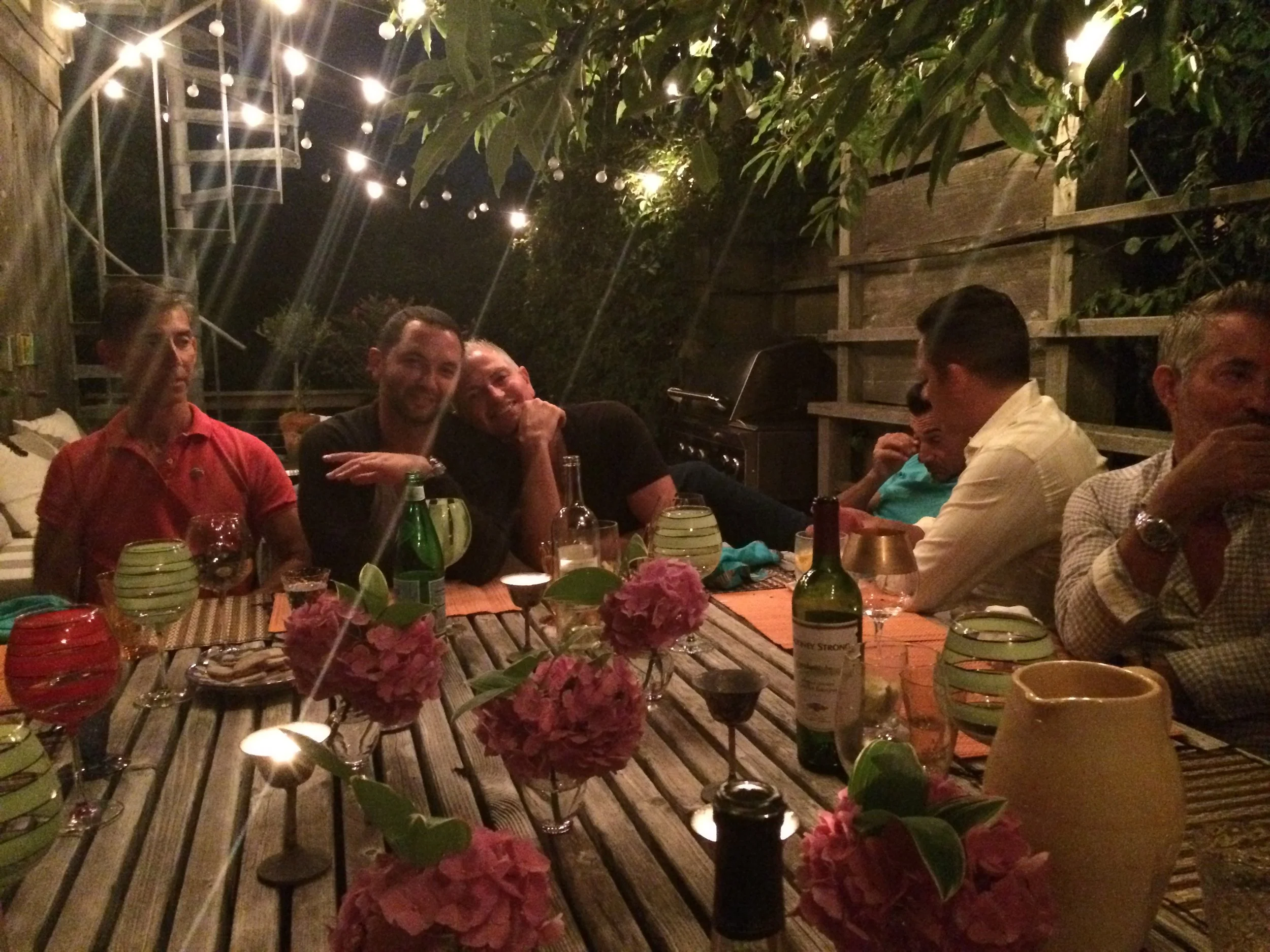

East End Living. Photos courtesy of Marc Blackwell and Eric Reinitz.
The impact of 529 Sail Walk on Marc and Eric's lives was immediate and profound. Until then, they had maintained separate apartments in New York City. To help finance the purchase, Eric put his condominium up for sale, and the two moved in together in the city. For any couple, gay or straight, moving in together and buying a beach house are two momentous — and often separate — decisions. Marc and Eric were making both at once. They saw a future together, and 529 Sail Walk had become an integral part of it.

Eric Reinitz and Marc Blackwell at 529 Sail Walk in 2000s. Photo courtesy of Marc Blackwell and Eric Reinitz.
For all its architectural grandeur, Marc and Eric never treated their house like a museum. They wanted it to be a place for friends, fun, love, and laughter — something they achieved in part thanks to their succession of beloved bulldogs, Max, Parker, and Lincoln.

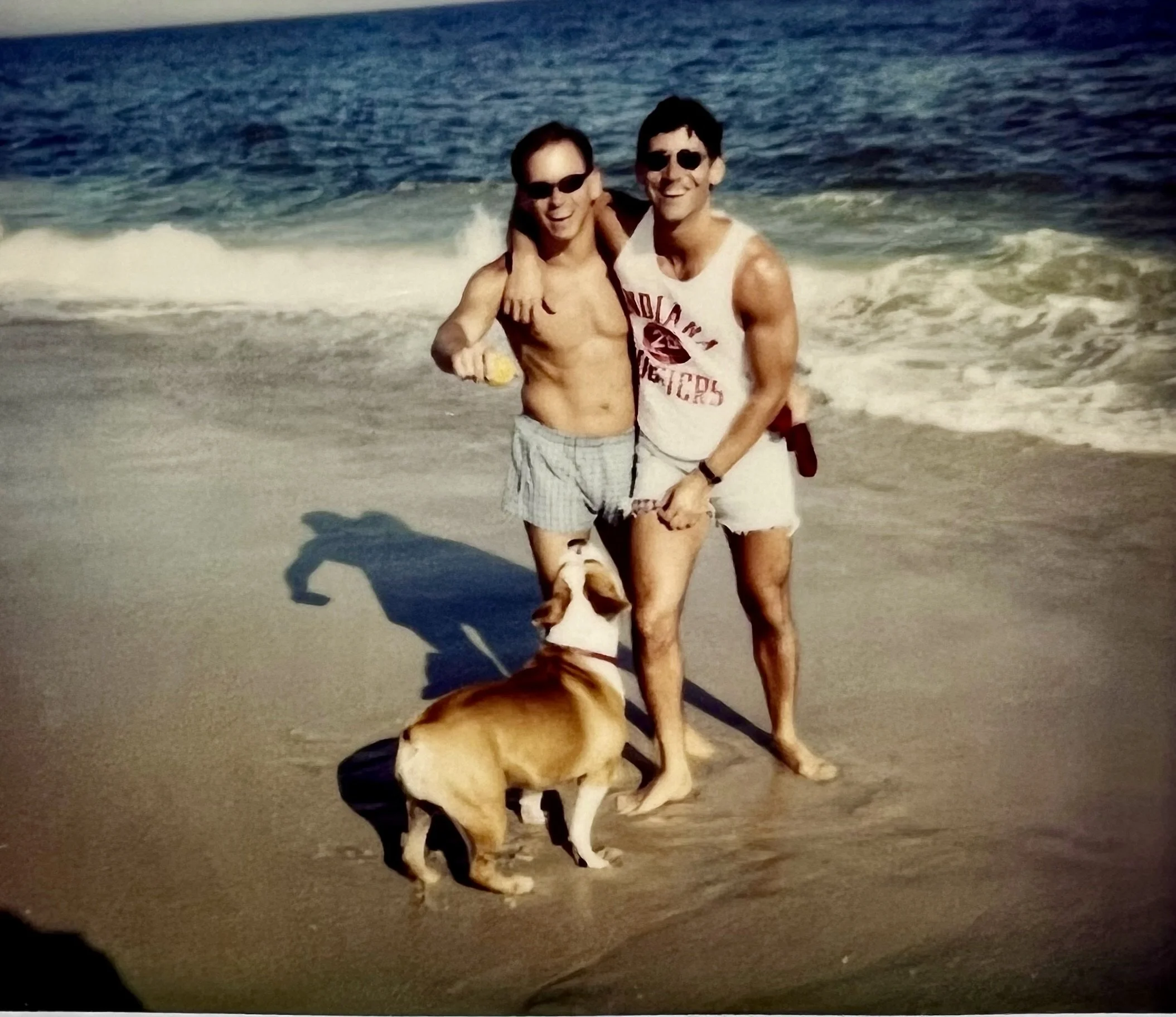
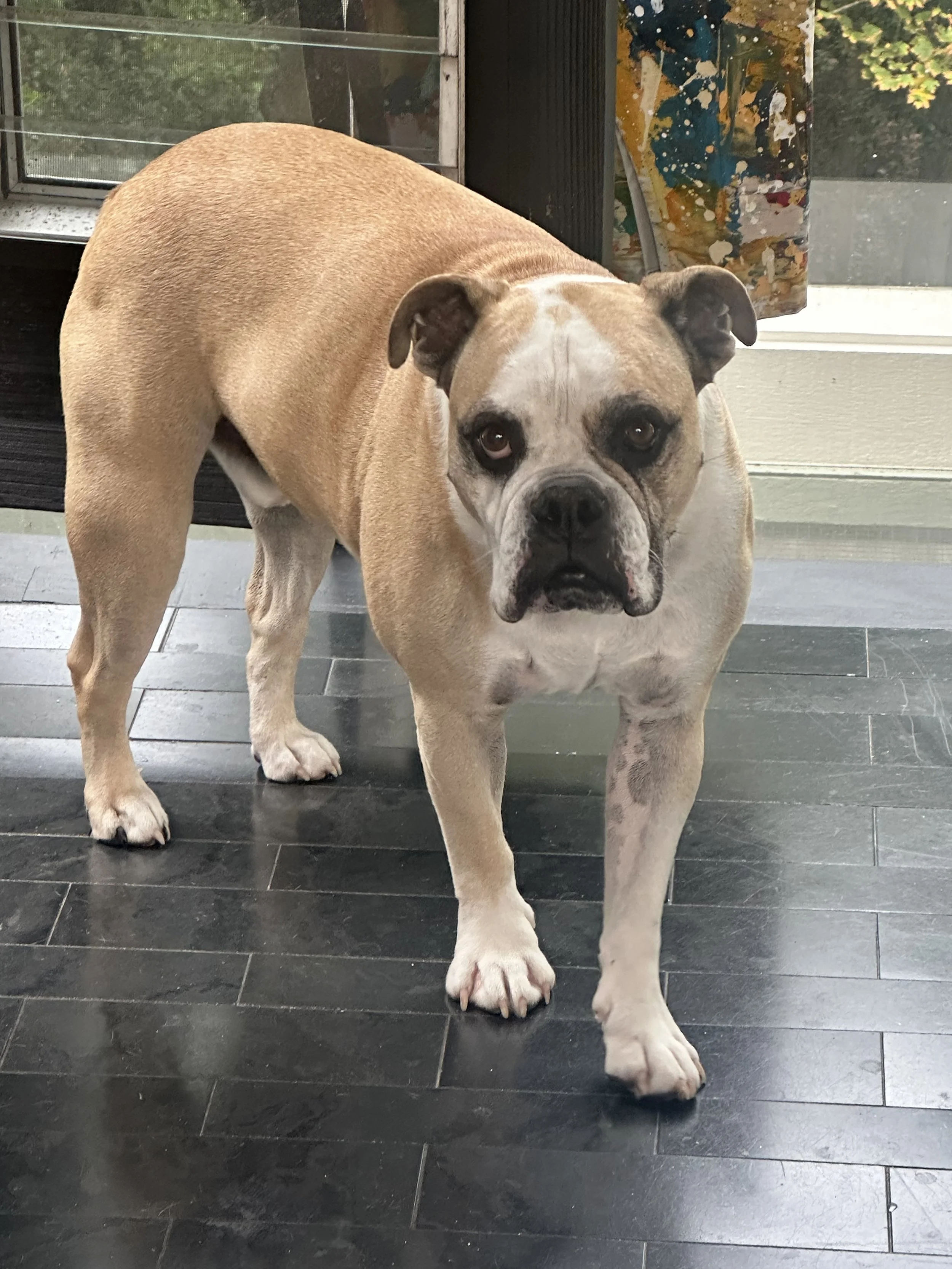

The Bulldogs of the East End. Photos courtesy of Marc Blackwell and Eric Reinitz.
Each of these lovable, sometimes stubborn characters considered the Gifford masterpiece very much his own, navigating its spiral staircases and multiple levels with ease. All were enamored with the beach, where driftwood offered an endless supply of irresistible toys. And they were all people focused and loved when Marc and Eric entertained. Over the years, they became well-known and much-loved personalities in the East End neighborhood, winning the affection of neighbors and visitors alike. In their own way, Max, Parker and later Lincoln brought a wonderfully down-to-earth quality to Gifford's soaring creation. It was not simply an architectural showpiece. It was a home, and everyone — including the dogs — had a place in it.
Making It Their Own
Living in a Gifford original required a willingness to embrace its quirks. The multiple staircases, which discouraged some prospective buyers, barely registered with Marc and Eric. They delighted in the unconventional layout and the possibilities it offered.
Although they shared a passion for the house, Marc and Eric brought different sensibilities to it.
Eric was captivated by the architecture itself — the changing light, unexpected perspectives, and ingenuity of Gifford's design. He sometimes rose before dawn simply to watch the day begin. At night, the soaring glass walls became mirrors, reflecting the living room and creating an almost theatrical effect.
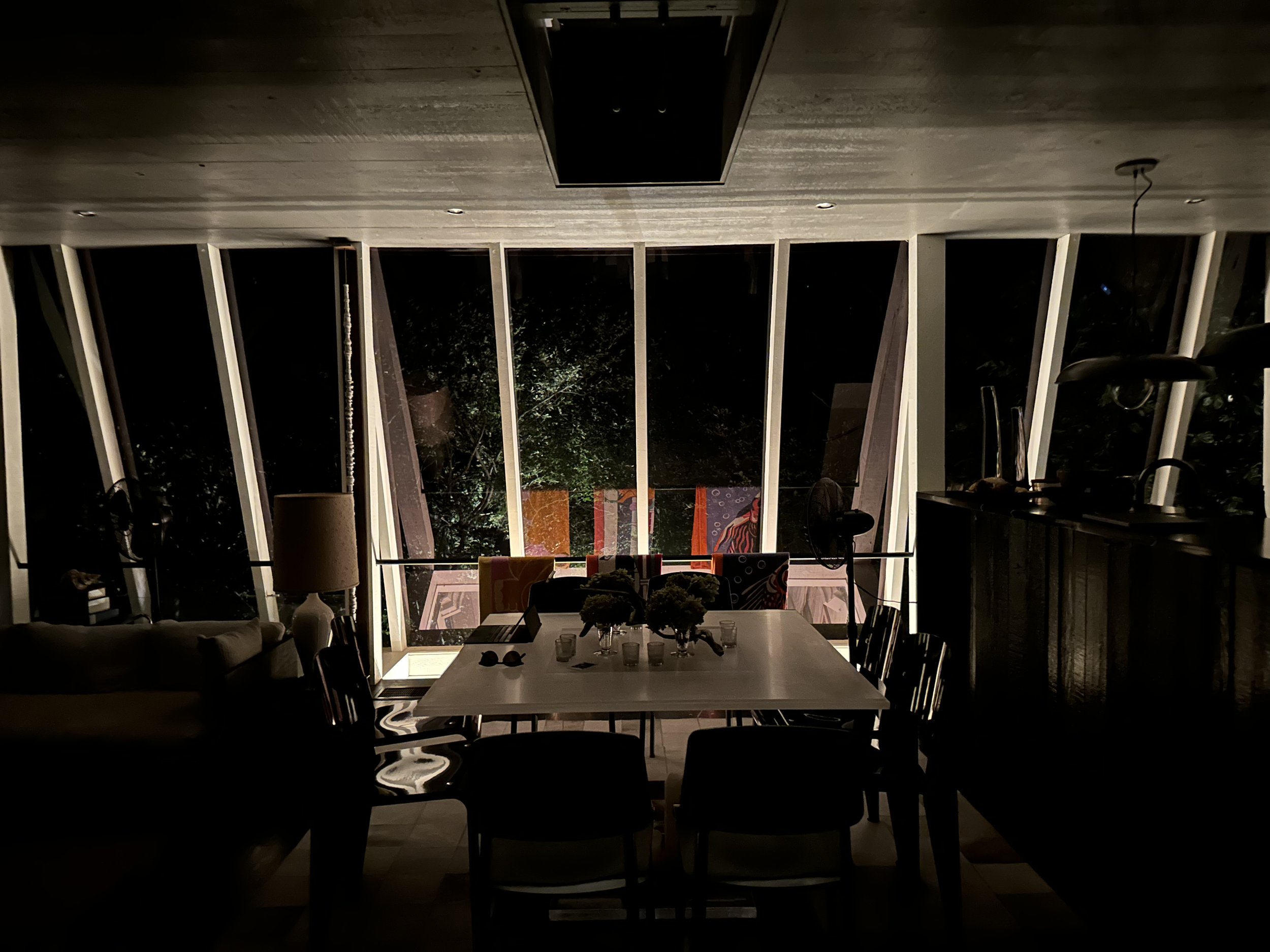
529 Sail Walk Living Room at night. Photo courtesy of Marc Blackwell and Eric Reinitz.
He remembers their first evening by the fireplace, wondering whether Gifford had deliberately designed the room to allow occupants to contemplate the architecture itself.
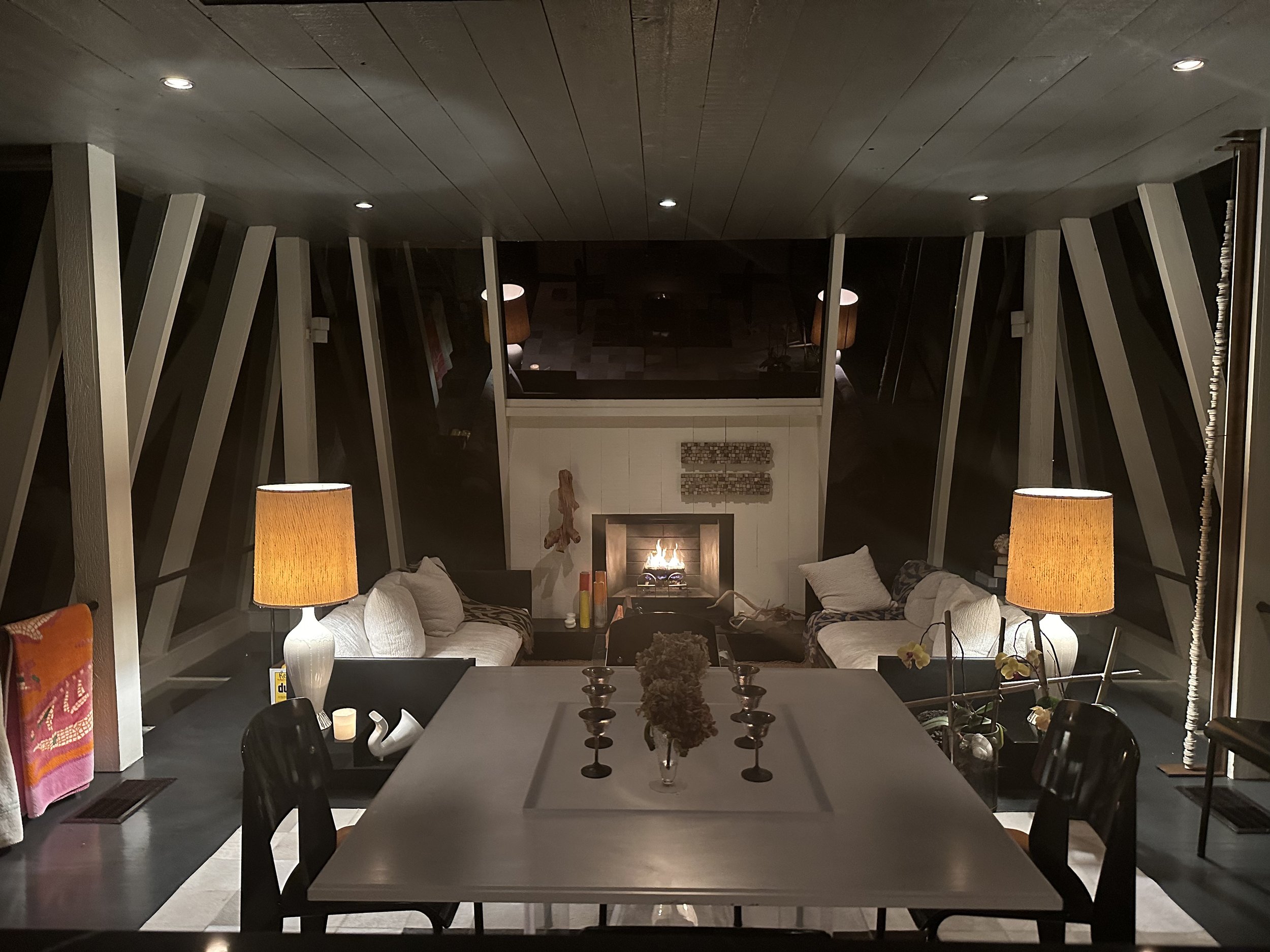
529 Sail Walk Living Room at night with fireplace lit. Photo courtesy of Marc Blackwell and Eric Reinitz.
Marc, whose professional life revolved around design, was particularly interested in making the house more beautiful, comfortable, and livable without compromising its architectural integrity. Even the natural ventilation system became part of daily life. Before the surrounding vegetation matured, they discovered that watering the ground beneath the angled glass walls helped cool the air entering the living room — a practical solution that worked in harmony with Gifford's design.
But living in a remarkable house also meant taking responsibility for it. Owning property on a barrier island requires considerable attention and investment, with salt air, storms, and shifting sands taking their toll. For Marc and Eric, that responsibility was heightened by their determination to preserve the architectural integrity of something exceptional.
When they purchased the property, it needed considerable attention. The vegetation was overgrown, outdoor areas were neglected, and the rooftop deck, despite its spectacular views, was not comfortably furnished for regular use. Rather than impose a new aesthetic, Marc and Eric made the house more livable while respecting its original character. They preserved the glass walls, built-in seating, and unconventional arrangement of spaces. They considered extending the spiral staircase to improve access to the lower-level bedroom, but structural limitations prevented it.
They accepted the constraint as part of living in an architectural original.
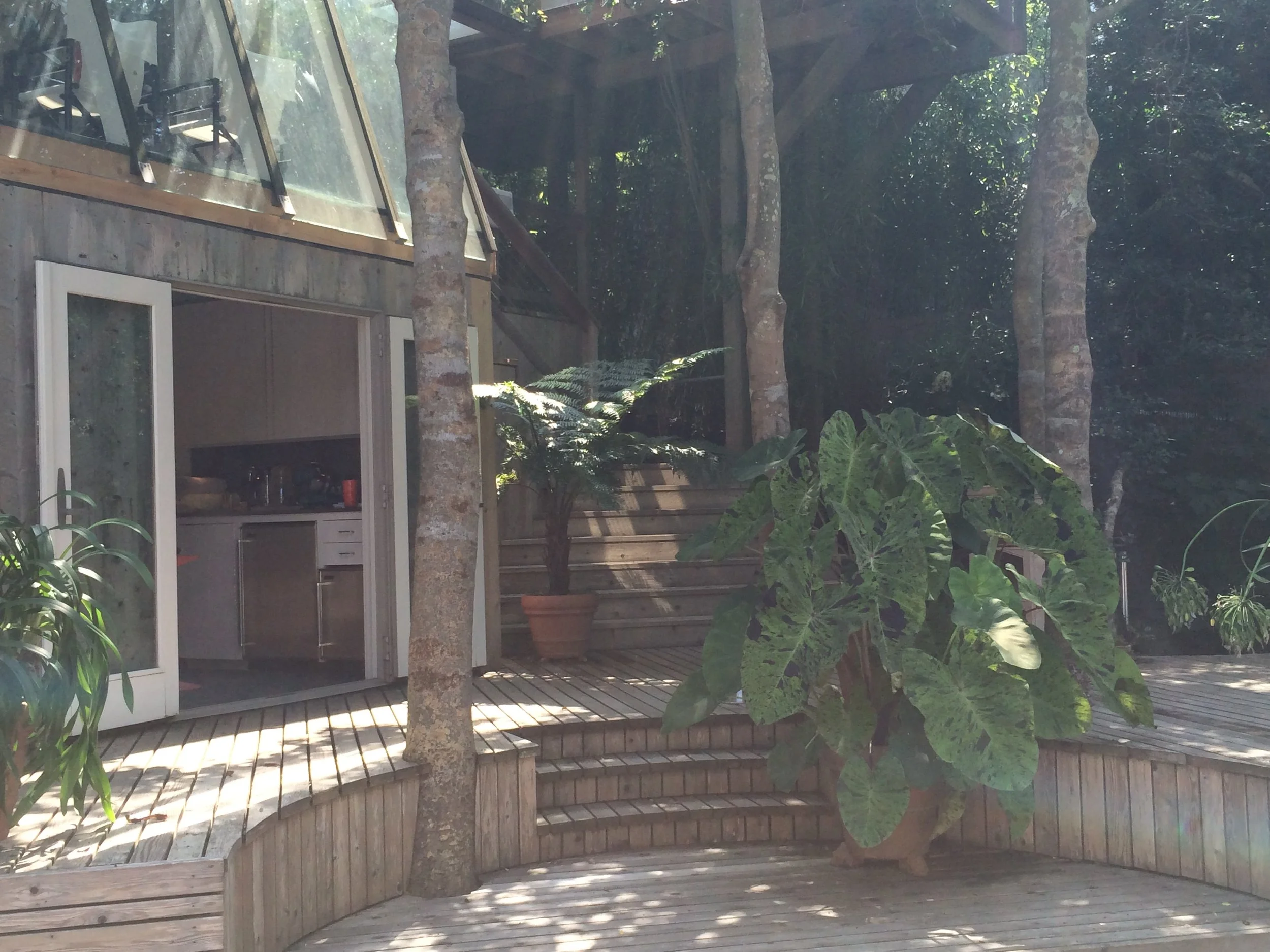
Their improvements were thoughtful and practical: a kitchenette beside the pool, an expanded downstairs bathroom, and stone finishes that complemented what they saw as the house's Japanese aesthetic.
529 Pool Deck and Kitchenette. Photo courtesy of Marc Blackwell and Eric Reinitz.
But perhaps their greatest contribution was outside.
When Gifford designed the property, the surrounding landscape was largely sand and low vegetation. Marc and Eric transformed it into an extraordinary garden cascading down the hillside toward Fire Island Boulevard. Their ambition was not simply to create something beautiful to admire from above, but a landscape that could be entered, explored, and experienced. Stone steps wound through lush plantings, revealing new perspectives as the garden descended. Hydrangeas, originally purchased as blue greenhouse plants, gradually developed a range of natural colors, while hostas thrived in the shaded landscape. Over the years, the garden matured into an integral part of the property, extending Gifford's vision of bringing architecture and nature together.
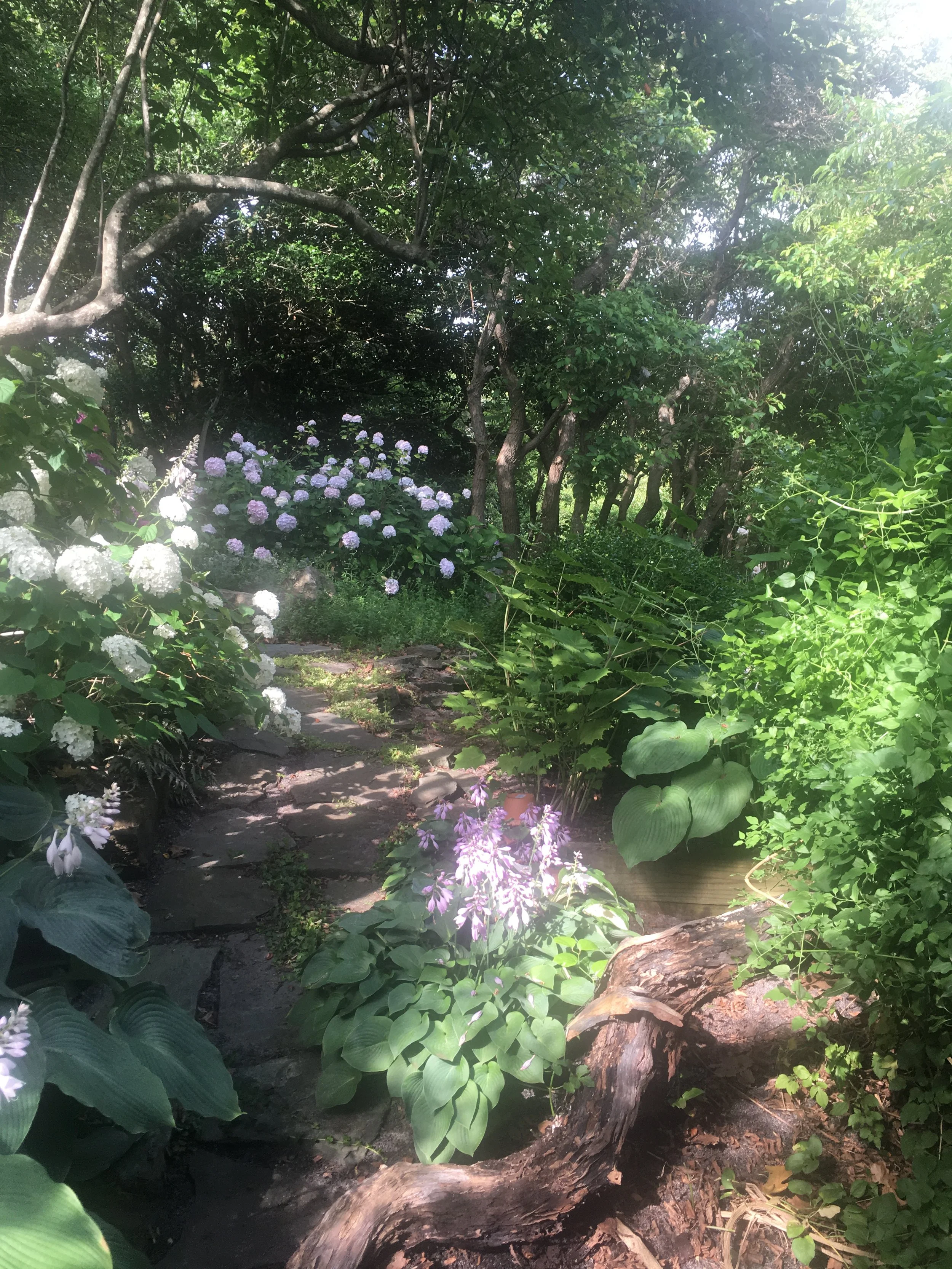

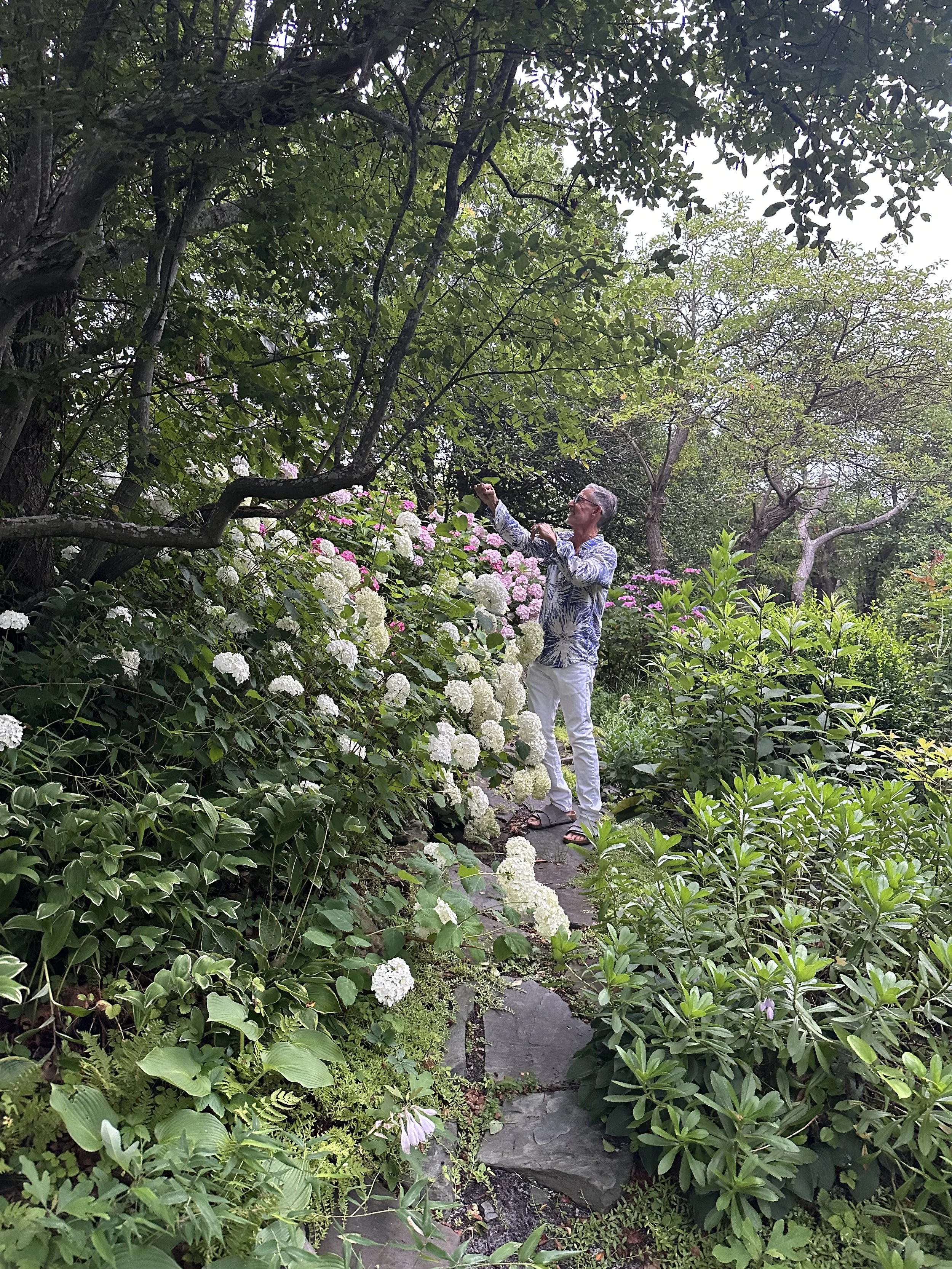
529 Sail Walk Gardens on the south side of the house. Photos courtesy of Marc Blackwell and Eric Reinitz.
Gifford had created an extraordinary architectural work. But it was Marc and Eric who filled it with the rhythms of everyday life — friends gathering for dinner, dogs ambling through the house liked they owned it, mornings spent watching the light, and countless hours tending the gardens. They had respected the architect's vision while adapting the property to their own lives. The house remained unmistakably a Gifford, but it was now unmistakably theirs as well.
The House That Called Them Back
Over the years, 529 Sail Walk became the setting for countless celebrations, sunsets, and gatherings with friends. It also witnessed more difficult moments.
On September 11, 2001, Eric and Marc were joined by friends and neighbors on the rooftop, watching smoke rise from Manhattan following the attacks on the World Trade Center. From their island refuge, they confronted a tragedy unfolding across the bay. Like so many other experiences, joyful and heartbreaking, the memory became part of the house's history — and their own.
By 2017, Marc and Eric had spent twenty years at 529 Sail Walk. Their lives, however, had changed. Their careers had taken them away from New York — across the country, in fact, to Seattle. Maintaining a seasonal home thousands of miles away no longer seemed practical. They loved the house, but the decision appeared unavoidable. After two decades, they sold 529 Sail Walk. It was a logical decision. It made perfect sense. It was the right call.
Until it wasn't.
Marc later reflected on something peculiar about selling a seasonal home in Fire Island Pines. Unlike leaving a primary residence, Pines home sales often include much of the furniture and household contents. And because sales frequently close during winter, there may be no final summer weekend, no last walk down the boardwalk, no last goodbye. Spring simply arrives, and the place that has welcomed you back year after year is no longer yours.
For Marc and Eric, the loss was more profound than they had anticipated. They missed the routines and relationships that had defined their summers — tending the gardens, entertaining friends, and being part of the East End neighborhood. What they had thought of as a summer house had become an important part of their lives.
Whenever they returned to the Pines for short stays, they found themselves drawn back to 529 Sail Walk. But what they saw was troubling. From their perspective, the house was no longer receiving the attention they believed it deserved. The gardens they had lovingly created were deteriorating, and signs of neglect were becoming increasingly apparent.
They understood that the property was no longer theirs and that its new owners would make their own decisions. But knowing that intellectually was one thing. Letting go emotionally was quite another. On one visit, Marc noticed that the garden was in particularly poor condition. Unable to resist, he turned on the sprinkler to water the plants. He no longer owned the house, had no responsibility for its upkeep, and no say in its future. Yet here he was, tending to a garden he had created years earlier. The house had changed hands, but Marc had not stopped caring for it.
They tried to move on, hoping that time would make the separation easier. Instead, they found themselves thinking about the house more and more.

During another visit, Marc began returning to the property. As he took photographs and he began to consider the possibility of owning it again. By chance, he encountered Liam O'Malley Davy, owner of the Pines landscaping company Gay Gardens, working in the yard. Marc deliberately mentioned that he thought they would someday buy the house back, hoping the message might reach the owner.
Liam O’Malley Davy (L) and his husband TM Davy (R). Photo courtesy BOFFO.
It did.
Liam set the wheels in motion, and conversations followed. Then, in 2022, five years after selling, Marc and Eric bought back the house they had never stopped loving.
When they first purchased 529 Sail Walk, they had fallen in love with its possibilities. This time, they knew exactly what they were returning to — its pleasures, inconveniences, and demands. Most importantly, they knew how much they had missed it. As Marc recalled, when they walked back in, they felt like they were in heaven.
A Gift Worth Preserving
Returning to 529 Sail Walk after five years was both exhilarating and unsettling. Much of the house was exactly as they had left it. Books remained on shelves, familiar fixtures were still in place, and Gifford's extraordinary architecture was unchanged. There was no new artwork, and the most conspicuous addition was a shag carpet (which they promptly removed). Yet the gardens had deteriorated, and the house seemed to have lost some of its vitality. They had come home, but there was work to be done.
As Marc put it:
"The house felt like it was frozen in time. Then came the reality that the stewardship we handed off was not embraced. Things had fallen into disrepair. The gardens were left unattended. The soul of the house felt empty. But once we started giving it the love it needed, it bloomed once again."
Their renewed stewardship also brought practical improvements. For all its architectural ingenuity, Gifford's soaring glass walls could make the house uncomfortably hot during the summer. After repurchasing the property, Marc and Eric installed UV-protective film on the glass and added air conditioning, making the house more comfortable without compromising its distinctive design.
The neighborhood had changed too. While they happily reconnected with some longtime friends and neighbors, many were now gone.
East End neighbor David Pavese with Eric Reinitz. Photo courtesy of Marc Blackwell.
Some had moved elsewhere in the Pines; others had left the community altogether. In their place, a younger generation was bringing new energy and perspectives to the East End. Marc and Eric welcomed the changes, but they were conscious that they were returning to a different neighborhood from the one they had left.

Perhaps more significantly, they themselves had changed. They were no longer the two ambitious young professionals who had stumbled upon an overgrown property after lunch in 1997. Their careers had flourished and taken them across the country, first to Seattle and more recently to Palm Springs. They were returning to a familiar place, but at a very different stage of their lives.
Eric Reinitz (L) and Marc Blackwell (R) in 2026. Photo courtesy of Marc Blackwell and Eric Reinitz.
And yet, 529 Sail Walk had lost none of its magic. With renewed care, the gardens flourished, friends returned, and the house once again became the center of their Pines life.
As Eric put it: "It's been a gift."
For Marc, the attachment is equally strong. So much of his creative energy and personal history is invested in the property that he finds it difficult to separate his own story from that of the house. Both recognize that their time at 529 Sail Walk is finite. One day, they will leave again. Until then, they see themselves as stewards of something exceptional, preserving Gifford's architectural vision while continuing to make the house their own. Their hope is that whoever follows will bring the same care, commitment, and affection to the property.
Marc and Eric's story reveals something fundamental about Fire Island Pines. For all the attention given to Tea Dance, the Pavilion, and the community's celebrated events, much of what makes the Pines special happens within its houses. It is there that friendships deepen, relationships flourish, chosen families gather, and lives unfold over decades. These houses are more than settings for Pines life. They become part of the lives of the people who inhabit them. Marc and Eric discovered just how profound that connection could be when they sold 529 Sail Walk. Having once left it behind, they now understand something they didn't fully appreciate before: You can sell a Pines house, but you will always carry it in your heart.