

The Story of FIPPOA (est. 1953)
By Virun Rampersad. March 2026
For over seventy years, the Fire Island Pines Property Owners Association (FIPPOA) has been a major force in the transformation of the Pines from a rustic beach enclave into one of the most celebrated and glamorous gay communities in the world. Guided by a board of elected, unpaid volunteers, FIPPOA has spearheaded the development of the Pines’ physical infrastructure, while carefully navigating its cultural evolution from homophobic origins to a modern gay mecca.
The Birth of an Association (1953–1956)
FIPPOA began modestly in the early 1950s. Formed by the first generation of homeowners who purchased property from the Home Guardian Company it was initially referred to as a “club” before later taking on a more suitable moniker. It elected its first President, Lee Cooley in 1955. He, along with John Thorpe, Franklin Barber and Hector Case were its early organizers. In its first by-laws, dated 1953, it defined four “classes” of directors, setting a precedent for rotating leadership, a process that continues to this day.
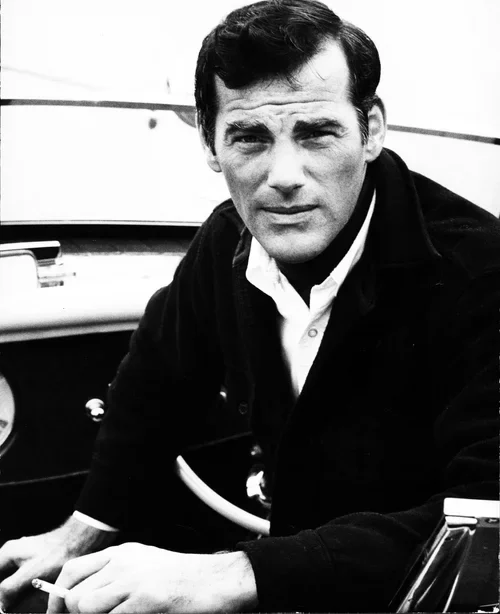
One of the first board members was Frank Carrington, who in time would go onto be its president. A theatre producer and arts patron, he owned the Carrington Estate located at the far west end of the Pines, which he used to support both established and emerging artists. Indeed, Truman Capote was believed to have written his classic, Breakfast at Tiffany’s while staying there.
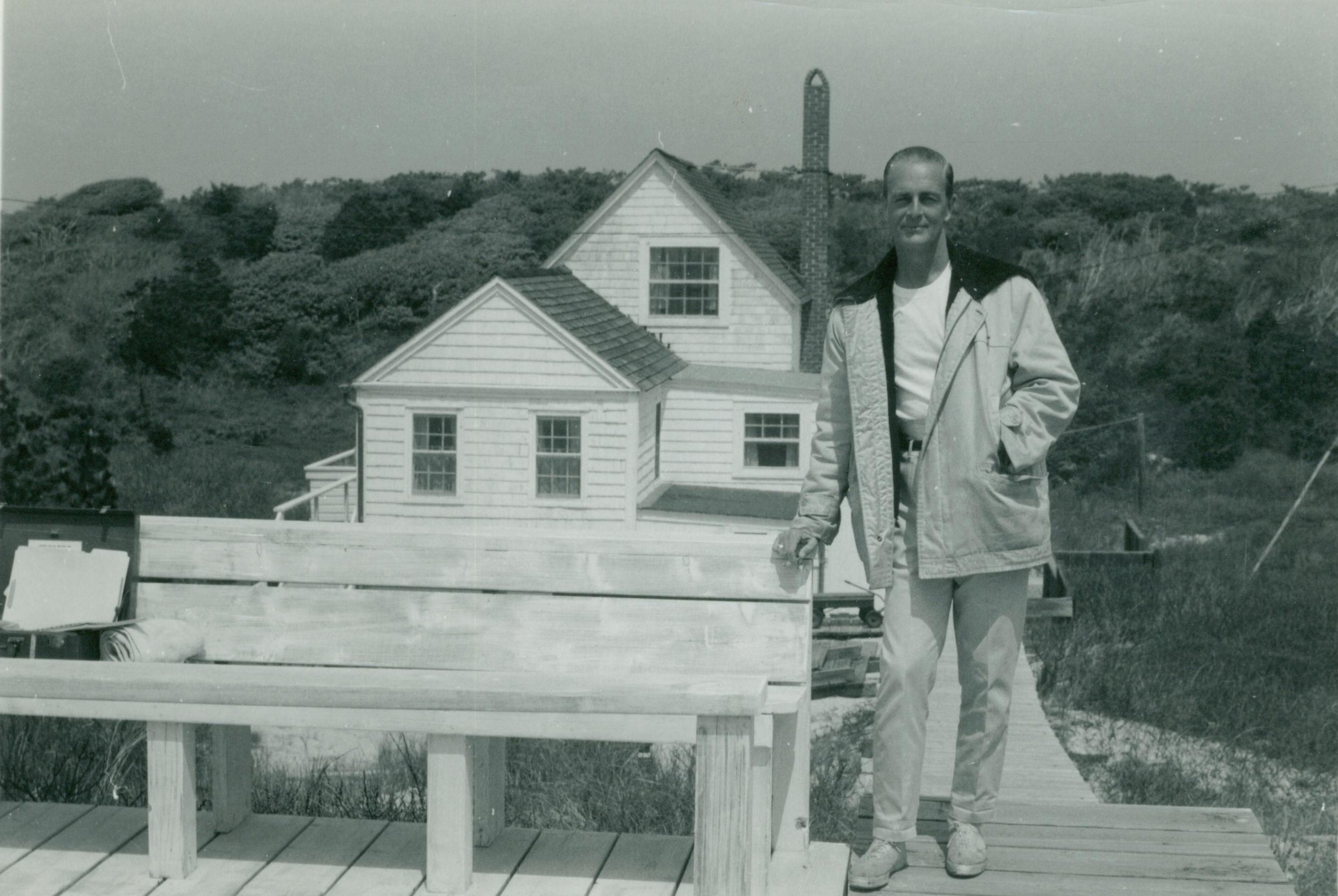
Frank Carrington at his estate in the Pines. Photo credit: Carrington Estate.
When he died in 1975, Carrington bequeathed the property to the Fire Island National Seashore. Today, the Carrington House is listed on the National Register of Historic Places due to its architectural, artistic, and LGBTQ historical significance.
As evidenced by its membership – in 1955, it had 277 members from an estimated 199 occupied homes – FIPPOA generated a high level of community engagement from inception. Initially, its focus was on practical issues that confront any newly established beach community –dune and harbor maintenance, sand fencing, and garbage removal, as well as the need for a fire brigade, reliable water supply, postal service, and ferry access.
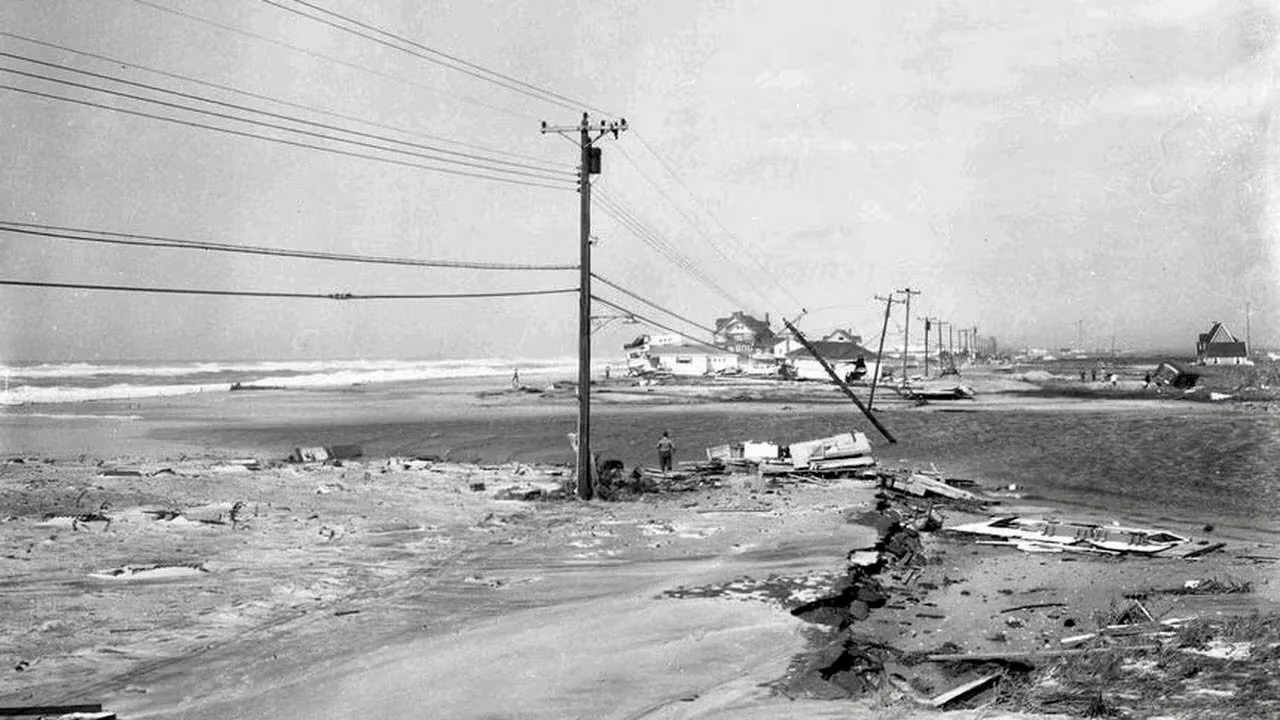
Early on it also had to deal with the impact of Hurricane Carol, which struck in 1954 damaging the beach, dunes and homes – a harbinger of the environmental challenges the community would repeatedly face in the future.
Devastation from Hurricane Carol. Photo courtesy of Newsday.
While the documents from the early meetings show the tone to be civic-minded and neighborly, we know from other records there was contention between the ‘preservationists’ and the ‘developers’ over issues like dredging, bulldozing and tree removal. Also, lurking just below the surface was a moral vision about who should be allowed into the fledgling community that would soon evolve into something discriminatory and exclusionary.
“A Family Community” (1956–1958)
As the Pines’ appeal grew within creative and bohemian circles, anxiety set in among some of the early homeowners. The board’s meeting minutes and letters from 1956 to 1958 document an open hostility to LGBTQ+ people (often referred to as ‘undesirables’ and ‘Cherry Grove types’), and a campaign to preserve what they termed a ‘family-type community” soon emerged. Initially, this effort consisted primarily of pressuring real estate brokers, most notably Ted Taussig and Arden Catlin, to screen buyers and renters for their ‘habits and references’. There was even a questionnaire proposed that asked prospective residents to declare their marital status, church affiliations, and employment, but this generated significant opposition and was never implemented.
In 1958 FIPPOA took the campaign to new levels, erecting the infamous “Welcome to the Pines: A Family Community” sign at the ferry dock. This sent an unmistakable message that gays and lesbians were not welcome.
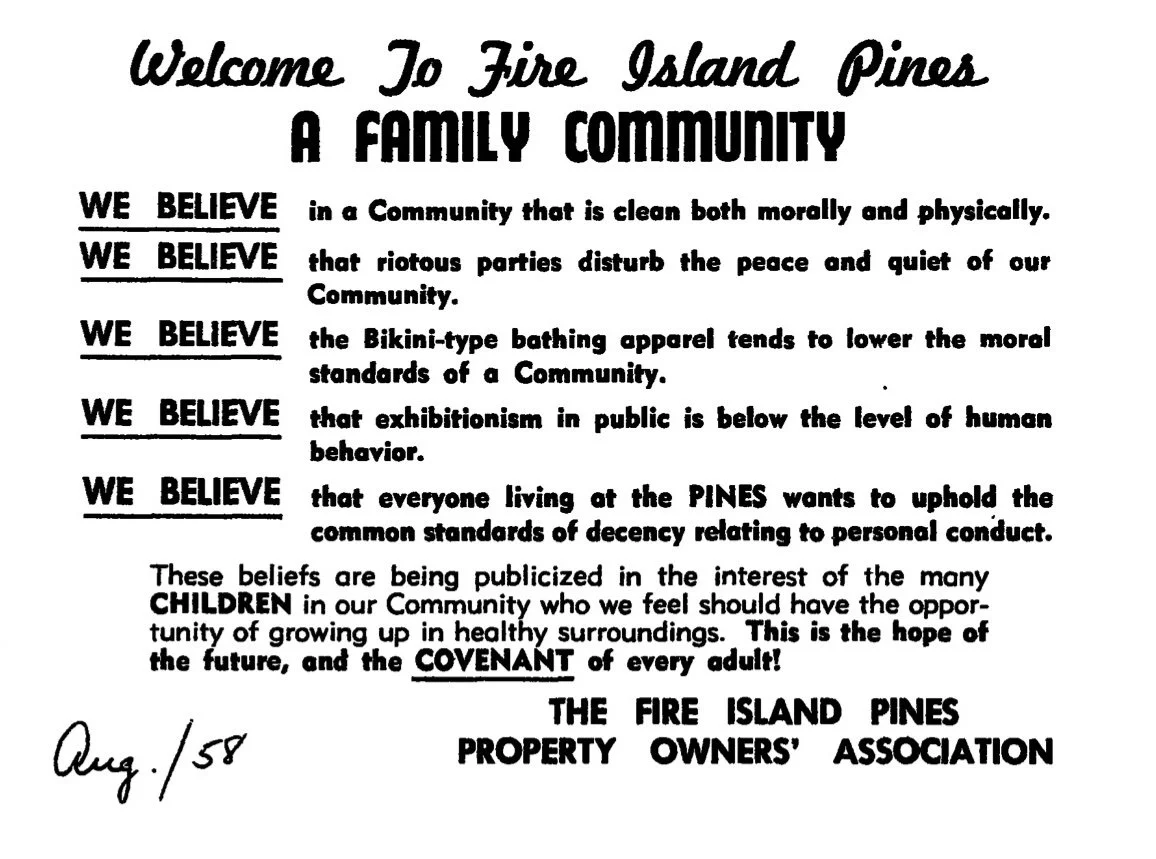
FIPPOA went so far as to have “We Believe” postcards printed and distributed that year.
“We Believe” postcards. Photo courtesy of FIPPOA.
This ‘family community’ campaign represented one of the most overtly exclusionary moments in Fire Island Pines history. In part, it reflected cultural issues on the mainland where a postwar America was uncomfortably encountering the emergence of visible gay life, and was accentuated by proximity to Cherry Grove, which had a growing LGBTQ+ presence.
Reformation By Fire (1959–1960)
In the late 1950s, FIPPOA was consumed by internal divisions. Board meeting minutes from 1959 depict factional battles that resulted in leadership turnover when Arden Catlin was nominated from the floor and elected president by one vote. She was not only FIPPOA’s first woman president, but also part of the ‘pragmatic’ wing of the Pines that was more focused on community building versus keeping gay people out.
A major turning point came on Memorial Weekend in 1959 when a fire destroyed Peggy Fears’ hotel, bar, and restaurant, which was the social and economic center of the Pines. Fire protection in Fire Island, then and now, depended on mutual aid, and the residents of Cherry Grove flocked to help contain the blaze.
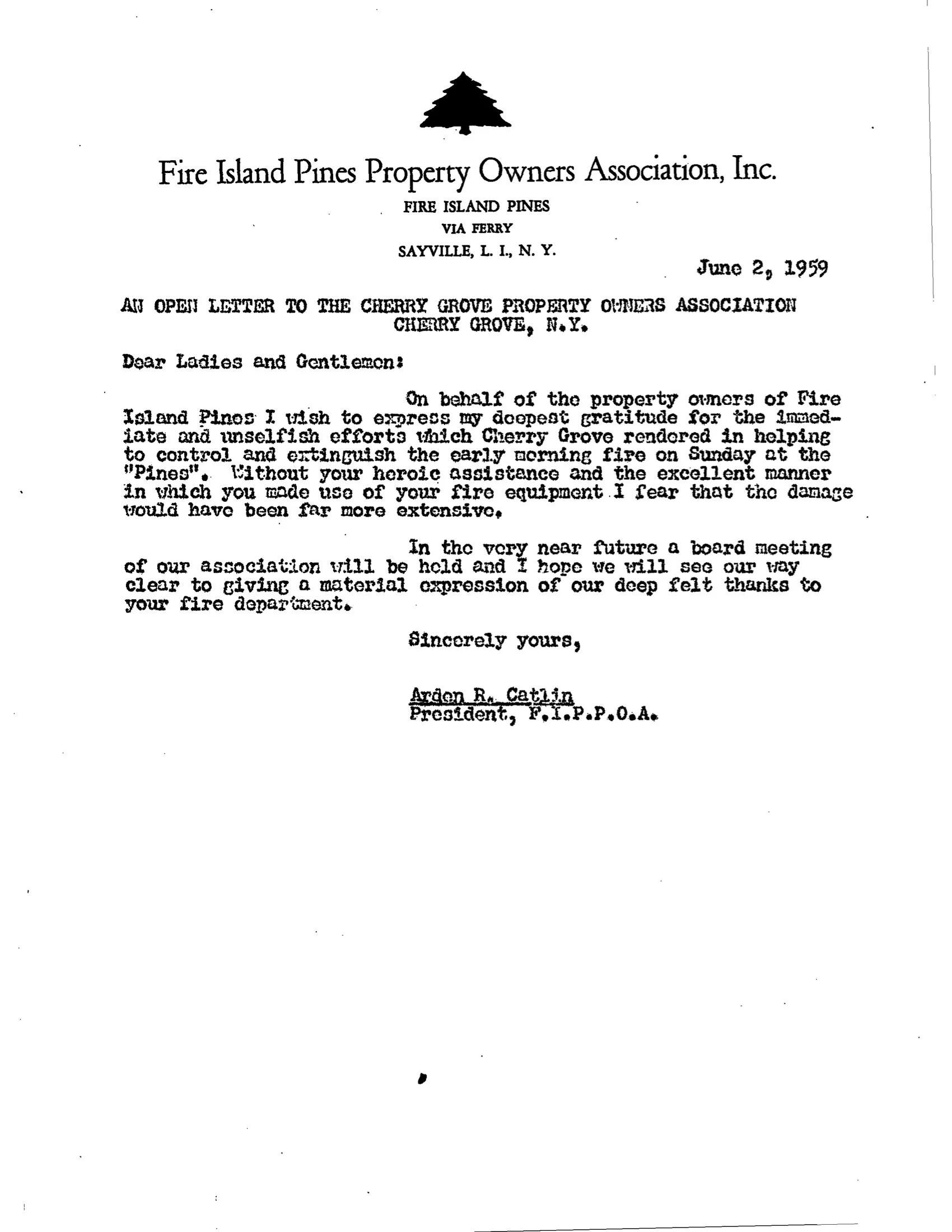
Their efforts were hugely impactful, so much so that FIPPOA sent a letter of thanks to the Cherry Grove Property Owners Association for their “heroic assistance”. It marked one of the earliest signs of reconciliation between two neighboring communities, as well as the beginning of the end of the anti-gay campaign in the Pines.
Letter from FIPPOA to Cherry Grove Property Owners Association. Photo courtesy of FIPPOA.
Arden Catlin, however, did not fare as well. She had inherited a deeply divided board after her defeat of Ted Taussig in the FIPPOA election and lingering animosity from the anti-gay crowd. In September 1959, one of the leaders of the anti-gay movement, Eugenie Ahders, led a successful censure motion accusing Catlin of conflicts of interests related to grocery procurement and plumbing contracts, causing her to resign.
In the aftermath of the board turmoil, FIPPOA’s focus turned pragmatic again, focusing on fire protection, maintaining the harbor, and stabilizing finances. Despite Ahders’ successful campaign to remove Catlin, the ‘family community’ rhetoric began to fade.
The Fight to Saving Fire Island
The 1960s brought one of the most significant threats to Fire Island’s way of life: Robert Moses. The dominant force behind New York’s parks and infrastructure, Moses proposed a high-speed highway running the entire length of the island, connected to the mainland by bridges. His plan would have fundamentally transformed Fire Island. It would have eliminated many homes, and facilitated beach access via tunnels beneath the roadway. Further, it would have opened vast stretches of the island to commercial development.
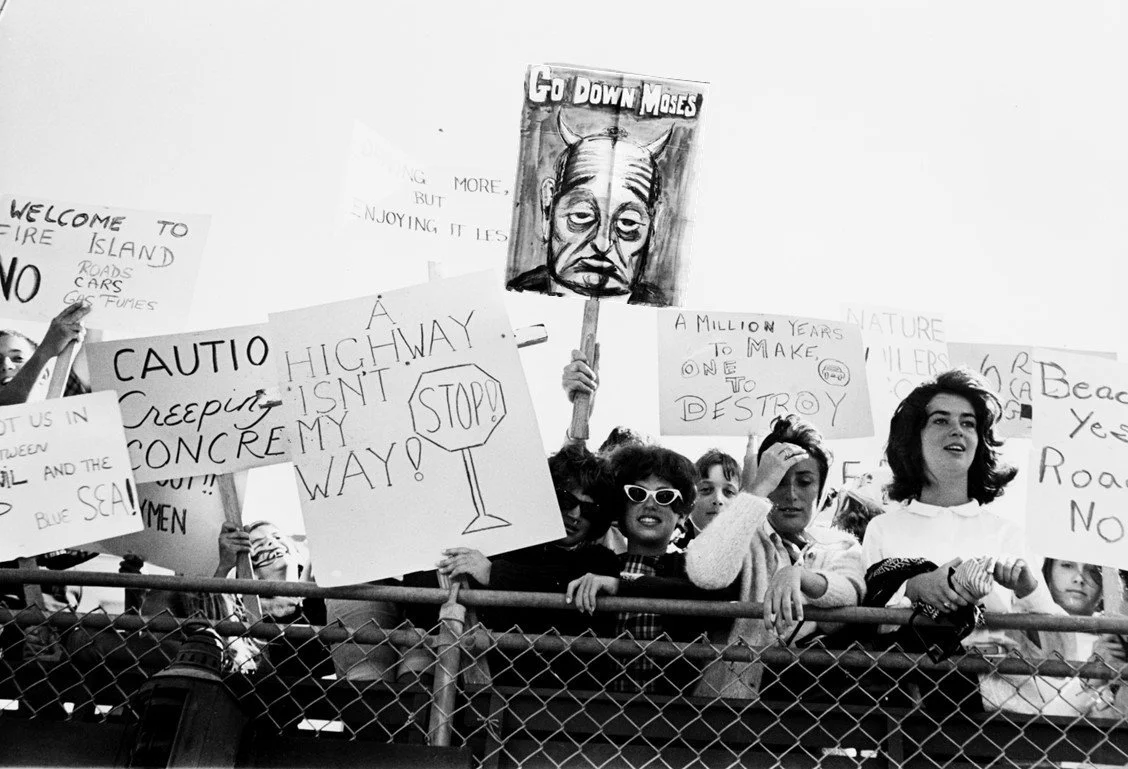
Moses’ proposal alarmed residents. FIPPOA leaders, most notably Alice Thorpe, John Chase, Harry Grayson, and Frank Carrington, joined forces with the Fire Island Association (FIA) to mount a successful opposition.
Protests Against Robert Moses Plan for Fire Island. Photo credit: Unknown.
The issue was ultimately resolved when President Lyndon B. Johnson designated Fire Island a National Seashore in 1964, due in part to Alice Thorpe’s personal advocacy. This permanently froze the island’s development footprint, preserving the Pines’ original layout, including the forested stretch between the Pines and Cherry Grove (commonly known as the Meat Rack) and the lands to the west all the way to Water Island.
From Homogeneity to Heterogeneity (1960s)
In addition to the Moses fight, the 60s saw FIPPOA contending with the growing pains of an emerging community. These included struggles with harbor rights, erosion control, garbage contracts, and questions of incorporation. Also at this time, a cultural shift was quietly underway in the Pines. The old guard of ‘family community’ founders was aging out, while a new generation, including many gay professionals and artists, were buying homes or shares in the new Co-ops.
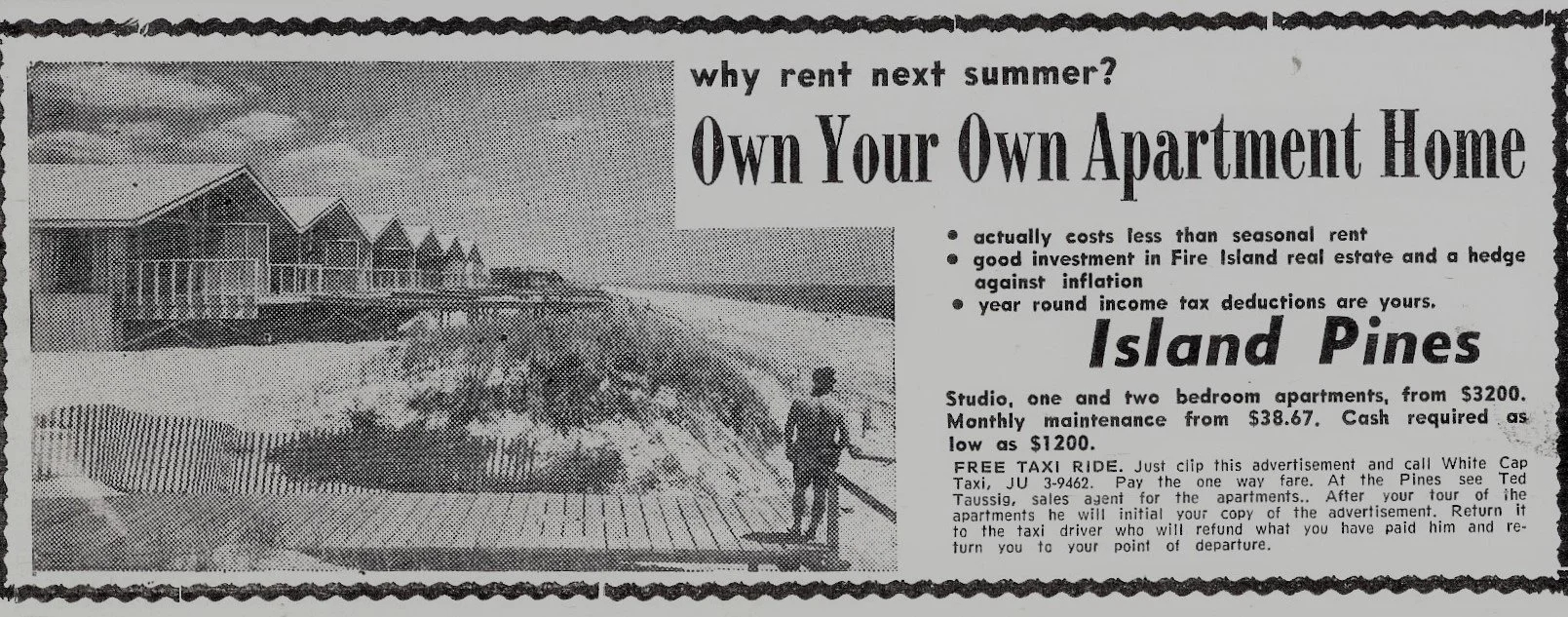
Advertisement for the Coops. Photo credit: Unknown.
FIPPOA stayed largely silent on these changes, focusing on operational and infrastructural issues. Although the FIPPOA’s papers show complaints about ‘transvestism’ (i.e., people in drag) in the harbor area, there is no evidence that the board took any meaningful action to address the issue.
The rising visibility of drag culture and nightlife in the 1960s were some of the earliest signs that the Pines was evolving into a gay mecca. Paradoxically, because of both its proximity and separation from Cherry Grove, it was appealing to wealthy gay business professionals. Toward the end of the decade, two pivotal events accelerated that shift. First, in 1968, the long-standing police raids used to intimidate and harass gay people came to an abrupt halt after 27 men arrested that August were acquitted in a manner that publicly embarrassed local law enforcement. Then, in 1969, the Stonewall riots in New York City ushered in a new era of visibility, activism, and social freedom.
While FIPPOA remained publicly silent on both events, it was clearly presiding over a community in transition. At the time, very few people lived openly as gay. Even in the wake of Stonewall, mainstream hostility was pervasive, legal protections were nonexistent, and living openly was socially, professionally and physically precarious.
Despite the climate – or maybe because of it -- there was a clear demographic shift underway in the Pines. Gay residents were increasing in number, and with that growth came a rising sense that the Pines was a place where one could live more authentically.
The FIPPOA board itself reflected this evolution. Prior to 1960, there were no known gay or lesbian members of the FIPPOA board (though it did include Frank Carrington, whose sexuality was often a topic of speculation, and John Chase, who would later live openly in the Pines).
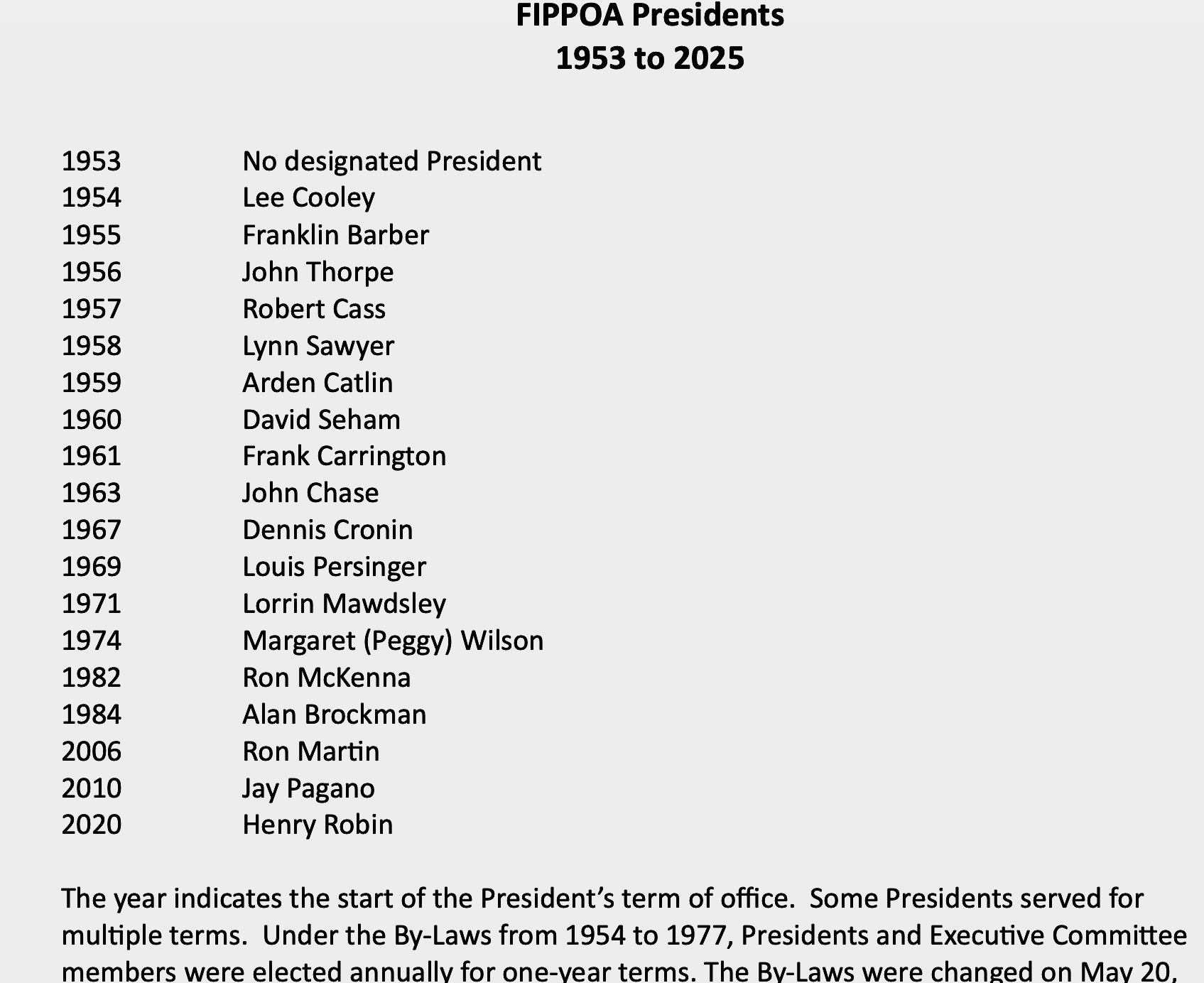
By 1969, however, the LGBTQ presence had grown to nine of the board’s twenty members — including its first openly (at least within the Pines) gay president, Louis Persinger
FIPPOA Presidents 1953-2025. Courtesy of Gary Clinton.
The Gay Ascendancy (1970s)
In the 1970s FIPPOA was challenged balancing demands for greater community governance (e.g., crowd control, noise, and safety) with a growing expectation of personal freedom. Letters in the FIPPOA Papers show it received complaints about drag queens ‘promenading’ through the harbor and fears that the association was ‘losing control’ to nightlife and commercial interests. Most striking is a 1973 memo from the Harbormaster warning residents that, on Saturday nights, the harbor was crowded with mainland visitors who were hostile toward gay people, and that residents entered the downtown area ‘at their own risk’. It was the first time gay residents and visitors were acknowledged as a distinct group within the community, an implicit recognition that they had become embedded in local life and commerce.
Despite these tensions, the 1970s were foundational in establishing the Pines as a gay community. Gay homeownership, rentals, and weekend visitors grew steadily throughout the decade. It also marked the birth of the Annual Invasion of the Pines when on July 4th, 1976, a group of Cherry Grove drag queens sailed into the harbor to protest a friend, Teri Warren, being denied service at the Blue Whale by John Whyte.
John Whyte. Photo courtesy of John Whyte.
The enthusiastic reception the invading drag queens received that day -- and in every year after -- was an unmistakable sign that the gay population had grown to be a significant part, if not the majority, of the Pines community. It also helped begin to dispel the notion that the majority of Pines residents were “anti-drag”.
Throughout the 70s, FIPPOA maintained its focus on infrastructure, operations, and finances. While it routinely advocated on behalf of residents on issues such as nightclub noise, the FIPPOA records suggest it did not take on moral or political positions -- in response to a complaint about nudity on the beach (which was quite popular in the 70s), the board stated that it was not a governing authority and that such matters should be referred to the police.
The official record, however, does not present a full picture of events at that time. Ron Martin, who was on the board in the late 70s, and would later go on to be President, had this to say:
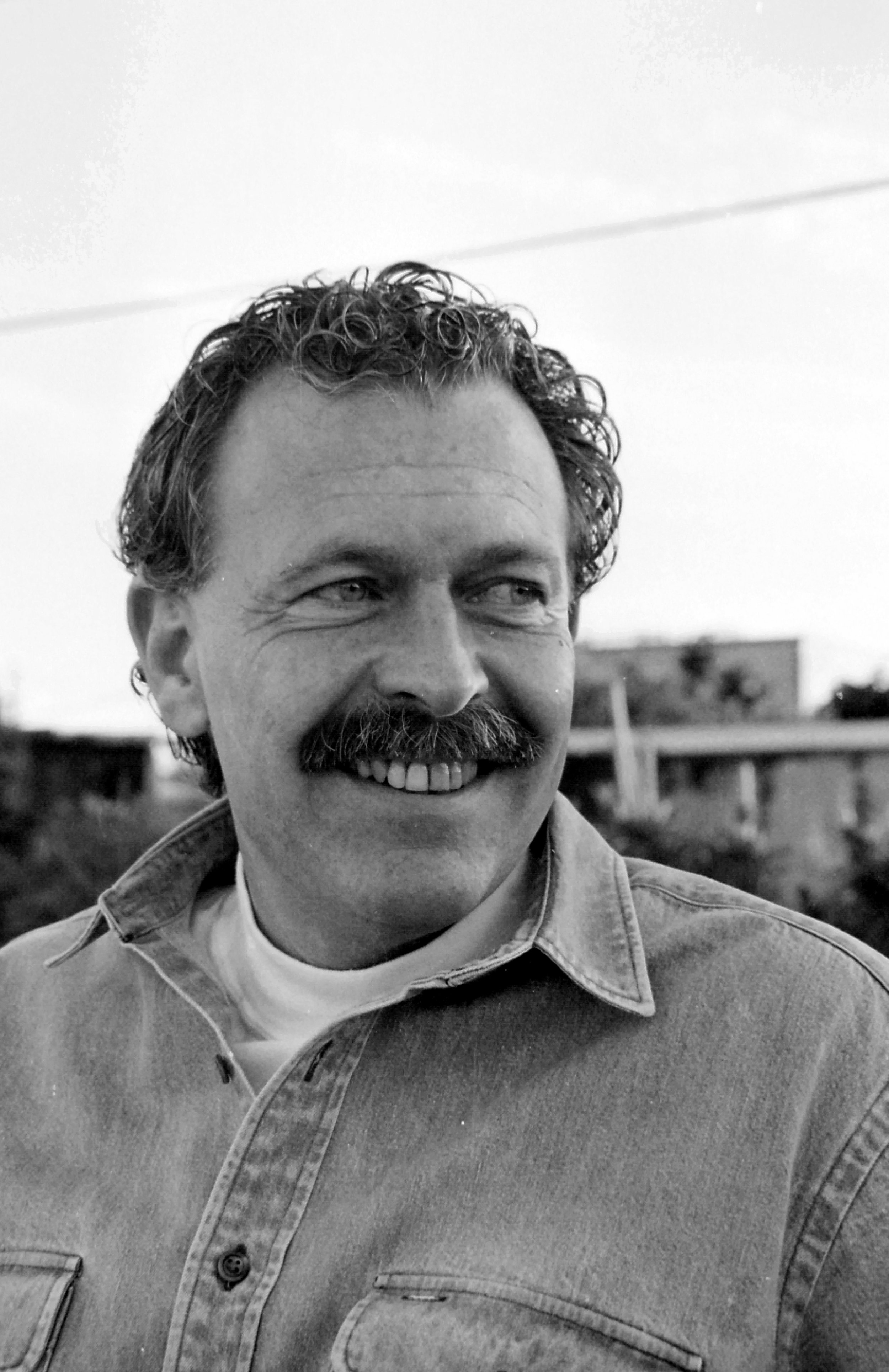
“The Pines is part of the Fire Island National Seashore (FINS) and under the jurisdiction of the Suffolk County Police Department. The FIPPOA board had many ‘quiet conversations’ with leaders of these organizations to ensure that their major concerns were addressed and in turn the community could operate freely in a safe and secure environment.”
Ron Martin. Photo credit: Unknown.
This strategy of “quiet diplomacy” and cultivating strong relationships with public officials proved remarkably effective for the Pines community. Once the association committed to volunteer trash removal and maintaining the landscape, rangers stopped entering the Meat Rack. In addition, residents were able to express themselves more openly in public spaces so long as order was maintained. Equally important, FIPPOA made the strategic decision to build and maintain a police station near the harbor, which strengthened trust between residents and law enforcement. Over time, the officers assigned to the Pines became more familiar with the community and its practices. They also came to recognize that Pines (and Cherry Grove) residents were far more orderly and better behaved compared with some other Fire Island communities, which were frequently plagued with fights, bottle throwing and other riotous behavior.
In an important, but often overlooked development, the 70s saw the creation of the Zoning Advisory Board (ZAB) by the Town of Brookhaven, which included Fire Island Pines. Shortly after, FIPPOA was recognized as the civic body representing the Pines and invited to join. This move ensured the community would have a seat at the table in decisions affecting property development including rezoning, commercial district approvals and density controls. It was one of a series of steps that FIPPOA would take over the years in developing an effective working relationship with the Town of Brookhaven that would impact things like taxes and sanitation.
The 70s ended on an optimistic note for the Pines. The different factions in the community came together to produce Beach, an all-night dance party on the beach to raise money for a new community fire engine. The event was celebrated in the Fire Island News, which described it as ‘the party of the century’. Its success augured well for the community and clearly demonstrated that the cultural needle had moved from moral exclusion toward open coexistence.

Ron Martin, Michael Schaible, Fern Mallis and Scott Bromley, the creators of Beach. Photo credit: Unknown.
AIDS (1980s)
It is unclear when AIDS first appeared in the Pines, though many believe it was as early as 1981, if not before; the famous New York Times ‘Rare Cancer’ article was published on July 3rd of that year. Despite this, the first reference to AIDS in the FIPPOA Papers does not appear until 1987 – six years later – when Kaye Ballard requested that proceeds from her performances in the Pines be directed to an AIDS charity and FIPPOA received a complaint about the graphic nature of a Gay Men’s Health Crisis (GMHC) pamphlet that had been distributed in the community. (It’s worth noting, the complaint expressed support for fighting AIDS but criticized its imagery as too extreme.)
When asked about the reasons for FIPPOA’s long public silence on the AIDS crisis, former board members Ron Martin and Dino Georgiou were adamant that it would wrong to interpret that as indifference. As Georgiou noted:

“The Pines was devastated by AIDS. Entire households were lost. All of us on the board were personally affected, and it was front and center in everyone’s minds. It would be completely wrong to think the board turned a blind eye to the crisis.”
Dino Georgiou. Photo courtesy of Dino Georgiou.
Per both Martin and Georgiou there were a number of factors that guided the board’s actions during this period.
First, as a property owners’ association, FIPPOA was not structured to provide the healthcare or social services that the crisis demanded. Moreover, people who needed those services sought them on the mainland, not in the Pines. For that reason, FIPPOA adopted a role of being a facilitator for groups like GMHC, providing information and, just as importantly dispelling misinformation (including the idea that AIDS could be spread by mosquitos). Board members also actively supported fundraising efforts for groups like Gods Love We Deliver and AmFAR that were held in the community.
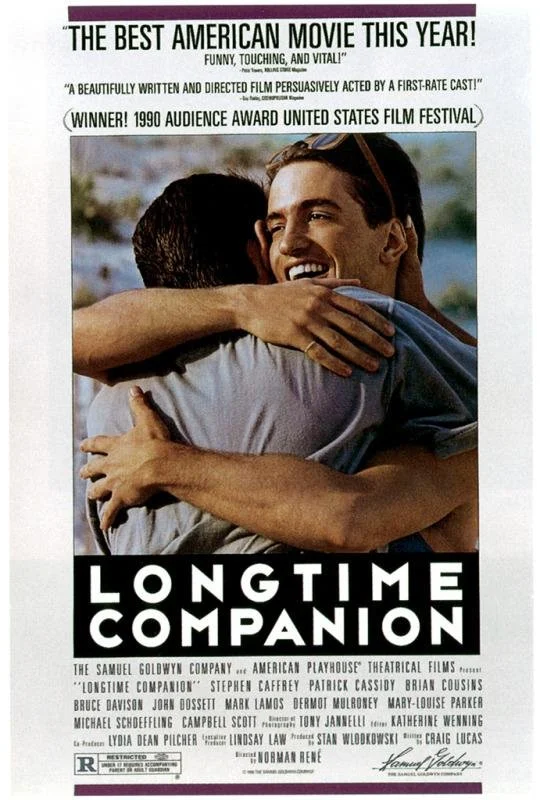
Second, as reflected in the internal debate in 1989 over whether to allow the filming of Longtime Companion, FIPPOA was deeply concerned about stigmatization and its effect on property values, which had already fallen due to the epidemic’s deaths and departures. As Martin noted, homes in the Pines represented a major part of many residents’ financial security, and fear-driven price declines eroded that resource precisely when it was needed most.
Longtime Companion Poster. Photo credit: Unknown.
When looking at the actions taken, it is important to bear in mind that at that time the media fixated on the most extreme or sensational aspects of gay culture. This portrayal often provoked negative public reactions that could very well undermine the broader efforts to fight AIDS. Simply put, the best way for FIPPOA to support the fight against AIDS was not a straightforward issue, which influenced the board’s cautious approach. On Longtime Companion, FIPPOA approved filming on the condition that certain scenes be removed.
The insights provided by Georgiou and Martin align with other parts of the FIPPOA minutes, which show real pride in the extraordinary work residents were doing to support those affected. Over time, the association grew increasingly vocal and engaged, supporting fundraisers, partnering with community leaders, and openly acknowledging the profound losses that touched nearly every household.
Despite the ravages of AIDS, the 1980s marked a period of major organizational advances for FIPPOA. Under the leadership of Alan Brockman, who succeeded Ron McKenna in 1984, the association restructured itself into a more professional and capable civic body. It introduced modern financial management practices to stabilize long-term fiscal health, reorganized its governance structure to clarify board responsibilities, and strengthened oversight of core functions such as harbor operations, fire safety, and sanitation. The role of Community Manager was created to support year-round operations, and public communications were revamped to increase transparency and community engagement.
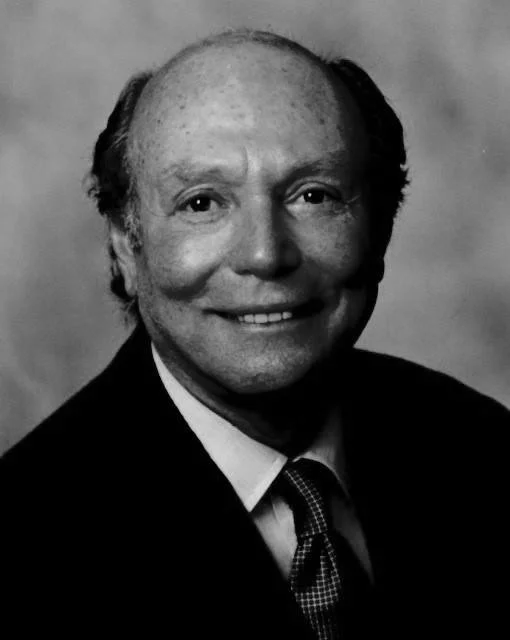
Alan Brockman, FIPPOA President from 1984-2006. Photo credit: Unknown.
These reforms paved the way for significant environmental and infrastructure improvements: harbor and dock renovations (in partnership with Sayville Ferry Service), beach replenishment and dune restoration (with Fire Island National Seashore and the Pines Conservation Society), and upgraded sanitation services. These steps, while not glamorous, transformed FIPPOA from a rudimentary homeowners’ association into a professionally run organization. They gave the community greater control over its operations, improved quality of life for residents, and laid the groundwork for the critical actions the Pines would take in the decades to follow.
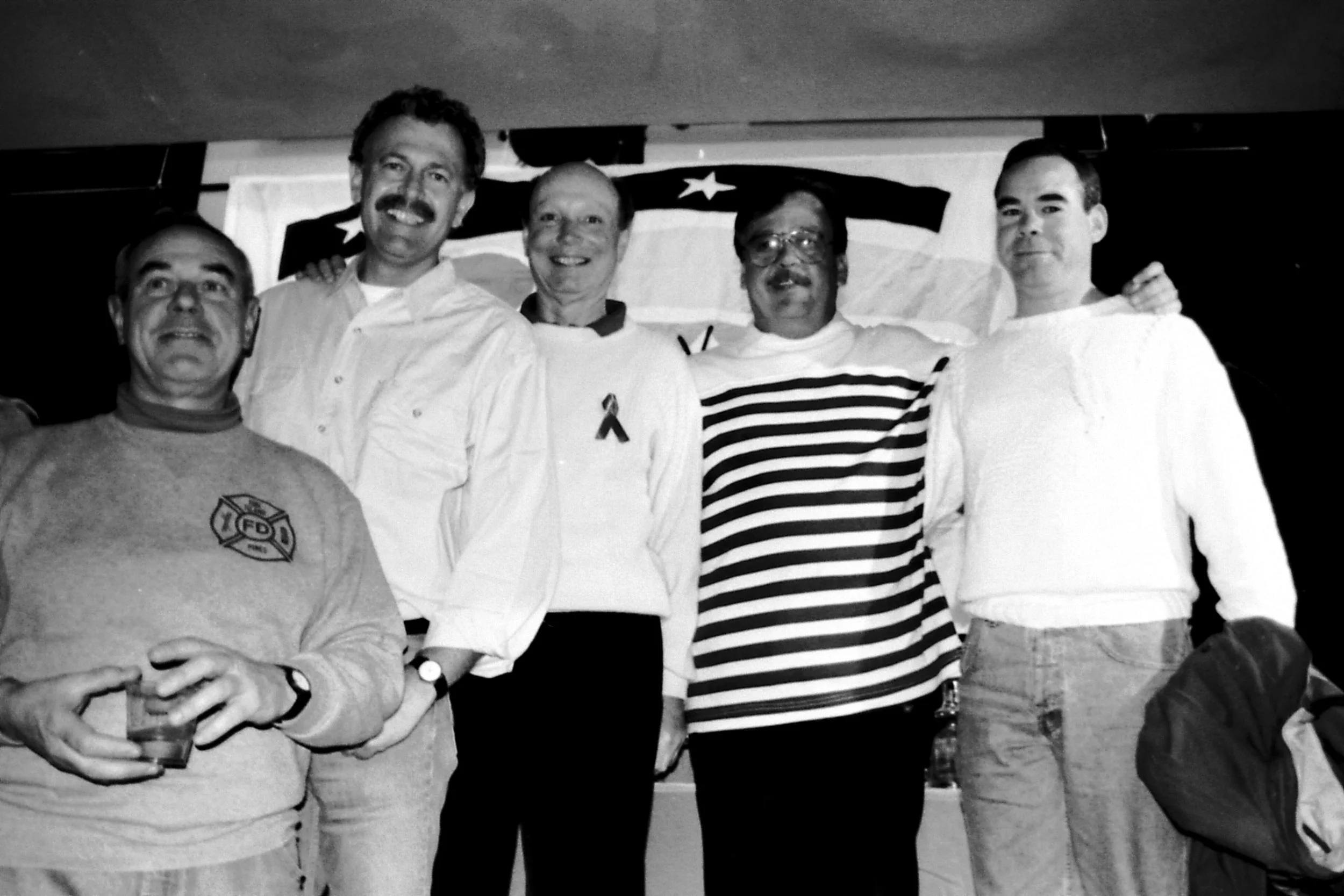
Senior Pines community leaders in the late 80s: (L-R) David Langer,Ron Martin, Alan Brockman, Ray Beatty and Jim Cashel. Photo credit: Unknown.
Renovations and Reforms (1990s)
By the 1990s, FIPPOA was essentially the governing body of an international gay destination. Despite the improvements implemented in the previous decade, the 90s saw the arrival of new challenges, primarily infrastructure decay and rising community expectations.
The decade saw a focus on upgrading much of the Pines’ infrastructure, which was aging or past its useful life, and was stressed due to years of deferred maintenance, and population growth. Water service had become unreliable, increasing fire risk; boardwalks had grown treacherous, leading to accidents; and the loading docks and refuse enclosures were collapsing or unsanitary. Fixes were no simple matter, as funds were not readily available, and the permitting process had become more complicated over the years.
In the second half of the 90s, FIPPOA undertook a comprehensive series of reforms to fix the infrastructure problems. It hired engineers to evaluate the harbor, boardwalks and utilities. It implemented a routine maintenance schedule and created capital reserve funds to finance major projects. It partnered with Suffolk County Water District to secure state grants to replace old pipes and install new pumps and introduced water conservation practices. In the late 1990s, FIPPOA implemented the largest harbor rehabilitation project since 1960s, and partnered with Coastline Freight to improve waste management services. These upgrades significantly improved the quality of life in the community.
On the cultural front the Pines progressed as well. People openly described it as a gay community and doubled down on the fight against AIDS. For its part, FIPPOA became more open and vocal. It embraced the Invasion, which it described as a major community event and worked with the Fire Island National Seashore (FINS) to make the Morning Party, a fundraiser for GMHC, a beach party in 1991 to accommodate the ever growing crowd. The move was a hit and continued throughout the decade, ending in 1998, at which point FIPPOA created the Pines Party. There was also open debate about having an AIDS Memorial in the Pines, but members voted against that in 1994.
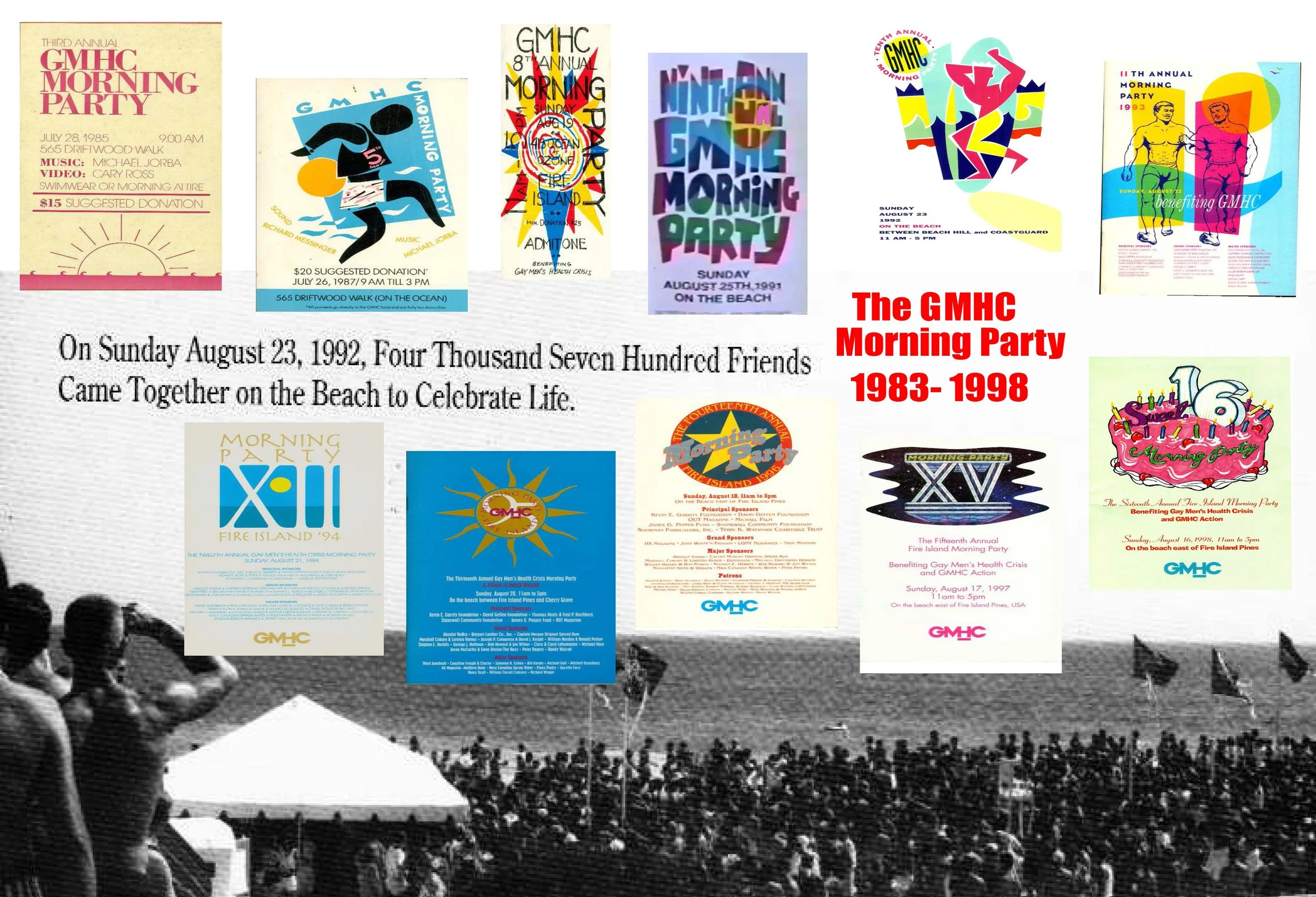
Posters from the Morning Parties throughout the years. Photo credit: Unknown.
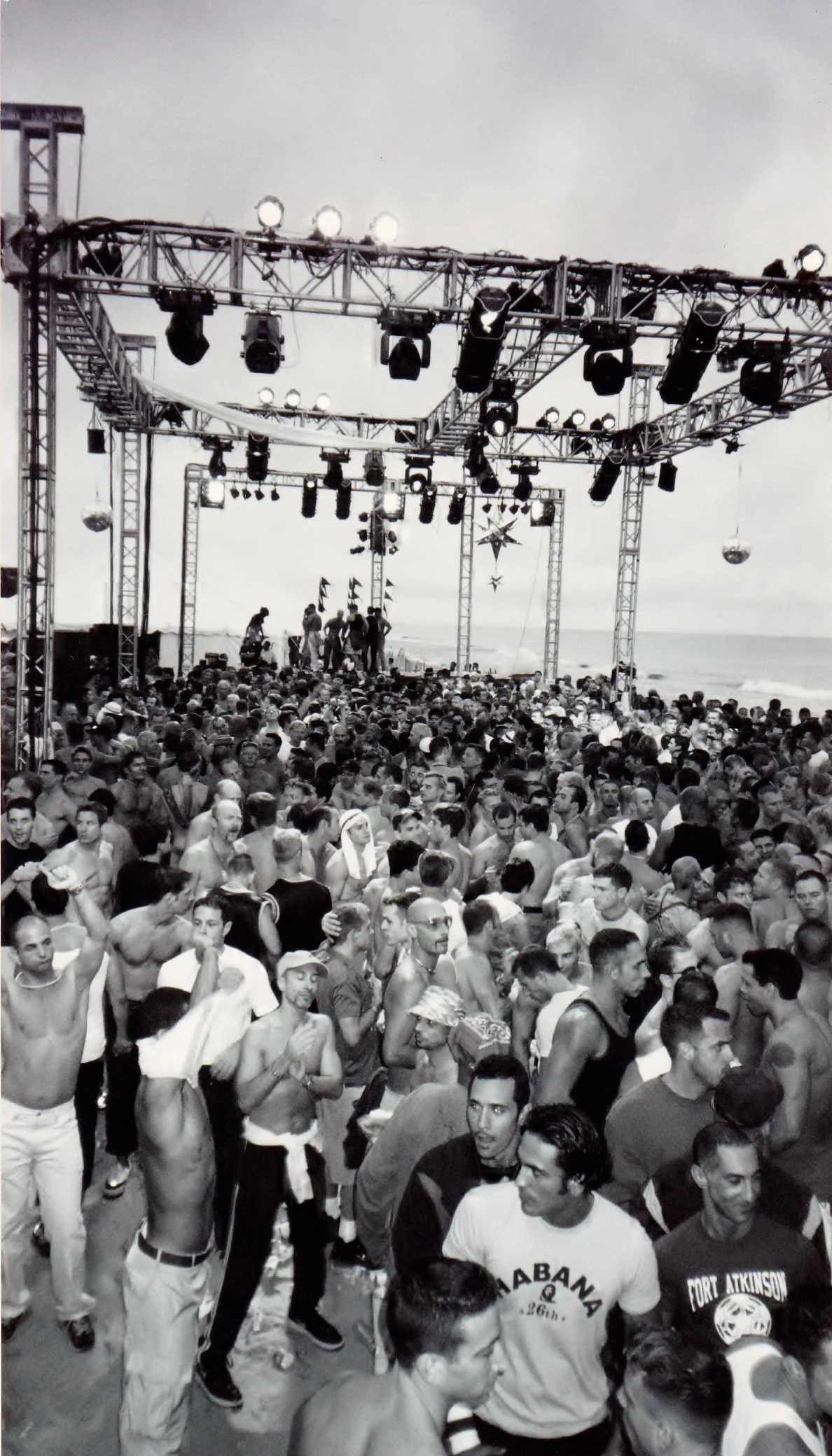
The first Pines Party in 1999. Photo credit: Unknown.
The backdrop to the progress the Pines saw in the decade was the introduction of the lifesaving anti-retroviral cocktail in the mid-90s. Thanks in large part to the relentless activism of the LGBTQ+ community - including many Pines residents – it literally gave a new lease on life to millions, and boosted optimism. These factors, along with a strong national economy, led to an uptick in population and property values. As the 90s drew to a close it was clear that the Pines was ending the decade in much better shape than when it started.
The New Millennium: The Existential Question Is Asked
The 21st century ushered in an era of both tremendous growth and profound challenges for the Pines. In this time FIPPOA continued to have a majority LGBTQ+ board and openly gay presidents – Ron Martin (who succeeded Alan Brockman) in 2006; Jay Pagano in 2010; and Henry Robin in 2020. Each led in their own way, but together with FIPPOA’s board and committee members, they enabled the community to move forward amidst the growing complexity of a rapidly changing world.
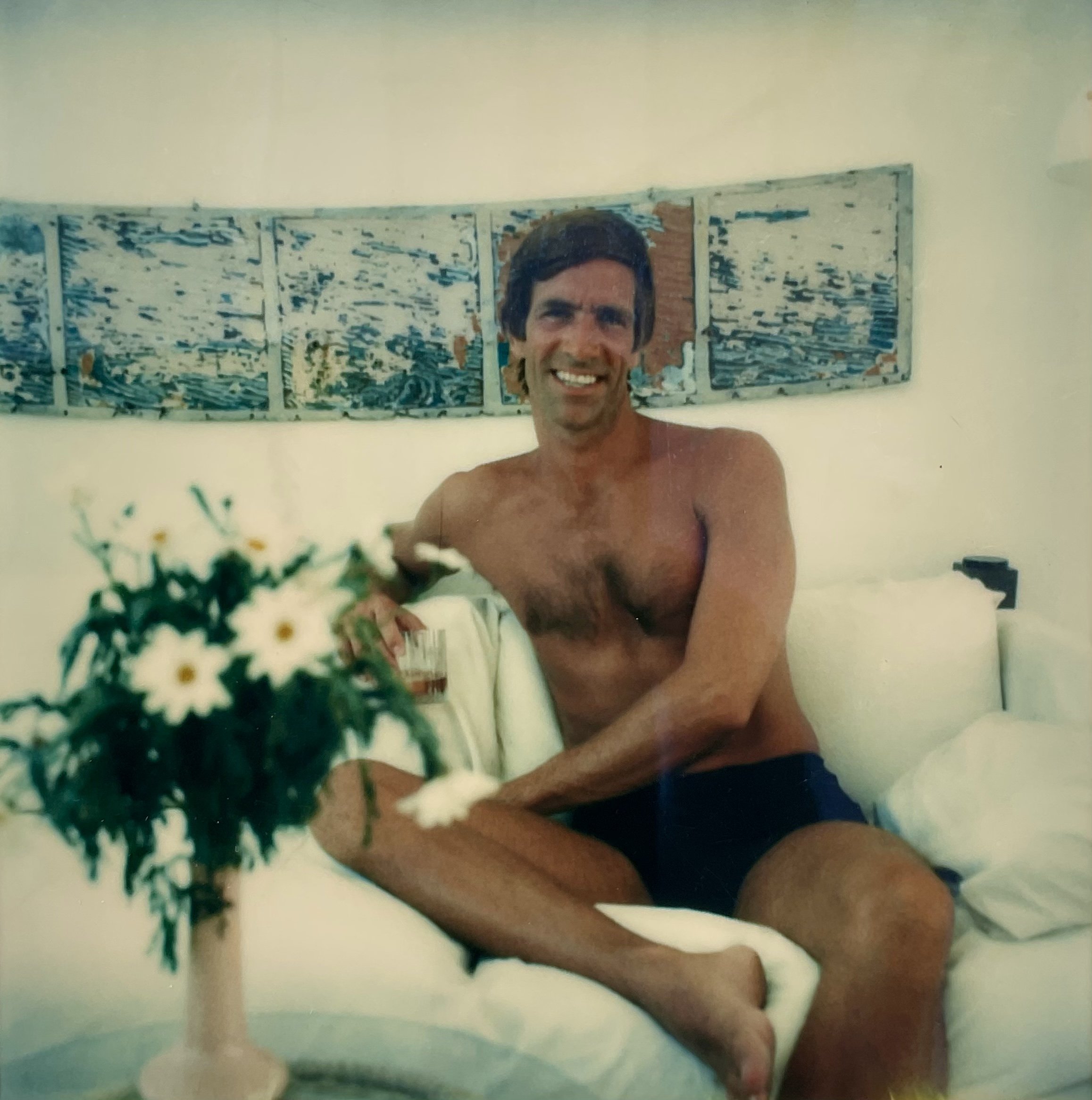
Jay Pagano who succeeded Ron Martin as FIPPOA President in 2010. Photo courtesy of Jay Pagano.
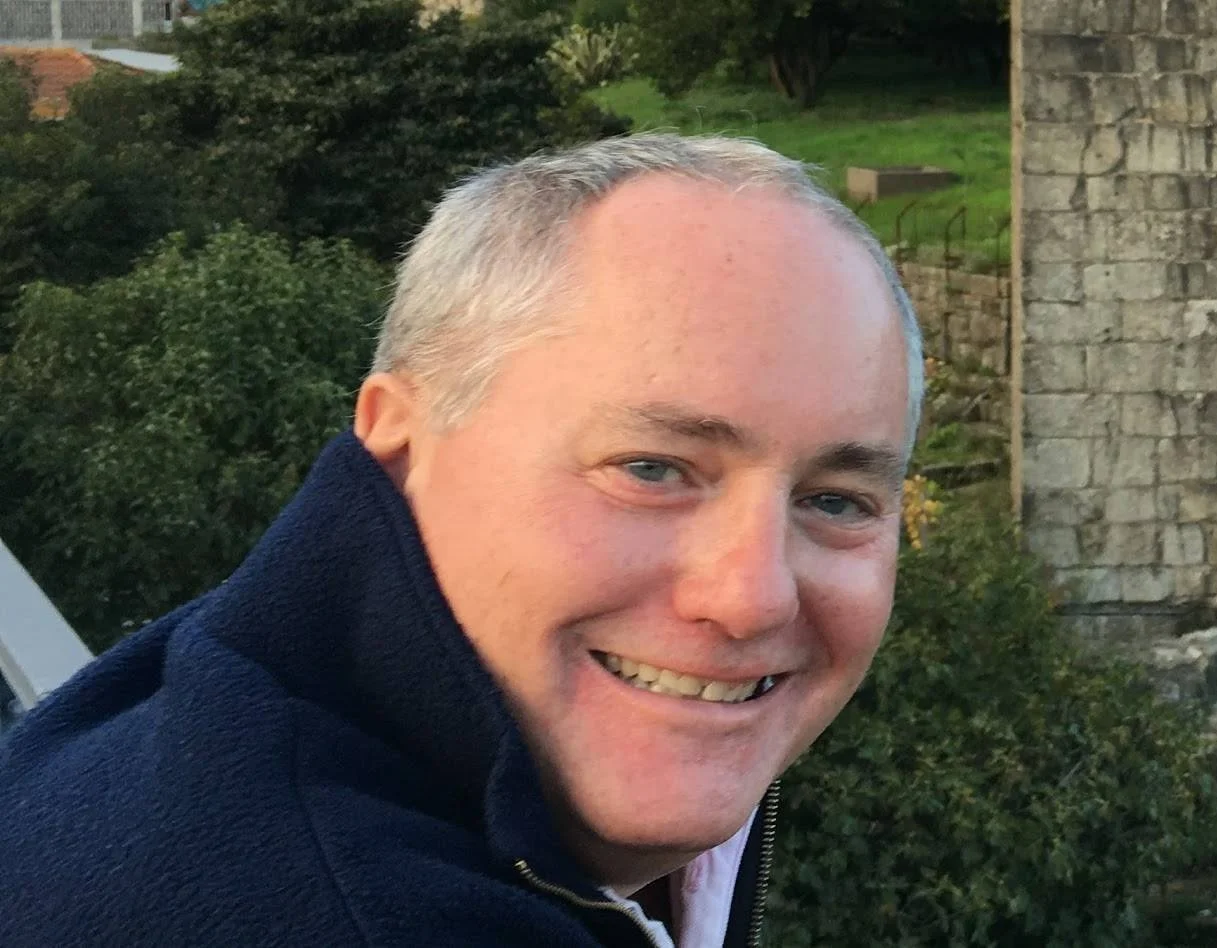
Henry Robin, who was elected FIPPOA President in 2020. Photo courtesy of Bob McGarity.
Of all the challenges the new millennium brought none was more profound than the existential question it raised: In light of climate change, can—and should—Fire Island be preserved?
The early decades of the century saw the island battered repeatedly. Major hurricanes and a succession of Nor’easters ravaged beaches and dunes, damaged homes and infrastructure, and caused widespread flooding. The Pines itself was breached more than once, with ocean water sweeping over the dunes and cutting all the way to the bay. The community, leveraging the Seashore Defense Fund, triaged the damage as best they could with trap bags, but it was clear these were only temporary measures.
The storms and the visibly rising water table raised questions about Fire Island’s long-term viability. Despite the vital role it plays in protecting Long Island and ensuring New York City could operate securely, there were camps that argued against a response, claiming that it was a waste of money and any benefits would be short-lived and only accrue to a small group of well-to-do people. Others argued that the best way to preserve the Fire Island was to remove the people altogether. In the Pines itself the debate was heated. Beach activities, such as the Pines Party, came under fire, and passionate arguments sometimes threatened to overwhelm expert guidance.
In a move that would have been inconceivable forty years earlier, the Pines stepped forward to lead Fire Island’s response. Working in partnership with other communities and the Fire Island Association (FIA), in 2024 FIPPOA devised and executed a strategy to engage federal, state, and local governments and secure a long-term commitment to Fire Island’s future. Board members, including Henry Robin and Andrew Kirtzman, met directly with Senators Chuck Schumer and Kirsten Gillibrand, Congressman Anthony Garbarino, New York Governor Kathy Hochul and the leadership of the Army Corps of Engineers (ACE).
The advocacy succeeded. ACE, which had responsible for the beach since Superstorm Sandy in 2012, revised its procedures to reflect worsening environmental conditions and implemented a replenishment program. Further, in what may prove to be the most consequential decision in Fire Island’s history since its designation as a National Seashore in 1964, New York State committed $1.7 billion over 30 years to routine beach re-nourishment for Fire Island and the South Shore of Long Island.
While the successful fight to save Fire Island was its major accomplishment, FIPPOA also made major progress in strengthen the community’s physical infrastructure and supporting its social and philanthropic activities.
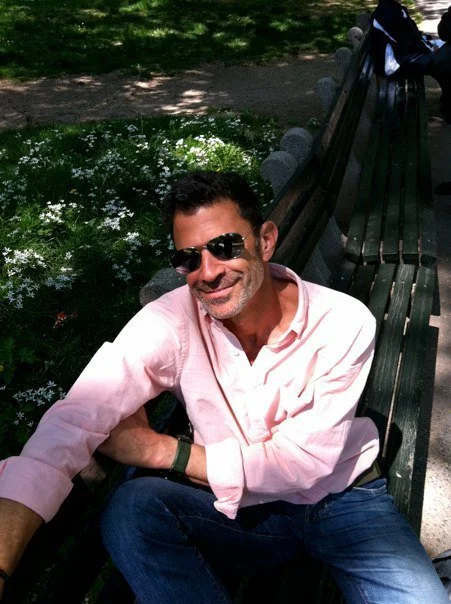
One of the most visible accomplishments of this period was the establishment of the Pines Party as the highlight of the summer season in the Pines. Drawing on the extraordinary talent within the community, most notably Allan Baum, who managed the multi-event weekend for almost a decade, it showcased the energy, creativity and joy that has long characterized the Pines.
Allan Baum. Photo credit: Allan Baum.
The highlight was the themed beach party, an extravaganza that ran from 10 pm to daybreak that was produced in partnership with legendary artist and producer Guy Smith.
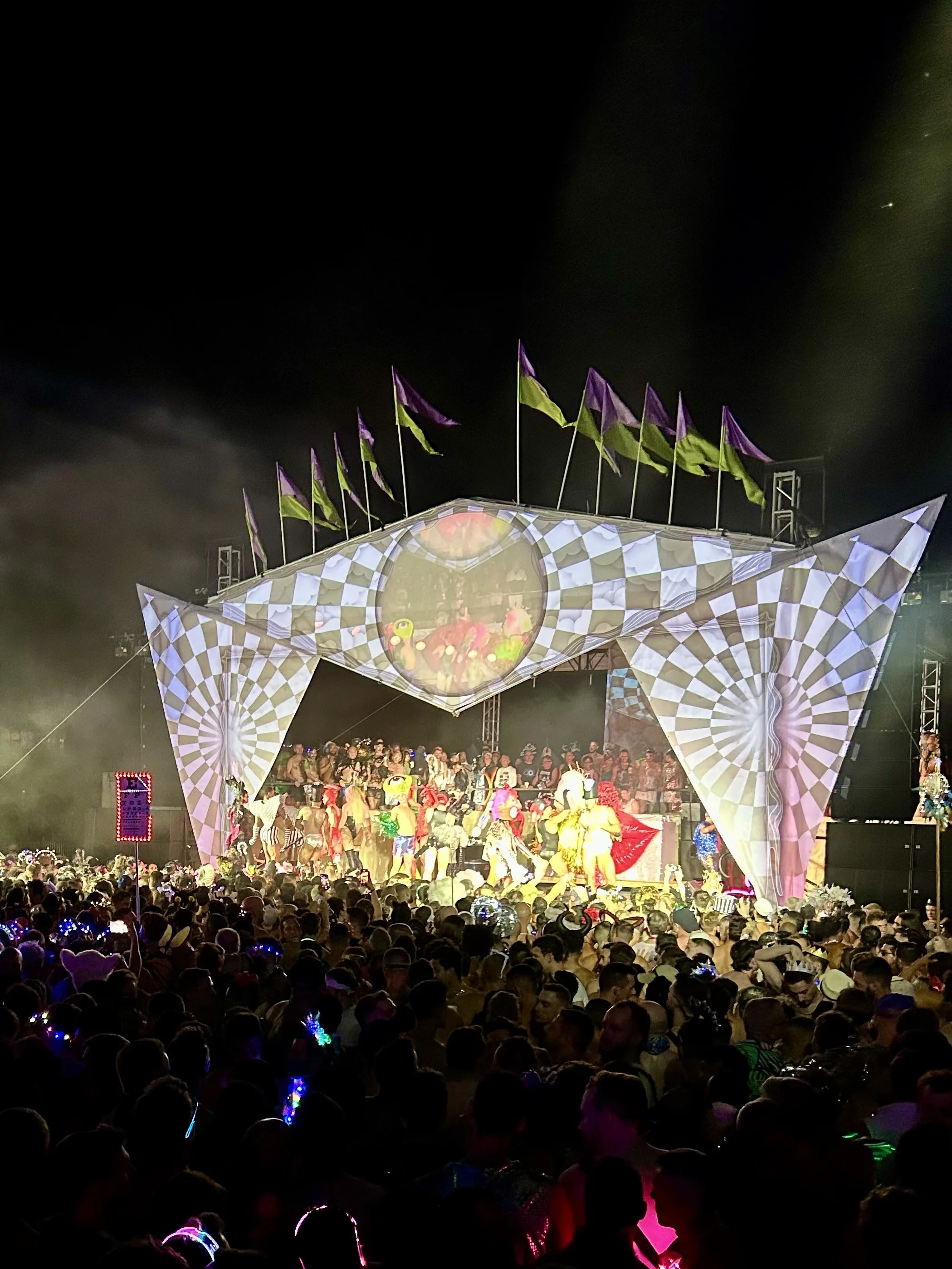
Pines Party 2025. Photo courtesy of Virun Rampersad.
One of the key decisions made in this time was to preserve the Pines Party as a community-centered event. In its early years, circuit parties dominated the gay nightlife landscape, and it would have been easy for the Pines Party to be swept into that commercial current. Doing so, however, would have privileged professional promoters over residents and risked crowding out the very community that hosted the event. Organizers believed this would be both unfair and fundamentally at odds with the culture of the Pines, and they took deliberate steps to give priority to residents. It proved a sound decision. Today, Pines Party is a vibrant – and profitable – event for the community.
Much of FIPPOA’s work in the new millennium fell into the category of what might be called ‘necessary but unglamorous’. As summer crowds grew and pressures mounted from home construction, new technology, and climate change, the physical infrastructure of the Pines required constant attention. In response, FIPPOA undertook a series of major projects, including rebuilding the harbor and dock areas and upgrading aging boardwalks. They also installed high-quality signage (critical in emergencies) and improved lighting to better support the flow of people and goods. In addition, they added garbage cans along the walks and beaches to help keep the community clean. Behind the scenes, FIPPOA oversaw the replacement of water mains and took steps to improve drainage, as a rapidly rising water table was causing flooding in several parts of the Pines.
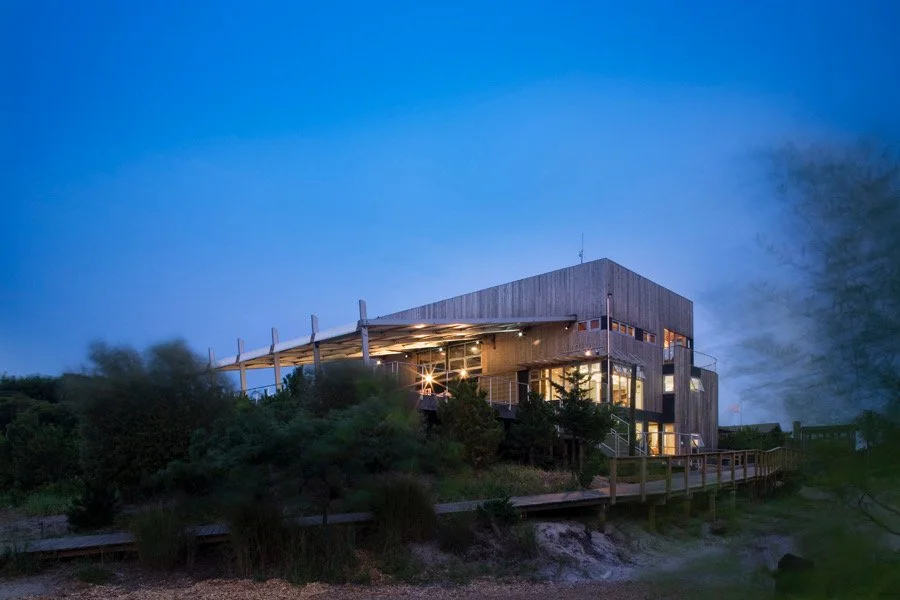
One of the biggest enhancements to the community was the construction of the new community center Whyte Hall in 2007.
Whyte Hall Community Center. Photo courtesy of Scott Bromley.
A modern, efficient community center, it is now used almost every day during the summer, hosting a variety of events, including artistic performances, religious services, weddings, benefits, civic celebrations, and community meetings. Designed by Pines resident Scott Bromley (and named after its major benefactor the late John Whyte), it stands as a clear symbol that the Pines has become a full-fledged community with a diverse and socially active population.
High speed internet represents one of the great advances of the twenty first century, with virtually everyone having mobile phones and personal computing devices. Recognizing and responding to this trend, FIPPOA, partnering with the Pines Pantry, helped introduce internet service to the Pines in the early-2000s. It took many years – and a protracted battle – but in 2021 they ushered in high-speed broadband service via Verizon. The introduction of internet services transformed the community’s culture. Landlines disappeared and with it the famous Pines Phonebook, once an essential tool to connecting.
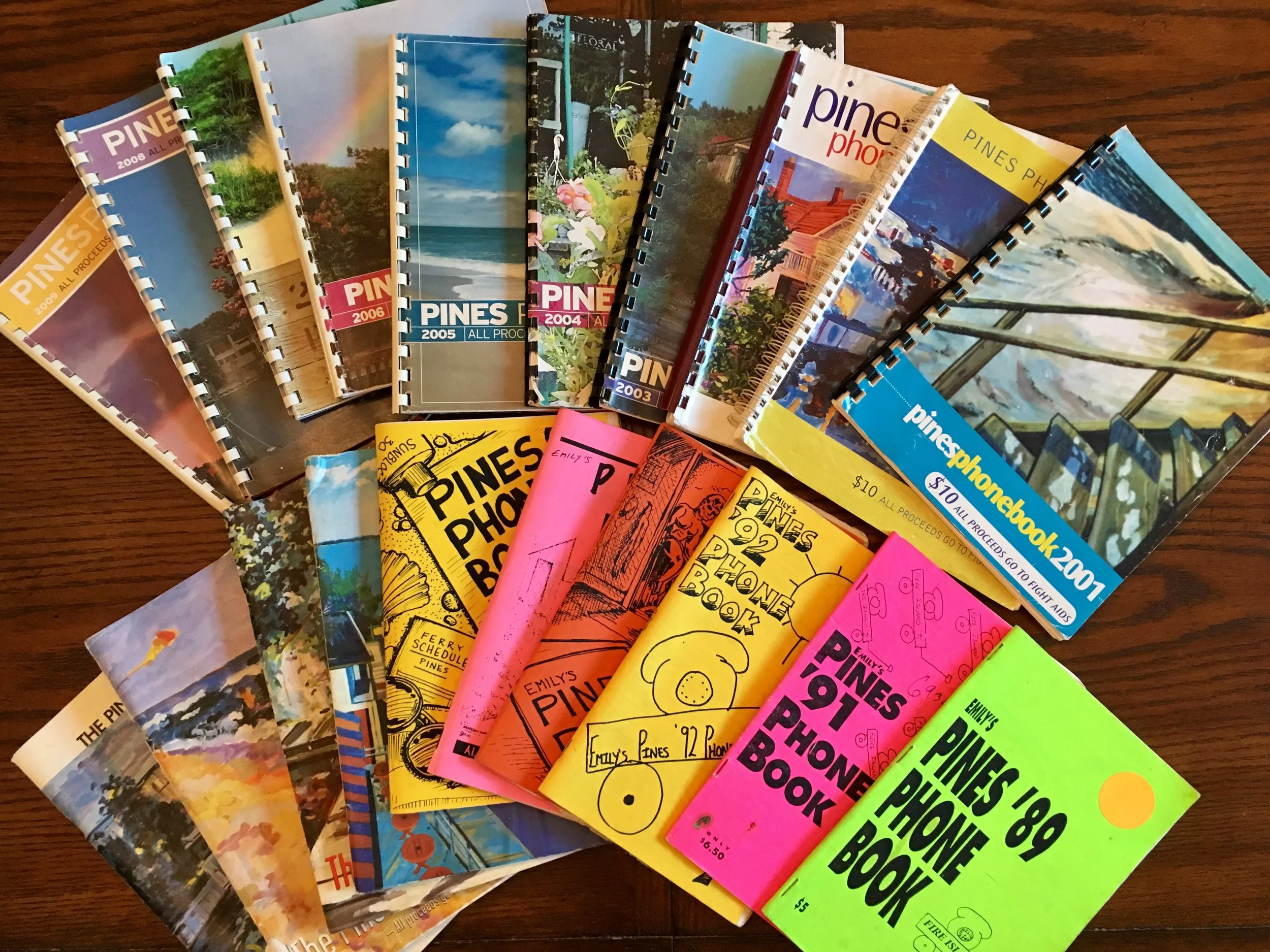
The Pines Phonebooks. Photo credit: Unknown.
The new millennium also brought setbacks. In addition to climate change, the Great Recession of 2008 depressed home prices and rentals, and a devastating fire in 2011 destroyed much of the downtown, including the Pavilion and the LaFountaine (Danikki) buildings. In 2020, COVID-19 swept across the globe, killing millions. The Pines became a sanctuary for many, and FIPPOA provided essential guidance that enabled the community to operate safely during an unprecedented crisis. A couple of years later, when an outbreak of mPox occurred, FIPPOA quickly mobilized and partnered with Northwell Health to vaccinate residents and visitors.
COVID was not the only crisis in 2020. The murder of George Floyd ignited a nationwide reckoning that reached the Pines as well. Community members raised their voices and FIPPOA created the Committee on Black Equality (CoBE), tasked with recommending steps to make the Pines more inclusive and welcoming to people of color. This led to the creation of Trailblazers Park in the Pines Harbor, a dedicated space featuring a public drinking fountain and flags honoring LGBTQ+ leaders from around the world.
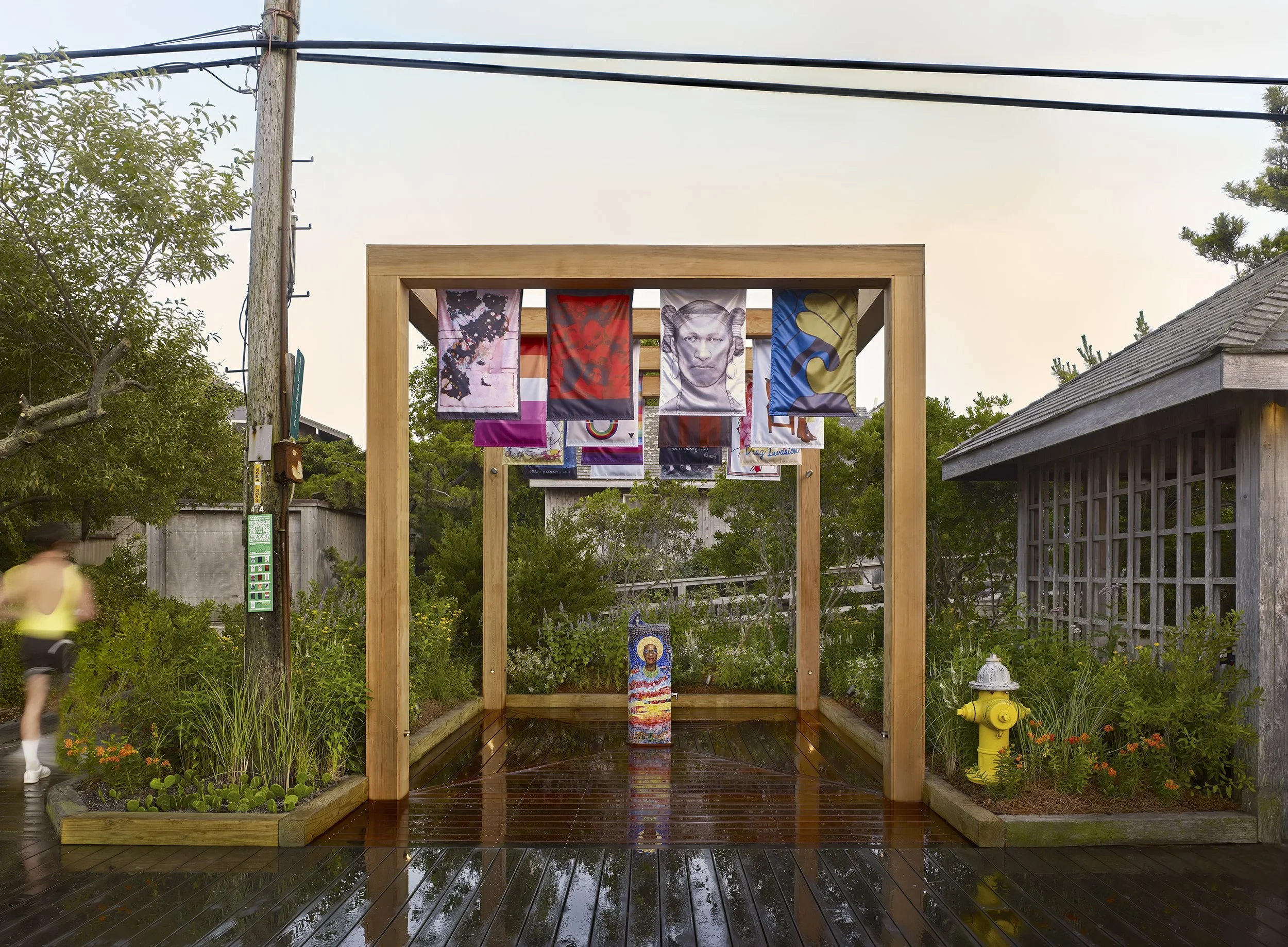
Trailblazers Park in the Pines Harbor. Photo credit: Unknown.
Its message that the Pines is open to all and recognizes the contributions of trailblazers within and beyond its shores represented a complete reversal from the “Family Community” sign FIPPOA posted in 1958.
COVID and the infrastructure upgrades had a noticeable impact on the community and culture. COVID ushered in a huge wave of new homeowners in the Pines, with over 20% of houses changing hands in a few years and a significant increase in property values. The rental market also changed; not only did prices go up, but the way people rented began to change. In the early years, homeowners and renters typically spent every weekend there throughout the season. Over time, house occupancy subdivided into half- and even quarter-shares, with people coming out once or twice a month, primarily for weekends. Post-COVID, rentals shifted away from seasonal half and quarter shares to week long stays once or twice a season, bringing with it a new generation of Pines visitors.
The challenges faced in the first quarter of the 21st century drove FIPPOA to develop innovative ways to serve the community. One example is the Pines Foundation (formerly named the FIPPOA Charitable Foundation) that was established in 1999 (and ‘came of age’ in the 2000s) to encourage greater financial support for civic and public-benefit projects through tax-deductible charitable giving. The foundation also allowed FIPPOA to manage certain activities, such as the Pines Party, philanthropic giving, the rodent control program, and community assets (e.g., Whyte Hall) separately from routine association business like harbor operations. It is an elegant solution to manage the diverse demands of its residents. Another example is the creation of the Fire Island Pines Property Owners Association Political Action Committee (FIPPOA PAC), which was established in 2013 and enabled FIPPOA to act as a political organization and engage more effectively with elected officials and influence public policy. It was a prescient step given the increasingly critical role political leaders would soon play in shaping the future of the community.
Looking Back to the Future
FIPPOA’s 70-plus-year history shows that meaningful progress requires sustained effort, that quiet diplomacy can be highly effective, and balancing competing priorities naturally generates debate — which can sometimes put board members in the crosshairs of disgruntled community members. Each generation confronted significant challenges that demanded creative solutions and close collaboration with public and private stakeholders. Yet above all, the history demonstrates what becomes possible when a community unites around a shared purpose.
Without a doubt, FIPPOA’s story — the Pines story — is so far one of success in the face of incredible obstacles, driven by a slew of intelligent, hardworking and community-minded leaders. The arc of history also reveals an increasing need for leadership across a wide range of disciplines, including law, finance, public advocacy, engineering, technology, and philanthropy. Fortunately, the Pines continues to attract smart, accomplished individuals with a deep commitment to community and volunteerism who are essential to the long term viability of the community.
From its rustic and sometimes exclusionary beginnings, the Pines has evolved into a glamorous, world-renowned beach resort where a majority-LGBTQ+ population enjoys strong, respectful relationships with its straight counterparts. Throughout this evolution, FIPPOA has been one of the primary vehicles through which the community has led change. Now firmly woven into the fabric of the Pines, this central role will likely continue as the Pines builds its future and confronts new challenges.