

Pines Profile - Richard Burns (b. 1955)
Building the Institutions That Changed the World
By Virun Ramperad, July 2026
Few people have shaped modern gay life as profoundly as Richard Burns. For fifty years, he has helped create and strengthen an ecosystem of institutions that has given the LGBTQ+ movement durability, power, and reach.
Unlike trailblazers such as Larry Kramer or Richard’s close friend Urvashi Vaid, whose activism unfolded in the public spotlight, Richard has often operated off camera. Nonetheless, his impact is just as profound. His work organizing protests and building and strengthening organizations was critical to enabling the LGBTQ+ movement to survive, mature, and ultimately transform American society.
Born in New York in 1955, Richard was the eldest of four boys. His father, who was a lawyer and a veteran of World War II, and his mother, who worked as a legal secretary, helped to shape him to be a leader imbued with integrity.

The Burns Boys: Richard, Peter, Steve and Jim. Photo circa late 1970s. Courtesy of Richard Burns
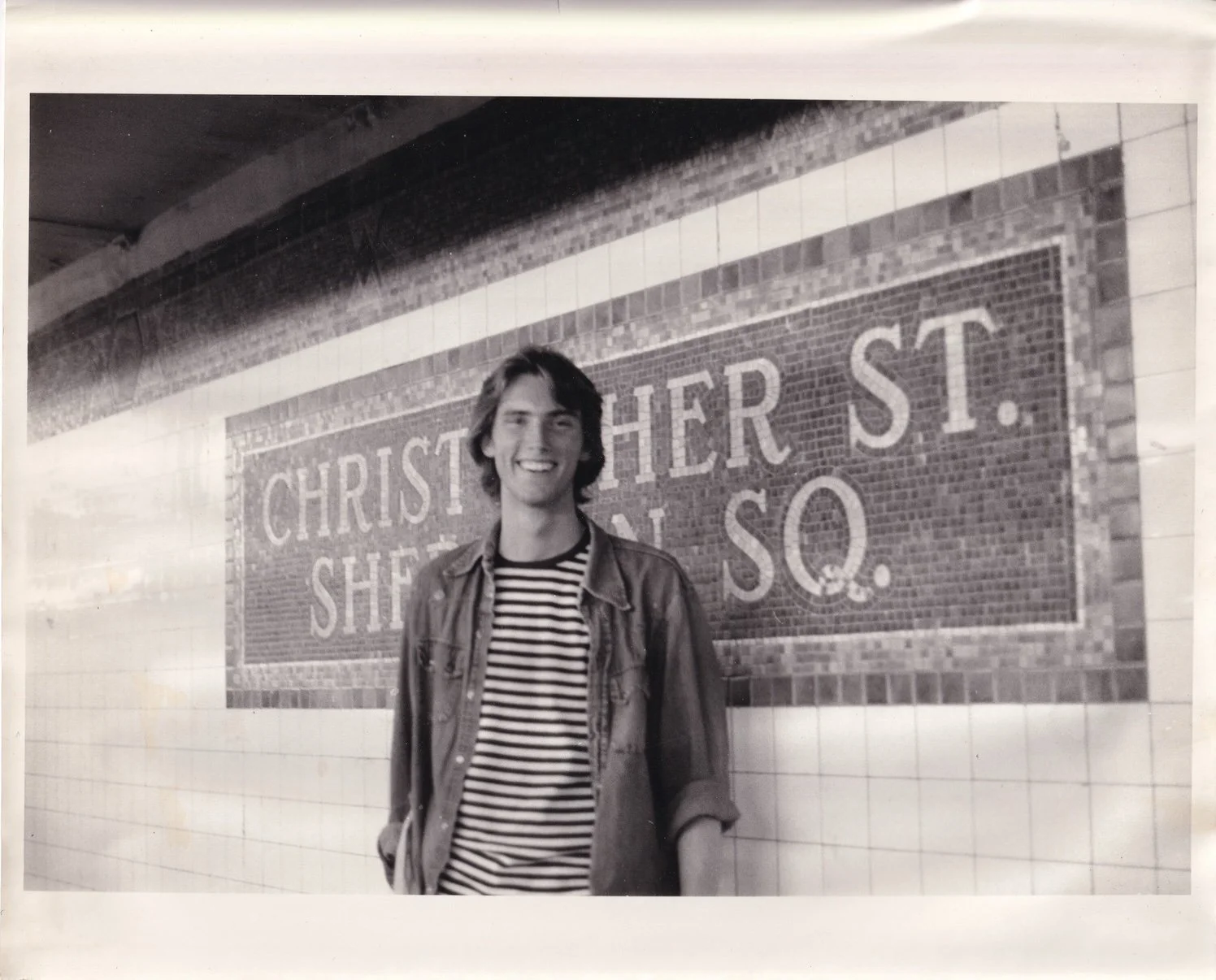
Richard Burns at Sheridan Square Subway Station, New York City in the 1970s. Photo courtesy Richard Burns.
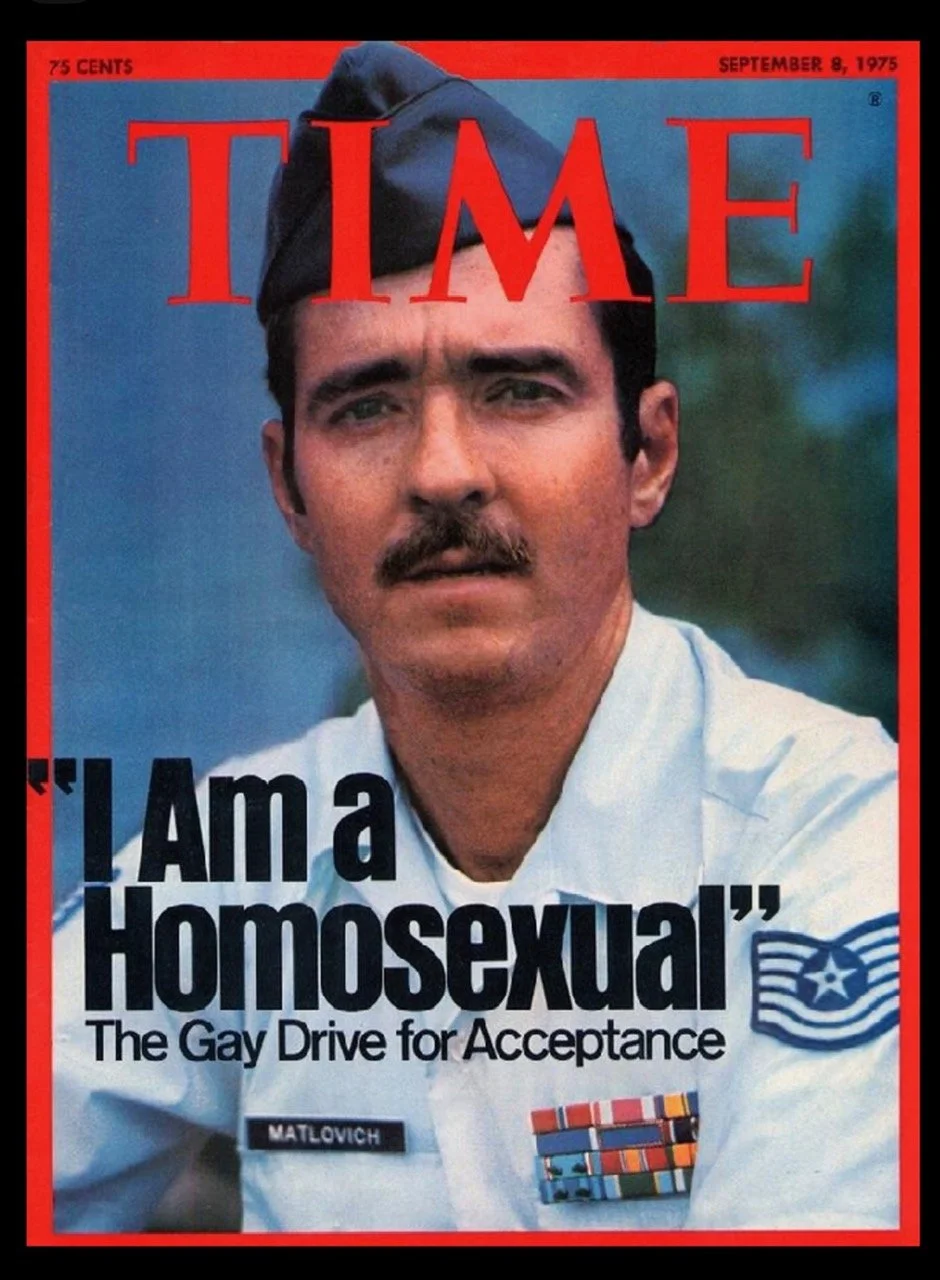
Richard knew from the time he was a young boy that he was gay. He would fantasize about the boys in the Hardy Boys young-adult mysteries and the TV star Ricky Nelson. Like most gay kids growing up in the 60s and 70s, he didn’t know of any other gay people. In 1975, when he saw the famous Time magazine cover featuring Leonard Matlovich, the decorated veteran who was discharged from the military for being gay, he thought, "We exist! There are others like me!"
Leonard Matlovich, Time Magazine cover
Richard went to Hamilton College, where he majored in English. During his sophomore year he came out publicly, one of the only openly gay men on campus (Pines alum Stephen Soba was the other). As he notes:
“It was very challenging from a mental health perspective, but I had no choice. I wouldn’t have survived if I hadn’t come out of the closet.”
When Richard graduated in 1977 there was no question about where he would go next: Boston, Massachusetts. It might have seemed an odd choice; after all, Richard was from the New York. Why not move to the city? However, Boston had something no other city had: Gay Community News (GCN). The national weekly newspaper was founded in 1973 by lesbian and gay activists who understood that their new movement needed a way to communicate with each other in a time before the internet or even fax machines. The paper was produced each week by a collective of staff and a host of volunteer writers, artists, graphic designers, and even envelope stuffers—since at the time people were afraid to be seen receiving a queer publication via the US Mail.
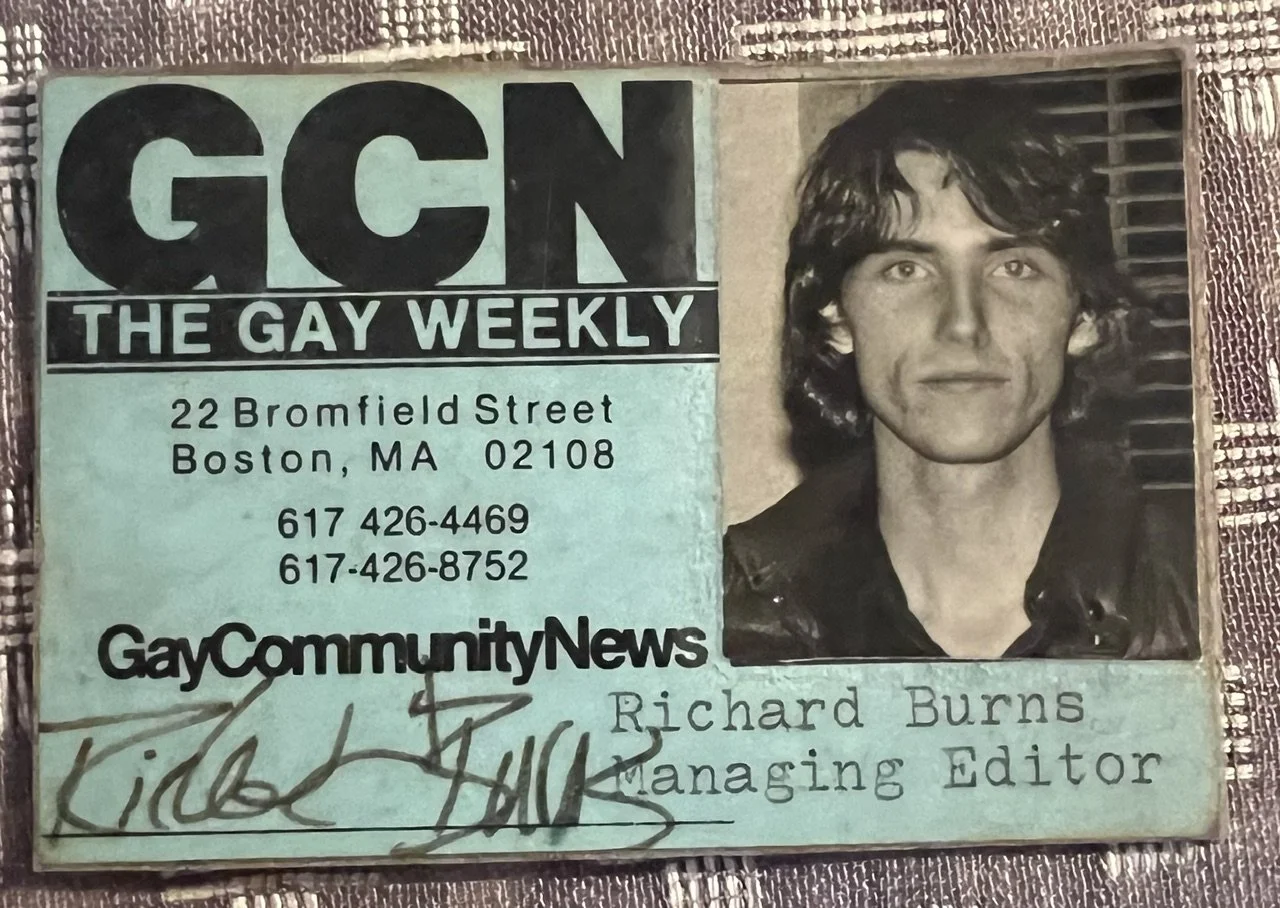
Richard Burns’ Gay Community News Press Pass. Photo courtesy of Richard Burns.
At GCN, Richard found something he had long sought - gay community. It was liberating and energizing. After a brief period of volunteering, he rose to become GCN’s managing editor.
In the 1970s, the LGBTQ movement was a work in progress. Although many of GCN’s staff and volunteers had liberationist politics—they believed that our movement should be as expansive and diverse as the queer population itself and fight for more than narrowly defined rights—not all agreed. There were constant debates among the staff about what constituted “gay news.” Were reproductive rights a gay issue? How about US intervention in Central America? GCNers couldn’t even agree on what to call themselves. Did the word “gay” include everyone? Why not call the paper “lesbian and gay”? Or “queer”
As managing editor, Richard had his first experience of leading a diverse and contentious staff, trying to stabilize an institution with precarious finances, and, of course, articulating his politics. He led GCN during a time of backlash: places like Seattle and Dade County, Florida, repealed their equal rights ordinances; San Francisco’s gay city councilor Harvey Milk was assassinated, along with the pro-gay mayor George Moscone.
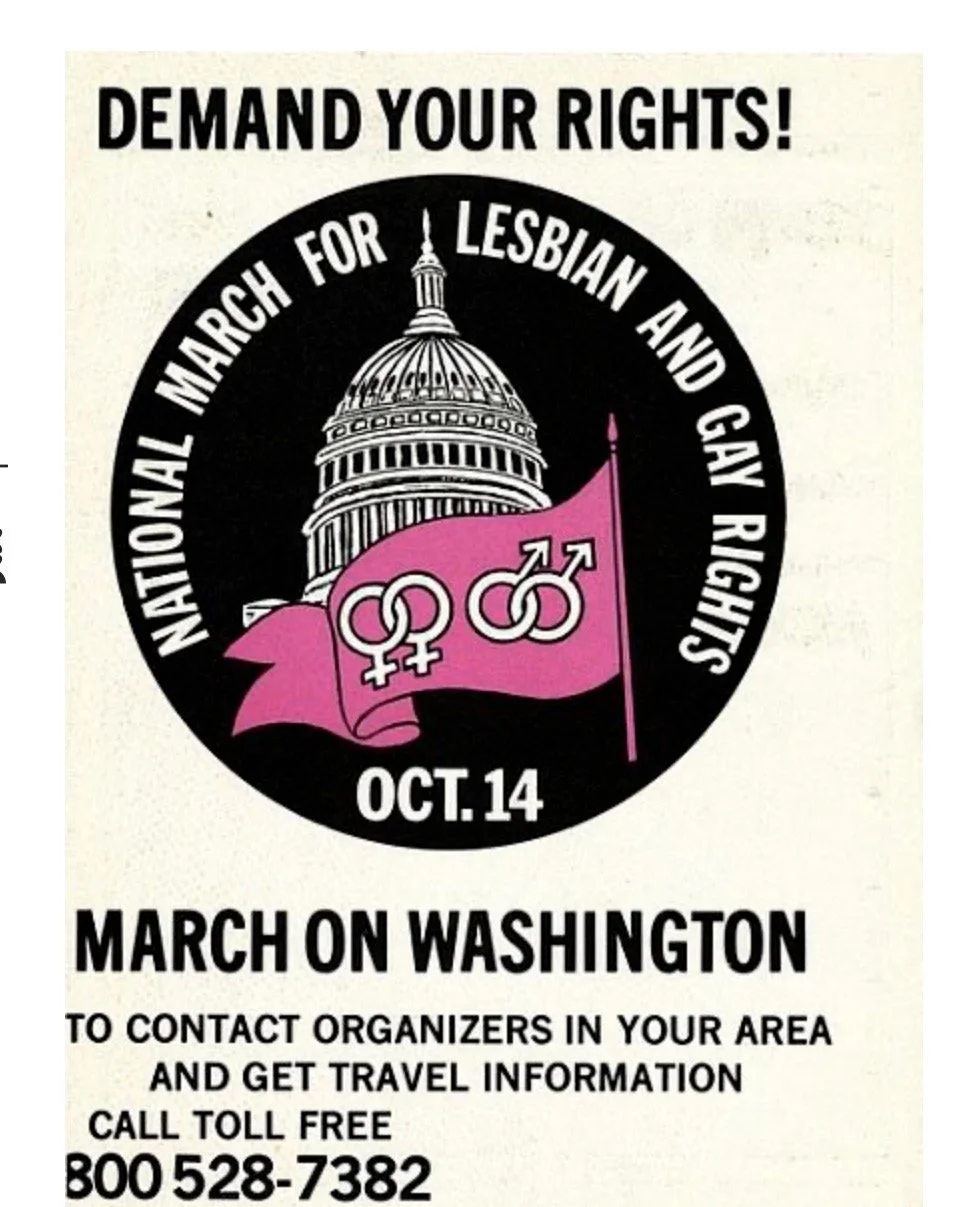
The queer community rose up to defend itself, perhaps most visibly at the first National March on Washington for Lesbian & Gay Rights, attended by tens of thousands of LGBTQ people from around the country, in October of 1979.
Flyer from 1979 March on Washington. Photo courtesy of Richard Burns.
Richard, along with his close friends and fellow activists, Amy Hoffman and the late Eric Rofes, and others from GCN, helped to plan the March. The experience changed them. Not only did the March make clear that there were thousands, if not millions, of gay people coming out across America, but also that they were part of a movement larger than their individual communities and local gay pride marches. As the movement slogan proclaimed, “We are everywhere.” Organizing the march created national networks and relationships that would define the movement for decades.

The Late Activist and Writer Eric Rofes at the Stonewall 25 March on the UN in 1994. Photo courtesy of Richard Burns
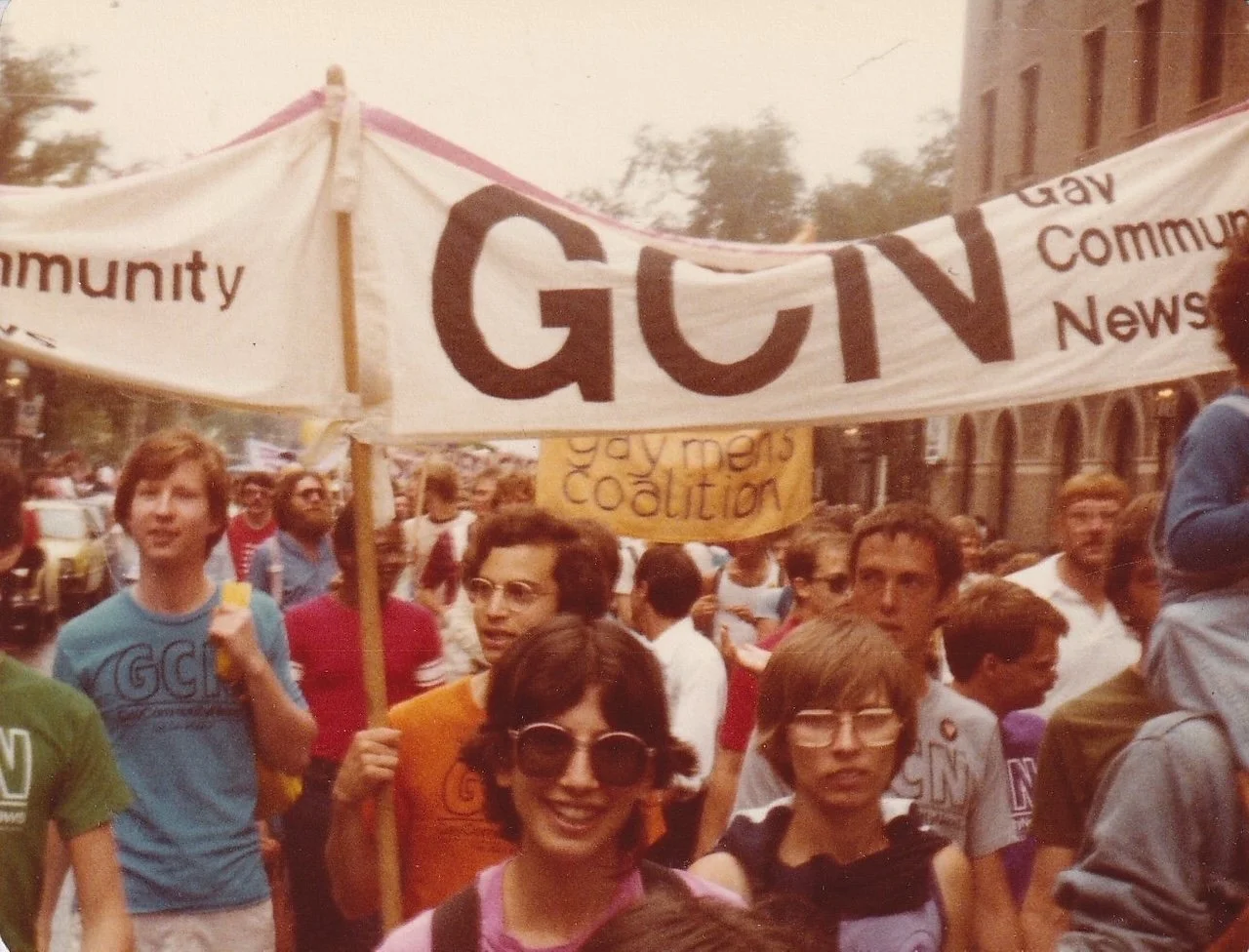
Richard has often said that GCN was an engine of gay liberation, a graduate school for activists. And indeed, at one point in the 1980s, the head of every national and significant local LGBTQ organization was, like Richard, an alum of Gay Community News.
Amy Hoffman (center) at Boston Pride March circa mid 80s. Photo courtesy of Richard Burns
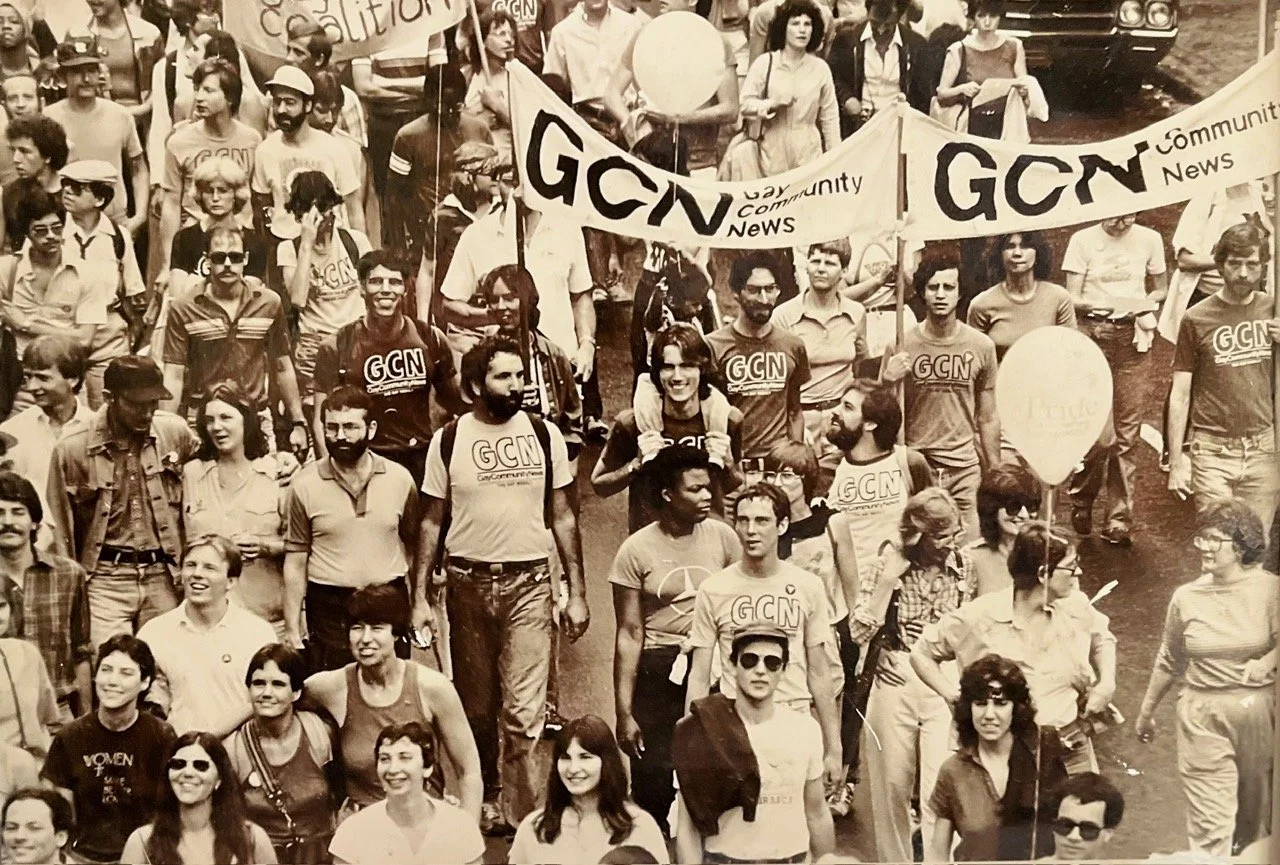
Top: Gay Community News Boston Pride 1981.
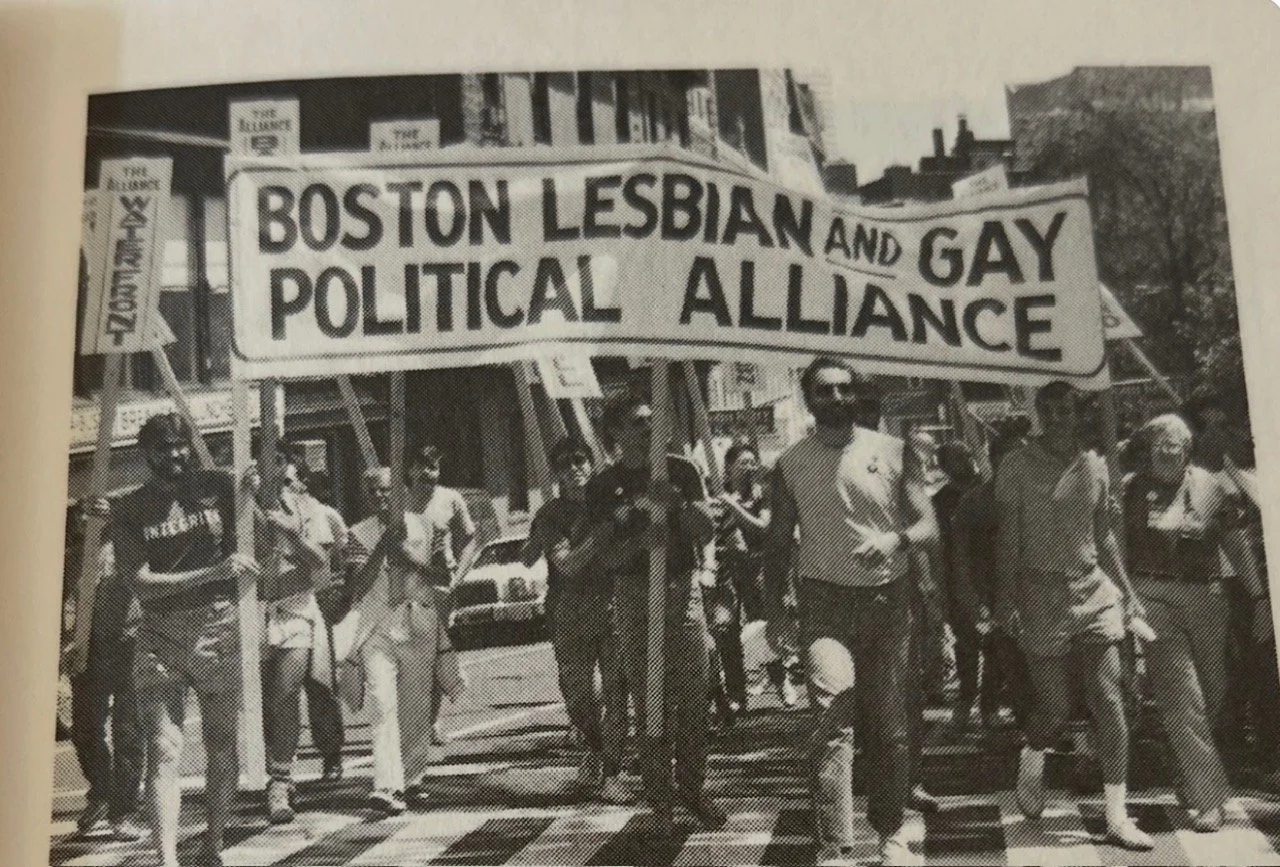
Below: Boston Lesbian and Gay Political Alliance March 1983
In 1978, when Richard was 23 years old, under the leadership of gay rights attorney John Ward, he co-founded and served as president of the founding board of GLAD Law, Gay and Lesbian Advocates and Defenders, New England’s LGBTQ legal advocacy organization.
In 1980 Richard joined the first national board of Lambda Legal and left GCN to attend law school at Northeastern University, where he met two people who would become lifelong friends and collaborators, Urvashi Vaid and Kevin Cathcart.
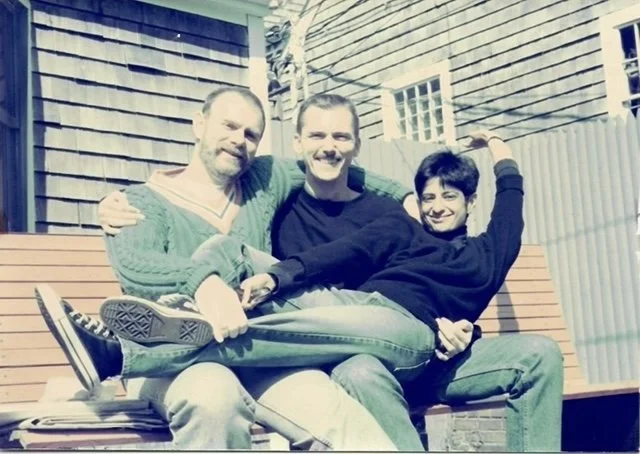
Kevin Cathcart, Richard Burns and Urvashi Vaid in front of Spiritus in Provincetown in the 1990s. Photo courtesy of Richard Burns.
While in law school, the three advocated for courses that examined the relationship between LGBTQ people and the law. A relentless organizer, in 1982 he co-founded the Boston Lesbian & Gay Political Alliance and the Massachusetts LGBTQ Bar Association. Although Richard earned his degree and practiced law in a private practice and for the city of Cambridge, Massachusetts, at the height of the AIDS crisis he knew that being a lawyer could not be his focus. He was an activist. In 1986 he made the life-changing decision to return to New York to become the Executive Director of the Lesbian and Gay Community Services Center (now known as the LGBTQ+ Center).
The timing of Richard’s arrival at the Center could hardly have been more inauspicious. The Center was in financial disarray, facing foreclosure and lacking resources. Working at both strategic and tactical levels, Richard led an organization on the precipice into one of the most important and vital queer organizations in the country, growing it from three staff members to almost a hundred. His first priority was stability, but almost simultaneously he formed a vision of what the Center could and should be: a place for community organizing, social services delivery, public policy advocacy, and cultural & social celebration. He developed a plan to make his queer liberation vision a reality. Odell Mays, who was the Treasurer of the Center during this time there had this to say:
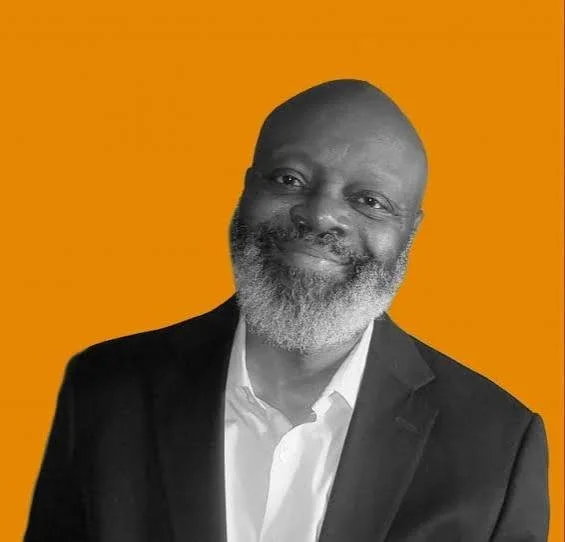
“Richard is a force of nature. He can strategize, leverage talent and connect people’s passions to causes. He excels at listening to people, understanding their stories and connecting that to the broader mission – and never making it about him personally. When these attributes are coupled with excellent public speaking skills, authenticity, curiosity, and personal charisma, it makes for a powerful leader.”
Odell Mays. Photo courtesy of American LGBTQ+ Museum
When Richard arrived at the Center in 1986, AIDS was ravaging the LGBTQ community. He often says that his father fought his war in World War II; our war would be AIDS. Unlike World War II, however, which the US entered with an established military and broad political support, the fight against AIDS began with virtually no infrastructure or public backing. In fact, the opposite was true. As the epidemic spread, so did homophobia and fear. Political figures such as Republican US Senator Jesse Helms and public intellectual William F. Buckley advocated harsh and inhumane responses. President Ronald Reagan remained silent about the epidemic for years. The LGBTQ+ community was left to confront the crisis on its own. More than 700,000 people died of AIDS in the United States including more than 100,000 in New York. Richard says:
“Embarking on that journey was in many ways an inevitable act of faith.”
ACT-UP was founded in 1987 at The Center and became the site of its famous weekly Monday night mass meetings. In New York and in communities around the country activists organized to fight homophobia with direct actions, care for people with AIDS, and demands for research on what caused the disease and how it spread. These kinds of actions helped to galvanize and even heal a shattered community.
At the Center, the changes Richard implemented transformed it into both a sanctuary and a staging ground. It became a place where people could gather, organize, grieve, learn, celebrate and fight back. Organizations that would help reshape LGBTQ+ history like the Gay & Lesbian Alliance Against Defamation (GLAAD); ACT UP; SAGE (advocates for queer elders); Callen-Lorde community health center; Gay Men of African Descent (GMAD), Housing Works (which provides housing and advocacy for people with HIV/AIDS, Immigration Equality and many other organizations were founded or found a home within the Center’s walls. By building a strong, professionally managed institution, Richard created the conditions that enabled some of the most important work in the LGBTQ+ movement to take place.

While transforming the Center, Richard also co-founded other institutions that connected activists and leaders from around the country like CenterLink, the national association of LGBTQ community centers.
Kevin Jennings, GLSEN, Richard Burns the Center and Kevin Cathcart, Lambda Legal at the GLAAD Media Awards in 2005 Photo courtesy of Richard Burns.
What makes Richard’s story even more impressive is that when he came to the Center, his only background in non-profit management and crisis management was at GCN. He had no vast network of donors and advisors to leverage. While he benefited from a handful of influential mentors, particularly Irving Cooperberg, the first president of the board of the Center and a longtime Pines resident who died of AIDS in 1997, it was clear to all who worked with Richard that he was a gifted, innately talented leader who learned by doing, supported by excellent instincts. His commitment was unwavering and his optimism boundless. People followed him.

Irving Cooperberg (centre) at a benefit for the Center at the Pavilion in Fire Island Pines. Photo courtesy of Richard Burns.
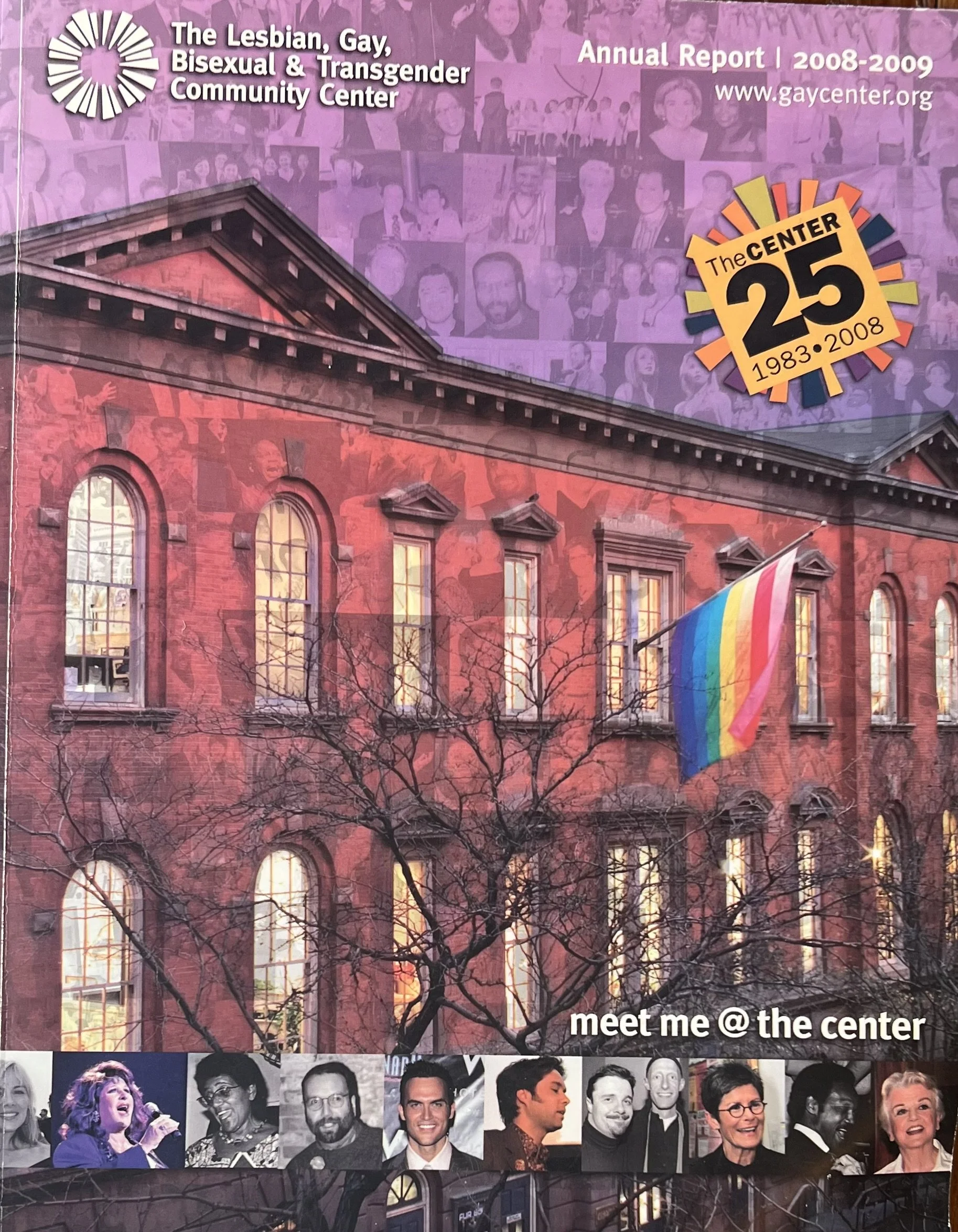
When Richard left the Center in 2009 after 22 years, his legacy was firmly cemented.
The Center Annual Report 2008-2009. Photo courtesy of the LGBT Center.
Through several capital campaigns he had expanded the Center’s infrastructure and secured its survival. Because of his work, the LGBTQ+ community was more engaged and better equipped to continue the fight for a fair, equal, and inclusive society. Richard Winger, who was the Center’s Board President between 2001 and 2004 noted that effecting change of this magnitude was a Herculean task requiring deft handling that few people could have achieved.
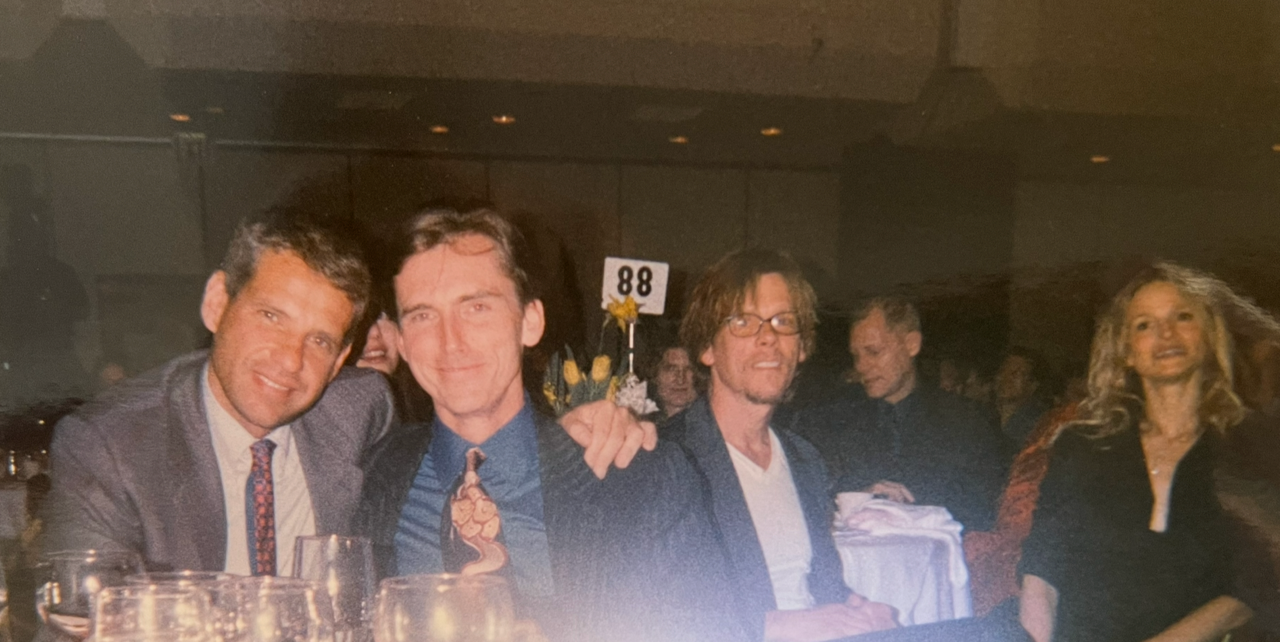
Richard Winger and Richard Burns at the GLAAD Media Awards in 2000. Photo courtesy of GLAAD.
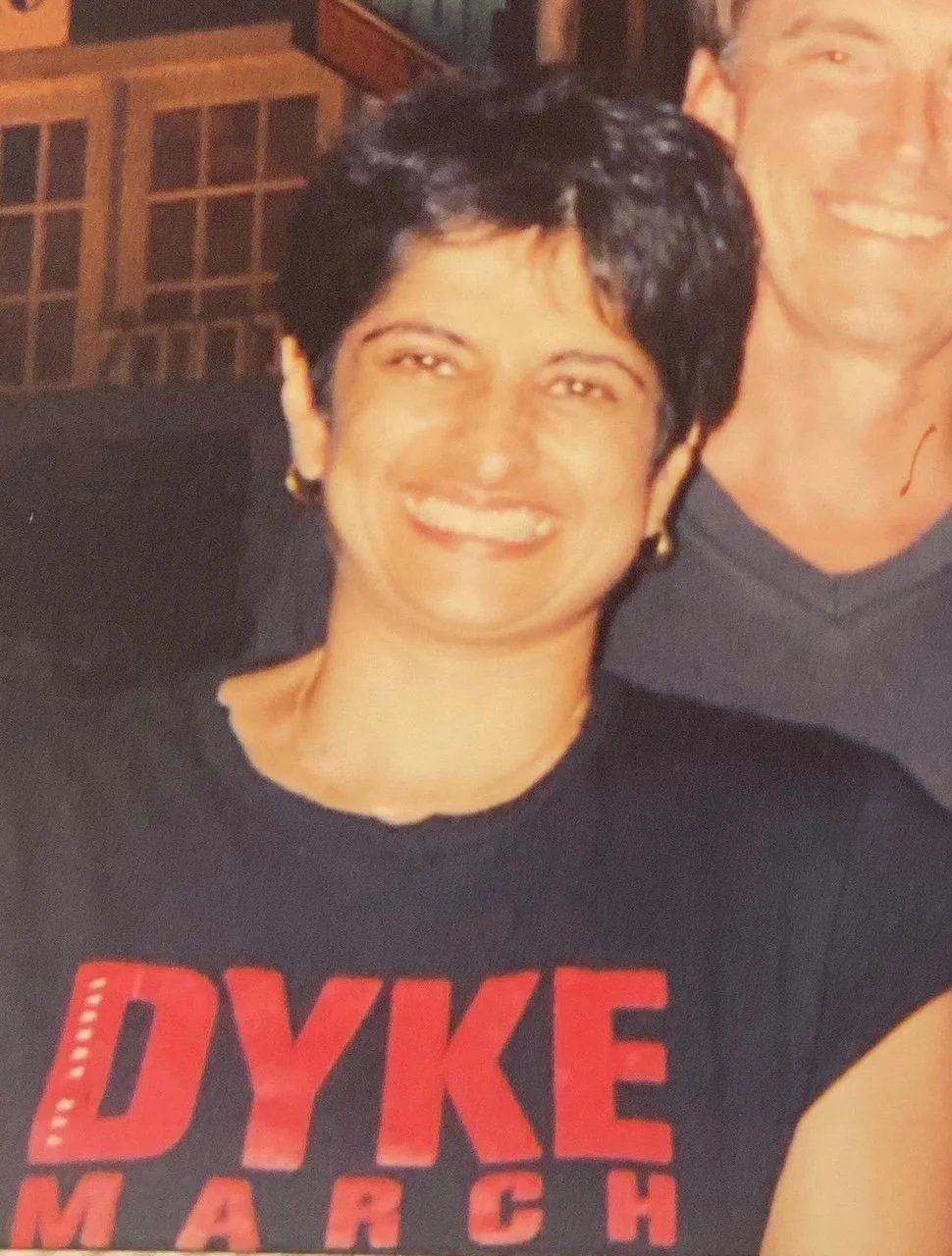
Post-Center, Richard did a two-year stint as Chief Operating Officer of the Arcus Foundation, a leading funder of LGBTQ equality, working with his close friend from law school, the foundation’s executive director Urvashi Vaid, before embarking on a remarkable second career helping organizations through periods of transition.
Urvashi Vaid and Richard Burns in Provincetown. Photo courtesy of Richard Burns.
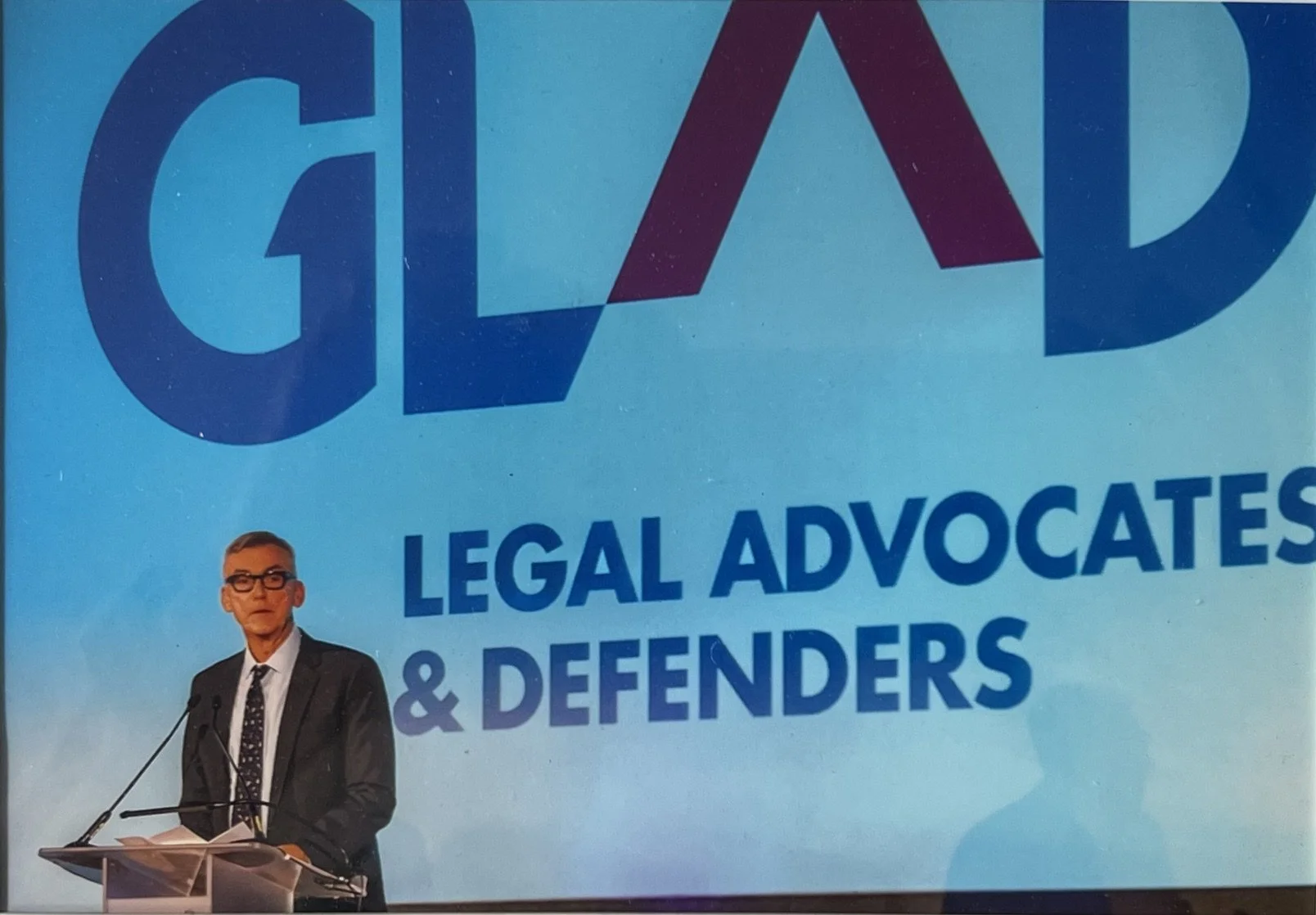
In this phase he successfully stepped in as interim CEO at organizations including Lambda Legal, GLAD Law, the Drug Policy Alliance, Stonewall Community Foundation, North Star Fund, PENCIL, Funders for LGBTQ Issues, the Johnson Family Foundation, and more.
Richard Burns at GLAD Law gala. Photo courtesy of GLAD Law
Richard is particularly committed to preserving and commemorating our movement’s history. Thus, he was a co-founder of the New York City AIDS Memorial Park, on the site of St. Vincent’s Hospital, where so many people with AIDS were treated and died. He was a key member of the team that organized for the designation of the Stonewall National Monument at Sheridan Square during President Barack Obama’s second term.
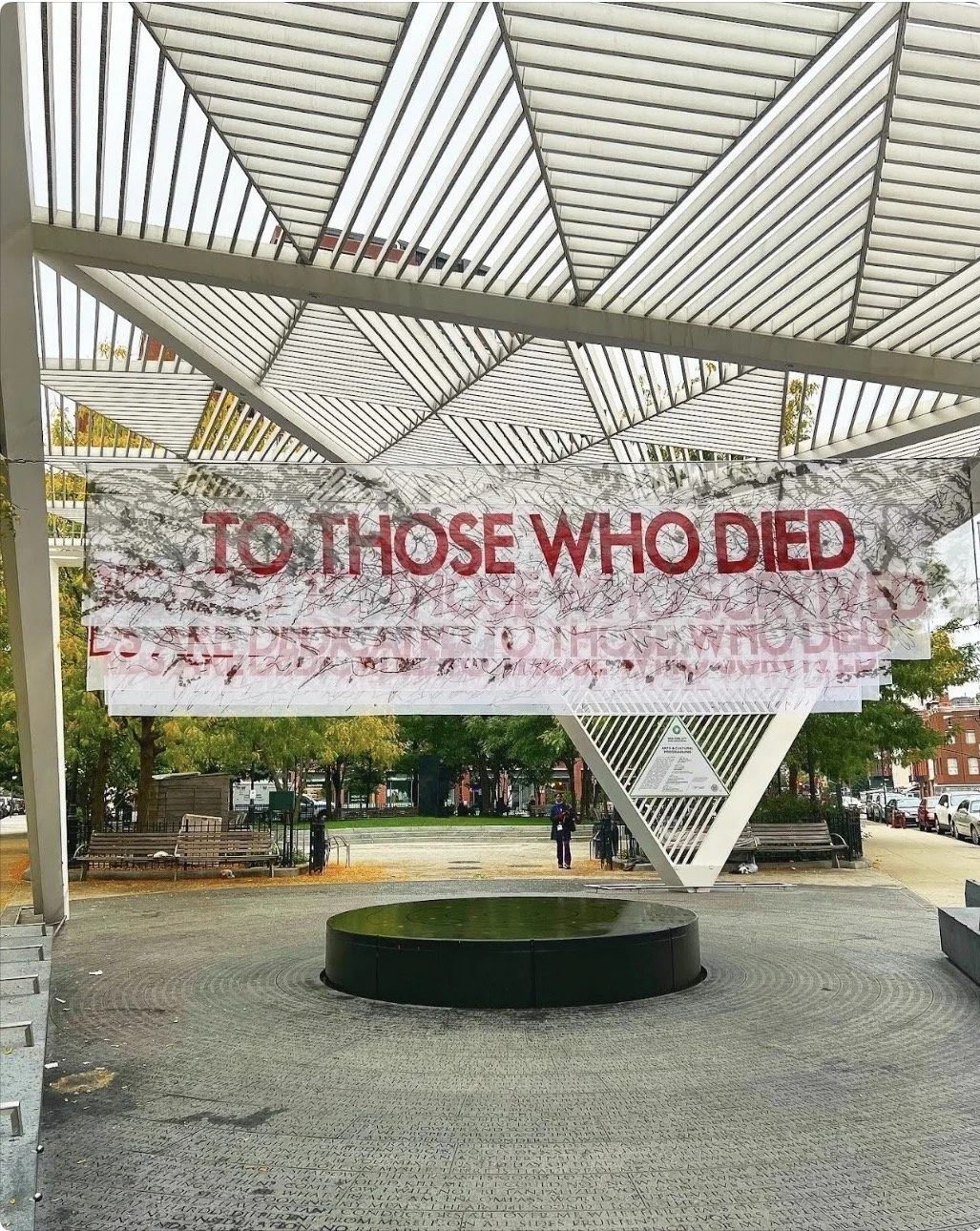
The New York City AIDS Memorial. Photo courtesy New York AIDS Memorial.
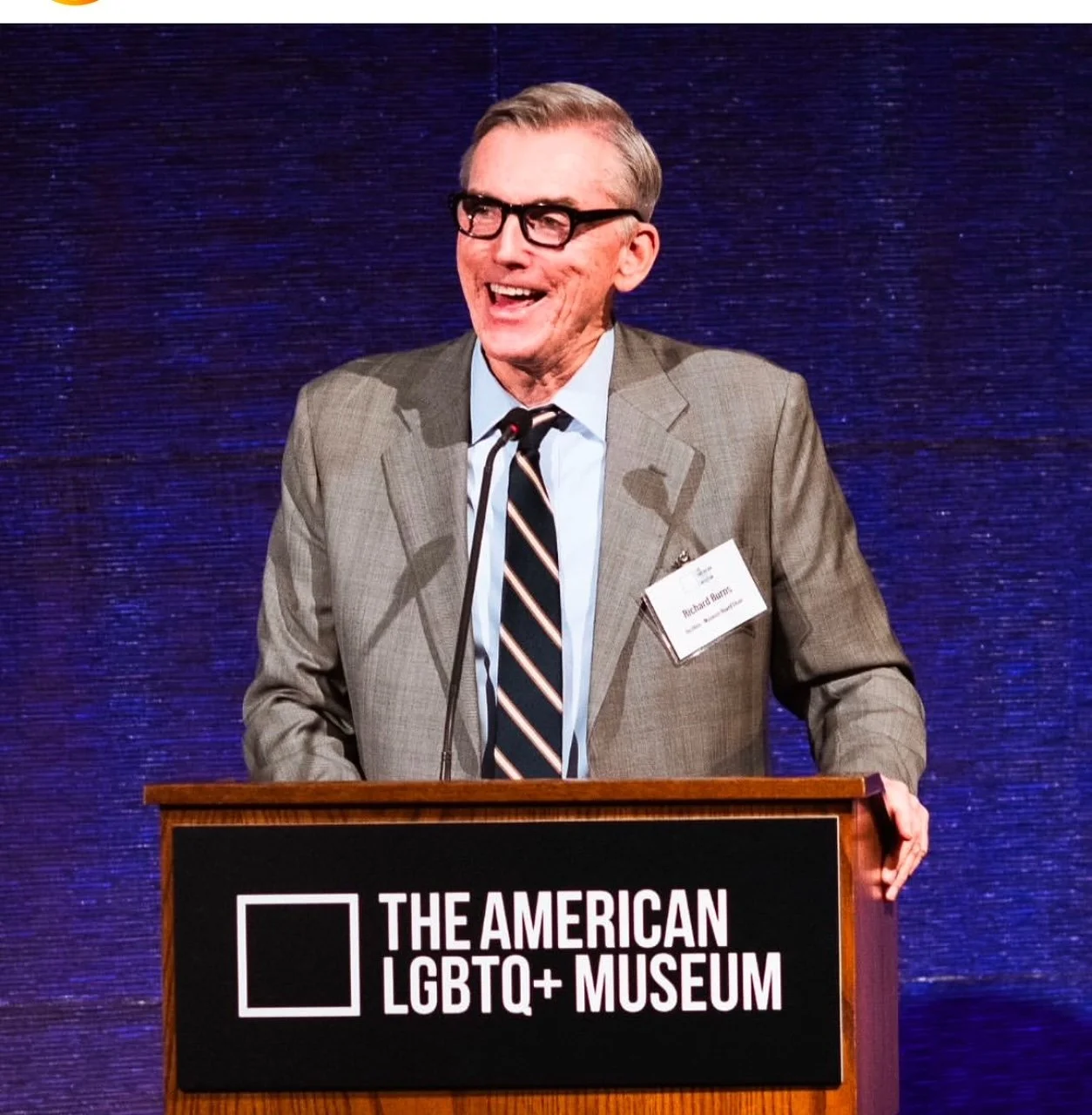
In 2017 Richard led the creation of the American LGBTQ+ Museum and served as chair of its board for nine years. The museum produced fifty programs around the country in 2025 and will open its galleries on the top floor of an addition to the New York Historical in 2028.
All of these organizations are designed to be cultural arms of the movement for equality and cement the place of LGBTQ people in American society.
Richard Burns at the groundbreaking ceremony for the American LGBTQ+ Museum in New York. Photo courtesy of American LGBTQ+ Museum.
As Kevin Cathcart, who led Lambda Legal for 24 years noted, few leaders excel both as long-term executives and as interim managers. Fewer still do so across organizations with vastly different missions. But, as he noted, Richard is different. He repeatedly earned the trust of boards and staff because of his ability to stabilize institutions, build consensus, and prepare organizations for future success. Eric Sawyer, who has known Richard since his ACT UP days at the height of the AIDS crisis and worked with him on the board of the NYC AIDS Memorial, is not a bit surprised.
“Richard is a critical thinker with strong execution skills who engages with both commitment and humility. He takes the time to develop a deep knowledge of the subject and focuses on getting stuff done. His work on The AIDS Memorial has been nothing short of inspirational. He is an excellent steward, strong at fundraising, organizing, problem solving and building consensus.”

Legendary LGBTQ+ Leaders Phill Wilson, Richard Burns, Kevin Cathcart, Jim Pepper and Eric Sawyer at Whyte Hall, Fire Island Pines in 2024.
Richard’s tremendous success at the Center and elsewhere notwithstanding, Rea Carey, former executive director of the National LGBTQ+ Task Force, sees his greatest accomplishment to date as his development of other LGBTQ+ leaders. Not only did he help create professional development programs to equip them to succeed, but he personally mentored many himself. As she explained:
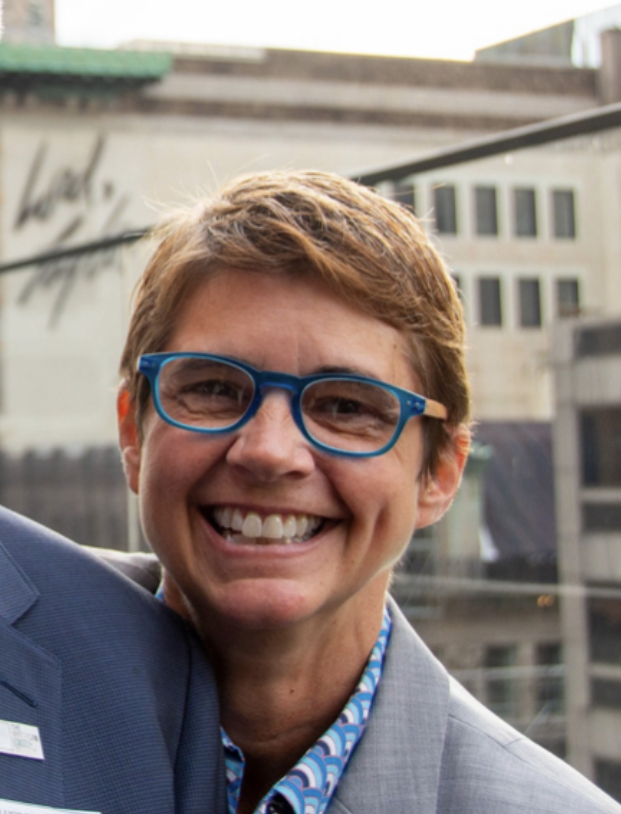
“Through his mentorship he has made many people better leaders, and, so indirectly, he has helped thousands of people he’s never met in places he’s probably never been.”
Rea Carey, Former Executive Director at the National LGBTQ+ Task Force. Photo courtesy Richard Burns.
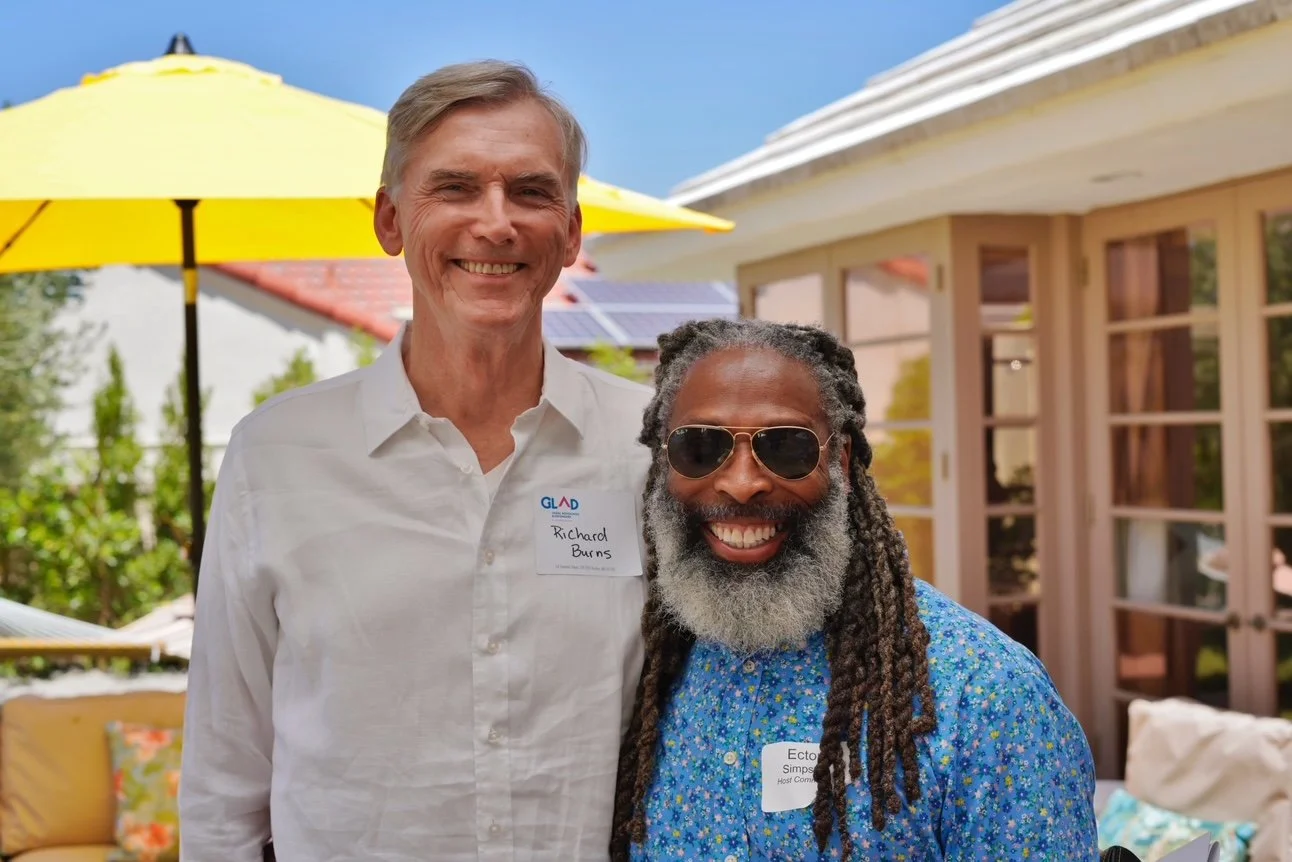
Ector Simpson, who spent sixteen years as the cultural program czar at the Center, agreed: “Because I knew him, I changed for the better.”
Richard Burns and Ector Simpson. Photo courtesy of Richard Burns
Institutions matter, but it is people who bring them to life. By helping to develop current and emerging LGBTQ+ leaders, Richard multiplied his impact far beyond any single organization or generation. Put another way, Richard did not simply build organizations; he also developed the people who would lead them, strengthening the community and positioning it for long-term success.
Richard's decades of leadership and accomplishments raise an important question: How did he do it? Where did the energy, wisdom, and resilience come from?
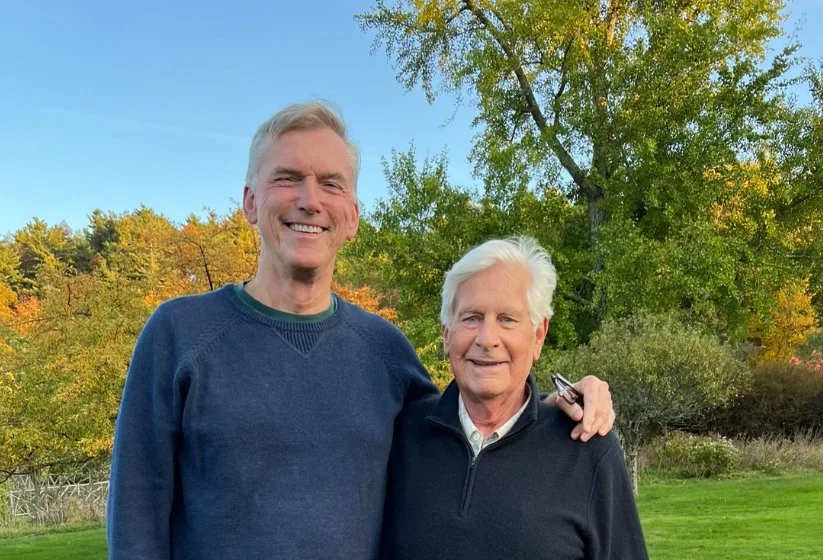
There is no single answer. Some who know Richard describe him as possessing the wisdom of an "old soul." He has learned from experienced mentors like his first, Irving Cooperberg, and more recently from Jim Johnson, chair of the board of the Johnson Family Foundation.
Richard Burns and Jim Johnson in 2025. Photo courtesy of the Johnson Family Foundation.
Richard’s friendships are long-standing, numerous and deep and certainly a source of support for him. What stands out, however, is that despite daunting challenges and more than a few set backs, Richard never seemed to become discouraged. Moreover, he actively pursued opportunities for recreation and fun. He understood that joy is not a distraction from important work; it is what makes that work sustainable. Driving institutional and cultural change requires more than commitment. It requires renewal, perspective, humanity, and the ability to recharge. For Richard, that meant making time for friendship, laughter, dancing, travel, love, and simple enjoyment—in short, building a life worth fighting for.

It was a philosophy he shared with the late Urvashi Vaid. As Urvashi's widow, Kate Clinton, recalled, while Richard and Urvashi could spend hours debating ideas and plotting strategy, they always made time for long walks on the beach in Provincetown and fun. Their dinners were filled with laughter—as Kate and many others have noted, Richard can be remarkably funny. And there was always dancing, something they both loved and excelled at. Those moments of joy sustained not only their work, but also a friendship that was warm, rich, and deeply cherished.
Kate Clinton, Richard Burns and Urvashi Vaid at the Center Garden Party in the 1990s. Photo courtesy of Morgan Gwenwald
The importance of balance was one of the things that drew Richard to Fire Island Pines. Introduced to the Pines by Irving Cooperberg in the late 1980s, he quickly fell in love with the place. Amid the pressures of leading one of the nation's most important LGBTQ+ organizations during the AIDS crisis, the Pines became a place where board meetings and crises gave way to ocean swims, beach walks, dinners with housemates, parties, the Meat Rack, the Pavilion and dancing. It was for Richard a powerful reminder that life was meant to be enjoyed.

Dancing on the bar at Sip N Twirl after the Invasion in 2000. Photo courtesy of Richard Burns.
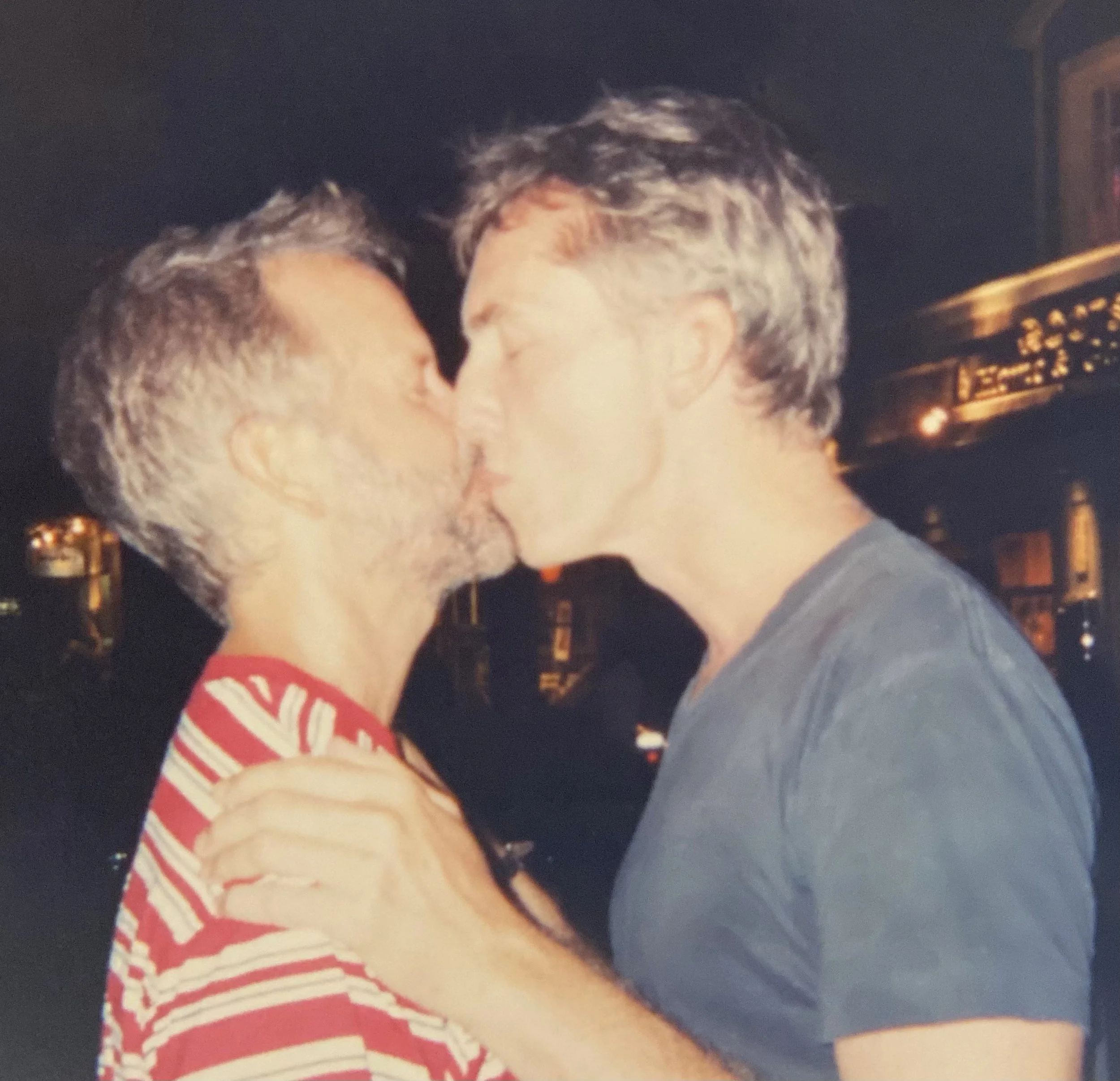
There he found friendship, freedom, chosen family, and love. Together with his husband, the set designer Bobby Berg, whom he met off-road mountain biking in Mexico in 2002, he has built a life that reflected the values he spent decades fighting for. From his first share in 1993 in an Act Up house on Beach Hill to today, the Pines remains one of the places that replenishes and inspires him.
Richard Burns and Bobby Berg. Photo by Urvashi Vaid.


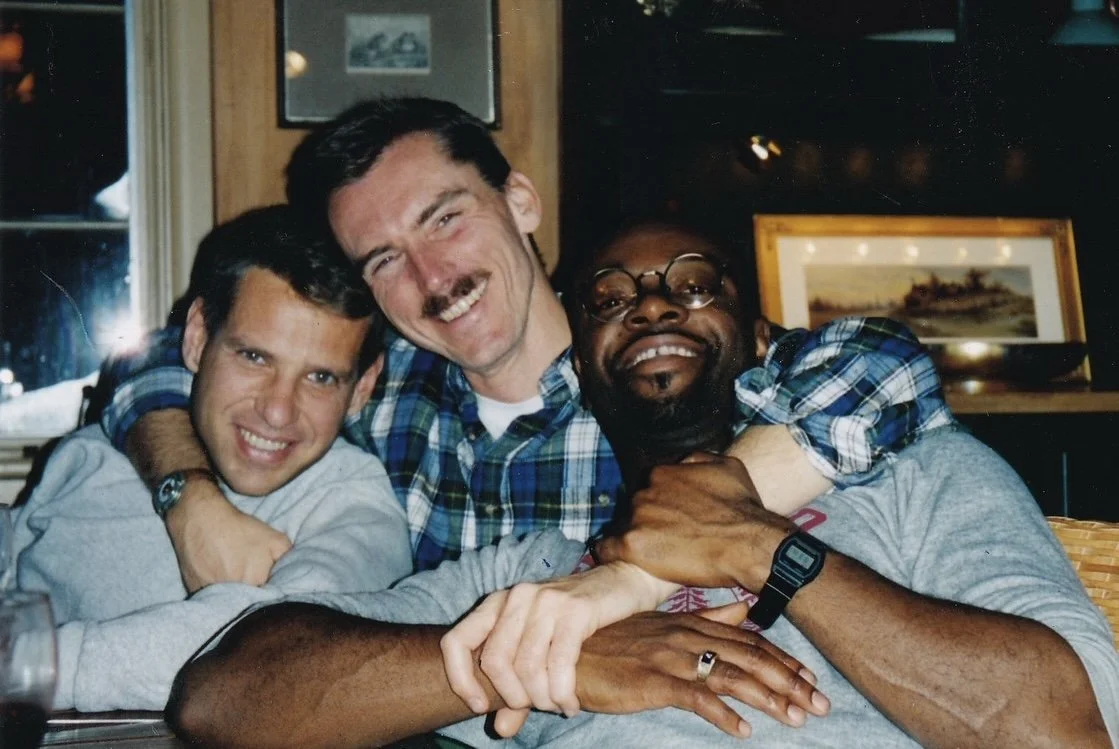
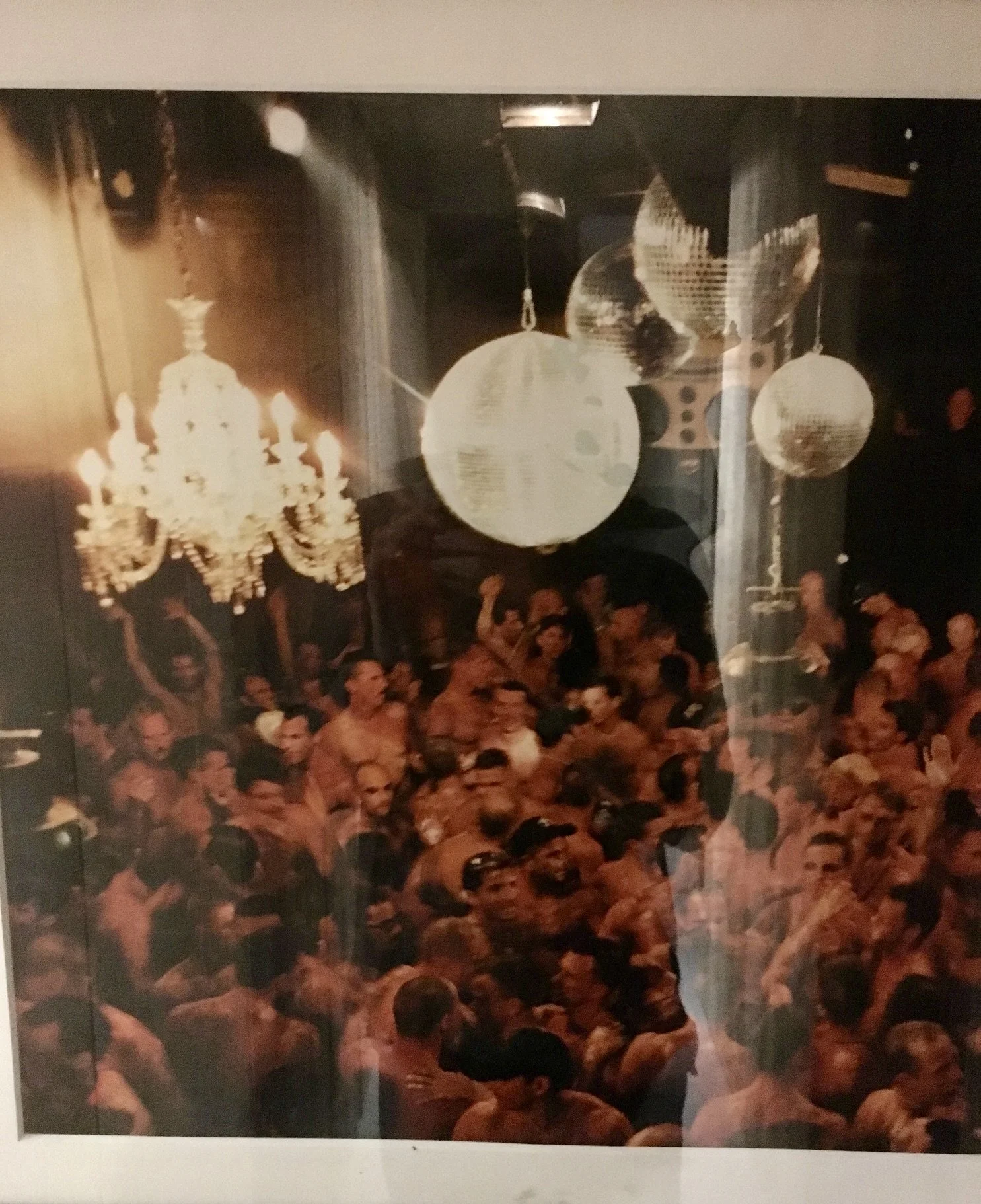
(L-R): Richard Burns and Bobby Berg at Herring Cove Bay, Provincetown. Photo by Urvashi Vaid. Richard Burns, Ector Simpson and Ben Stilp on the Boston to New York AIDS Ride. Photo courtesy Richard Burns. Richard Winger, Richard Burns and Odell Mays in the 1990s. Photo courtesy of Richard Burns. Dancing at the Pavilion. Photo by Robert Zash, courtesy of Richard Winger.
For fifty years and counting, Richard Burns has been about community—finding it, building it, strengthening it, and helping others discover it for themselves. Along the way he has played many roles: activist, organizer, strategist, mentor, executive, fundraiser, historian, and movement builder. But through it all, he has been guided by the simple, unshakable conviction that LGBTQ+ people deserve not merely tolerance, but dignity, respect, equality, and the opportunity to love themselves and one another fully. His is a story of service: creating spaces where LGBTQ+ people can find support, connection, and opportunity. Through his work, he has helped replace loneliness and shame with dignity, confidence, and belonging, enabling thousands of people to feel seen, valued, and uplifted.
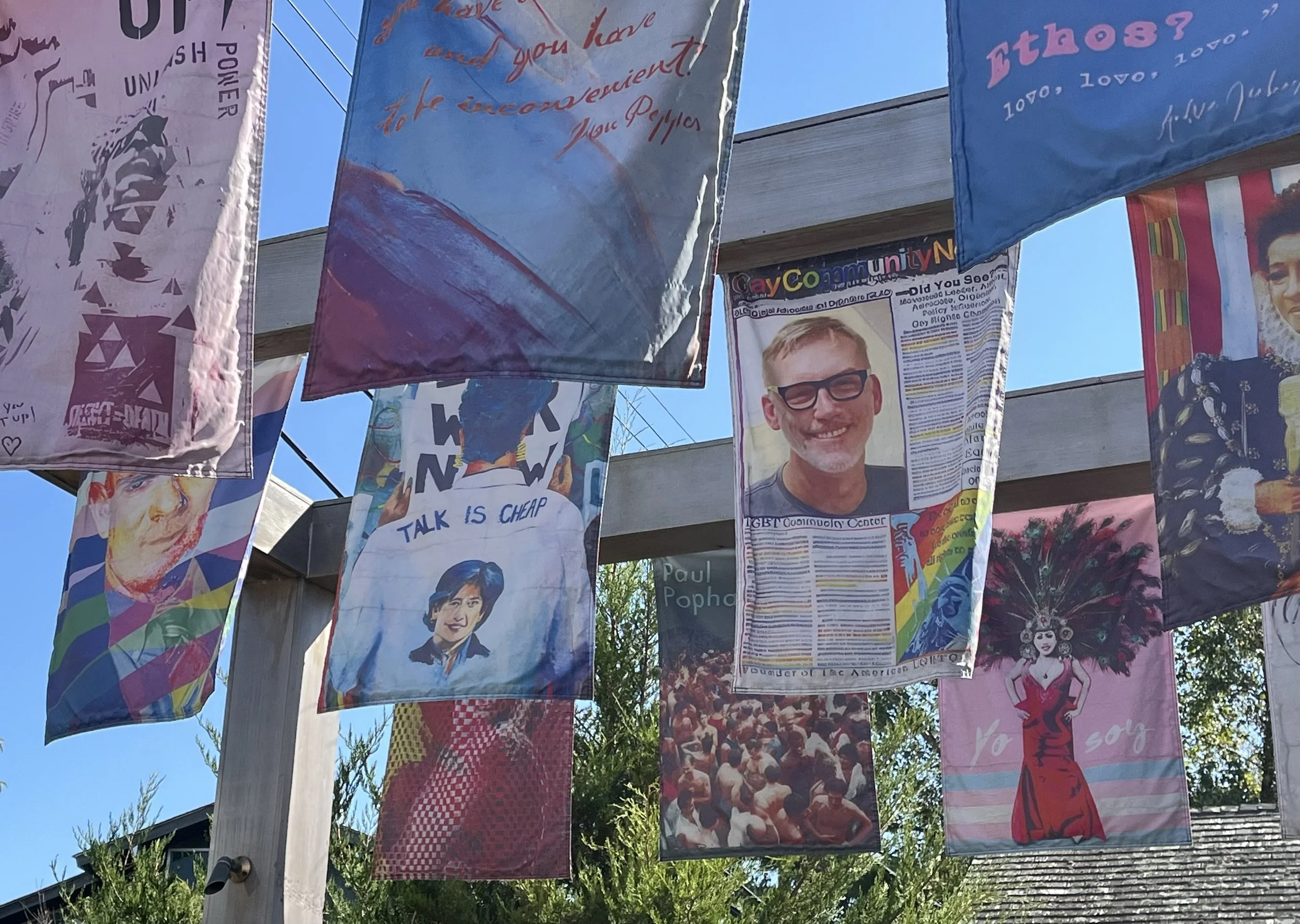
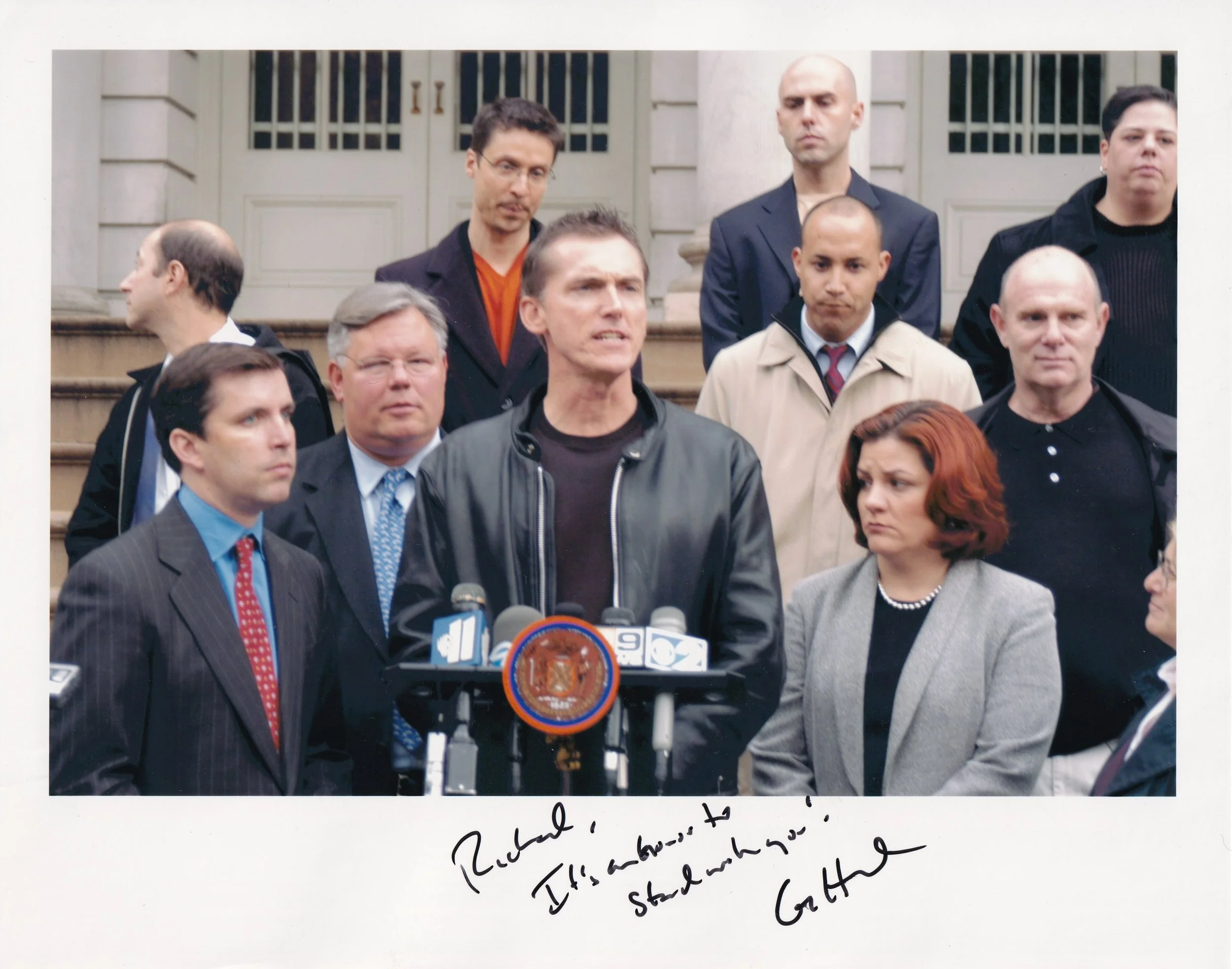
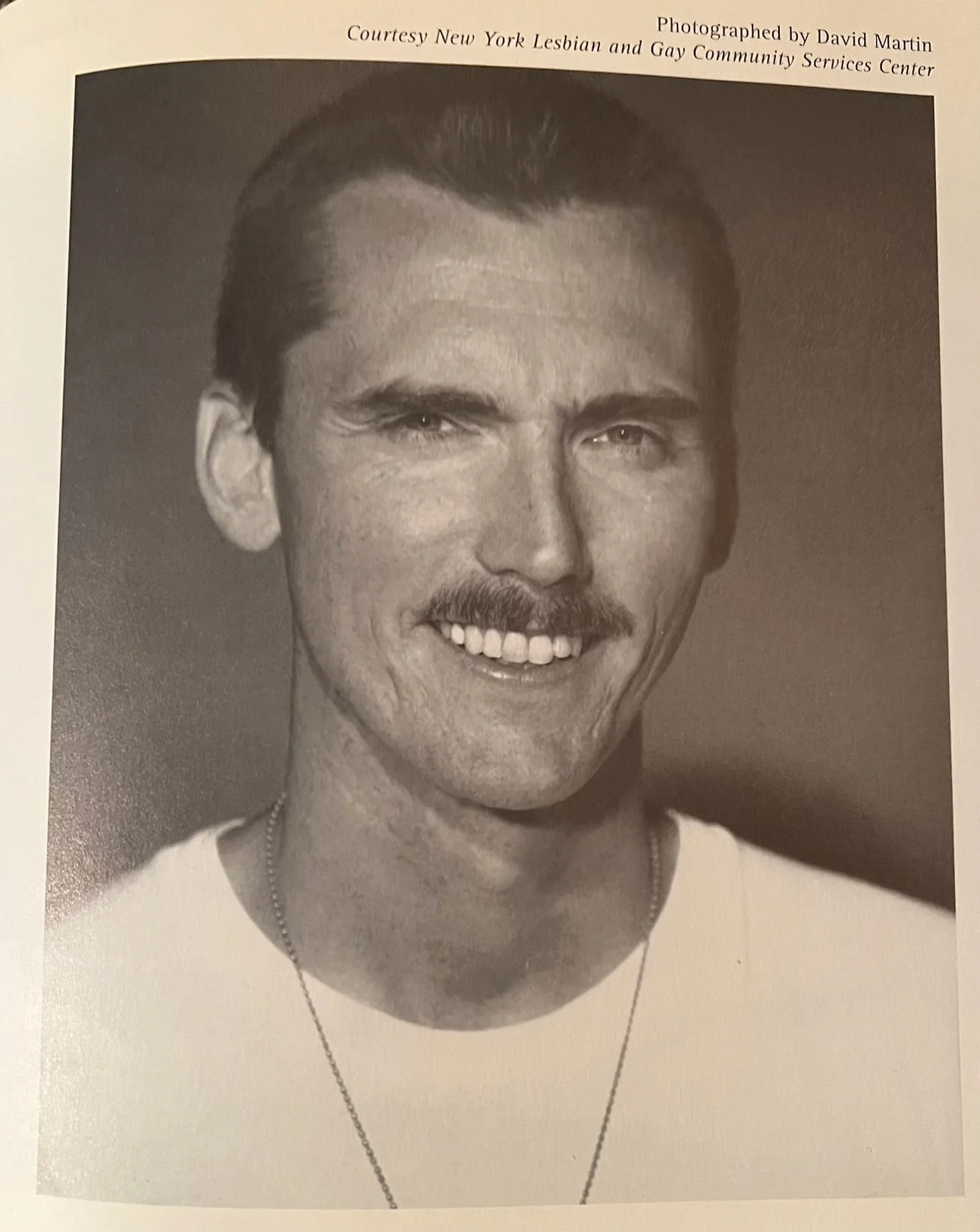
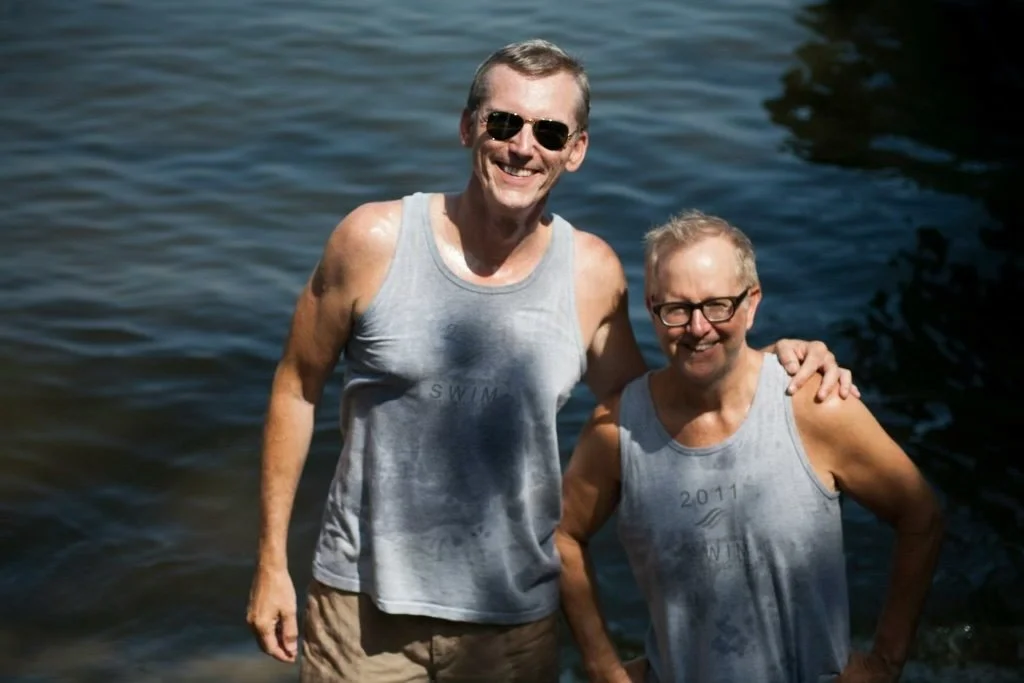
(L-R): Richard Burn’s flag at Trailblazers Park in Fire Island Pines Harbor. Photo courtesy of Richard Burns. On the steps of City Hall. Photo courtesy of New York City Council. Richard Burns photo in Uncommon Heroes. Photo by David Martin. Richard Burns and Bobby Berg at the Stonewall Swim in 2011. Photo courtesy of Richard Burns.
It is fitting, then, that one of his latest undertakings is service as Founding Chair of the American LGBTQ+ Museum. As Richard said in a recent profile in Hamilton Magazine “Culture has to be a mirror in which we can see ourselves reflected. We want to preserve and herald the stories of the incredibly courageous queer people who came before us, so that every person who comes to the museum can see themselves in this cultural mirror and see they can have a life filled with success and joy and love.”
Given the life he has led to date, it should be a surprise to no one that the boy who once searched for proof that people like him existed is now helping preserve and share the stories of those who came before him. In this way he will help ensure that future generations will know they are not alone and that they belong to something larger than themselves.