

The Outdoor Shower Revealed
By Virun Rampersad, September 2025
There’s something about an outdoor shower that feels like pure beach living. Turn on the water, step in, and the day’s salt, sand, and sunblock melt away beneath an open sky. A hallmark of coastal life, the outdoor shower has been a part of Fire Island Pines since the community’s earliest days. From its rustic beginnings to the refined designs of today, it is deeply embedded in the culture of the community.

Fire Island Pines 2015. Courtesy Virun Rampersad
In the 1930s, the Pines was for the intrepid. People seeking freedom and solitude would have to trek across the dunes to enjoy the tranquility of its deserted beach. Early beachgoers, including members of the Green Mountain Club, camped in tents or simple huts. With no indoor plumbing or piped water, they crafted outdoor showers with hoses and buckets, drawing from the ocean or freshwater pools. Many were nudists, so privacy was not a concern.
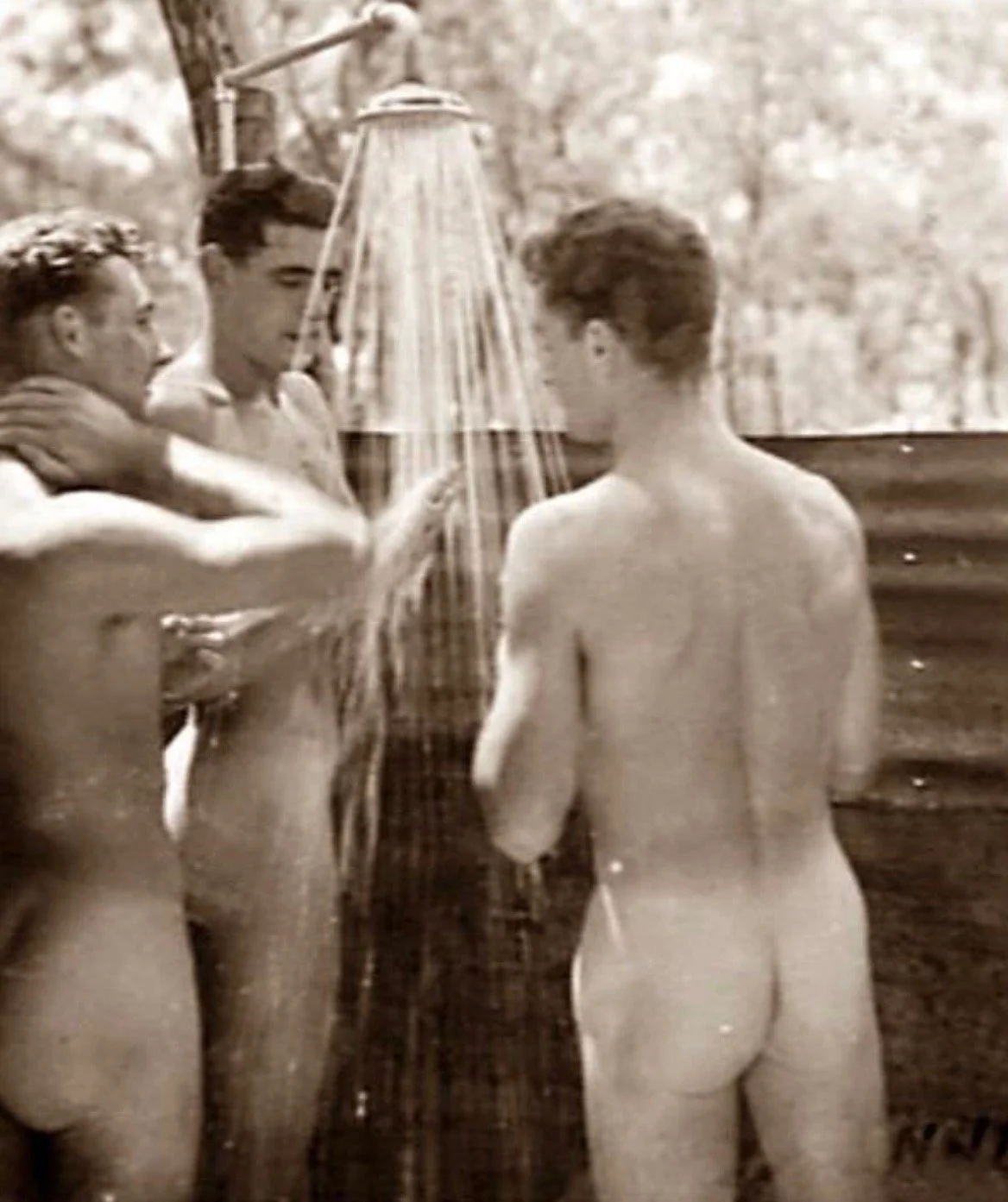
Beginning in the 1950s people began to build houses in the Pines with indoor plumbing. However, when residents discovered that sand and salt tracked indoors quickly damaged floors and fixtures, rinsing off outside became a necessity.
Photo credit: NeilfromSydney2003
As architect and longtime Pines resident Nick Politis noted: “Once homes became less rustic people became more concerned about sand in their houses, and outdoor showers became a must.”
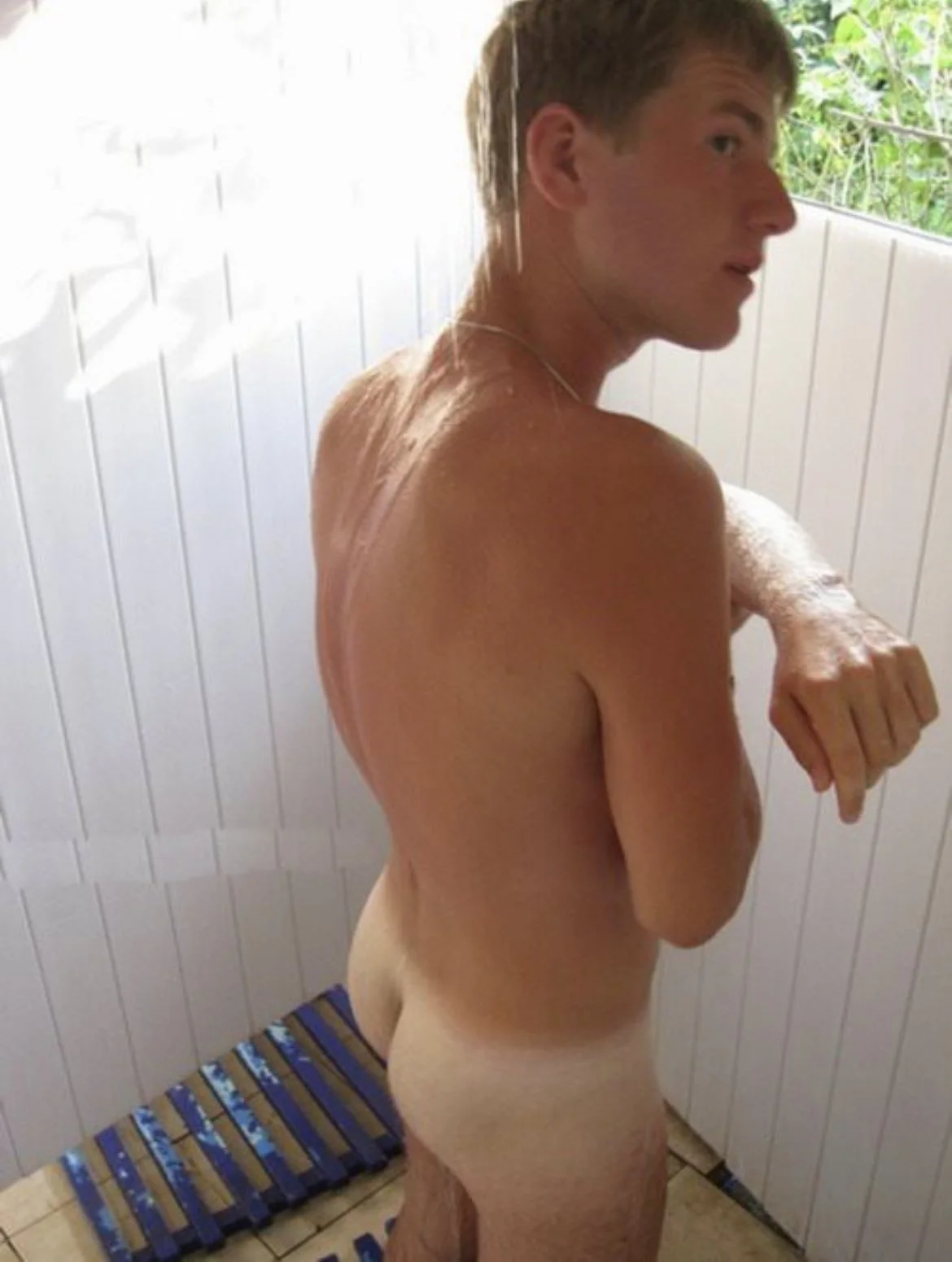
Soon they were everywhere, as residents realized it was not just useful in taking care of the house, but it was also practical and pleasurable.
Photo credit: Jonathan Baum
Homeowners balanced openness and privacy with slatted fences, bamboo screens, and cedar enclosures, features that became signatures of Pines design.

Fire Island Pines 1985. Photo credit: Jesse Mandel
Very quickly many equipped their outdoor showers with places to hold soap, shampoo, conditioner, razors, moisturizer, and other essentials.
By the 1970s, in the wake of Stonewall, outdoor showers took on an added charge. They became stages for liberation, intimacy, and play.

Many were only partially screened, visible from decks and walkways, enabling both voyeurism and exhibitionism.
Photo credit: Jonathan Baum
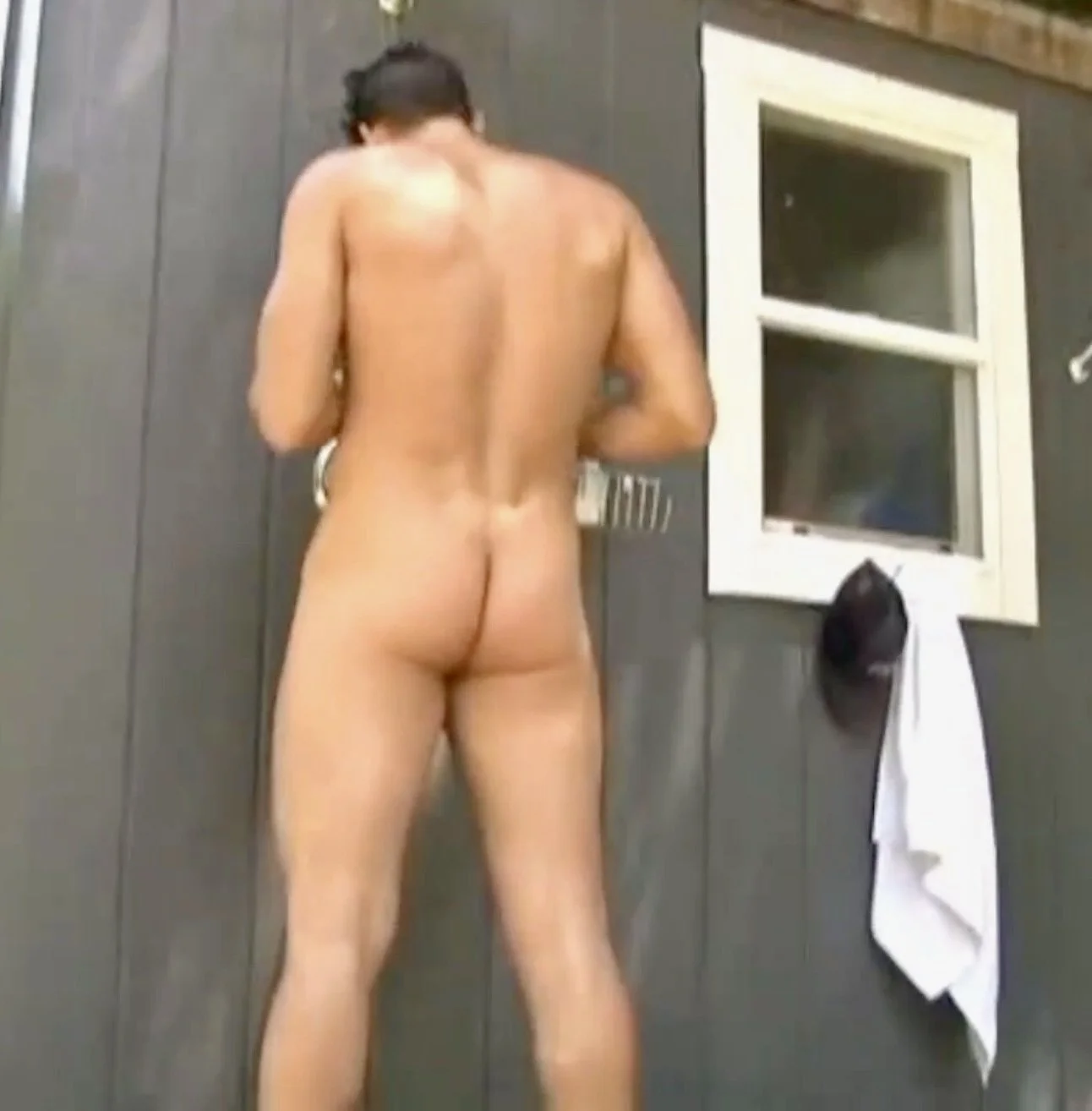
Brent Barton, owner of the legendary ocean front house, “Morningside” noted: “In the original design of the house the outdoor shower was a simple shower head on the side deck facing the Ozone and Ocean Walks. It was open to all passersby and no one ever complained.”
Photo credit: Jonathan Baum
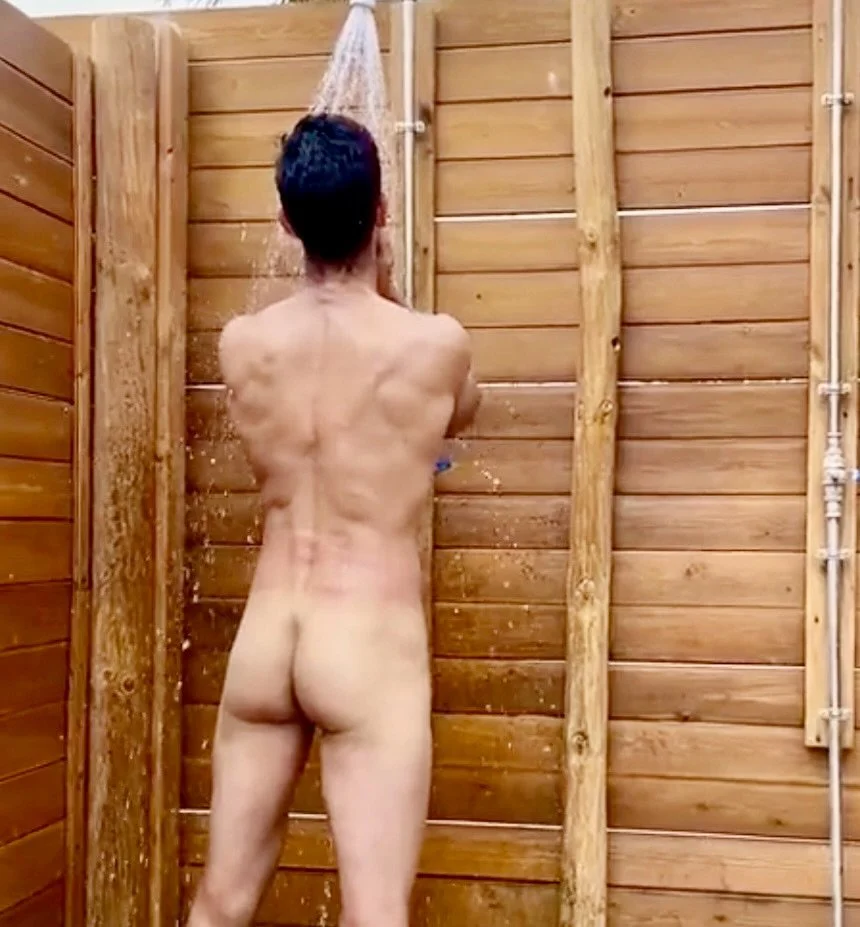
Simply put, outdoor showers went beyond a place to wash off. They embodied the freedom of being naked outdoors, sensual, unashamed, and connected to both nature and others.
Photo credit: David Stringer
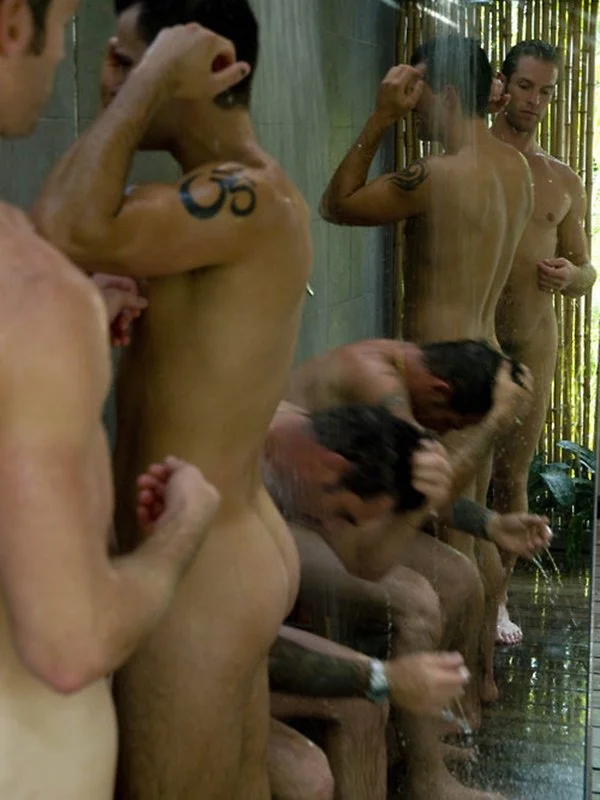
In houses known for pool and sex parties, outdoor showers often served as social hubs where playful rinses blurred into erotic encounters. As a former Pines resident glibly noted, it also had its practicalities: “Unlike a pool or hot tub, with an outdoor shower you can have a lot of fun and not risk drowning.”
Photo credit: Unknown
Architects such as Horace Gifford and Scott Bromley embraced the social openness into their work. Their designs featured expansive decks, walls of glass, and outdoor showers tucked into corners or placed fully in view.
Some were as simple as a basic shed with a solitary shower head.
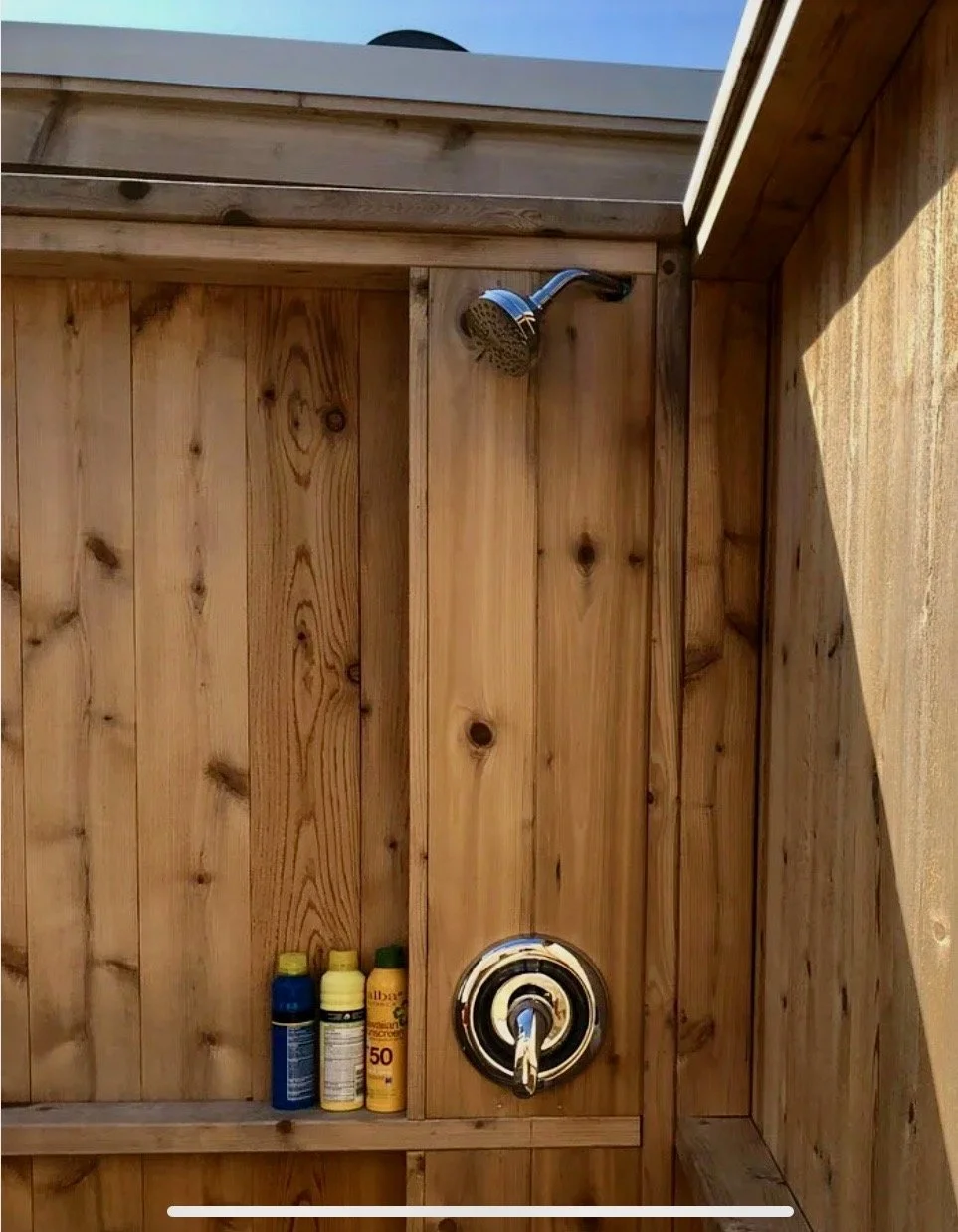
Simple outdoor shower. Photo courtesy of Mitch Goldberg
Others, however, were large cedar-clad cabins with benches, mirrors, and sophisticated fixtures, built to hold several people at once.
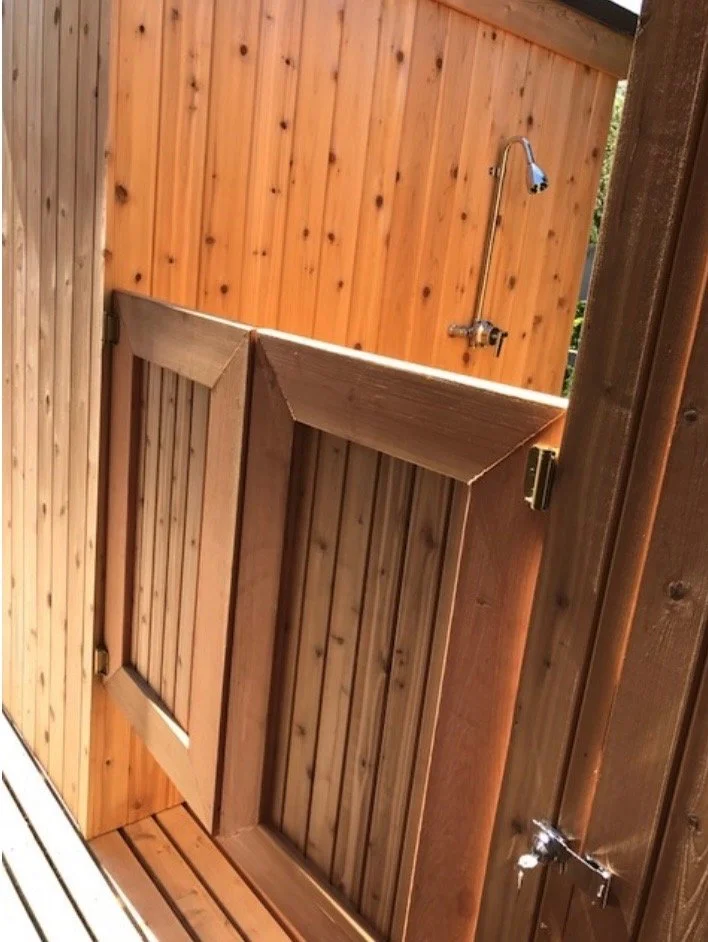
Cedar outdoor shower. Photo courtesy of Scott Bromley.
Gifford, the most influential Pines architect of the 1960s and ’70s, often integrated showers into semi-concealed decks where one might shower while neighbors mingled nearby. Bromley famously designed outdoor showers without doors, strategically placed to offer privacy for those who sought it.
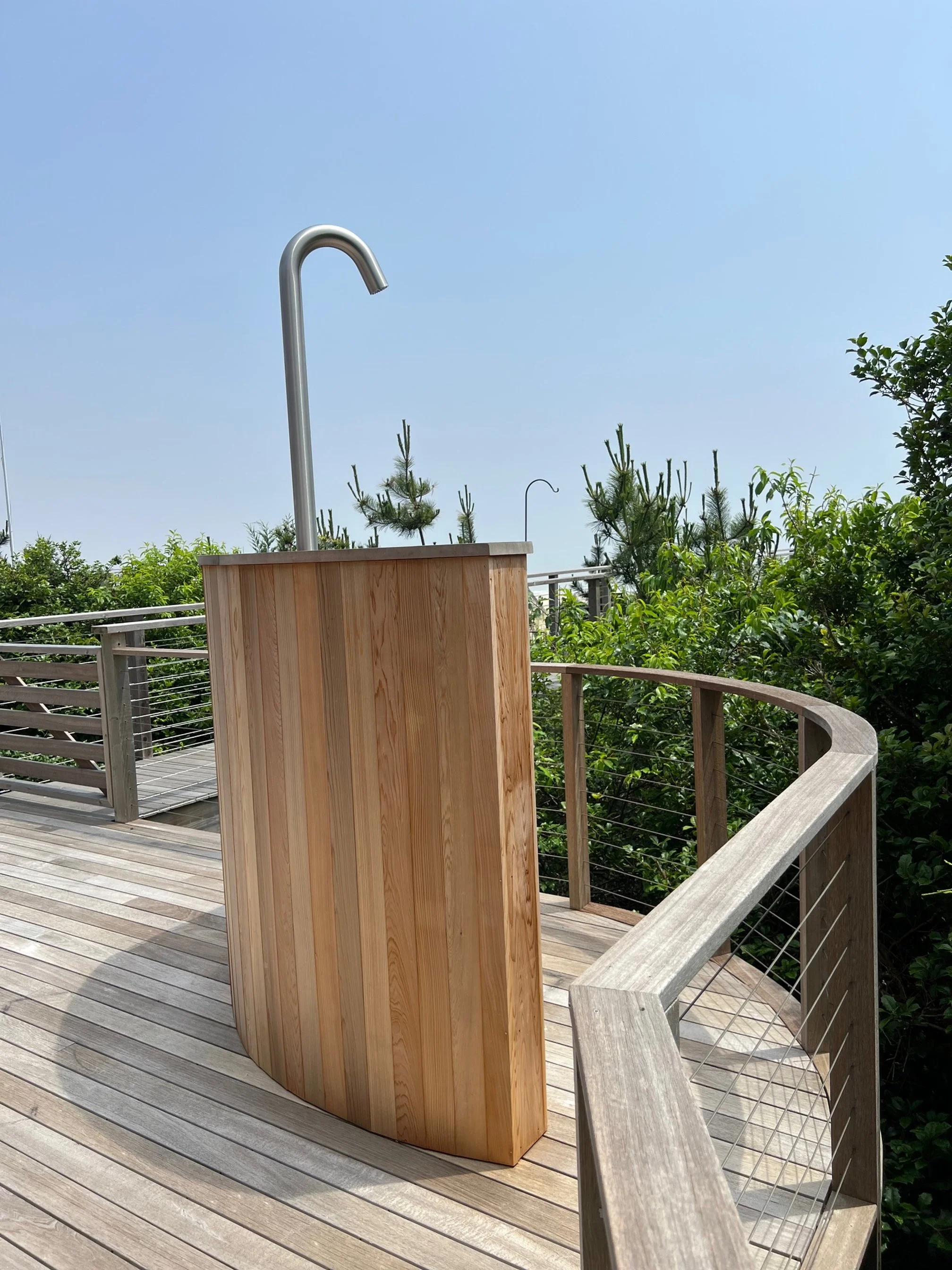
Curved outdoor shower with no doors. Photo and design by Scott Bromley.
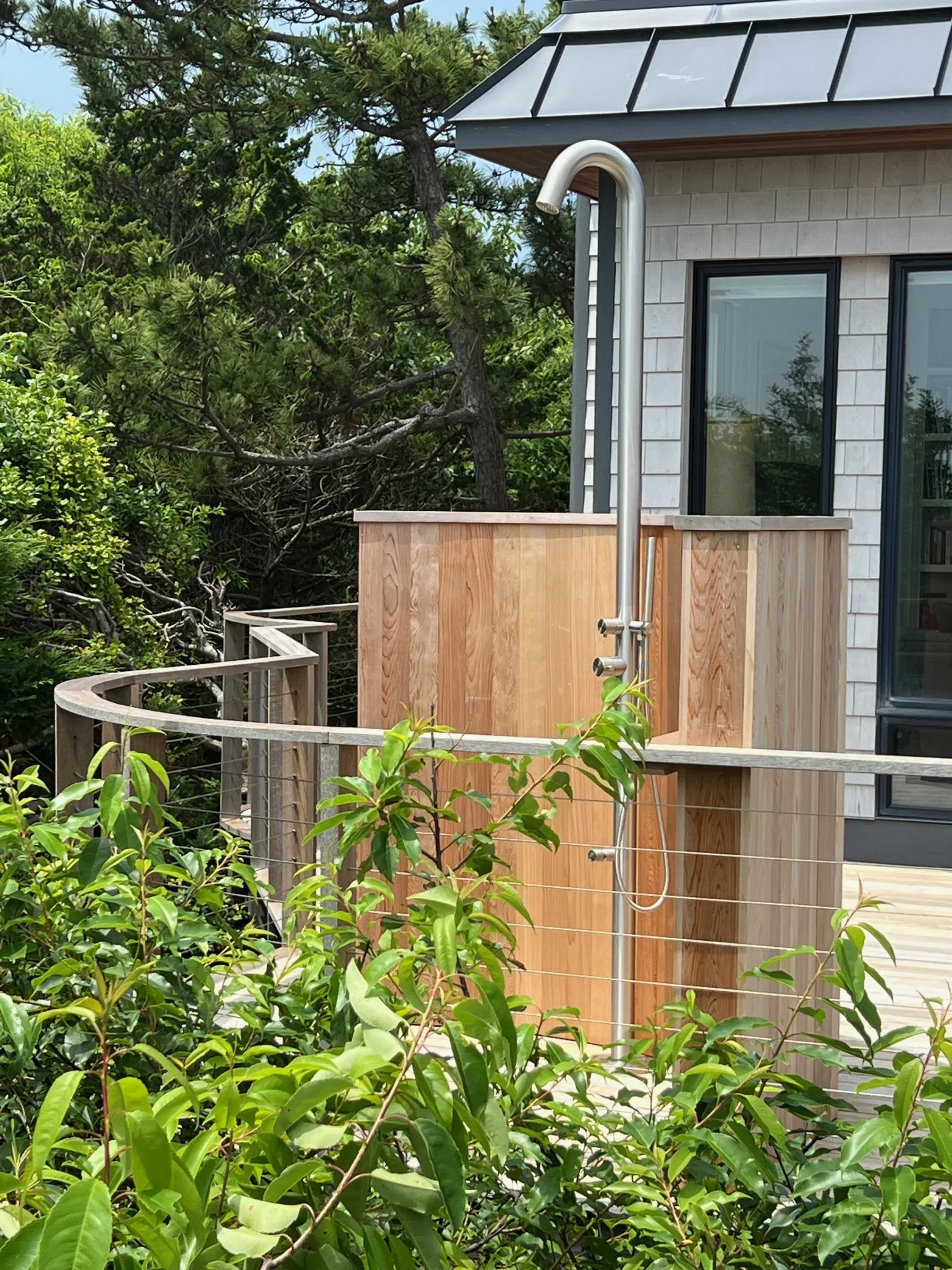
Curved outdoor shower with privacy provided by nature. Photo courtesy Scott Bromley.
In some houses, the outdoor shower was on the pool deck, next to the garden, so that it blended into nature.
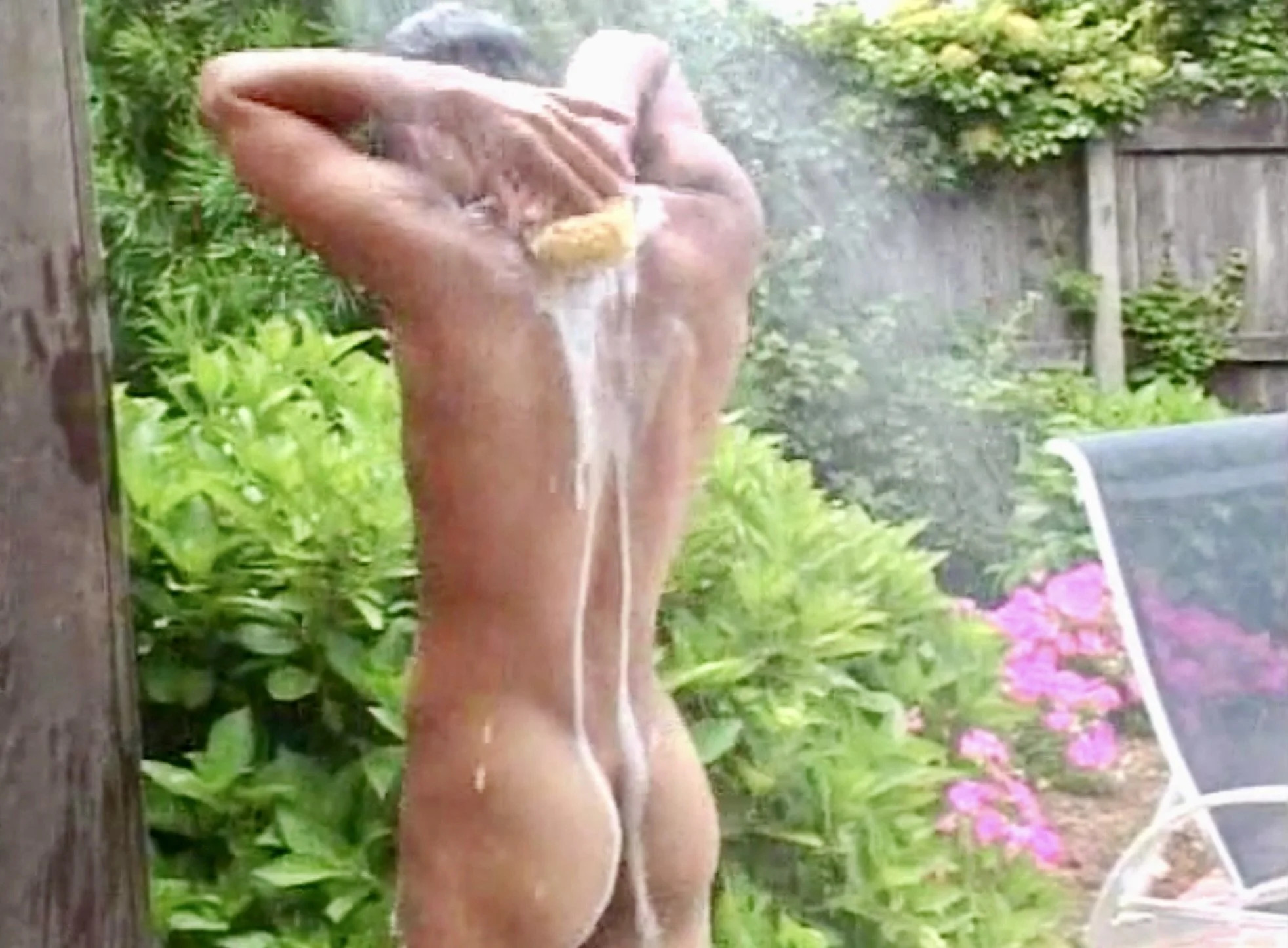
Photo credit: Unknown
In others, it was discreetly tucked away under stairs or landings, to preserve deck space and conform to lot coverage limits.
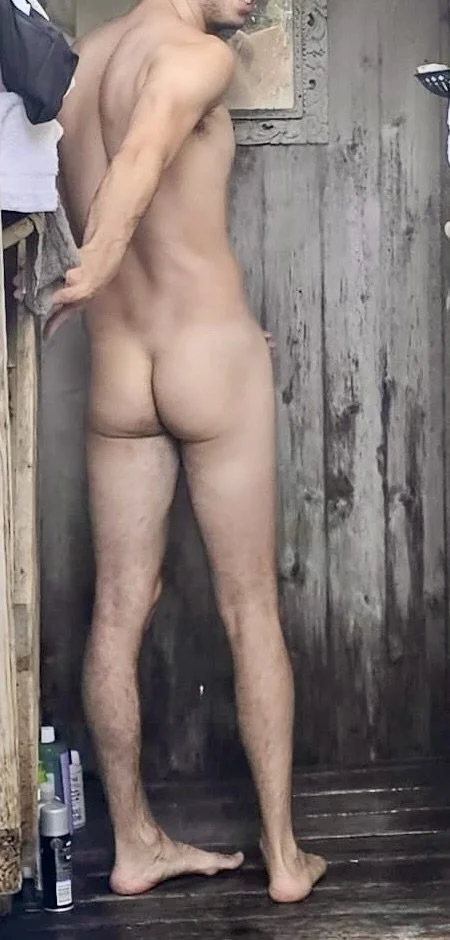
Photo credit: Virun Rampersad
Some used very rudimentary equipment, but many employed sophisticated designs and fixtures, and seamlessly fitted into the rest of the house.
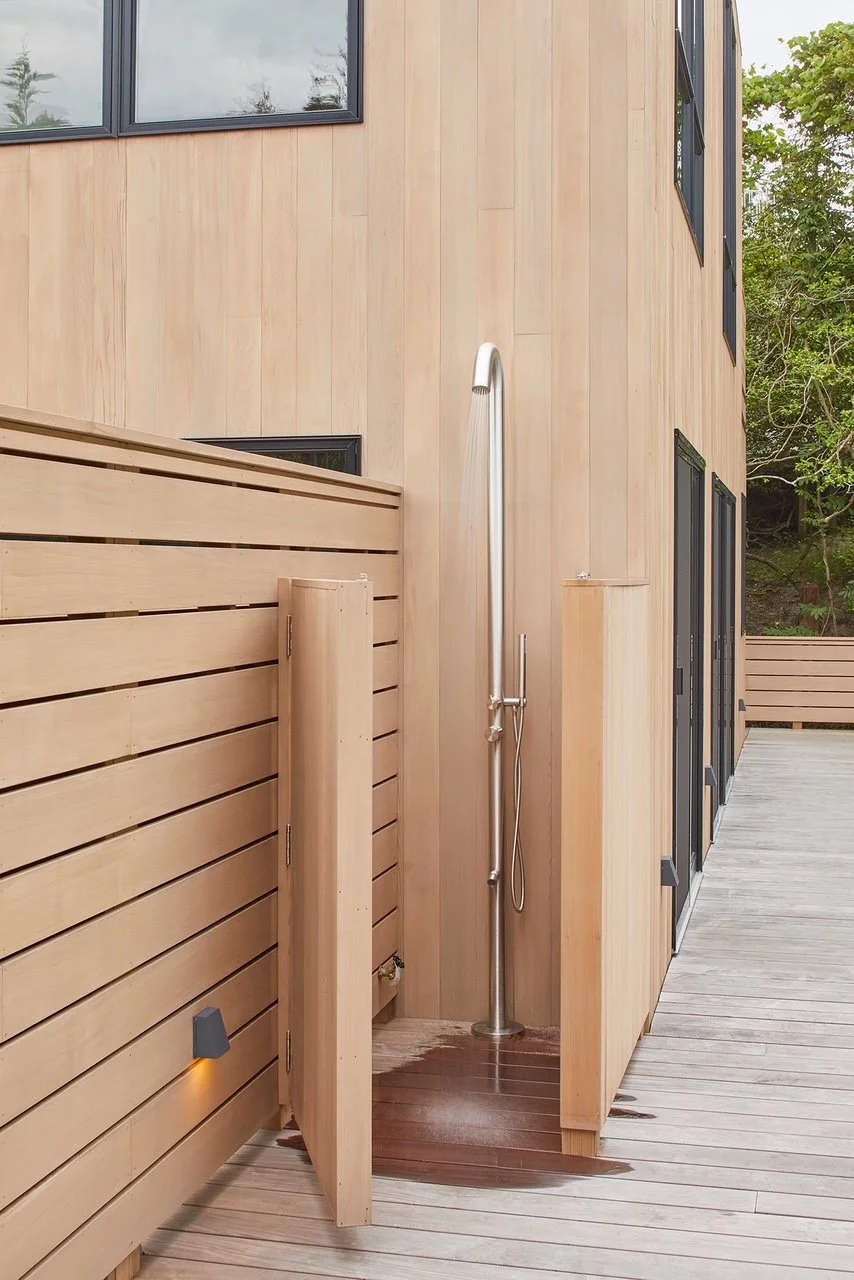
Photo credit: Scott Bromley
Wherever they were located and regardless of sophistication, outdoor showers very often became part of the social dynamic. It was not uncommon for housemates and guests to have communal rinses that sometimes became flirtatious preludes to the evening’s parties. As one former Pines resident, Jonathan Baum, said: “My housemates and I would come back from the beach and all rush into the outdoor shower together before we went to Tea. Inevitably while we were in there, someone would douse us with cold water from the deck hose which had us all screaming and running naked back to our rooms!”

Today, the outdoor shower is a staple of Pines houses. Both practical and symbolic, it is considered an essential, not a luxury.
Photo credit: Jonathan Baum
Kris Grae, co-owner of Pines Harbor Realty noted: “An outdoor shower is an important amenity for both renters and homebuyers. People value a large, luxurious, well equipped outdoor shower when they’re at the beach.”
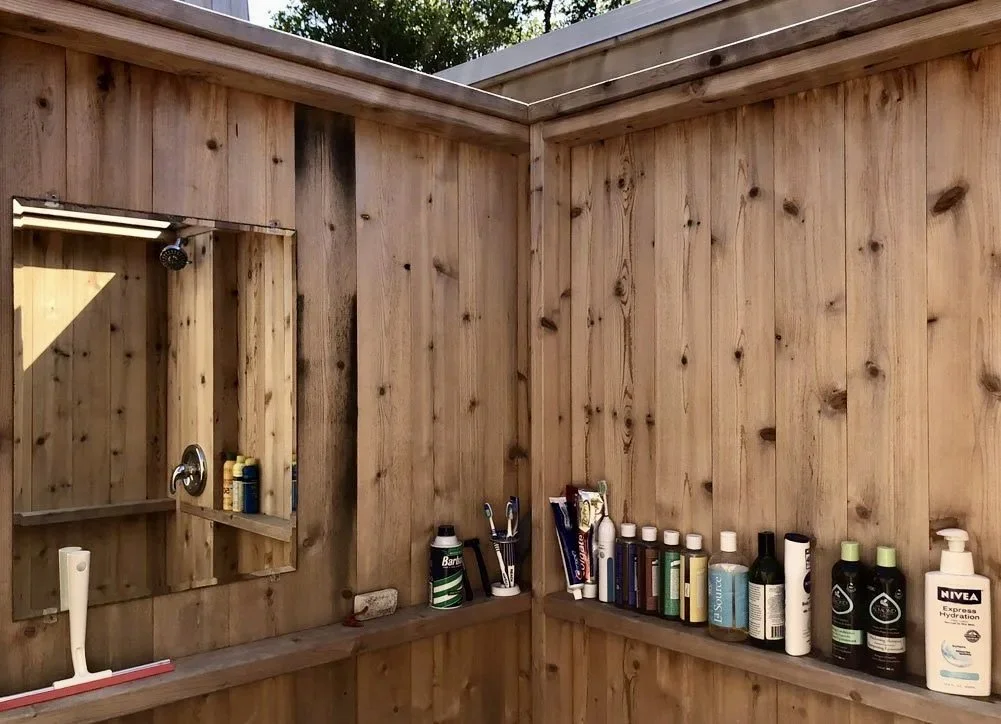
Fire Island Pines outdoor shower circa 2010. Photo courtesy of Mitch Goldberg.

From a rustic essential, outdoor showers have evolved into a global lifestyle feature. They can be found in many varieties in diverse settings around the world, functioning as both a luxury and a necessity.
Photo courtesy Unknown
For the Pines, however, the outdoor shower is far more than a place to rinse off. Over the years it has blurred the line between private and public, utility and ritual, sensuality and community. And in that blending, it has come to embody the very spirit of Fire Island Pines itself.