

August 22, 2026: An Evening to Remember
By Virun Rampersad, November 2026
On August 22, 2026, The Normal Heart came to Fire Island Pines, not simply as a landmark of American theater, but as a powerful reminder of a history this community had lived.
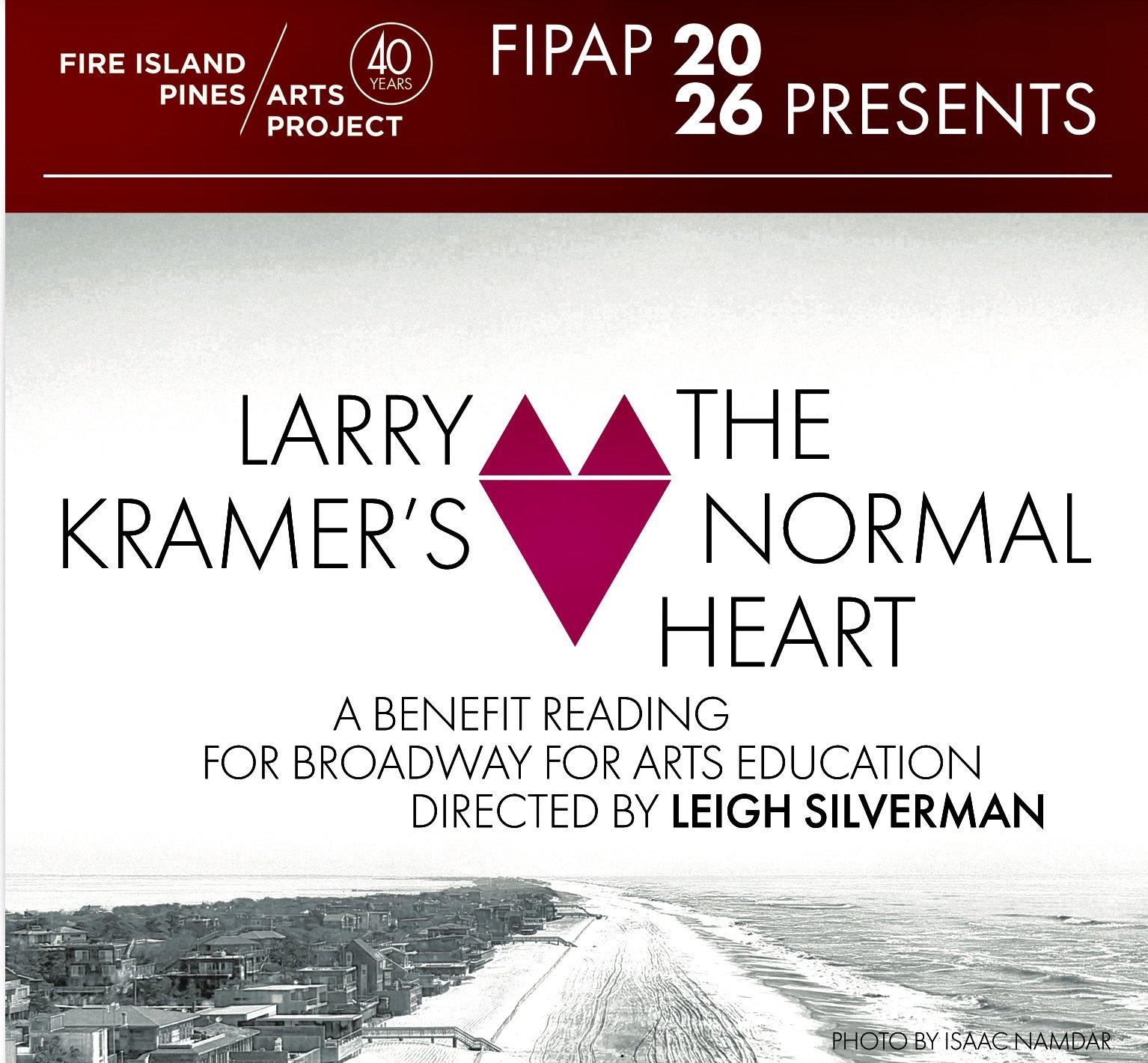
Partial photo of the event poster. Courtesy Steven Alan Black.
Few works have captured the devastation of the AIDS epidemic as poignantly as Larry Kramer’s Tony Award-winning play. First performed at New York’s Public Theater in 1985, it portrayed a community fighting for recognition, compassion and support amid government inaction and societal indifference. For the Pines, where the epidemic had claimed countless lives and left an indelible mark, the story was deeply personal. More than 40 years after its premiere, the play remained as relevant and emotionally resonant as ever.
As part of its 40th anniversary celebrations, the Fire Island Arts Project (FIPAP), along with Broadway for Arts Education (BAE) presented a one-night-only reading at Whyte Hall.
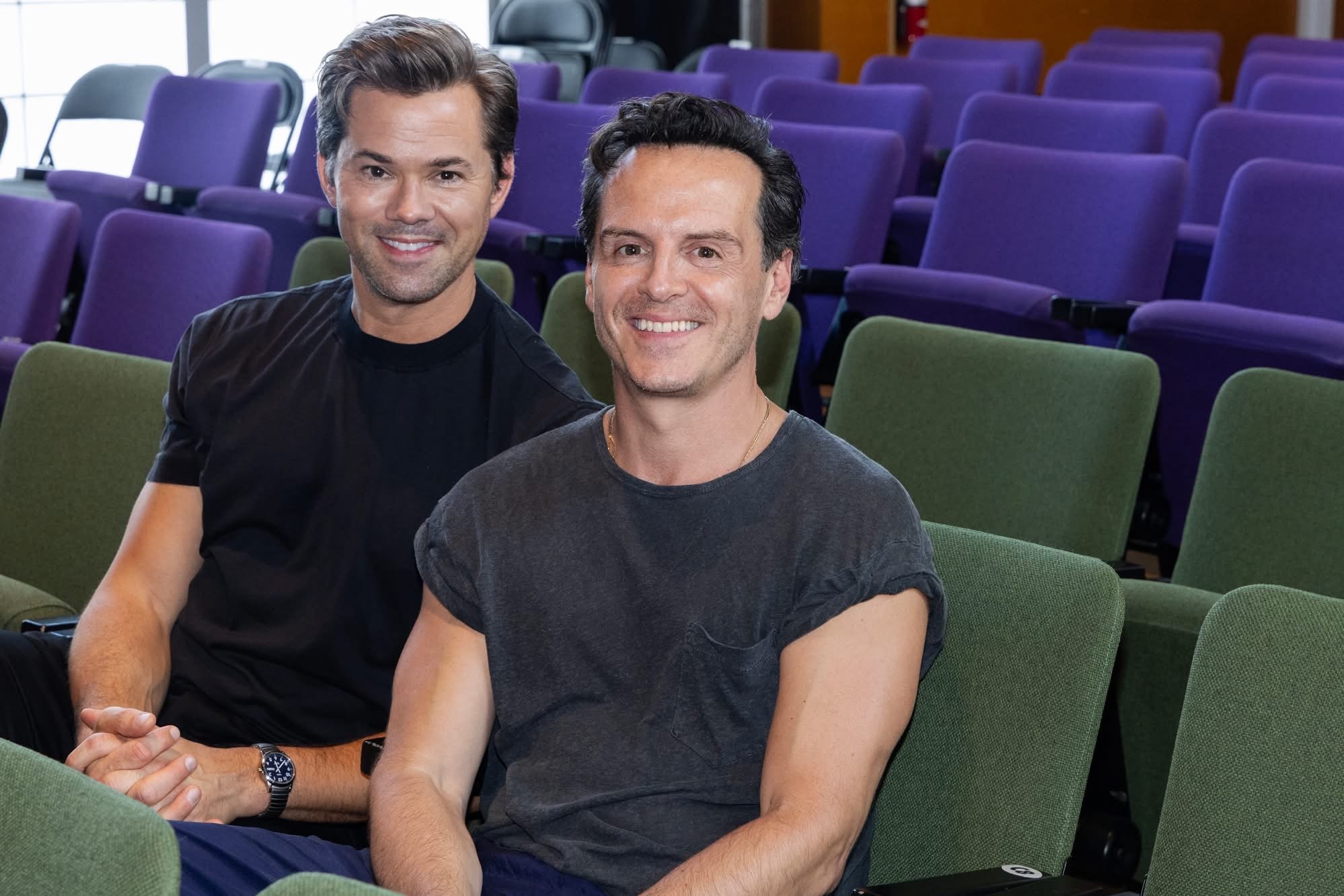
Led by FIPAP Board members Skie Ocasio, Nicole (Nikki) LaFountaine, and Steven Alan Black, the production featured an extraordinary cast headed by Andrew Scott and Andrew Rannells, under the direction of two-time Tony Award nominee Leigh Silverman.
Andrew Rannells (L) and Andrew Scott (R) at Whyte Hall. Photograph by Koitz.
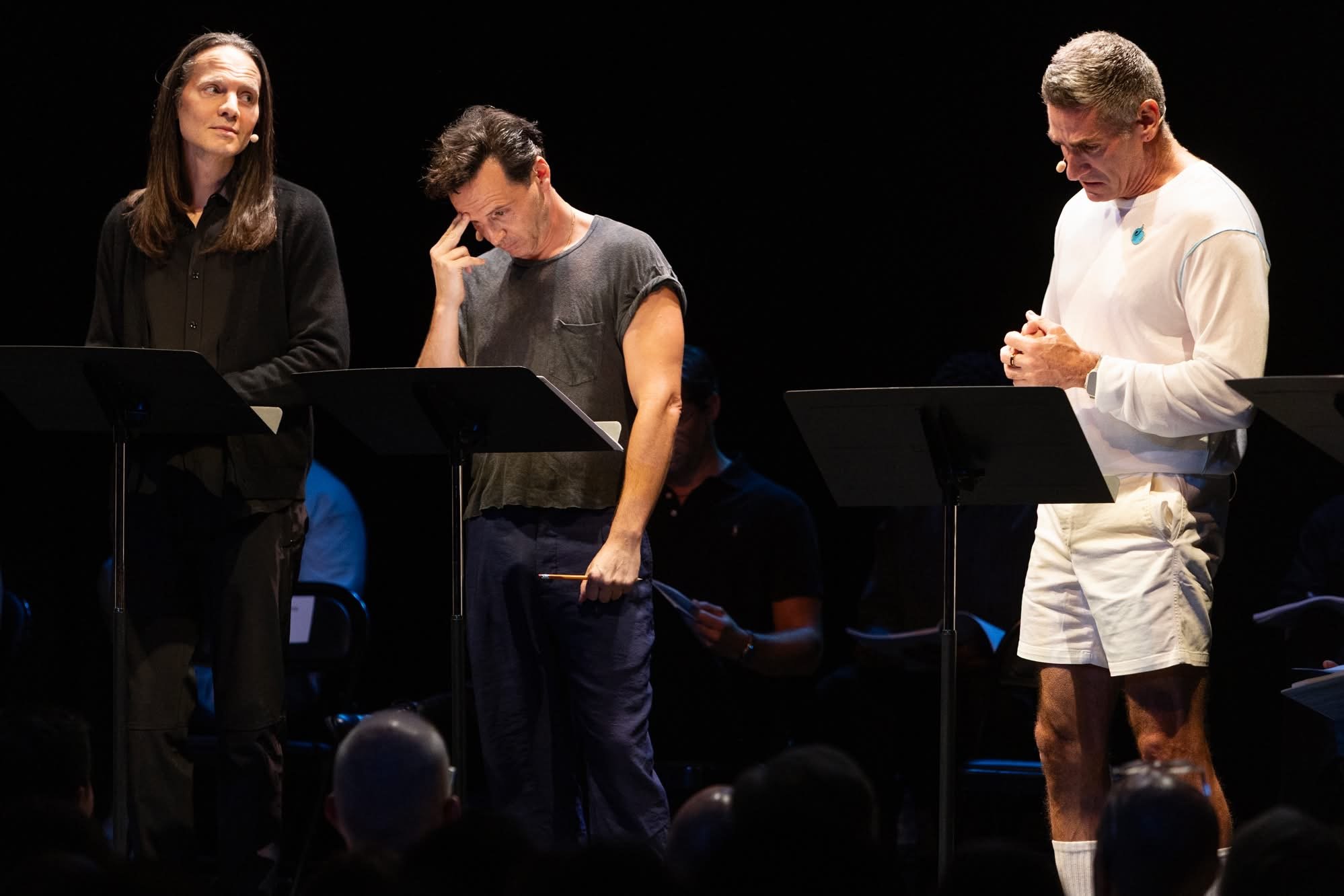
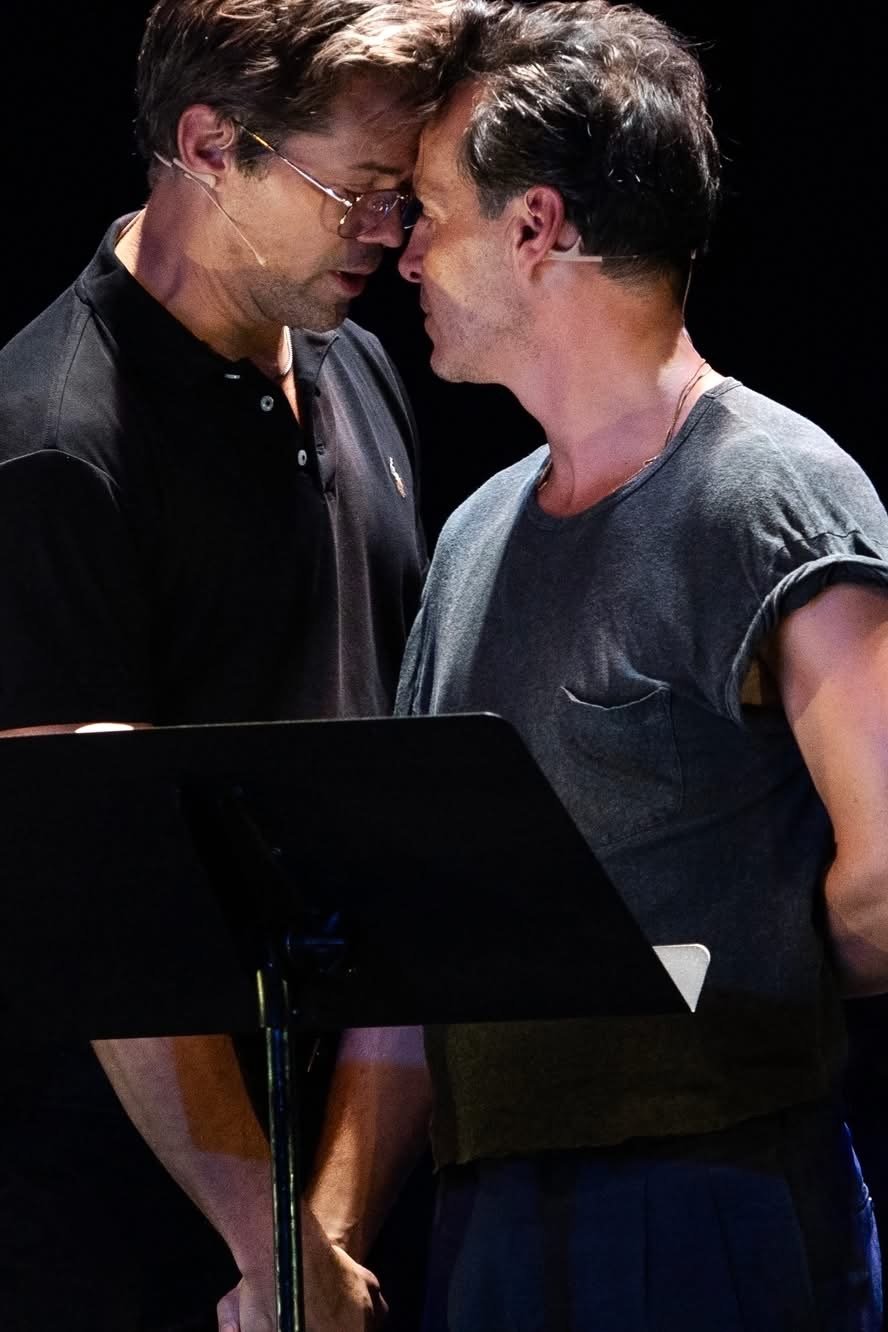
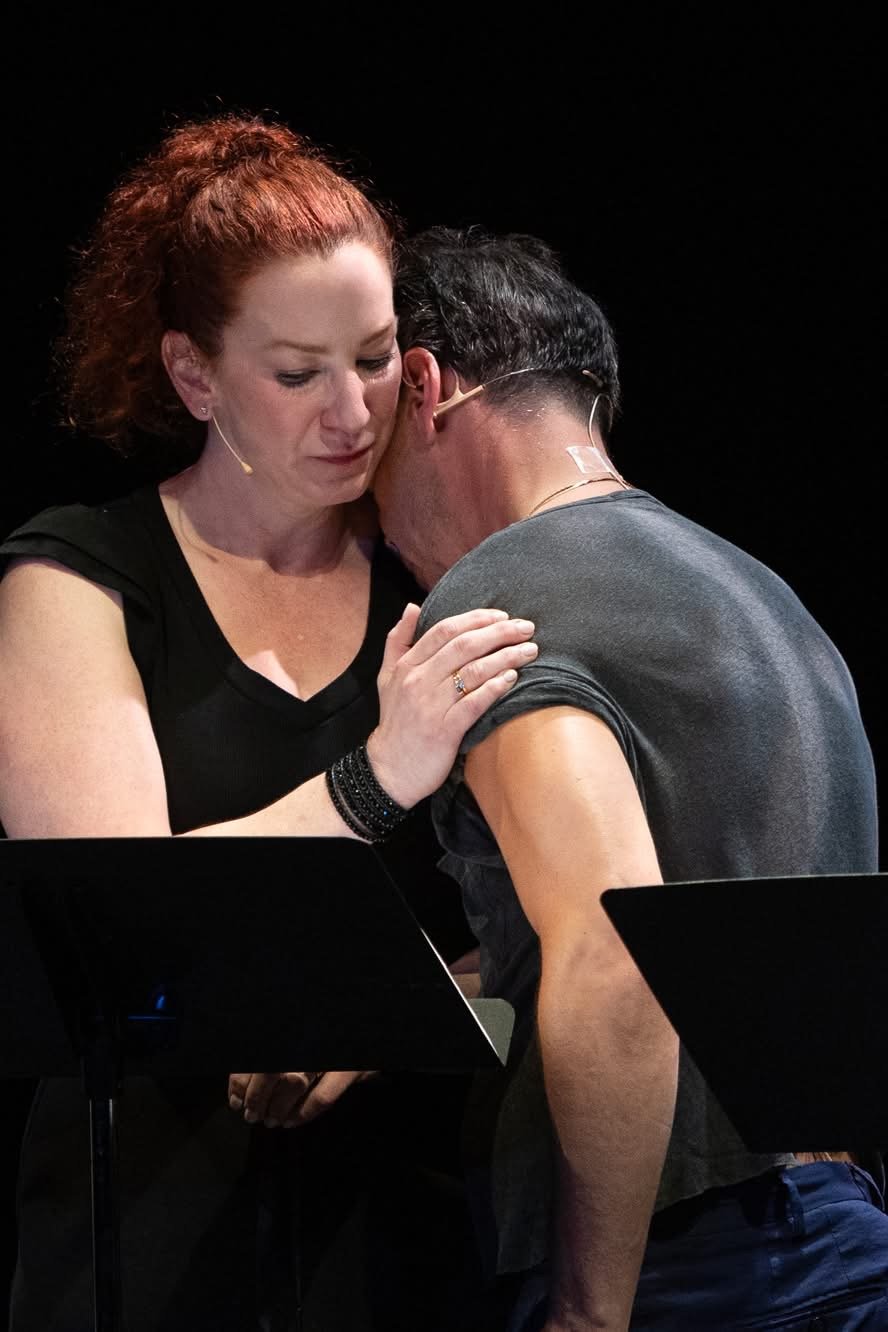
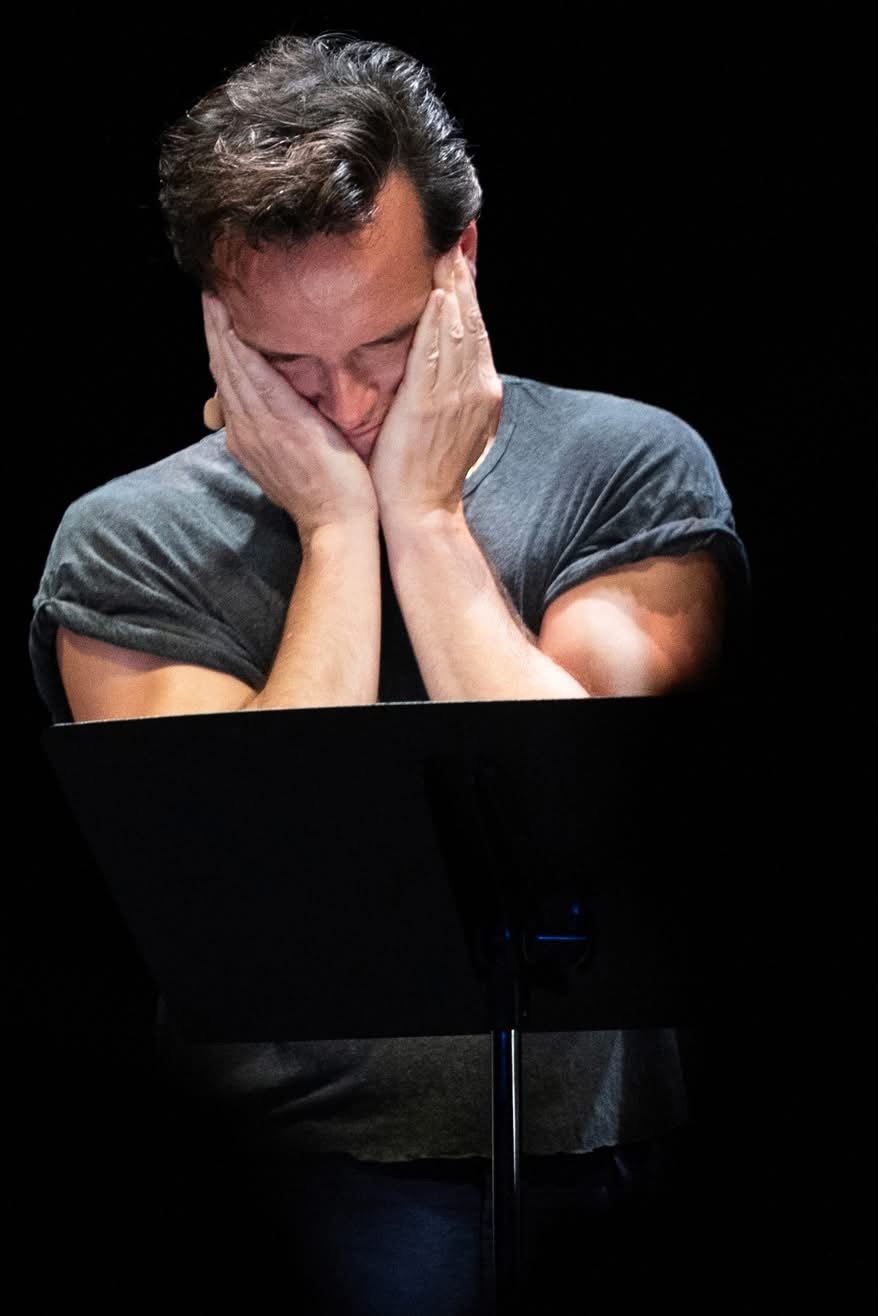
Photos from the reading. Photographs by Koitz.
The evening was more than exceptional theater. It was an opportunity for the Pines to revisit a defining chapter of its history, honor those who had endured the epidemic, and introduce younger generations to the struggles and sacrifices that helped secure the freedoms they enjoy today.
Its impact extended beyond the stage. On the deck of Whyte Hall was installed a Living Memorial that offered visitors another moving way to connect with the history of AIDS.

Inspired by the AIDS Memorial Quilt, the installation featured six telephone stations where visitors could pick up a receiver and listen to firsthand accounts of loss, activism, friendship, and survival.
Pines resident Jonathan Saw at the Living Memorial. Photograph by Koitz.
Patrons were also invited to contribute their own stories to a growing digital archive. The concept was simple but powerful. Hearing the voices of people who had lived through the epidemic made a history often conveyed through statistics and photographs immediate and deeply human.
The memorial, which grew out of the partnership between FIPAP and Broadway for Arts Education (BAE), was inspired by Skie's experience with an earlier reading at the LGBTQ+ Center. He had been struck by how little many younger people knew about the epidemic. Some did not even realize that the suffering and struggles portrayed in Kramer's play were rooted in actual events. Skie saw an opportunity not only to bring the production to the Pines, but to use it to educate a new generation.
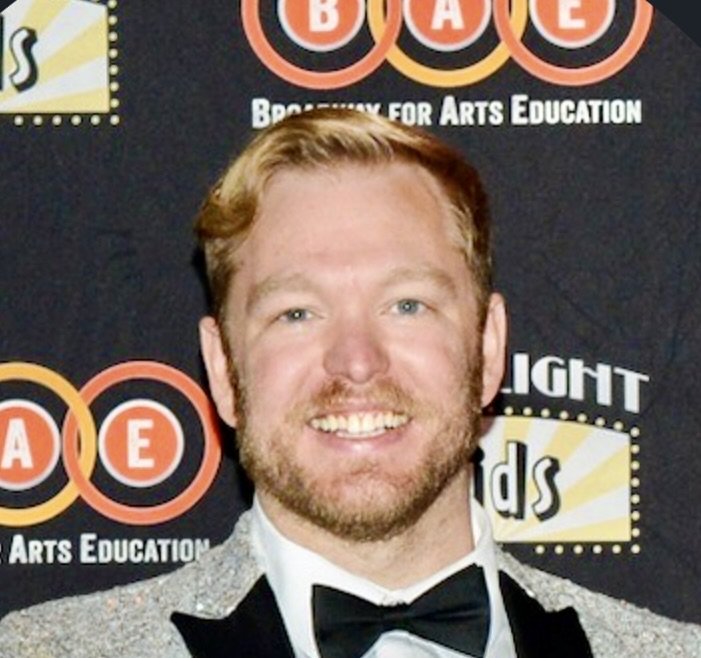
Under the leadership of BAE executive director Ben Houghton, young people from Long Island participated in five days of workshops exploring The Normal Heart and the epidemic's social and political context.
Ben Houghton. Photo courtesy Broadway Arts for Education.
They also helped collect interviews with performers, activists, and community members, gaining firsthand insights into a history largely absent from their education. In the process, they became participants in preserving that history, helping ensure that the voices of those who had lived through the crisis would continue to be heard. You can learn more by going to the BAE Normal Heart Living Memorial page.
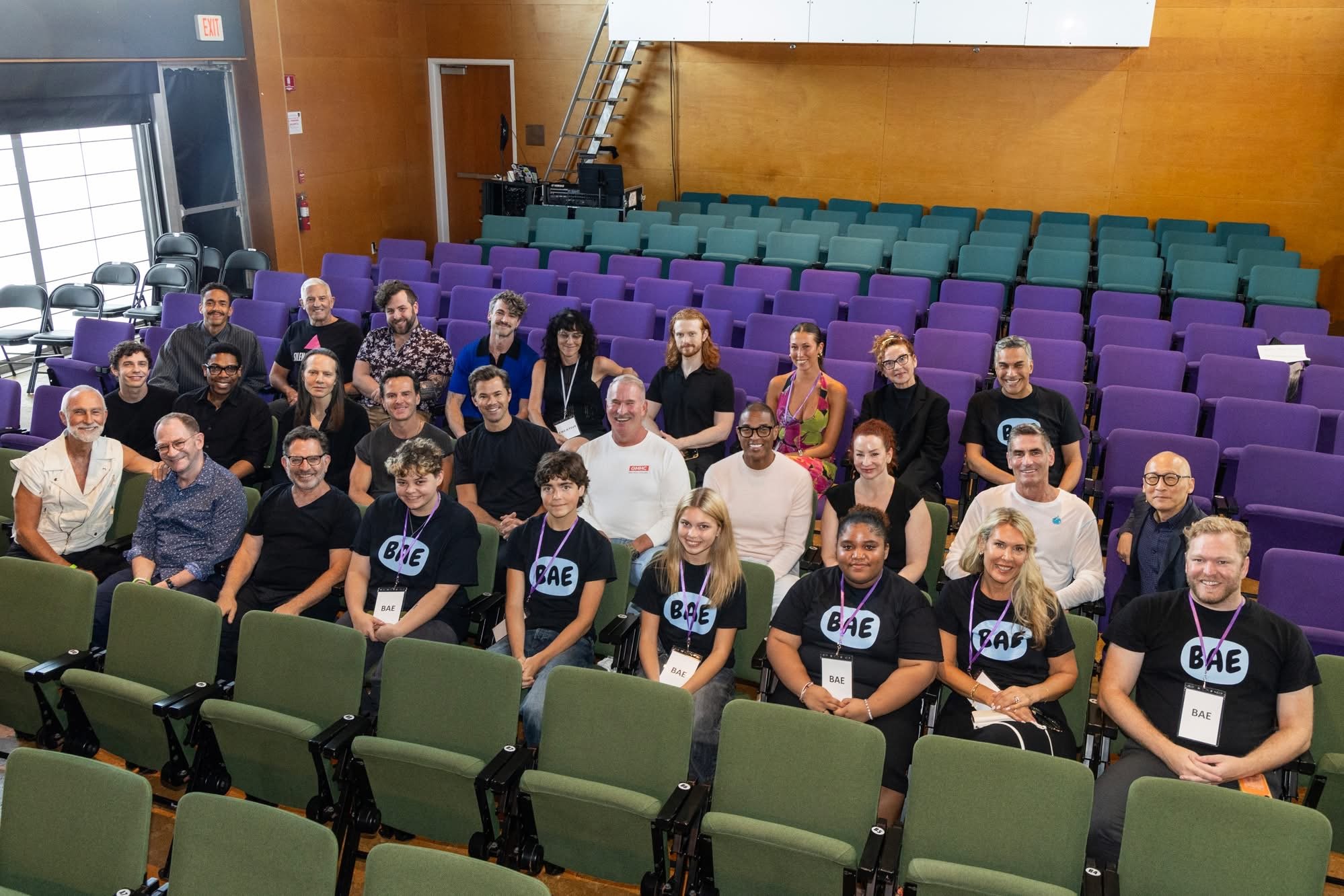
Group photo including BAE participants. Photograph by Koitz.
For Skie, AIDS is deeply personal. He lost his mother to the disease and understood the importance of remembering those affected by the epidemic. Bringing The Normal Heart to the Pines on its fortieth anniversary — which is coincidentally also FIPAP’s fortieth — seemed like perfect way to honor those we have lost.
Steven immediately embraced the idea, and together with Skie and Nikki, began developing the production. Nikki enlisted Leigh to direct; she had previously visited the Pines and understood the significance of presenting Kramer's work there. Casting directors Benton Whitley and Peter Dunn of Whitley Theatrical then helped assemble an exceptional company. Many performers had personal connections to the material, and all volunteered their time.
But the organizers wanted more than a gathering of theatrical stars. They wanted the production to be rooted in the Pines, with residents whose lives and work reflected the struggles portrayed onstage. Three names quickly emerged: Eric Sawyer, co-founder of ACT UP and Housing Works, who has devoted his life to fighting AIDS and discrimination; James Dale, whose challenge to the Boy Scouts of America's exclusion of gay people reached the U.S. Supreme Court; and Todd Sears, founder of Out Leadership, who left a lucrative banking career to advance LGBTQ+ inclusion in business and beyond. Their participation brought something no amount of acting talent alone could provide: the lived experience of a generation that had fought for its survival and rights.
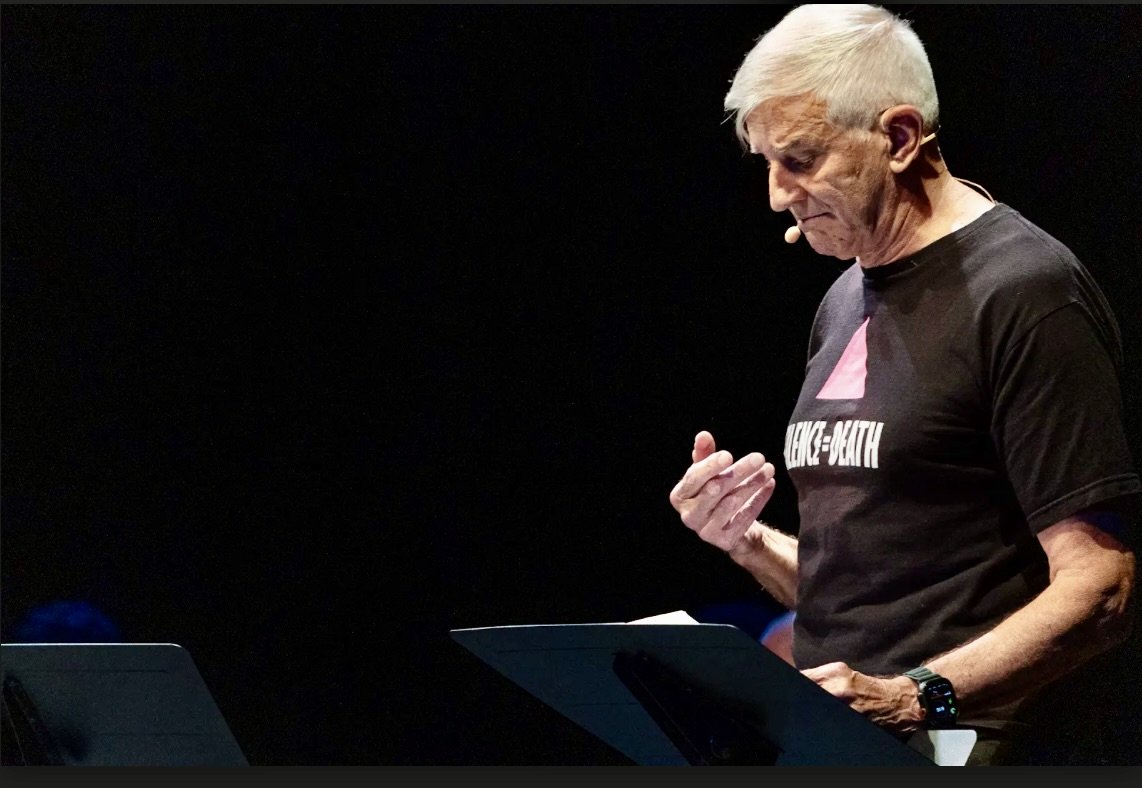
For Eric, the reading reopened some of the most painful memories of his life. He had attended the original 1985 production at the Public Theater with his boyfriend, Scott Bernard, who was gravely ill with AIDS and covered in Kaposi's sarcoma lesions.
Eric Sawyer on stage. Photograph by Koitz.
One scene was particularly devastating: a character experiences a medical emergency aboard an airplane and dies shortly afterward. Eric knew that anguish firsthand. Scott had died during a flight to visit his mother one last time. Tragically, Eric had not been at Scott's side. At a time, his boyfriend needed him most, Eric’s employer had refused him time off to accompany his partner on this important and difficult journey. Scott was forced to make the journey with a close friend instead. It was a heartbreaking reminder of the cruelty and discrimination that compounded the suffering of those living with AIDS. More than four decades later, performing Kramer's words brought those memories flooding back.
For James, the play recalled coming out at Rutgers University during the height of the epidemic, when the liberation of acknowledging his sexuality was shadowed by the fear of contracting AIDS. Attending ACT UP meetings while still in college changed the course of his life. The experience gave him a sense of purpose and set him on a path of LGBTQ+ activism that would eventually take him to the U.S. Supreme Court.
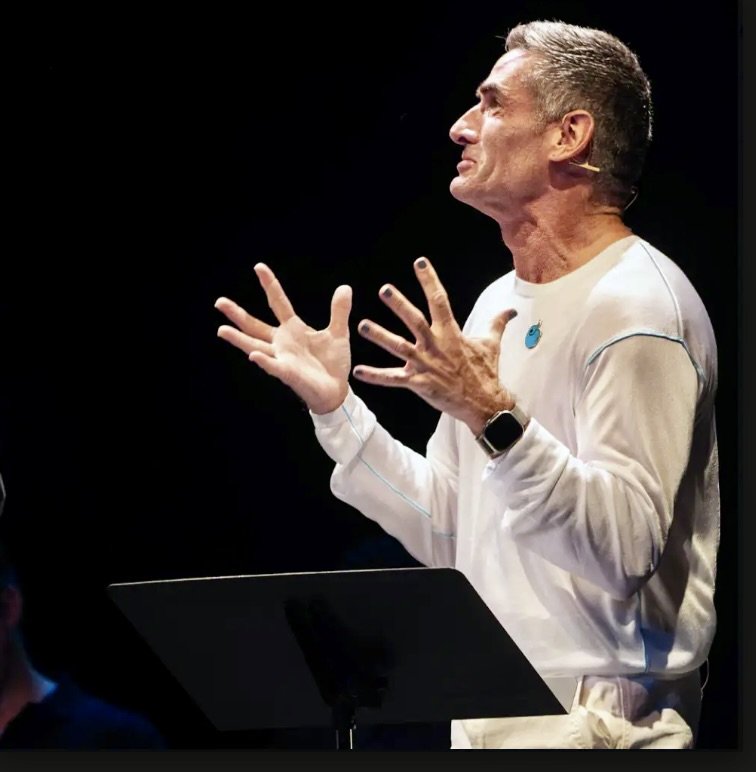
James specifically requested the role of Craig Donner, a frightened young man awaiting a medical diagnosis who becomes the play's first character to die. Having lost friends and mentors to AIDS, James understood the terror and uncertainty embodied in Craig. The performance was deeply emotional for him, but also profoundly rewarding. He later described it as "One of the best nights of my life."
James Dale on stage. Photograph by Koitz.
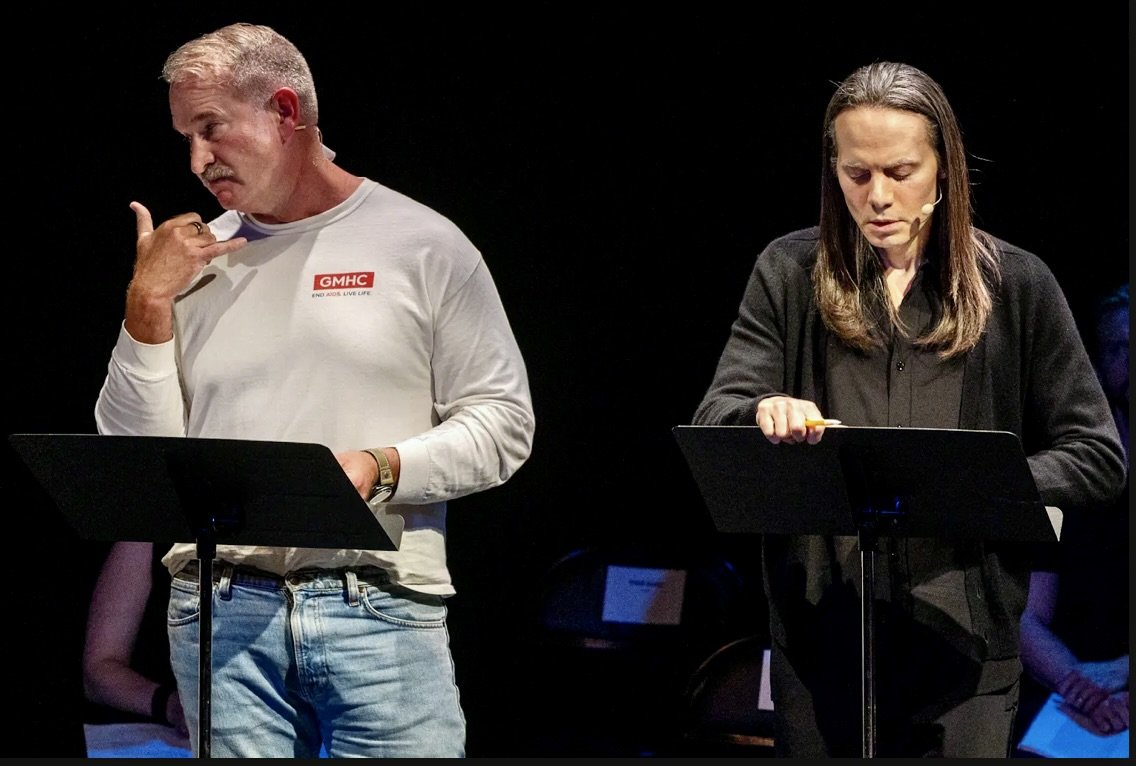
For Todd, The Normal Heart had held profound meaning since he first saw it as a young man. Years later, Larry Kramer became a friend and mentor, and Todd remains close to his widower, David.
Todd Sears and Jordan Roth on stage. Photo by Koitz.
He saw the production as an opportunity to help those still carrying the grief and trauma of the epidemic confront painful memories, while educating younger generations about what their predecessors had endured. Just as importantly, he believed the play's message had renewed urgency as cuts to HIV/AIDS funding under the Trump administration threatened decades of hard-won progress. On a personal level, the chance to perform in the Pines—a place he considers home—alongside extraordinary actors and fellow activists Eric Sawyer and James Dale was an opportunity he could not pass up.
These personal connections gave the production extraordinary emotional resonance. For many onstage and in the audience, Kramer's words evoked memories of loved ones lost, battles fought, and a time when survival itself was uncertain. Stripped of elaborate staging, the reading allowed the power of his words and the performances to shine through. As longtime Pines resident, Stephen Foster, who lost his first partner to AIDS, observed, there wasn't a dry eye in the house.
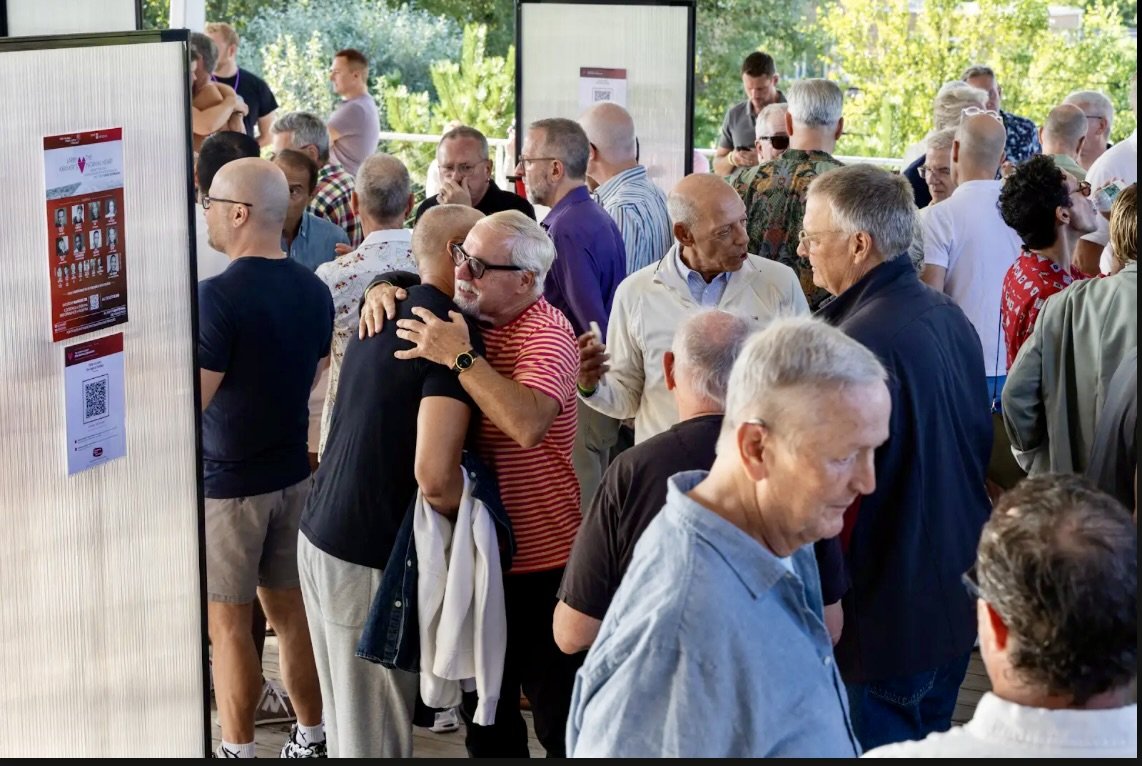
Patrons at the Living Memorial on the deck of Whyte Hall. Photograph by Koitz.
The production required months of planning, coordination, and extraordinary generosity. Steven, Skie, and Nikki managed the complex logistics, from rehearsals and transportation to accommodations. FIPAP Board members and community supporters donated their Pines home to house visiting creatives, contributed food, hospitality, and other logistical support. It was underwritten by PJ McAteer; Gary Clinton & Don Millinger; Dr. William Kapfer & Eric Baker through the Rex Reed DAF / The Rex Reed Foundation; and David Lam & James Dale through the David Lam Giving Fund for BAE's LGBTQIA+ curriculum initiative. The event poster was designed by Anthony Jackson using a photo from Isaac Namdar.
For the cast and crew, the day stretched to nine hours of rehearsals, preparation, and performance. Yet all agreed the experience had been worth the effort. The production raised approximately $30,000 for Broadway for Arts Education (BAE), with FIPAP donating all the proceeds from the event ($13,000) and $17,000 in separate grants made directly to BAE.
But its greatest achievement cannot not be measured in dollars. It had brought together celebrated performers, veteran activists, longtime residents, and young people encountering this history for the first time. Through theater and personal testimony, it created a shared experience of remembrance, understanding, and connection.
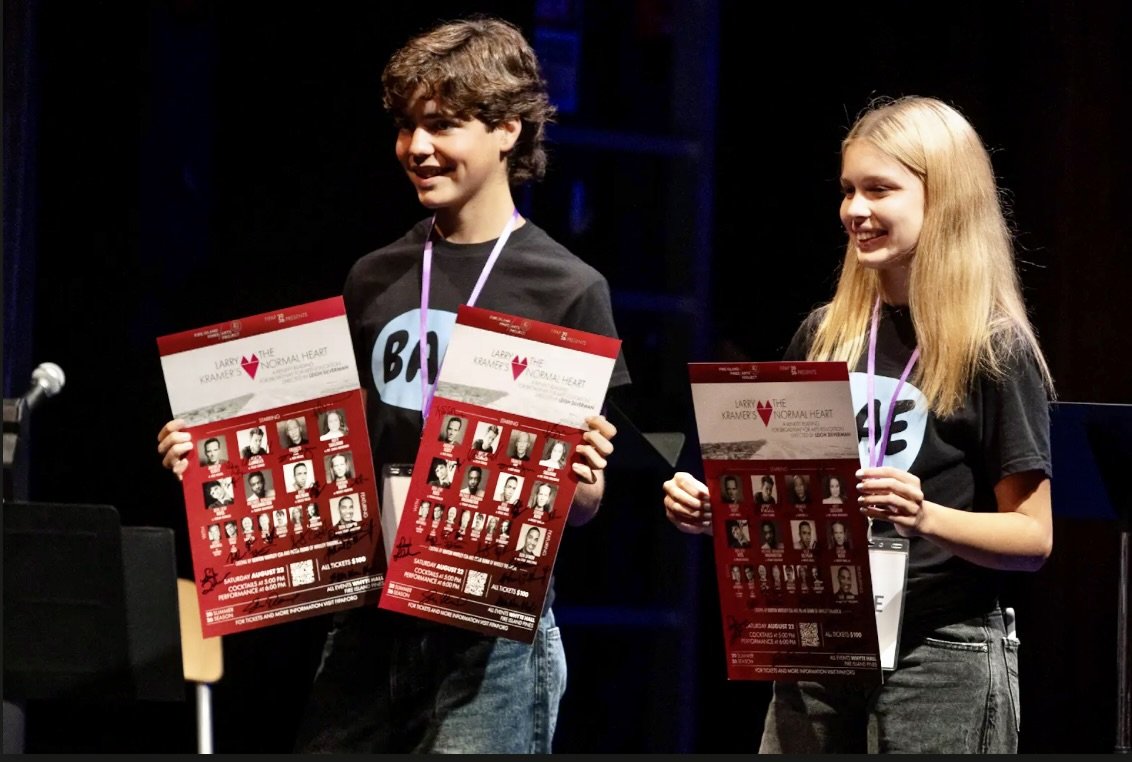
BAE participants with event posters. Photograph by Koitz.
For 40 years, FIPAP has enriched the Pines through theatre, music, and entertainment. With The Normal Heart, it demonstrated the power of the arts to do something even more meaningful: honor those we have lost, confront painful history, and ensure that their stories are not forgotten. For those who lived through the epidemic, the evening stirred memories of people they loved and battles they fought. For younger generations, it offered a deeper understanding of the courage and sacrifices behind freedoms they might otherwise take for granted.
But the evening carried a larger message: preserving history is not simply about remembering those who came before us. It is about ensuring that future generations understand what this community endured, the courage it took to survive, and the people whose struggles helped make their lives today possible.
We cannot bring back those we have lost. But we can keep their stories alive. And in doing so, ensure that their lives—and what they fought for—are never forgotten.
And on August 22nd 2026, FIPAP and BAE did just that.