

Pines Profile - James G. Pepper (b.1944)
By Virun Rampersad, January 2026
The Embodiment of Philanthropy
Jim Pepper is one of the most beloved and respected members of the Fire Island Pines community. An unabashed capitalist with a tremendous intellect, strong moral compass and a bias for action, Jim’s life has been spent doing things that improved the lives of millions of people. For almost six decades he has helped build institutions, fund movements, and steady the LGBTQ+ community through its darkest chapters. Averse to self-promotion, Jim has consciously avoided the spotlight so as not to distract from those on front line. However, his contributions have been broadly recognized as impactful and inspiring, reflecting his generous view on leadership and a strong calling to serve.
Early Life
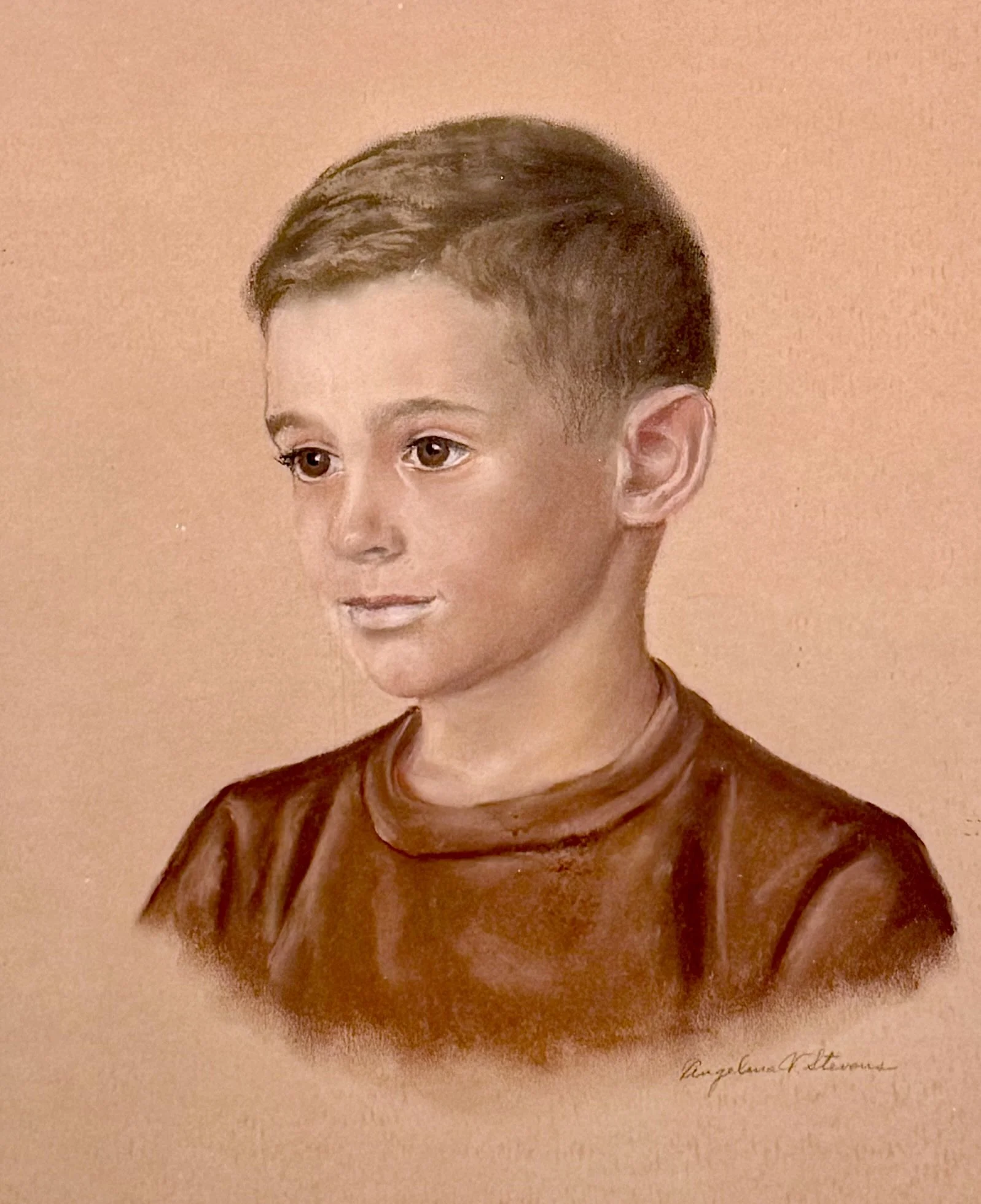
Born in the mid-20th-century James G. Pepper—known simply as Jim—grew up in a world
that demanded silence and invisibility from gay people. The youngest of originally four boys
(his eldest brother died at a young age), Jim grew up in a middle class family who moved to
North Carolina from New Jersey.
Portrait of Jim Pepper as a child. Courtesy of Pepper family.
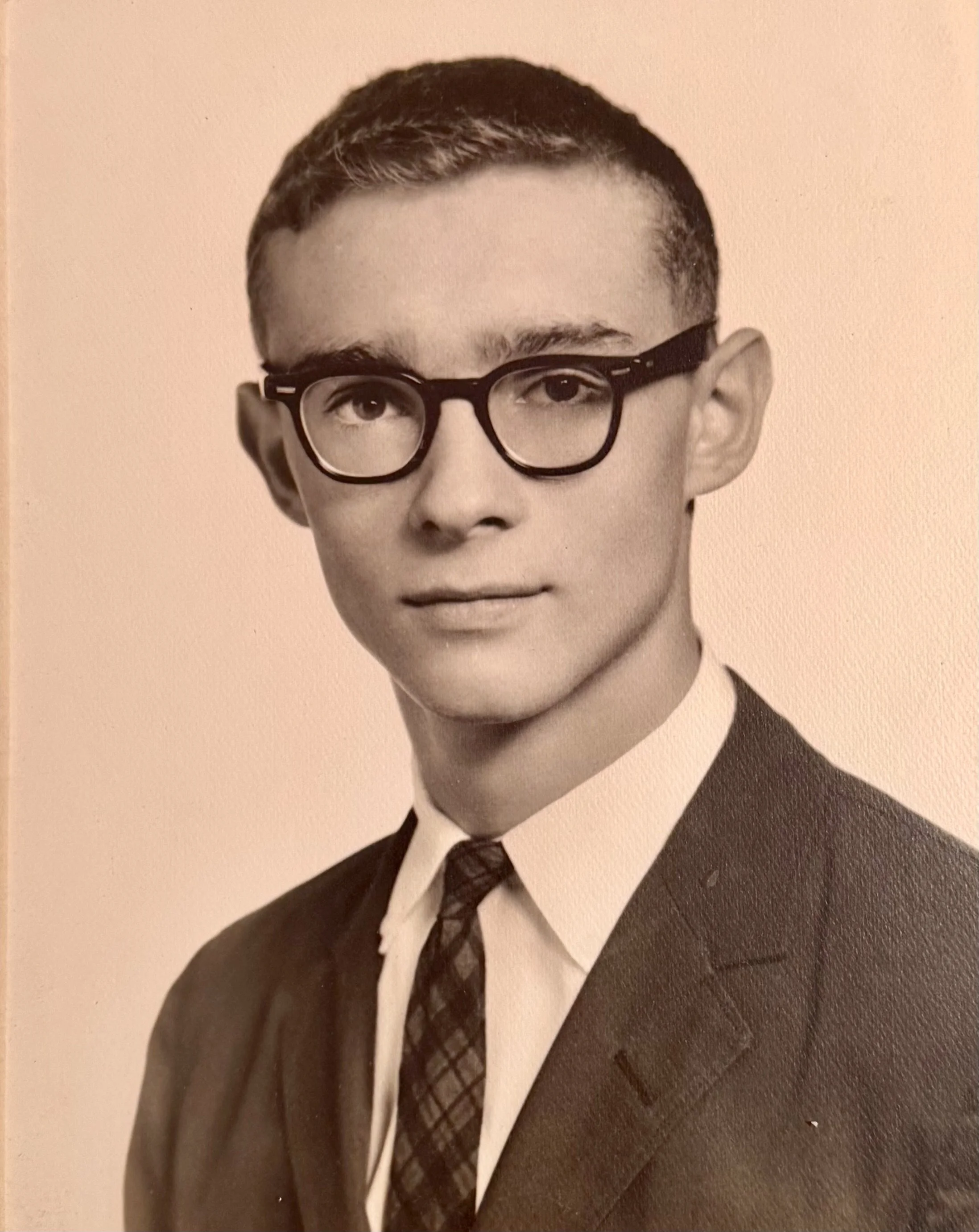
After attending a preparatory academy, he enrolled at his
father’s alma mater, Davidson College, and graduated in 1965, just one year before the
school became racially integrated.
Jim Pepper, Davidson Years. Photo courtesy of Jim Pepper
At Davidson, Jim stood out not only for his academic and athletic excellence, but also for his quiet empathy and strong sense of right and wrong. Friends remember him as warm, highly organized, and naturally community minded. Even amid the turbulence of the 1960s, he was a voice for tolerance, justice, and service, and stood out as a leader who brought people together, instinctively and effortlessly. While at Davidson he badly damaged his shoulder during a wrestling match, an injury that prevented him from joining both the ROTC and the military. As a result, he plunged himself into his career, moving to New York to join Chase Manhattan Bank.
Coming Into Himself
Ironically, for someone so perceptive, Jim didn’t fully understand his own sexuality until he was living in New York City. At the time, he was forging a successful career in finance, first at Chase Manhattan Bank, where he became the youngest Vice President in the firm’s history, and then at the investment boutique, Brundage, Story and Rose, which was later acquired by Bessemer Trust Company. His success reflected both his dedication and an extraordinarily sharp mind that enabled him to quickly assess complicated situations and develop actionable recommendations. It was a skill he would call on many times over in the coming decades.
In an era when Wall Street was openly hostile to LGBTQ+ people, Jim, like many of his generation, lived a life of separation. Publicly, he was a fast rising executive in finance. Privately, he socialized in New York’s underground gay community. Jim thrived in both spheres. Fit, handsome, charismatic, and deeply curious, he quickly built a circle of friends, finding joy in post-Stonewall gay New York. Professionally, he became a highly regarded financial advisor to high-net-worth clients, university endowments and pension funds. His success was due not only to his financial acumen, but also because he took the time to understand his clients’ businesses well and recognized that the best answers were often right in front of your nose.
Although he quickly became a major player on Wall Street, there was a place a couple of hours away that would play an even bigger part in Jim’s life — Fire Island Pines.
Finding His Future In Fire Island Pines
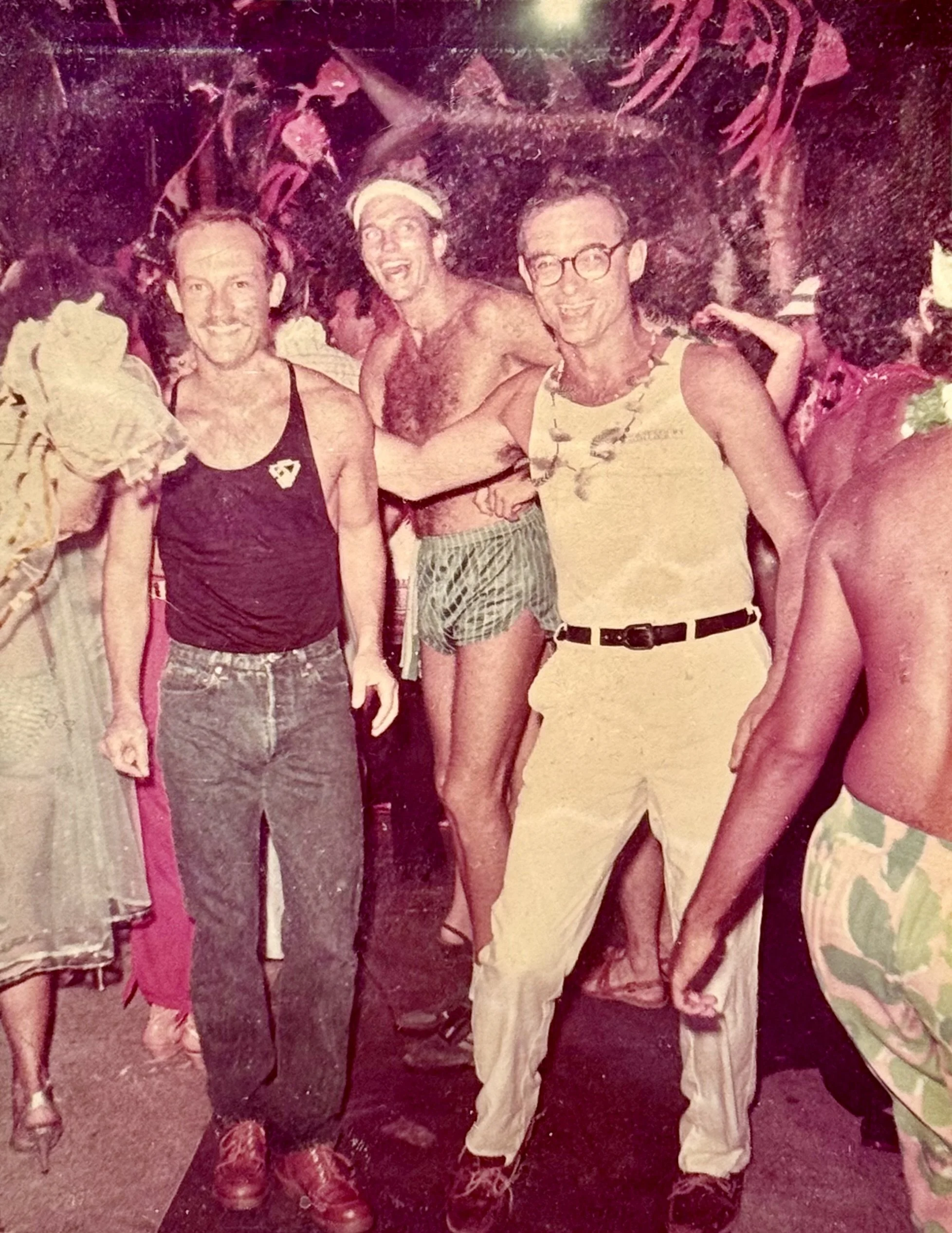
Jim took to the Pines right away and it quickly became his sanctuary. In its natural beauty
and sense of freedom, he found friendship and love. Unlike anywhere he had been, it was a
place where gay people were visible, vibrant and being their authentic selves. Being there
allowed him to begin to envision a future where gay people could be open, joyful, and
powerful everywhere.
Jim Pepper in the Pines. Photo courtesy of Jim Pepper.
Awakening to Activism
Jim was very much aware 1970s reality was a far cry from his vision. Even in the Pines, behind the glamour of parties and beach houses, gay people faced discrimination in all major aspects of life, including housing, healthcare, employment, and human rights. The joy was real, but so was the injustice. Jim was doing very well professionally and his future was bright. It would have been easy to look the other way and allow his wealth and position carry him forward. However, Jim wasn’t built that way. Innate to his being was a belief that if you could help and the cause was right, you should. These were the seeds that would grow into a life of activism.
Lambda Legal: A Movement Conceived in the Pines
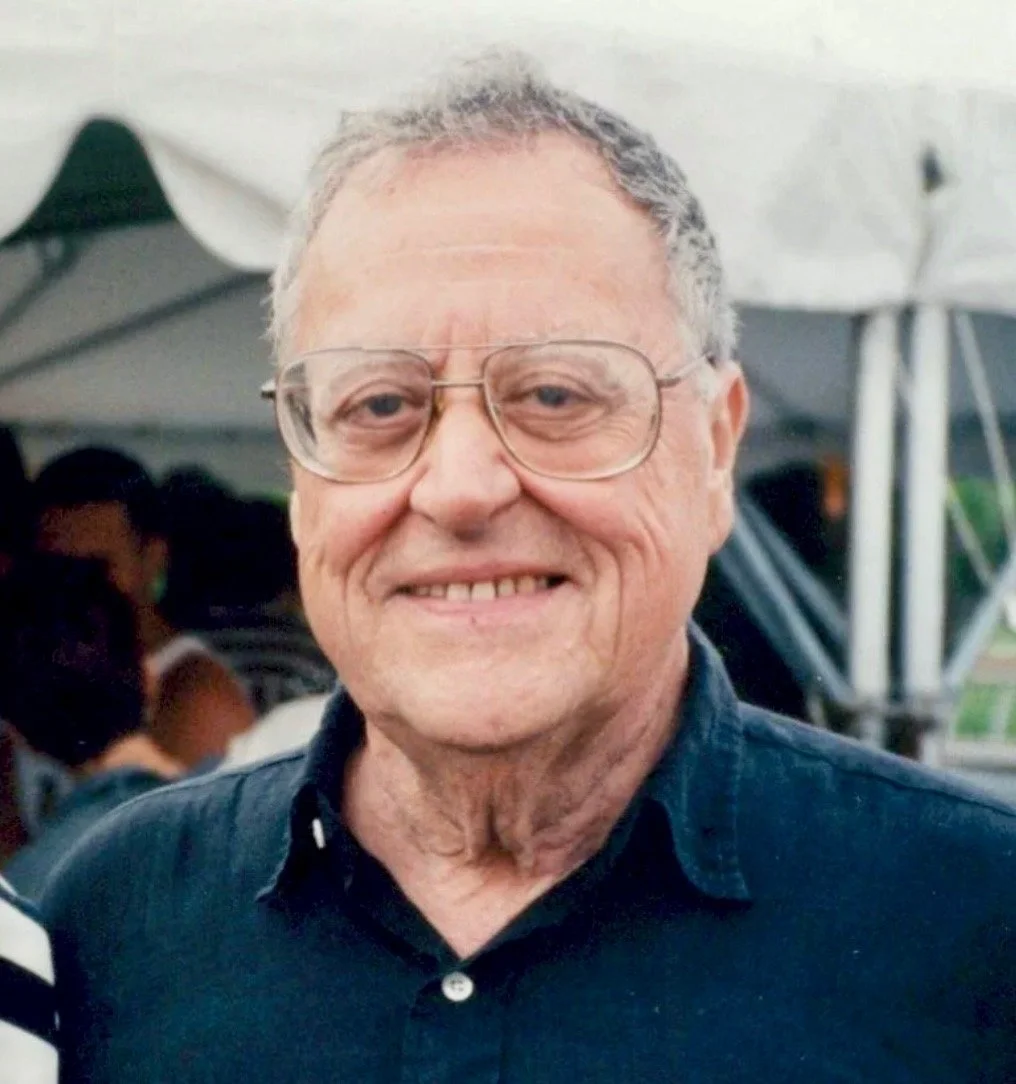
In 1973, Lambda Legal was conceived with a goal to use the U.S. legal system
to secure equal rights for LGBTQ+ people. Jim and other members of the Pines community like The Pines Liquor Shop
owner Jack Lichtenstein, soon became supporters.
Jack Lichtenstein. Photo courtesy of Lichtenstein family.
Very quickly Jim came to understand something that shaped his activism forever: movements run on courage, but they win with structure, strategy and money. In 1978, Jim, Jack and others launched Lambda Legal in the Pines, a groundbreaking annual fundraiser that helped power the organization’s growth into a national legal force. It was an effort that reflected another one of his beliefs -- activism didn’t always have to be loud to be effective. Sometimes it’s done quietly, in beach houses, on boardwalks, in boardrooms, in cocktail conversations and at dinner parties.
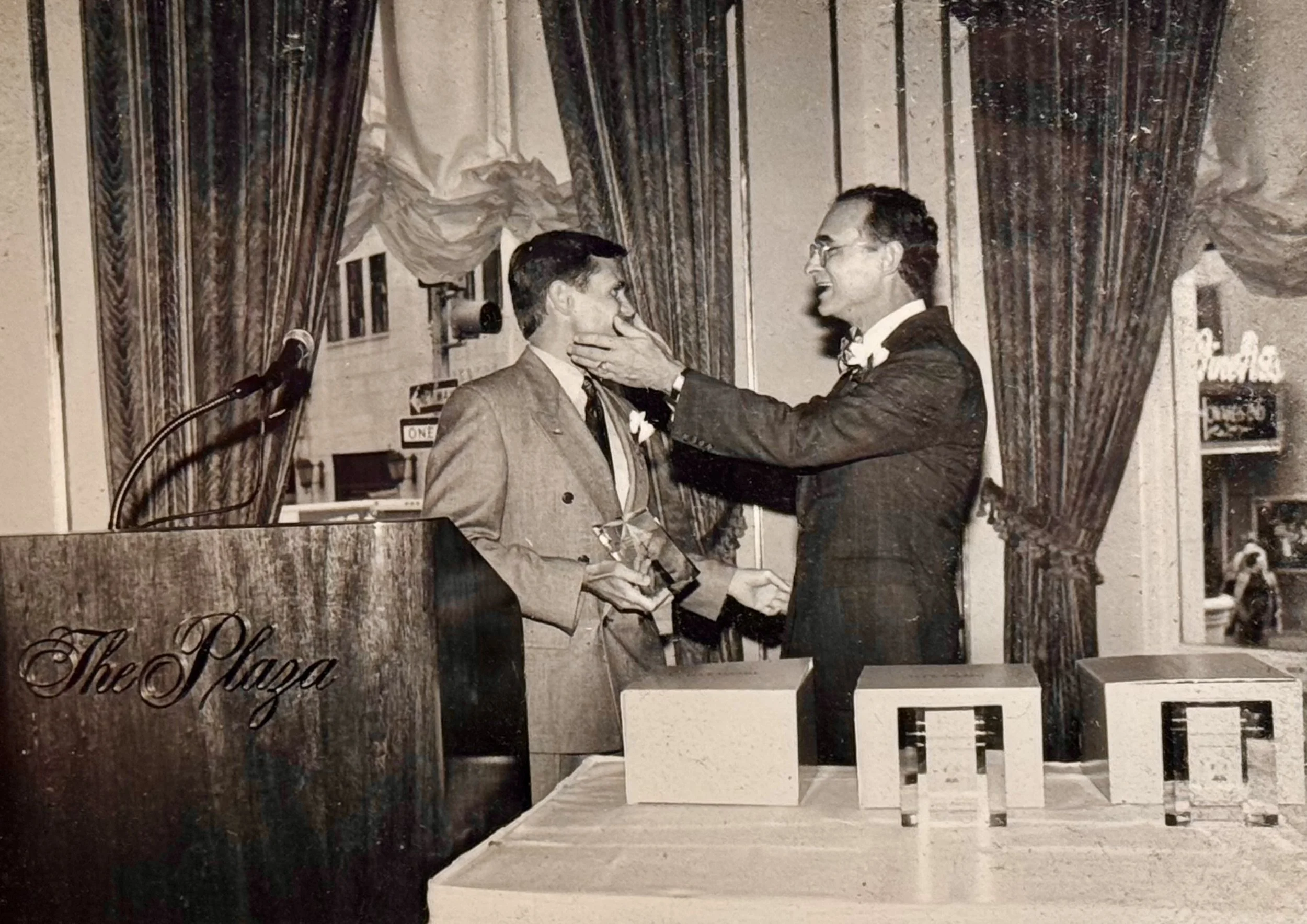
Jim receiving an award at a Lambda fundraiser from Tim Sweeney at the Plaza Hotel in New York.
Answering the Call: The AIDS Crisis
The 1980s brought AIDS to America and it tore through the gay community with a cruelty and speed that is difficult to describe to anyone who didn’t live through it. In the Pines, many vibrant, healthy and handsome young men were quickly transformed into lesion covered skeletons. Almost overnight entire groups of friends vanished, and virtually everyone lost someone they loved dearly.

The gay community was first ignored and then shunned by mainstream America as the
crisis unfolded. In response, they reframed the meaning of the terms ‘community’ and
‘chosen family’. Many stepped forward to care for friends afflicted by the disease, and a few Pines members, most notably Larry Kramer and Paul Popham, formed Gay Men’s Health
Crisis (GMHC) to help organize a coherent response to the crisis.
Despite the commitment and determination of its leaders, it soon became clear GMHC needed help so one day Paul Popham paid Jim a visit at his house in the Pines. The situation was dire, he explained, and GMHC desperately needed someone like him on board. Jim didn’t hesitate. He said yes. It was a decision, however, that involved significant personal risk.
At the time, Jim was working at Brundage, Story and Rose where the partners were required to obtain permission for outside work. In the 1980s AIDS was taboo, and Wall Street was still hostile to gay people. Coming out -- which is essentially what he would be doing -- was highly risky. Moreover, getting involved with AIDS issues was considered virtual career suicide. Jim was undeterred. He told the partners he considered it a moral issue and was going to do it. He wasn’t asking permission, rather he was advising them of his plans. Jim risked his career and his livelihood to answer the call. It is a tribute to the firm’s leadership (and a testimony to the value Jim was delivering) that there was no objection.
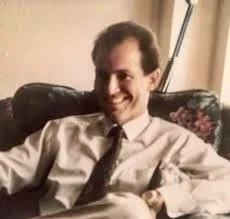
As Treasurer of GMHC, Jim brought discipline, strategy, and compassion to the crisis. He
worked closely with figures like the late Nathan Kolodner, who helped shape Jim’s
philanthropic philosophy.
Nathan Kolonder. Photo courtesy of The AIDS Memorial.
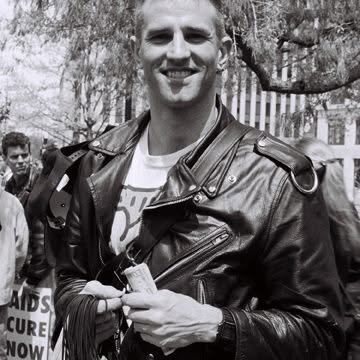
Jim also supported and collaborated with figures like Eric Sawyer, co-founder of
ACT UP, a group that protested in front the White House, had ‘die-ins’ in front of St.
Patrick’s Cathedral and frequently disrupted traffic and events in cities around the country.
Together, they developed the famous ‘Black Hat/White Hat’ strategy.
Eric Sawyer. Photo courtesy of Eric Sawyer.
ACT UP wore the Black Hat. Angry, loud and disruptive, dressed in jeans and leather jackets, ACT UP protestors generated attention and created a sense of urgency about the crisis. They made AIDS impossible to ignore, creating irritation, discomfort and even fear amongst public and private sector leaders. Jim, in the White Hat, presented a stark contrast — a debonair, articulate, highly successful Wall Streeter, often sporting a bow tie, offering to engage in quiet conversation.

The strategy worked. Officials sought out the “White Hat” dealmakers because the ‘
Black Hat’ activists were making the status quo impossible to defend. Very soon, the wheels of progress began to turn.
ACT UP Protest. Photo courtesy of The Atlantic Magazine
The success of ‘Black Hat/White Hat’ was an example of how effective Jim was in working with different types of people to drive change. Although he was the consummate financial executive who spent much of his time in board rooms with senior business leaders, Jim was never uncomfortable working with radicals. He respected them and shared their goals, and consistently touted their dedication and determination. As he stated years later in a speech at Davidson College:
“You gotta show up. You gotta be visible. And you have to be inconvenient… The more outrageous it is, the more coverage it gets—and the more minds it changes.”
For their part, although he looked like the establishment they were trying to change, ACT UP recognized and appreciated his unwavering support. As Eric Sawyer noted:
“Jim is one of the most giving people I have ever met. At a time when others were shying away from ACT UP, he was always available to help with money, advice, and encouragement.”
In a time of mass death and little hope, Jim worked with other LGBTQ+ leaders to build strategies that turned things around and saved lives. Beyond ACT UP and GMHC, he supported many other AIDS related causes, including Housing Works where he once again partnered with Eric Sawyer. Even in the darkest of times, he persevered. He participated in marches (always in a suit and bow tie) and remained a steadfast pillar of support to the movement’s leaders. Even when things seemed hopeless he never flinched from what he saw as a moral imperative.
To put in perspective what the activists like Jim, Eric and others achieved, when AIDS emerged in 1981 it was a fatal, incurable disease primarily affecting gay men that the government and mainstream America had no interest in addressing. With no one to turn to, the AIDS activists took the lead. They developed strategies, built organizations, developed funding mechanisms and mobilized people. They found ways to care for the sick and dying, developed safer sex techniques to prevent contagion, and fought the status quo relentlessly and intelligently. Their efforts led to the development of a highly effective cocktail therapy that literally gave millions of people a new lease on life. But their impact went beyond that. Their efforts changed the way medicines were developed, ushering in a slew of new therapies for a wide variety of illnesses. It is not an exaggeration to say that by 2025, anyone on a drug created in the past twenty years was a beneficiary of the fight against AIDS.
Building Institutions for the Long Haul
It is worth noting, Jim’s activism did not start or end with AIDS. His board service actually began in the 1970s with the Youth Counseling League (later merged into the Jewish Board of Familyand Children’s Services). But one of his most enduring institutional achievements came in 1990, when he co-founded the Stonewall Community Foundation to support LGBTQ+ nonprofits and strengthen queer philanthropy.
In the early days, Jim was heavily involved, bringing his organizational and leadership expertise to the table. As former Executive Director Bill Mattle noted:
“Jim has high standards and helped everyone raise their game. He had vision and a strong sense of what was right. Very importantly he ensured that Stonewall’s grant committee reflected the communities they served and respected the work they did.”
Jim’s leadership style was direct, strategic, and results oriented. At one meeting, frustrated by endless discussion, he banged his fist on the table and said:
“You’ve spent almost an hour talking about how you’re going to spend the money and not one damn second on how you’re going to get!”
Jim knew how to keep people focused on priorities and played an active role in hiring and developing its leadership team. In addition to Bill Mattle, over time he brought in leaders like Matthew Bank, Ken Green, Richard Burns, and Bradley Carlson each of whom helped advance Stonewall’s mission.

R-L: Jim Pepper, Bill Mattle, Ken Green, and Matthew Bank, all former Presidents of the Stonewall Foundation. Photo courtesy of Jim Pepper.
Later, when he realized that it was in the best interests of the foundation, Jim stepped down. He did so graciously, taking his leave but never withdrawing his support. In the not-for-profit world this often did not occur – many founders and leaders stayed on for extended periods using the platform as a means to retain public relevance and social status. For Jim it was never about prestige, ego or self-promotion; indeed, those were traits he despised. For him it was about the work and the impact and nothing more.
Jim continued in the vein of service, later as President of the Allan Morrow Foundation and on the Board of Visitors at Davidson College. To this day, he is a generous supporter of Fire Island initiatives, from Whyte Hall to the Pines Conservation Society and the Pines Care Center.
Pushing Boundaries—and Facing Backlash
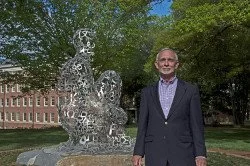
Sadly, LGBTQ+ activism is not always celebrated and there was pushback and hate, even in so called “friendly environments”. When Davidson College awarded Jim the John W. Kuykendall Award for Community Service in 2015 at his 50th reunion, not all his classmates were supportive. Indeed, some were quite cold. Jim’s response:
“Frankly, I don’t give a damn.”
He understood that progress had a cost and bore it without complaint.
Jim Pepper at Davidson College
The Parties Were Never Just Parties
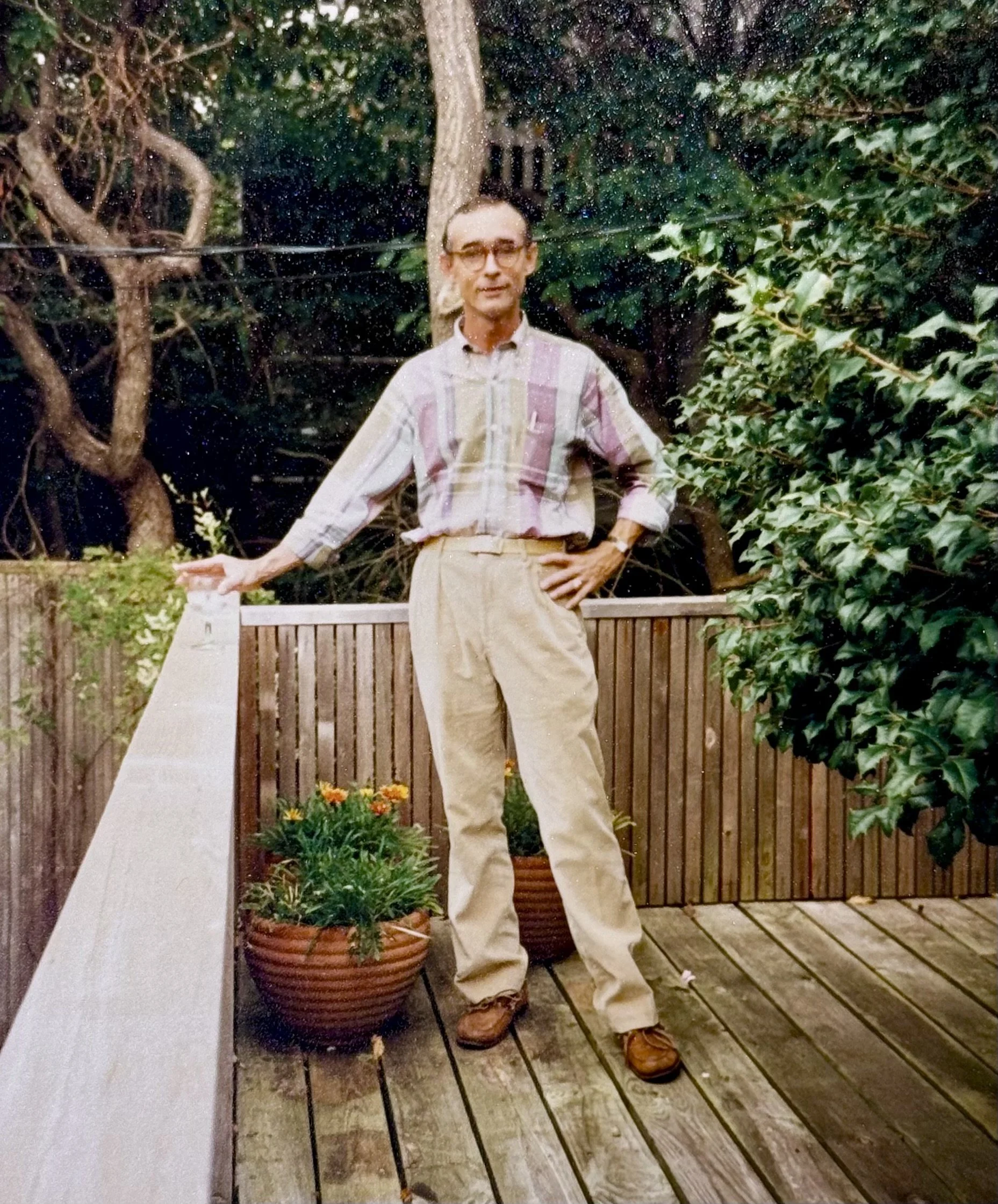
Jim Pepper in Fire Island. Photo courtesy of Jim Pepper.
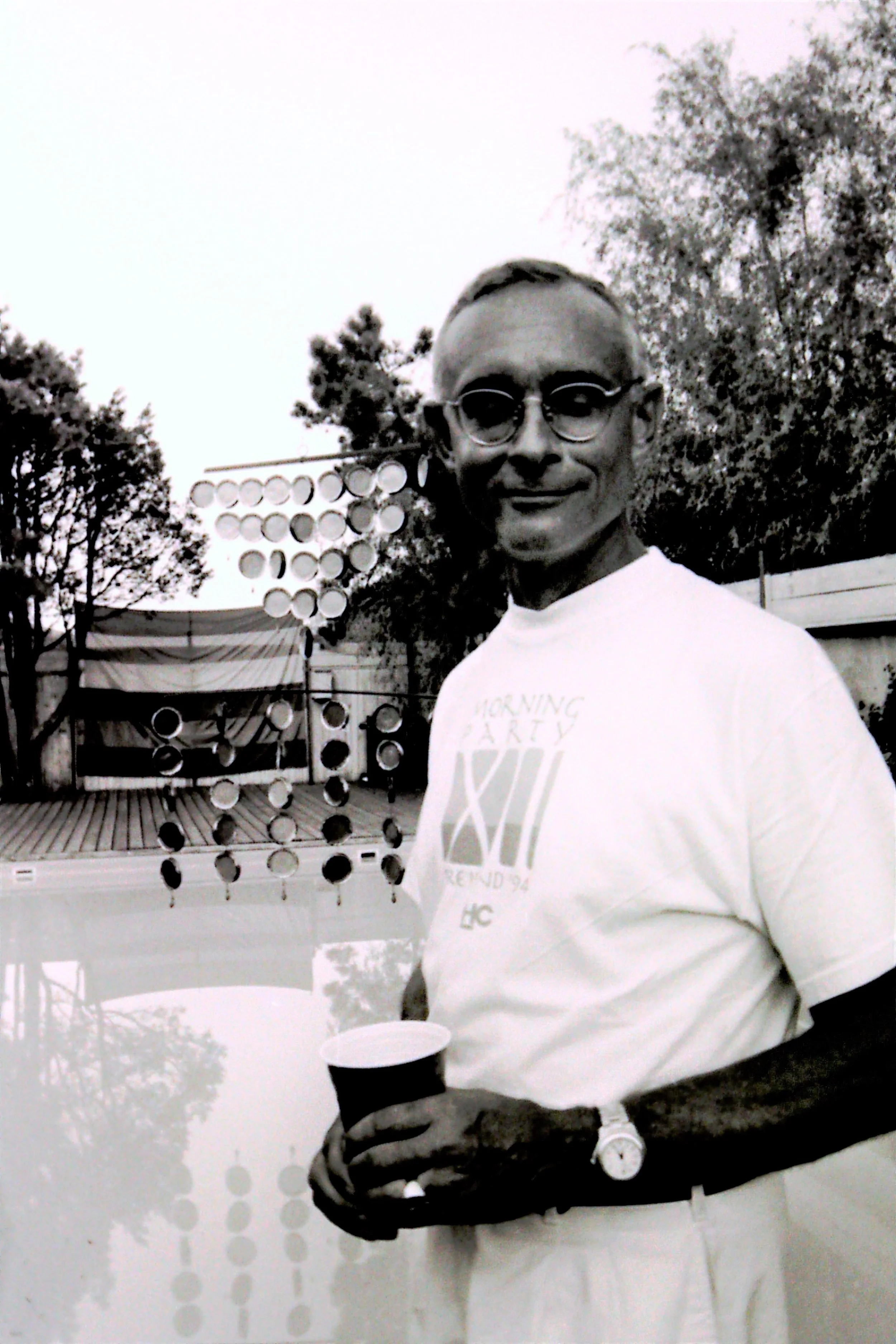
Despite the seriousness of his work on Wall Street and as an activist —or perhaps because
of it— Jim always made space for joy. His parties in the Pines were legendary. For years, alongside his neighbor Steve Herbits and DJ Buc, he co-hosted and helped underwrite a wildly popular afterparty following the Morning Party. It honored Pines community members and organizations such as the Pines Fire Department, who were welcomed free of charge as a gesture of thanks.
Jim Pepper at the Morning Party in 1996.
Running this party was no small effort. It involved taking down fences, building decks and covering pools – and then putting everything back together afterwards. However, they did it gladly and it was a huge hit. Jim gives a lot of credit to Steve Herbits. As he noted:
“It took a lot of time and effort to host this party, but Steve never blinked. His personal generosity ensured that we were able to create a memorable event for the people in the Pines community.”
A big part of the party’s success was that, at its core, it was a true community celebration. At a time when large events like the Morning Party drew global crowds, this gathering’s Pines focus tapped into the community’s unique joy and spirit. It was friends and neighbors dancing and having fun together in a spectacular setting. It quickly became known as “the party to be at.”
Its success, however, brought an unintended downside: the free tickets began to be scalped. While that was never the original intention, Jim recognized there was no turning back. Instead, he transformed the event into a fundraiser, reasoning that if money was already changing hands, it should at least support a good cause.
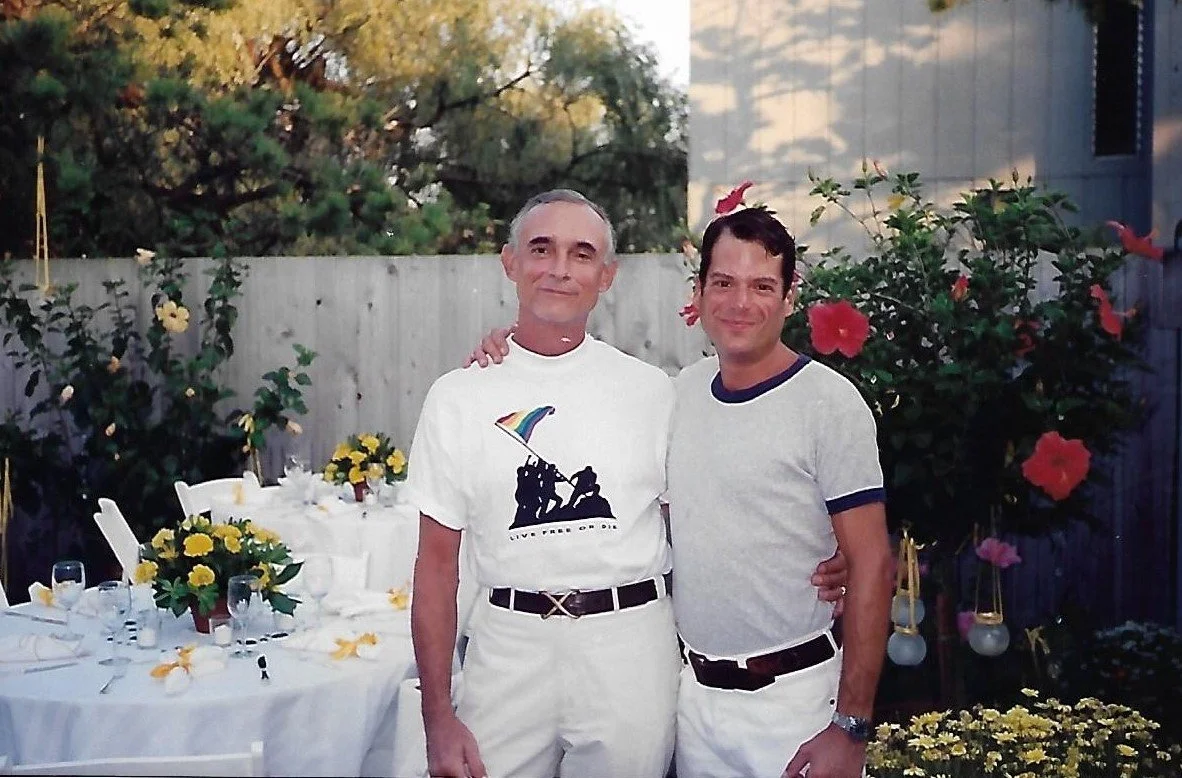
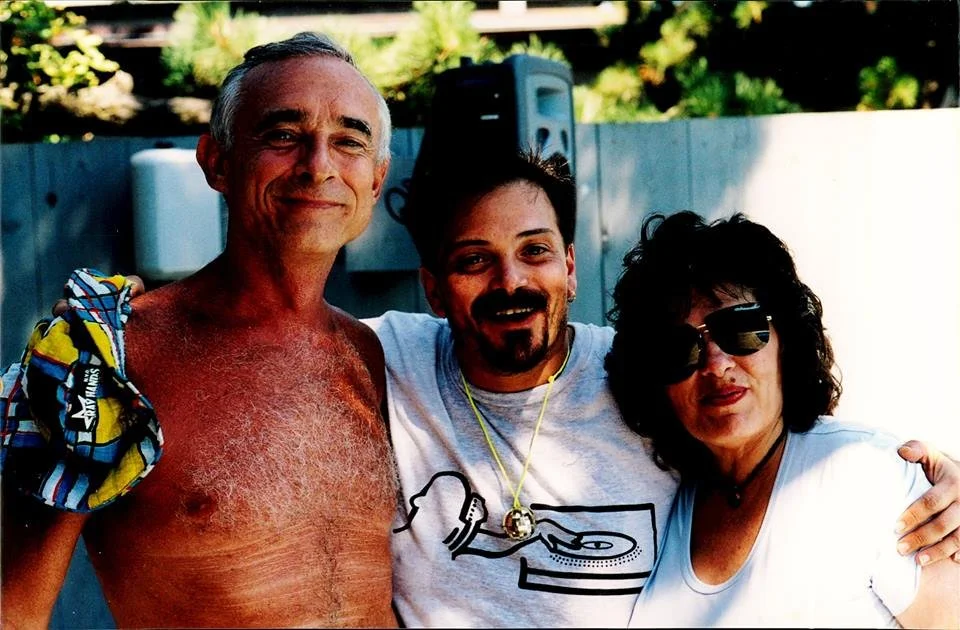
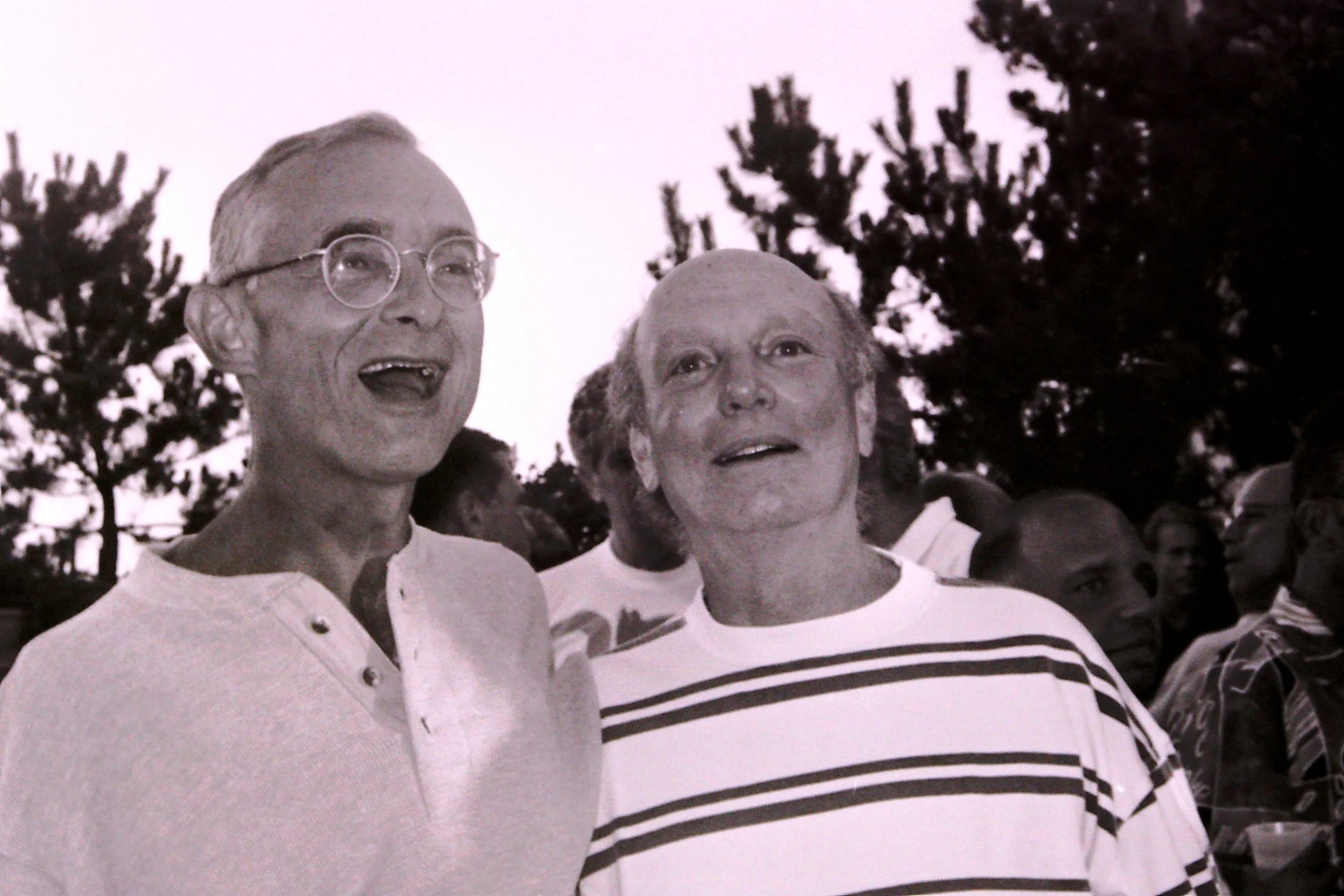

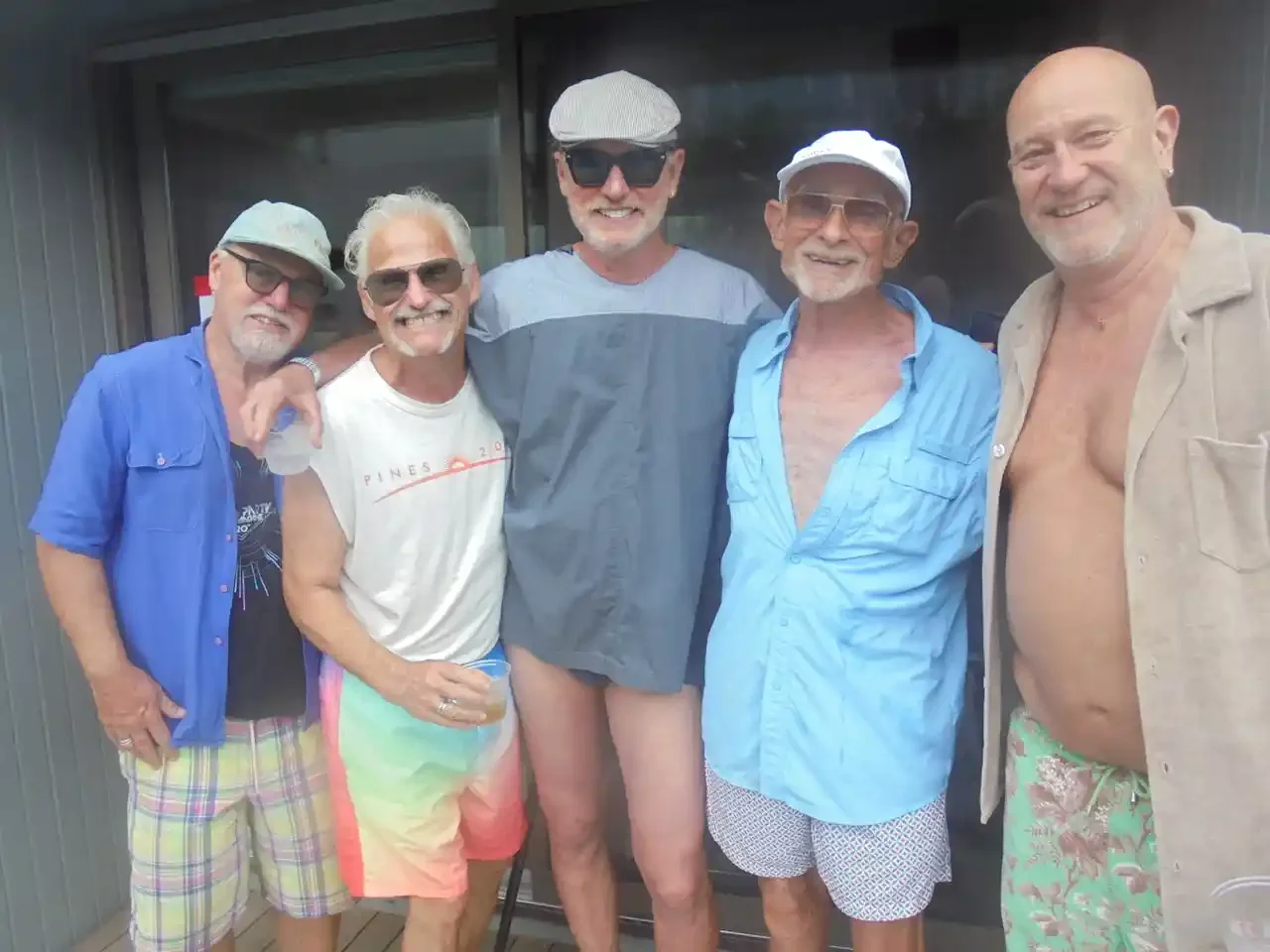
Jim with friends Jim Russo (1L), DJ Buc and friend (2L), Alan Brockman (3L) and Jay Pagano (4L). Photos courtesy of Jim Pepper.
When the Morning Party gave way to the Pines Party, Jim began hosting the Closing Party, ensuring there was a strong dance floor and plenty of seating, so that everyone, including elders, could join comfortably. That welcoming and considerate approach was the hallmark of all his social engagements, be it a small cocktail gathering, a lavish dinner party or a blockbuster dance event. Jim’s house in the Pines was always open, whether for a quick visit, a philosophical chat, or strategic advice. These weren’t just social moments. They were acts of love, community and leadership.
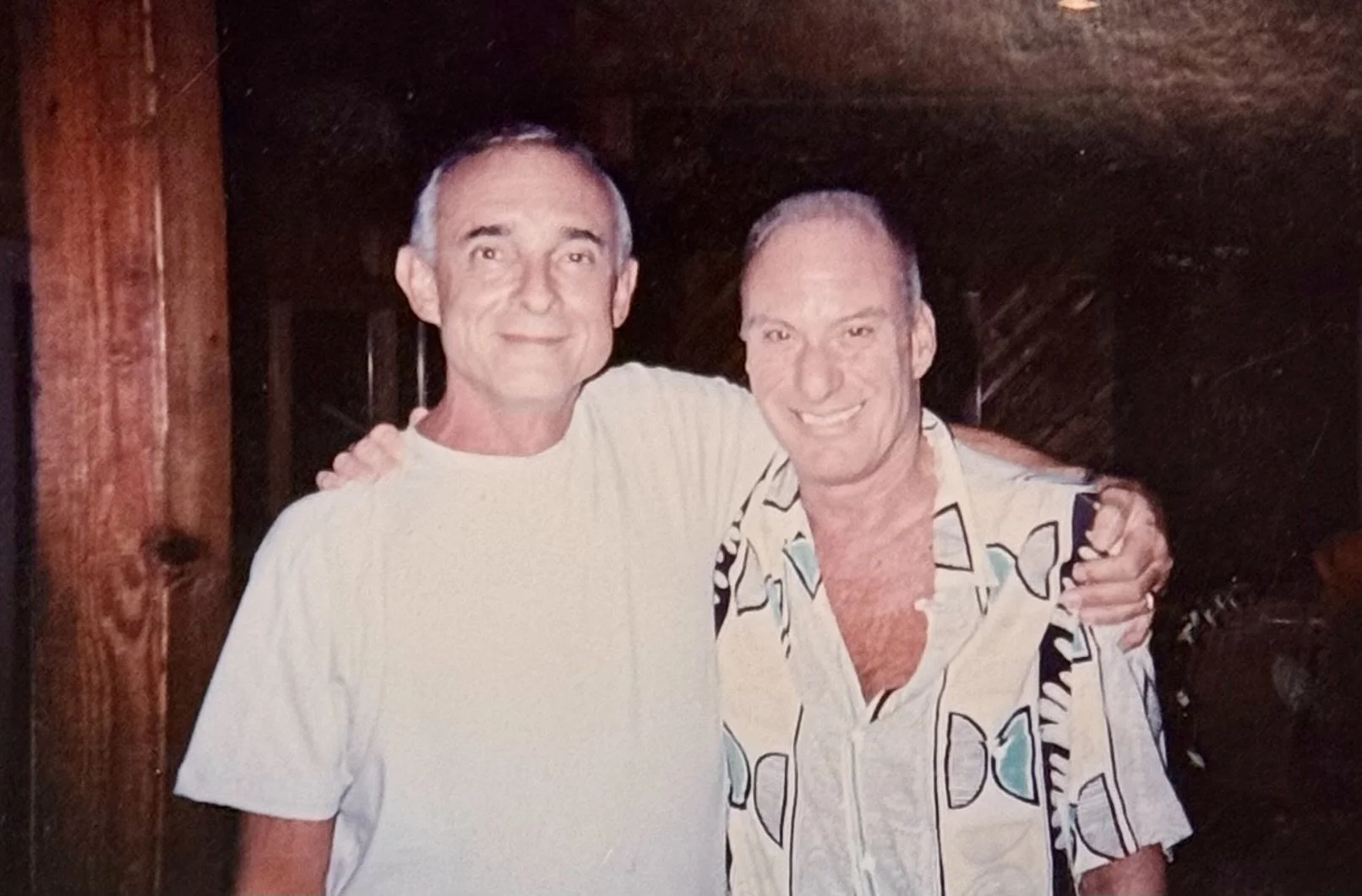
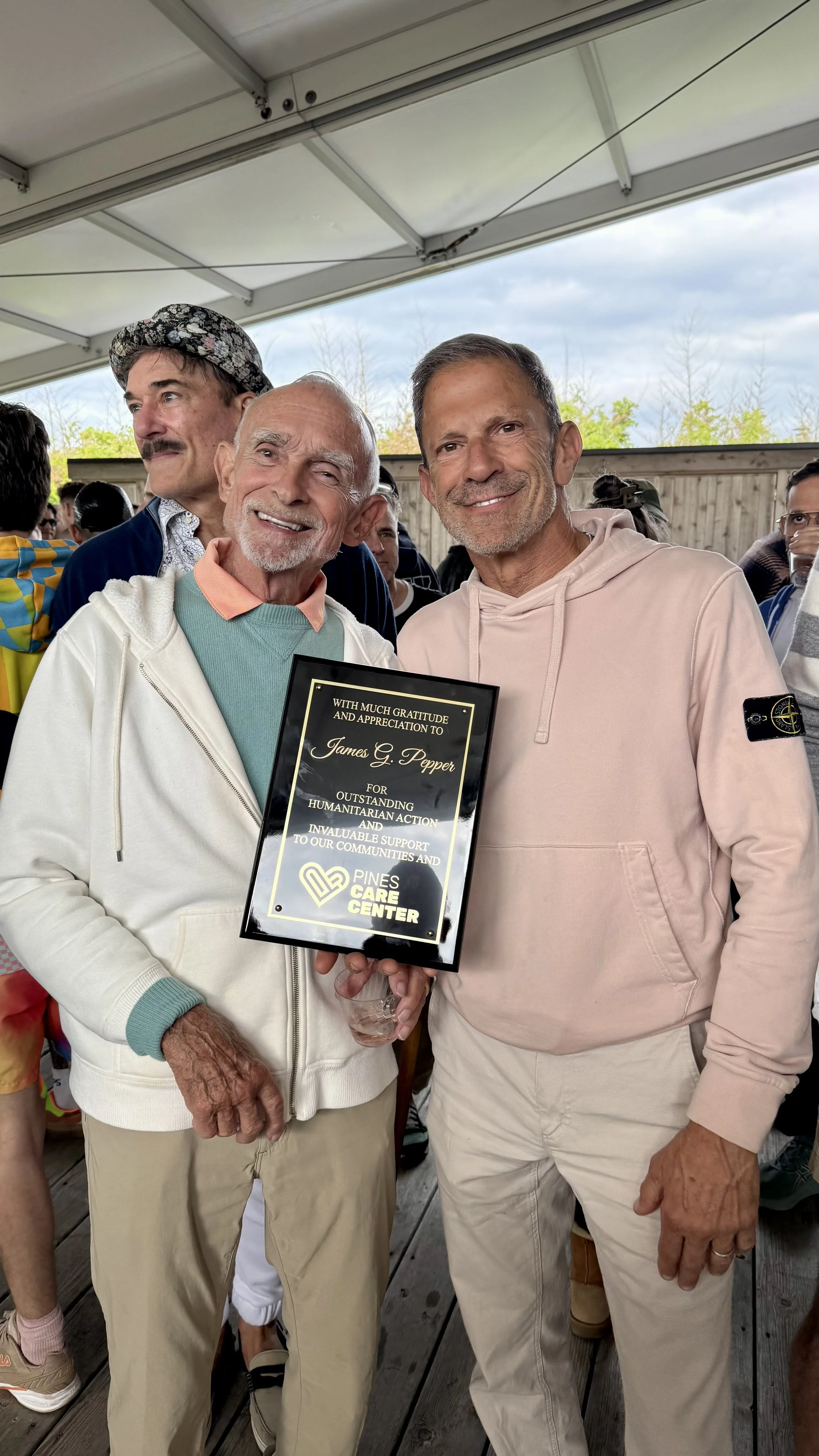
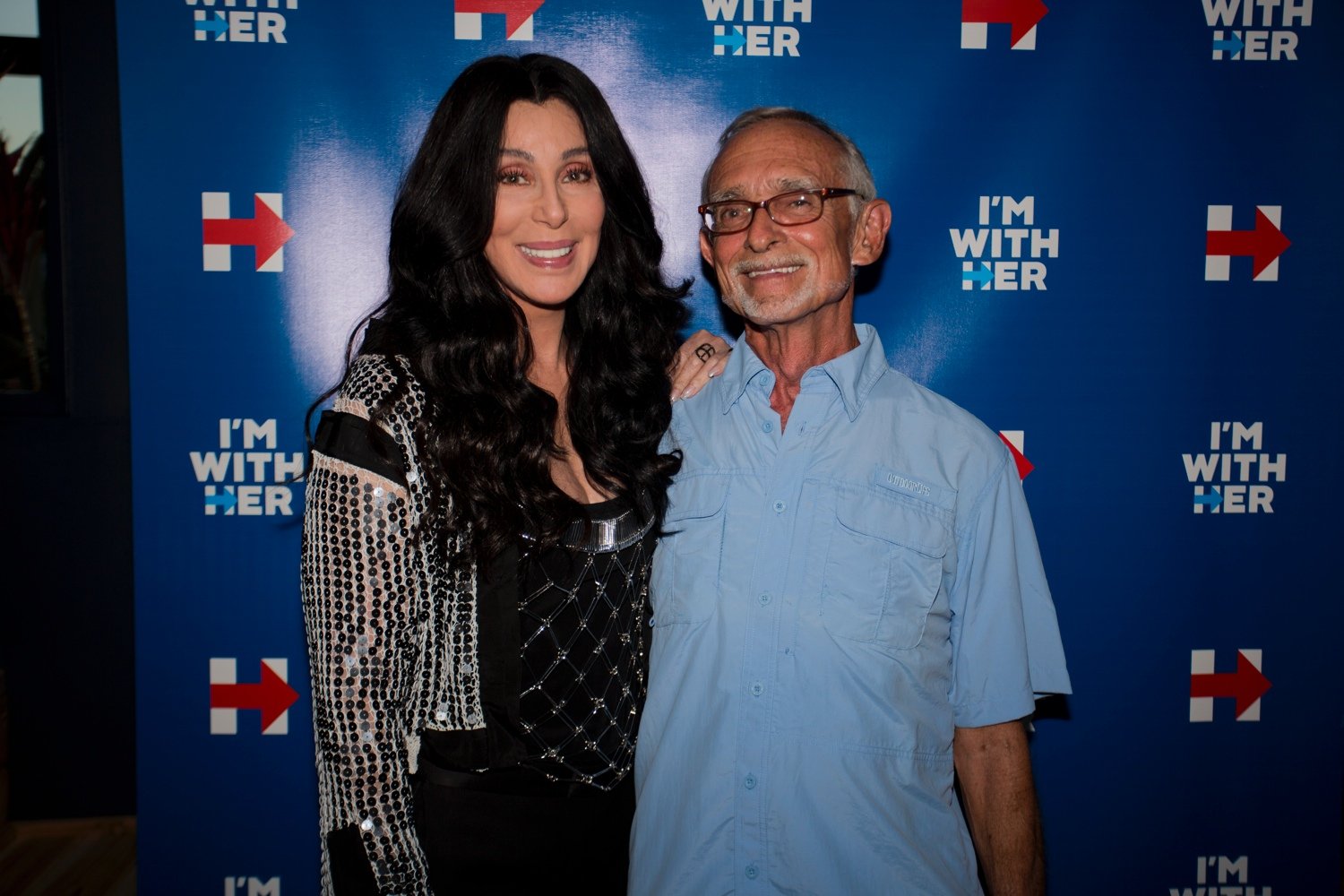
Jim supported virtually all charitable events in the Pines including Pines Conservation Society, Pines Care Center and Pines Historical Society. Photos courtesy of Jim Pepper.
The Toilet That Became a Legend
One of the hallmarks of Jim’s approach to giving was that it had to be fun, and no one should take themselves too seriously. He takes a particularly dim view of those who use charitable activities for self-promotion — and is not shy about expressing his views. One of the most memorable examples came during the fundraising campaign for the new community center, Whyte Hall. Naming rights for donors had become a hot topic among organizers and contributors. When they called Jim to see how he would like to be recognized, they got an unexpected response:
“I don’t give a shit!”
And he hung up.
Irritated, Jim stewed for a few minutes and then called back:
“How much is a toilet?”

It wasn’t a question the organizers were prepared for, but today a bathroom stall in Whyte Hall proudly bears his name. He made his point, and everyone got the message. In fact, when another donor, Gil Neary, heard what Jim had done, he promptly claimed a urinal.
The Jim Pepper Toilet in Whyte Hall. Photo courtesy of Virun Rampersad.
Beyond New York
Jim has had a home in Miami for a number of years, and has been very supportive of activist efforts in South Florida, offering advice, engagement and financial support. He used his “activism through joy” approach in Miami, hosting the legendary Phoenix Rising party at his Miami home, an event that is still talked about.
Over the years, Jim maintained close connections with his family, particularly his mother, Nita. She, like him, became an AIDS activist, working in her hometown of Greensboro, NC. And she too gave both money and time, something that made him very proud. As he once said:
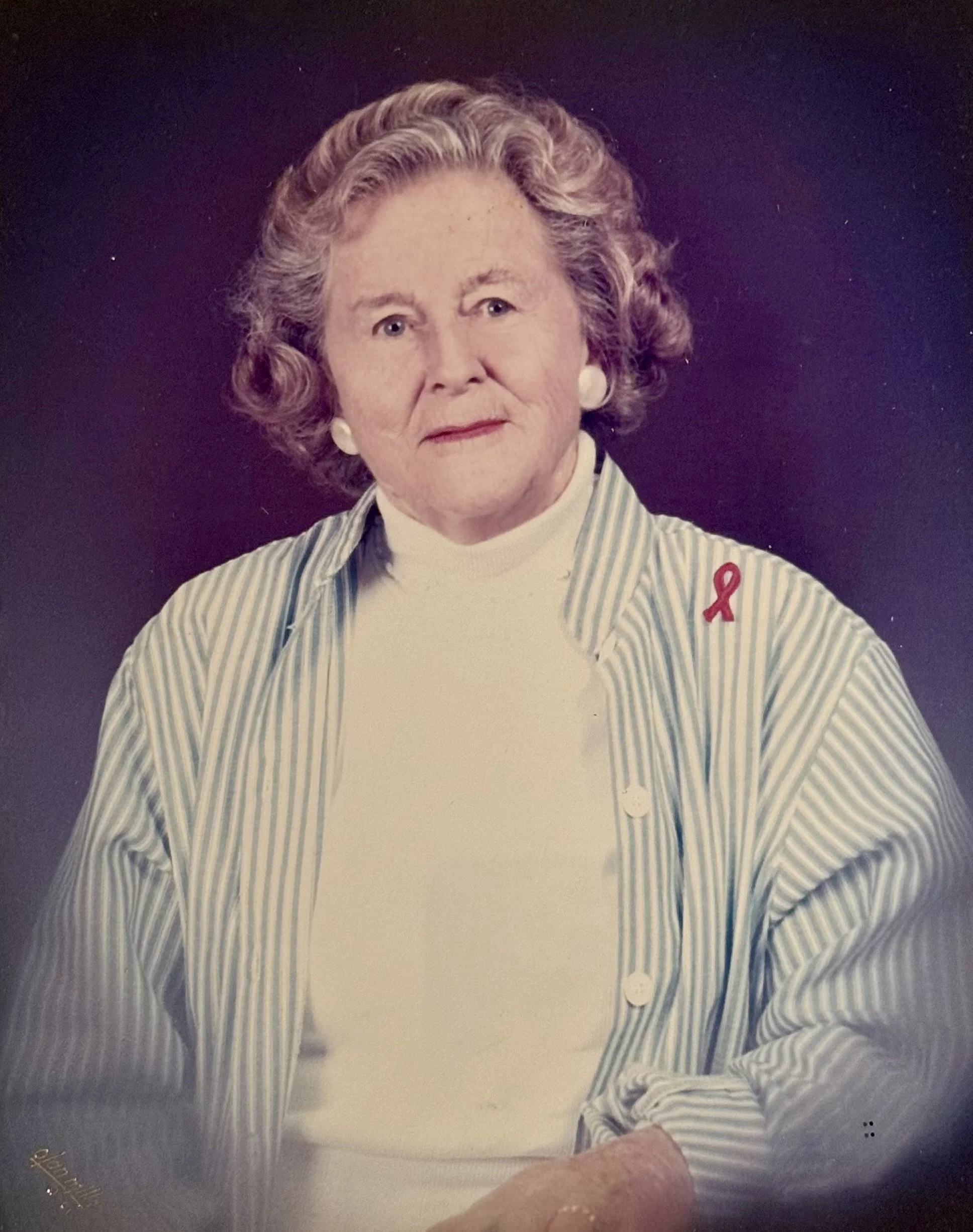
“It’s like a reverse
of Driving Miss Daisy – there’s my seventy five year old mother driving her car and in the
back seat is a Black lady with AIDS being driven to a doctor’s appointment.”
Nita Pepper. Photo courtesy of Jim Pepper
Legacy and Reflection
Jim is proud to say he has enjoyed his life. While AIDS robbed him of some of those he loved dearly, he has enjoyed a great relationship with his blood family and formed a chosen one as well, most notably Raymond Hart, Chad Herndon, Andrew Meyer, and Bill Mattle.


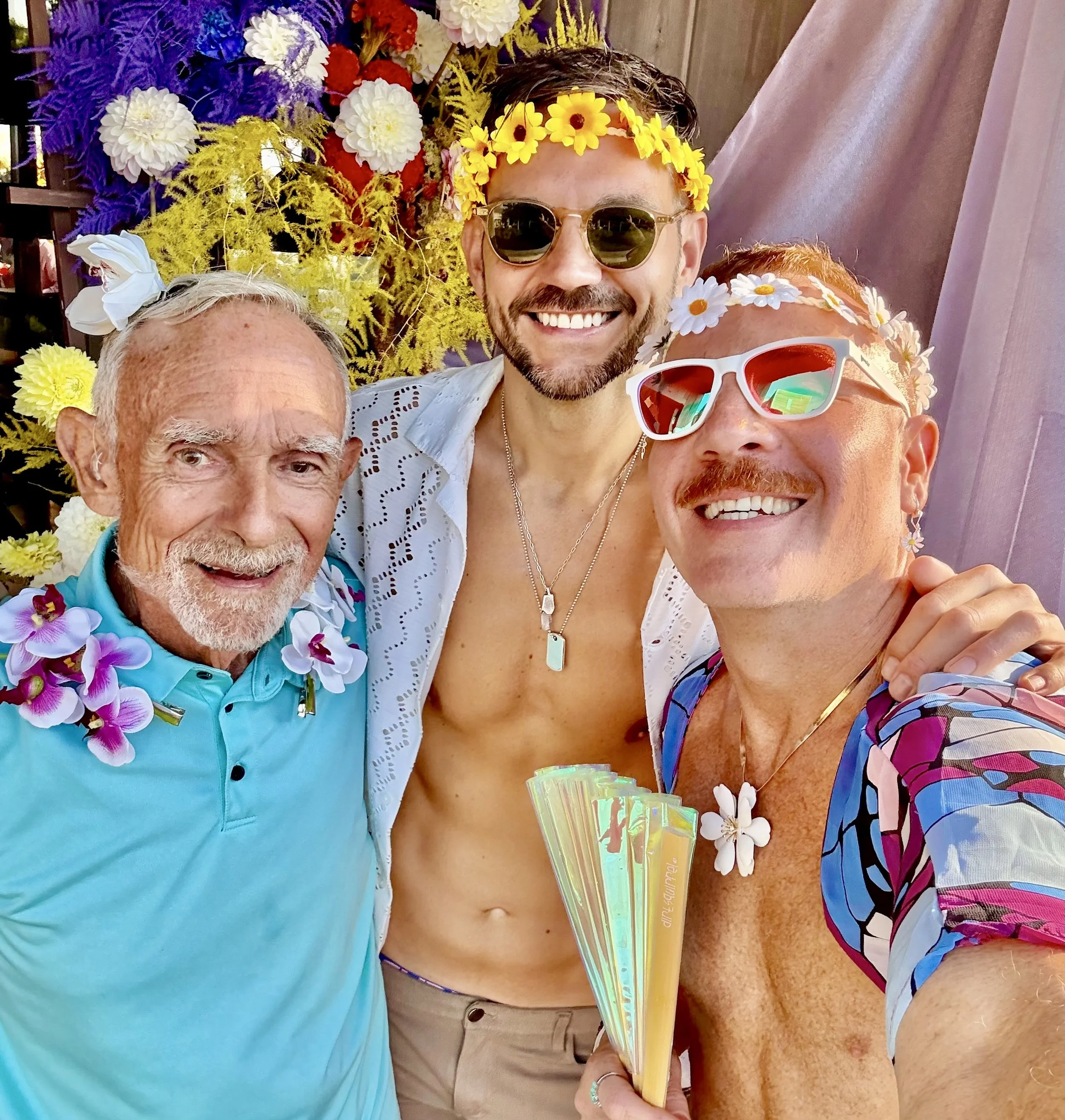
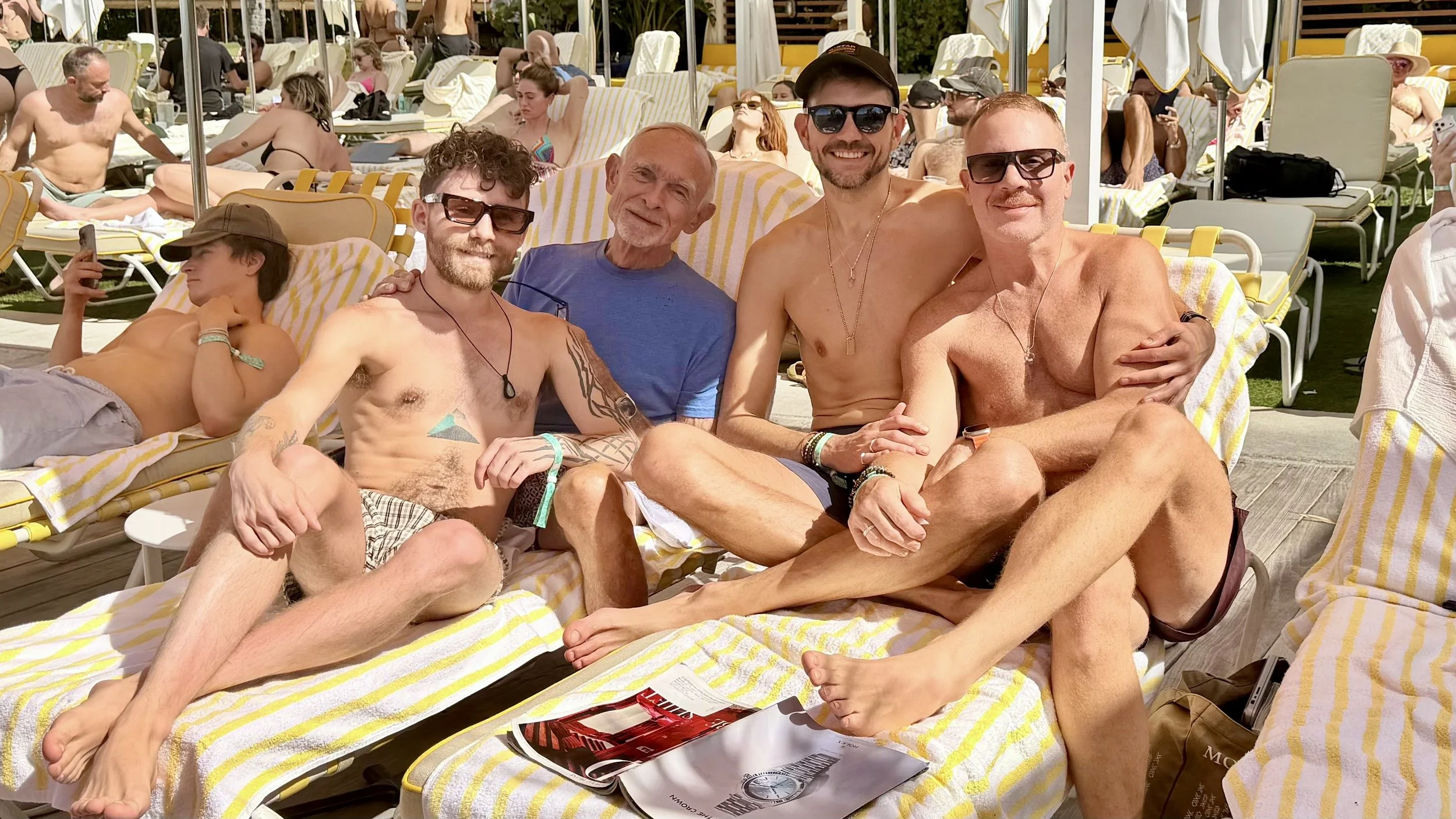
Jim with his chosen family including Chad Herndon, Bill Mattle, Evan Ipock, Andrew Meyer, and Jim Lin.
He had a stellar career on Wall Street, traveled the world, built an extraordinary art collection, and partied with the best of them. But perhaps most importantly, he remained true to himself and never lost sight of the importance of making a positive difference. Despite his preference to remain out of the spotlight, his contributions earned widespread recognition—not only within the LGBTQ+ community, but also at the highest levels of power.
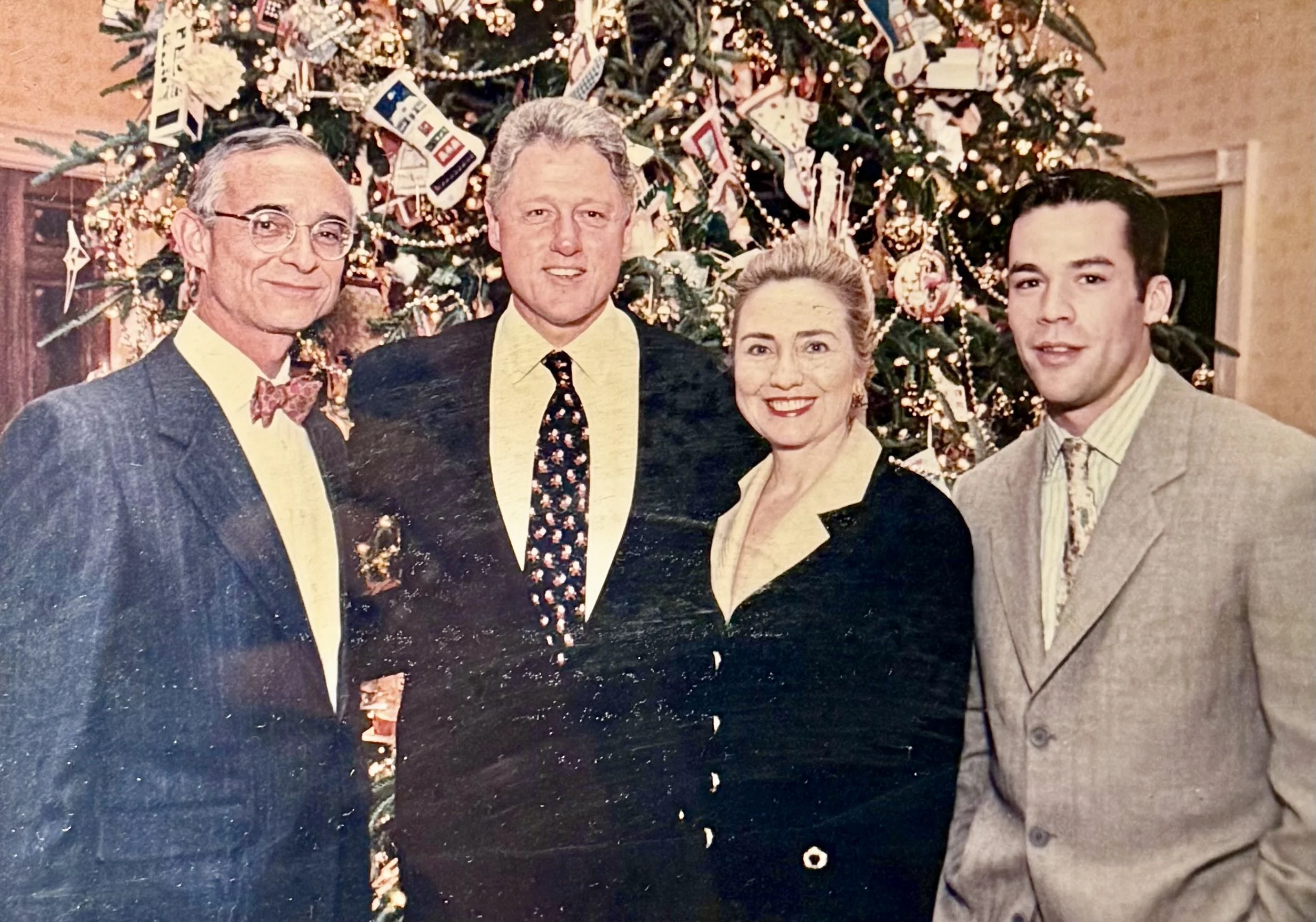
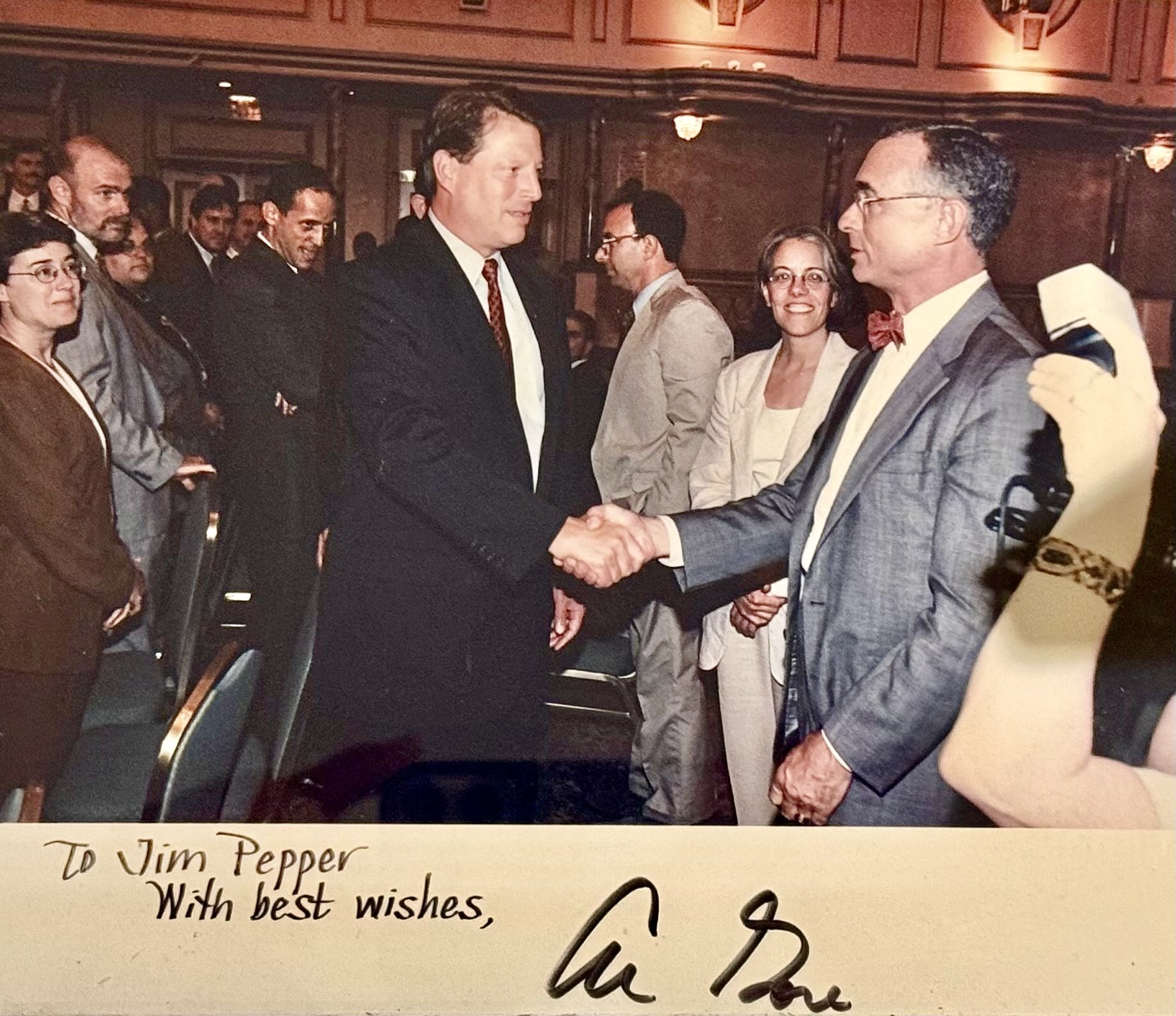
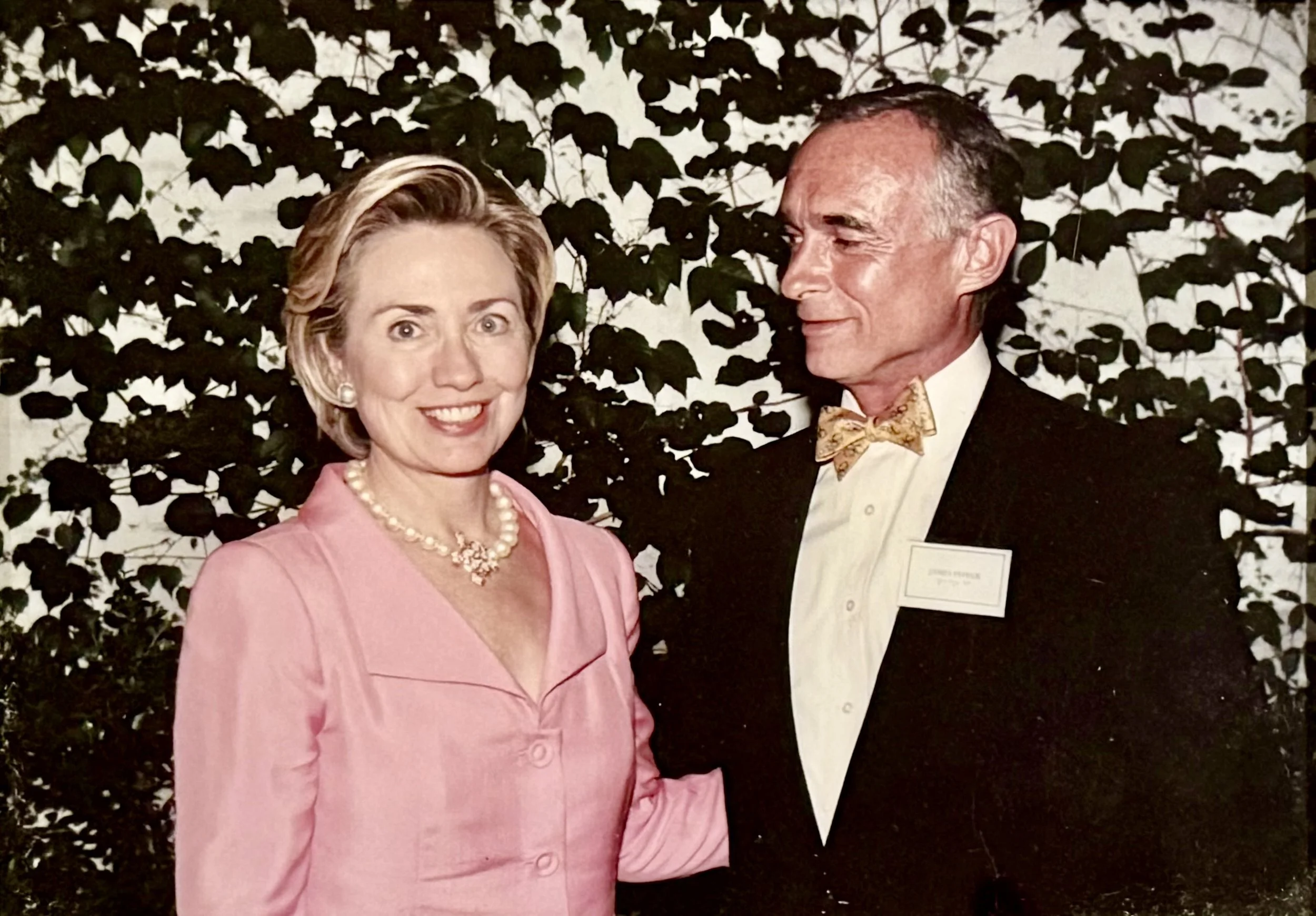
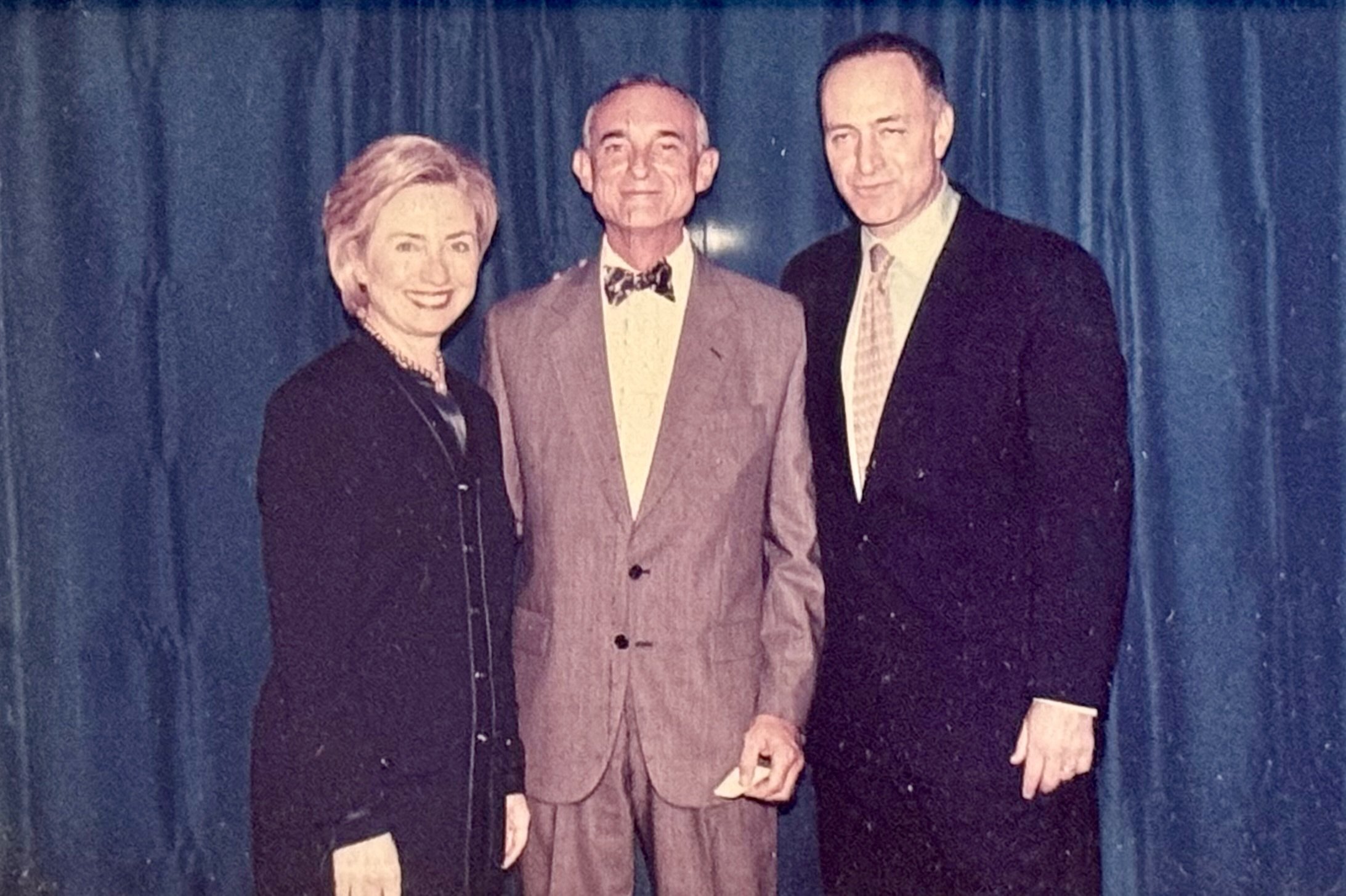
Jim Pepper with President Bill Clinton and First Lady Hillary Clinton, Vice President Al Gore, Senator, Senator Clinton and Senators Clinton and Schumer.
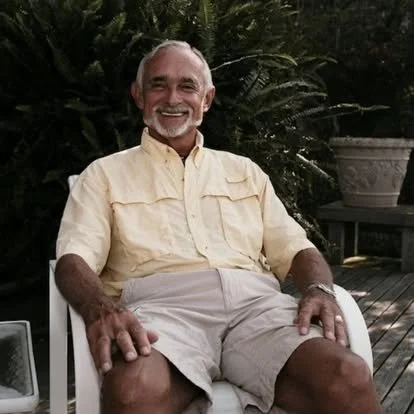
In the Pines community and beyond, Jim is known for his kindness, generosity, sense of humor and a no-nonsense way of getting things done. He embraces people from all genres if he believes they are good and is generous to a fault with his friends. Jim discovered his gift; he developed it over the years and used it to help make the world a better place.
Jim Pepper at home in the Pines. Photo courtesy of Jim Pepper.
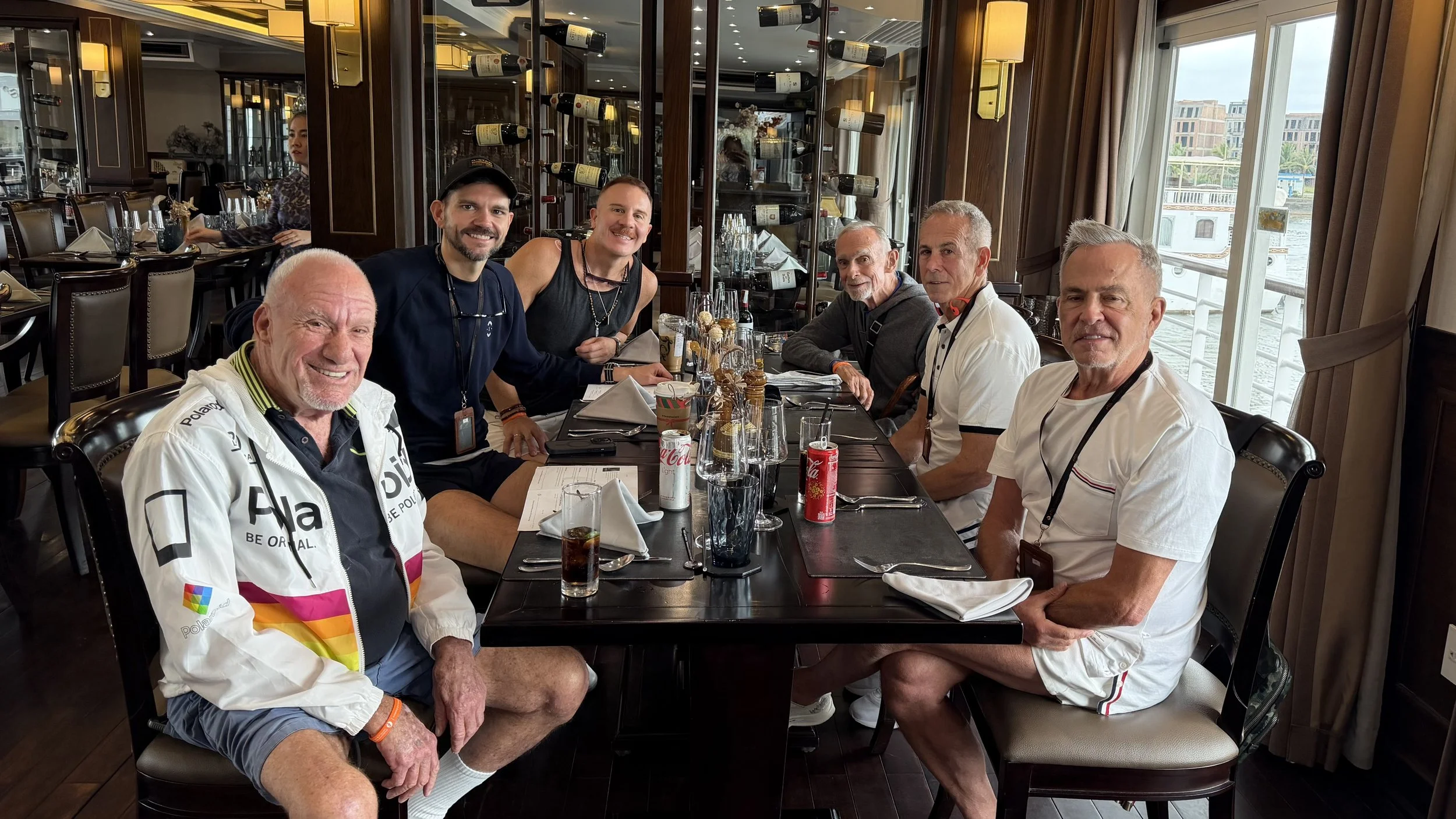
Today, he spends winters in South Beach, summers in the Pines, and travels to exotic locales with friends as often as he can. Now retired, he has stepped back from activism, but is always available for good friends and a good party.
Jim Pepper with Ward Auerbach, Andrew Meyer, Chad Herndon, Jerry Chasen and Andy Baker. Photo courtesy of Chad Herndon.
The Man Behind the Legend
Jim Pepper doesn’t fit into any easy box. He is warm and generous, yet sometimes brutally impatient. A progressive activist with liberal values, he is an unapologetic capitalist. A philanthropic leader devoted to the vulnerable, he was also a titan of Wall Street. A man who shies away from the spotlight, he has repeatedly stepped forward personally to improve the lives of countless others. Outcome oriented, he is quick to ensure others receive the credit they deserve. And while he is highly regarded for his work on some of the most serious issues confronting the LGBTQ+ community, he is also remembered for whipping out the drag to create a madcap conclusion to a fabulous Pines dinner party.
For Jim these are not contradictions; he is all of these things. What is undeniable is the impact that he has had. When asked about this, Jim demurs, stating that he often gets credit for things that would have happened anyway. His friend Jerry Chasen points out that this is conjecture and what matters is he did it. As he noted:
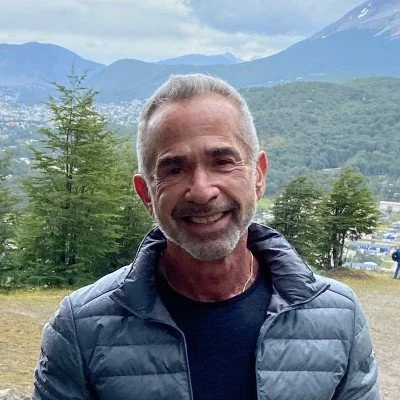
“It’s much easier to follow a blazed trail than to blaze one.”
Jerry Chasen. Photo courtesy of Jerry Chasen.
Indeed, Jim’s impact on even highly accomplished and successful leaders is clear. Steve Herbits, a former senior executive at Seagram’s Corporation who also worked at the highest levels of government for members of the Cabinet had this to say:

“When I think of Jim, I think about all the lessons he taught me.”
Steve Herbits. Photo courtesy of Steve Herbits.
These comments would likely embarrass Jim. He remains to this day a bit shy and self-effacing when talking about himself. But there is no doubting their veracity. As the late Gene Burkard wrote about Jim in his profile in Uncommon Heroes:
“If gay life is a theatre performance, James Pepper is not exactly center stage—the lights would hurt his eyes, and the applause would embarrass him. While other activists strut their stuff and, for better or worse, play to the crowd, Pepper works backstage, adjusting a costume, patting some nervous shoulders, lending the cash for that final set piece. But without Pepper and people like him, lesbian and gay society would be a sorry show indeed.”
Jim Pepper showed what it looks like when a man combines brilliance with decency, ambition with compassion, and success with responsibility. His life’s work has enabled him to touch many lives deeply and indelibly. Moreover, he has demonstrated that while power can be achieved through money, true leadership comes from integrity. It is reflected in a philosophy that instructs the next generation:
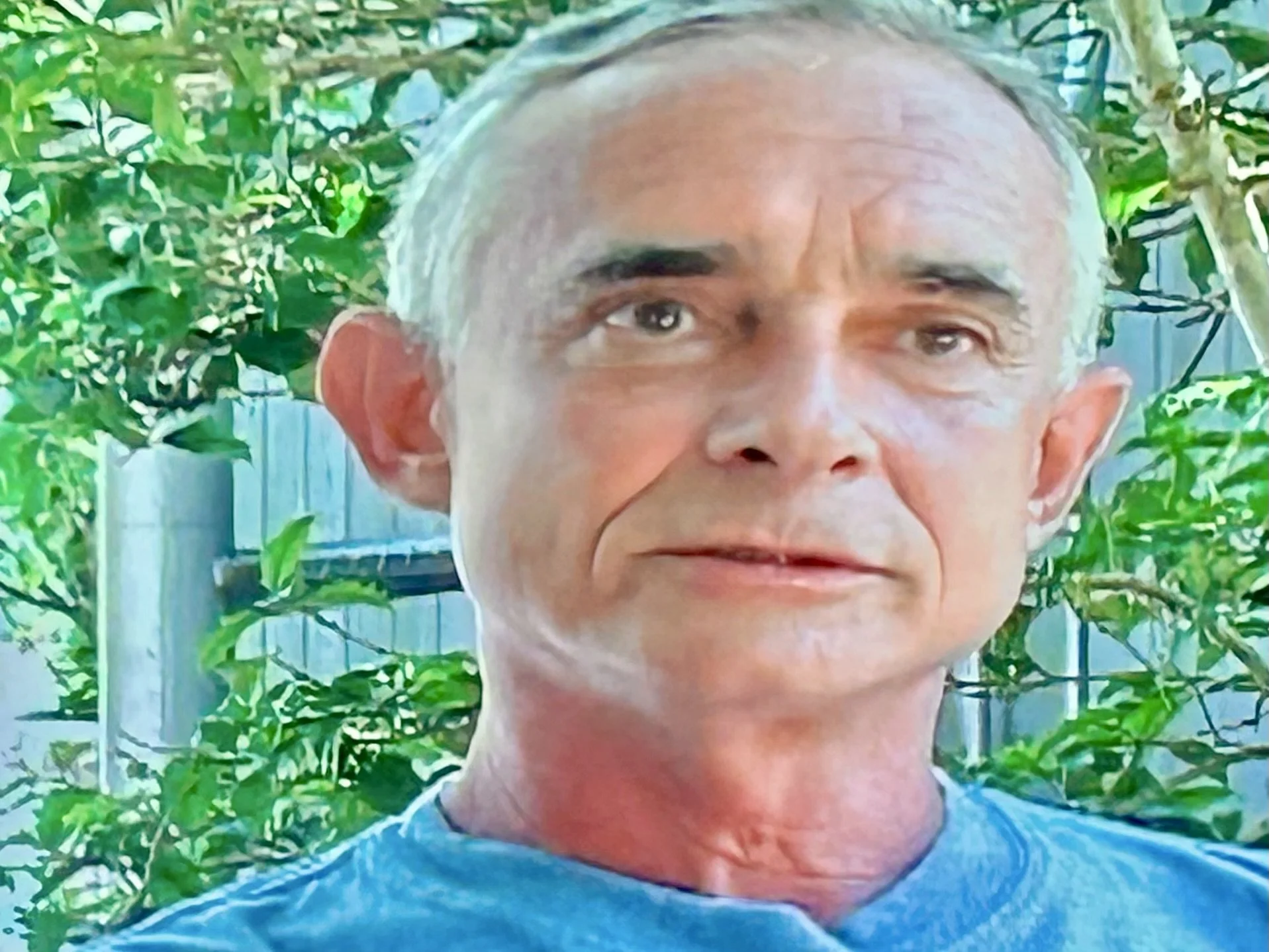
“When you start doing things and making decisions based on solely on the money, you’re
nothing more than a prostitute. Some things need to be done and there’s no profit in it, but
you do it because it’s the right thing.”
Jim Pepper interviewed for Where Ocean Meets Sky. Photo courtesy Crayton Robey.
Jim showed up.
He organized.
He gave.
He served.
He led.
And he did it with empathy, wit, and purpose—while making damn sure nobody forgot to have a good time.