Pines Profile - Bob Howard (b. 1941)
The Dean of Real Estate and a Pillar of the Community
By Bobby Bonanno and Virun Rampersad. Updated: February 2026.
For more than five decades, Bob Howard has helped shape Fire Island Pines. Although often referred to as the “Dean of Real Estate,” his impact reaches far beyond property lines. In his time, Bob founded High Tea, serves on the executive committee of the Fire Island Pines Chamber of Commerce, led the Pines Conservation Society for two decades, and has served on the Pines Fire Department for more than forty years—all while championing nearly every civic and charitable effort in the community.
In moments of celebration and in times of crisis, Bob has been a constant, galvanizing presence. He didn’t just build a business, he helped build the Pines itself, earning his place as one of its most respected and beloved leaders. His life is a testament to reinvention, resilience, and an unwavering devotion to a community that became not only his home, but his life’s work and enduring legacy.

Bob Howard was born in Woodbridge, Connecticut, in 1941. From an early age, his life was defined by achievement, leadership, and a desire to create. In his junior year of high school, his teammates elected him captain of the swim team, where he set a record in the 100-meter backstroke. By his senior year at Amity Regional High School, he was editor of the 1959 yearbook. He also wrote, produced, and emceed a student talent show he called Manhattan Serenade.
Bob Howard. Photo courtesy of Nick Politis
His father, a World War II veteran, admired the discipline and structure of the Boy Scouts of America, and Bob embraced that rigor, ultimately earning the rank of Eagle Scout.
Bob entered the University of Connecticut intending to become a dentist, but it did not take long for him to recognize that his gifts lay elsewhere. Drawn to performance and storytelling, he shifted to drama. In 1961, after seeing him perform at a summer playhouse, the legendary acting teacher Constance Welsh invited him to join the acting division at the Yale School of Drama. It was a turning point that affirmed his artistic instincts.
Like many young men of his generation, Bob came to understand his sexuality in college. In 1963, he walked into his first gay bar. That night, he met Richard Gustafson, an associate professor of Russian language and literature at Yale University. They clicked and Richard became his first partner and a defining presence in his early adult life.
The 1960s were shadowed by the military draft, and Bob was soon called to serve. He would later recall the humiliation of standing in line in his underwear with other young men awaiting their physicals, uncertain of what the future would hold. When told he would be assigned a desk job despite declaring himself a pacifist, Bob took an even greater risk. Swallowing his fear, he told the officer: “I’m also a homosexual.”
He had spoken those words aloud only once before — to his family doctor — and the response was: “Don’t tell your father. It will kill him.”.
This time, his truth brought a result he preferred: he was dismissed from service. That moment of courage, fraught as it was, freed him to move forward with his life.
Not long after, Richard was offered a joint appointment at Barnard College and Columbia University, with tenure, and the two moved to New York City, settling on the Upper West Side.
Bob Howard in the mid-1970s. Photo courtesy of Bob Howard.
In New York, after a brief foray in playwriting, Bob decided to switch careers and took a job at Metromedia Television. With his organizational and people skills Bob’s career took off, producing the shows for Fran Lee and being an associate director of the 10 O’Clock News.
During this time, Bob naturally continued to grow and evolve as person, leading to a breakup with Richard in 1971. The ties they formed were strong, however, and they remained friends until Richard died in 2023 at the age of 92.
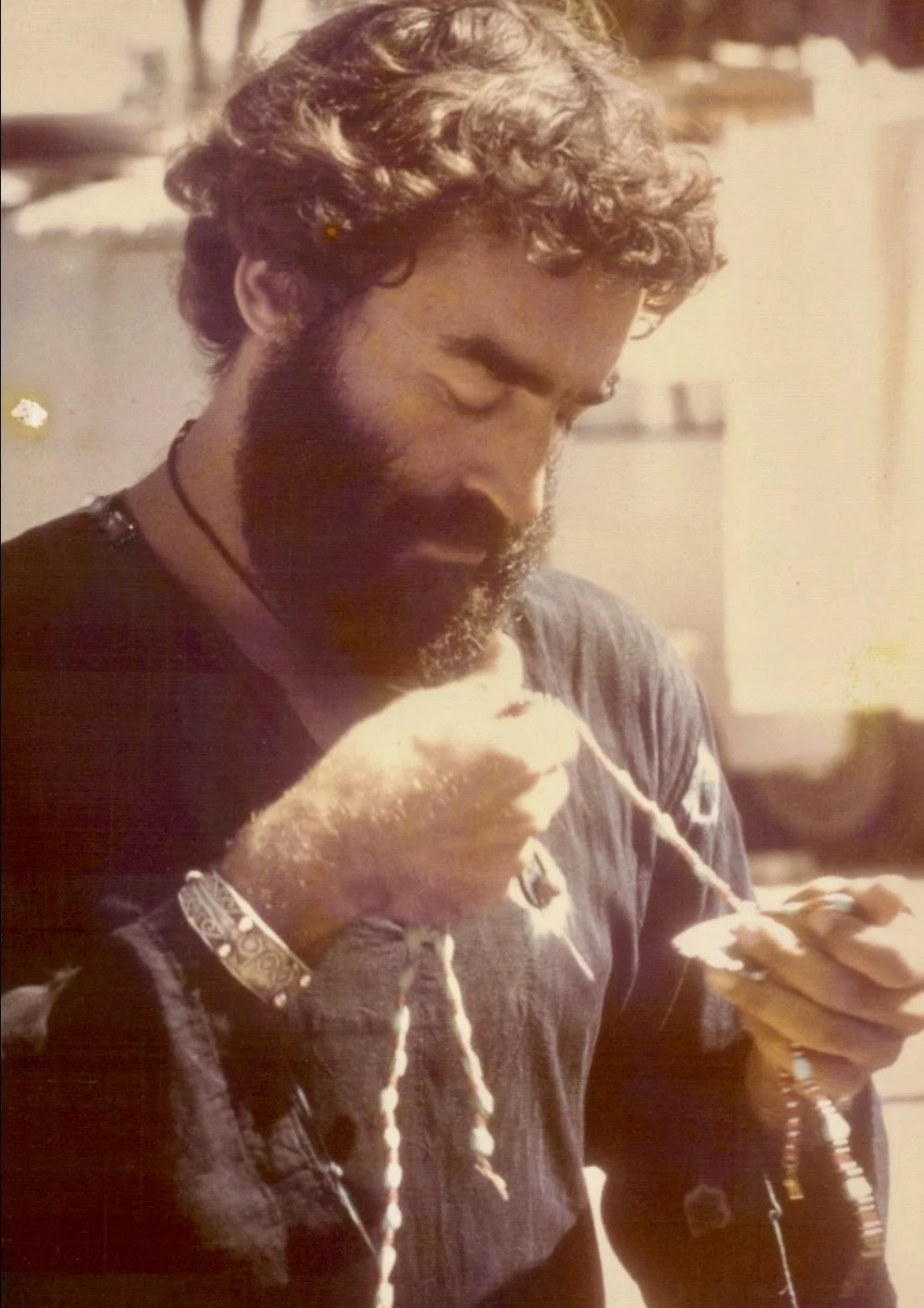
Despite his success, working in television was more of a means to an end, and after the breakup with Richard, Bob felt the need for a change. An adventurous hippie at heart, picked up and went to Spain seeking his true passion. He briefly became a jewelry maker in Formentera, a small island off Ibiza, but his people skills led him to sales. The job paid the bills but was hardly a passion.
Bob Howard making jewelry in Spain in 1970s. Photo courtesy of Bob Howard.
After three years in Europe, Bob returned to New York determined to get his life on track. He moved to Greenwich Village, got his real estate license and went to work for a realty called Lofty Aspirations.
At this time New York’s gay scene was buzzing. It was the post-Stonewall Disco era, and Bob enjoyed himself at the clubs of the day -- 12 West, Flamingo and later The Saint. It was during this time, that he met Nicholas (Nick) Politis and started a romantic relationship that would evolve into a lifelong friendship.
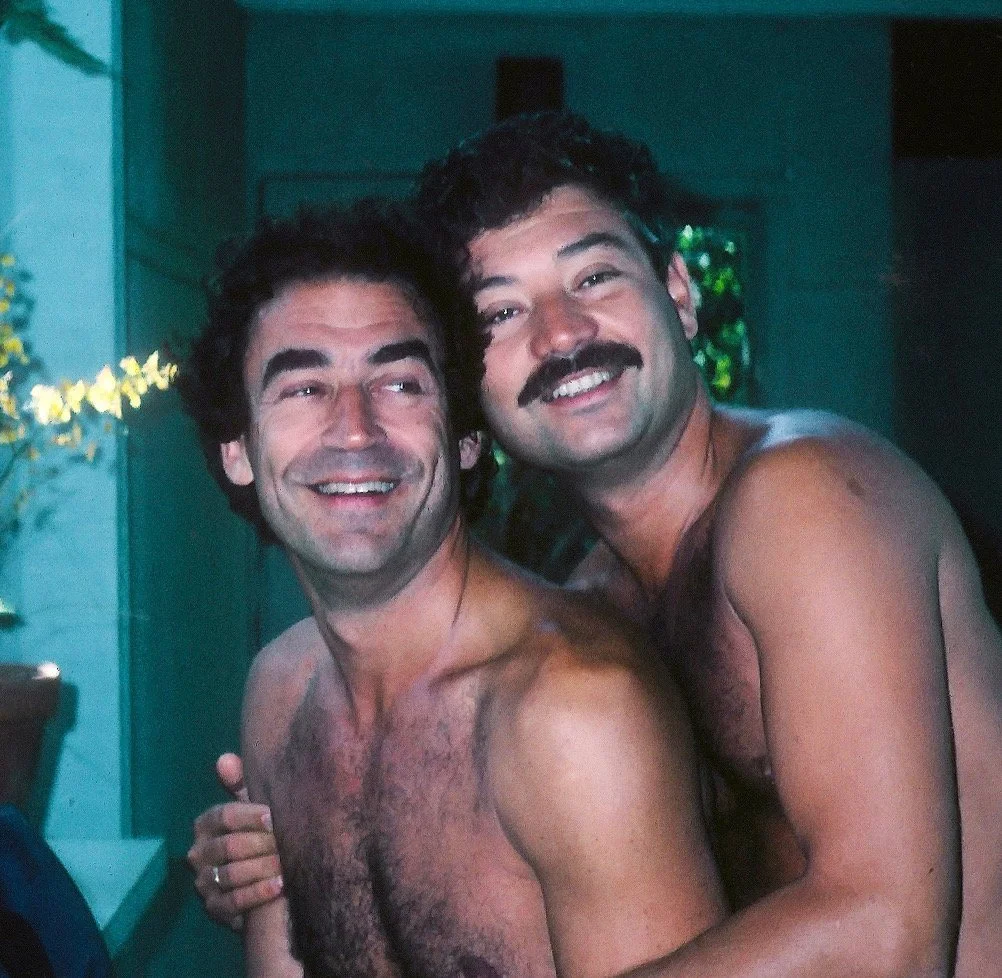
Bob Howard and Nick Politis. Photo courtesy of Nick Politis
One day in 1975 Nick took Bob to visit a friend who had a house in Fire Island Pines. A small town boy at heart, Bob took to the Pines immediately. The intimate, rustic charm, the sense of community, and above all, the freedom to be openly and safely gay made him feel he had finally found the place he had been searching for.
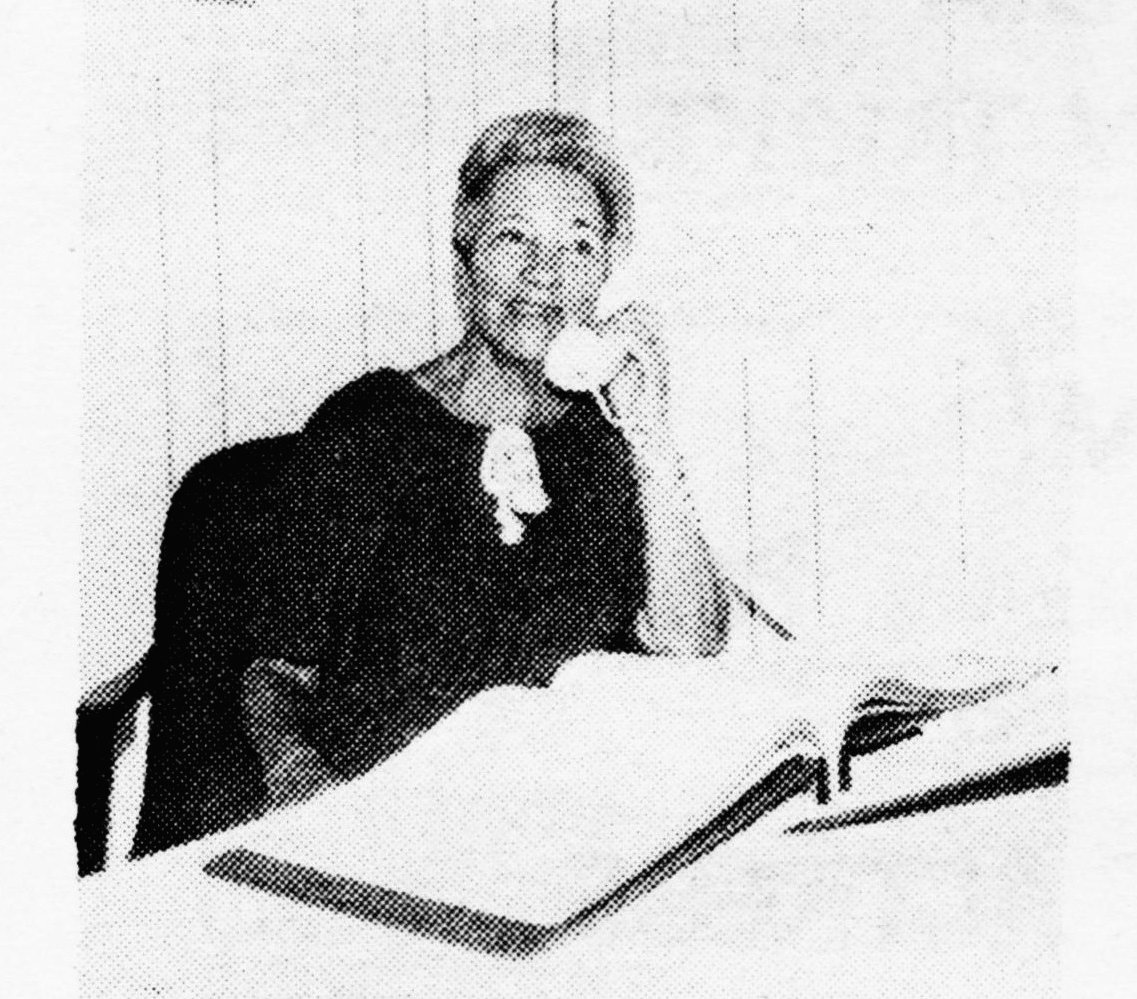
Determined to make the Pines part of his life, he rented a small house on Sail Walk. The rental agent was Doris Taussig, daughter of Warren Smadbeck, who, with his brother, had developed the Pines.
Doris Taussig. Photo credit: Unknown
Fifty years later, when asked what his favorite memory was from that first summer, Bob recalls walking East, back to the Pines from the Grove, along the beach bathed in the pastel dawn light, bare feet cooled by the ocean after dancing all night at the Ice Palace with Nick. Nothing beat that long walk home.
The following year Nick and Bob rented a house together in the Pines. It was significant time for America. The bicentennial year, it saw the country turn the page to a new future with the election of Jimmy Carter, the introduction of the Concorde providing high speed trans-Atlantic air travel, and the explosion of disco. It was also the year of the first Invasion of the Pines after a Cherry Grove drag queen had been refused service.
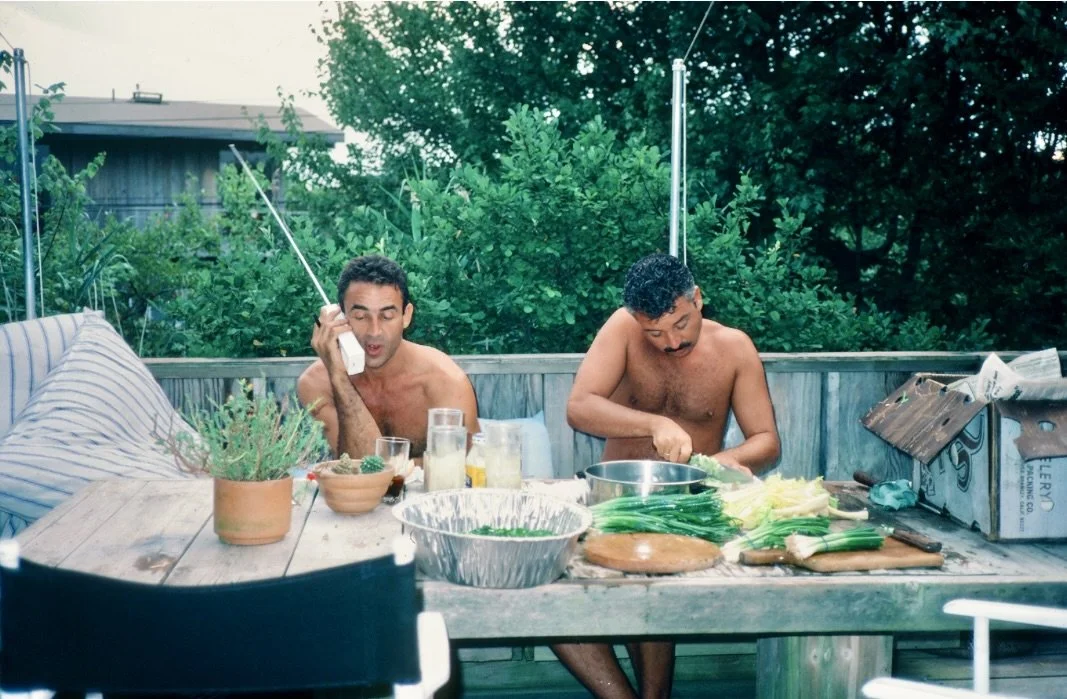
For Bob it was a magical summer. He split his time between New York City and Fire Island. He fell even more in love with the community, reveling in its beauty, with homes tucked into nature, boardwalks following the contours of the dunes, and the rare freedom it offered gay men.
Bob Howard and Nick Politis in the Pines. Photo courtesy of Bob Howard.
Determined to make the Pines an integral part of his life, Bob approached Doris about a job as a realtor. She was cautious at first but agreed on the condition that he bring in his own clients; the office walk-ins were off-limits. Bob did not hesitate. He saw that the Pines represented a great opportunity. It was a unique place and was attracting wealthy individuals and celebrities, not just from New York, but from across the country and Europe as well. With his social skills and presence in the Gay New York club scene, he quickly developed a large network, and his business and reputation grew.
1976 was also the year Bob and Nick transitioned from lovers to friends and a new phase of their lifelong relationship. When Bob shared with Doris that he and Nick were no longer a couple, she made an astonishing offer: she asked him to consider taking a bedroom in her oceanfront home for the coming season. Doris explained that being as housemates would be a great way to know each other better, and frankly she was a bit lonely since her husband, Ted, had died. The Taussig’s had built the biggest home on the ocean at that time (it was the precursor of the legendary Ponderosa) and spanned two side by side lots. Bob agreed.

Ted and Doris Taussig’s house on the ocean. Photo credit: Unknown.
What made the offer particularly unexpected was the Smadbecks originally marketed the Pines as ‘A Family Community’ and Doris’s husband Ted was active in efforts to keep it straight, taking active steps to avoid selling or renting to gay people. This created an openly homophobic atmosphere for a while. However, the trend was unstoppable and by 1976 the community was majority gay. Throughout the summer when Bob lived with Doris, they shared meals and lots of stories. He learned that her early life was spent vacationing in pre-revolutionary Havana. He came to realize that Doris’ deepest regret was that she was unable to shake off the homophobic reputation her late husband had left behind. It was clear to Bob that Doris did not have any such feelings. She felt it was an unfair criticism, and that she was a victim of guilt by association.
Bob was a natural in real estate and quickly developed a thriving practice. In 1981, with the active encouragement of his clients, Bob elected to start his own firm with partners Jim Reiser and Scott Schatznback called Shore Realty. Effectively this meant going into competition with Doris. While disappointed, she took the news in stride. She recognized that Bob had to move on. She also concluded that her oceanfront house was too big for her. In his last deal at Taussig Real Estate, Bob sold Doris’s house.
Excited about the future, Bob and his partners got going quickly and took an office at 36 Fire Island Boulevard (also known as the LaFountaine Building). However, the future had other things in store.
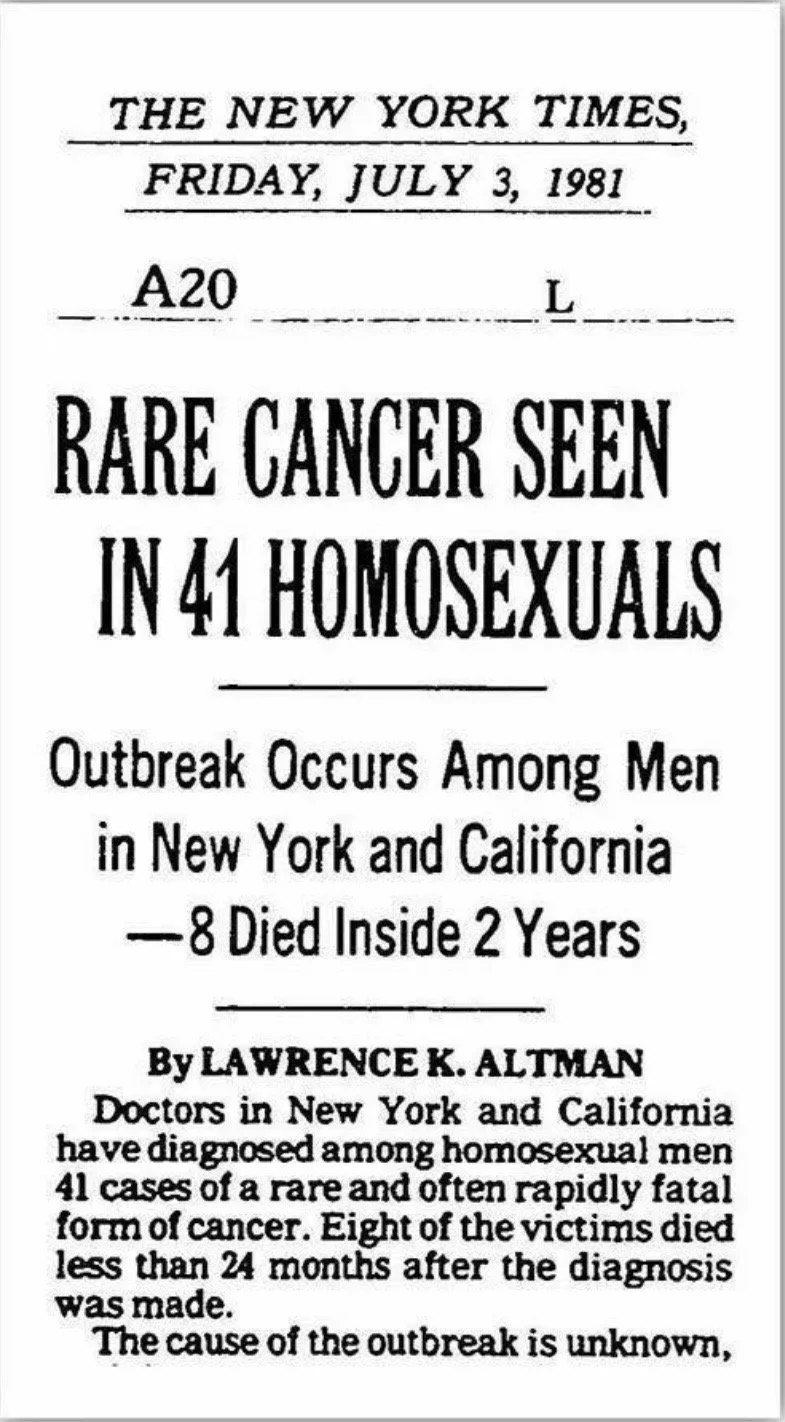
New York Times, July 3rd 1981.
1981 was also the year that AIDS began its rampage through the Pines. Soon the once vibrant community was soon filled with sick and dying people. Although Bob himself did not get sick, many friends did, including his business partners Jim and Scott. Soon Bob found himself effectively running Shore Realty by himself. It was a challenging time and quite often he found himself selling properties of people he knew well who were sick or had died. In many cases, he represented family members who did not know their relative was gay or had a partner or even what the Pines was. Sadly, it not an uncommon situation at the time, and was in fact the theme of Terrence McNally’s hit play 'Lips Together, Teeth Apart’.
Despite the grim environment, Bob never thought about going elsewhere. Given that he had a New York license and had previously practiced there, it was a viable option. However, he never seriously considered it. He had put down roots in the Pines. It was his community, and he felt it important that he keep moving forward until the crisis was over.
Real Estate Business Card. Photo courtesy of Bob Howard.
In 1985, Bob spied an opportunity when a café in the Pavilion facing the harbor became available. Bob instantly realized the new location would be a huge boost to his business, and in 1985, he opened Bob Howard Real Estate, with salespeople Anthony DiCandia, Tony Casals and Lesley Mandel. As he suspected, the new office with its central location overlooking both the ferry dock and Fire Island Boulevard soon became a hub for all things Pines.
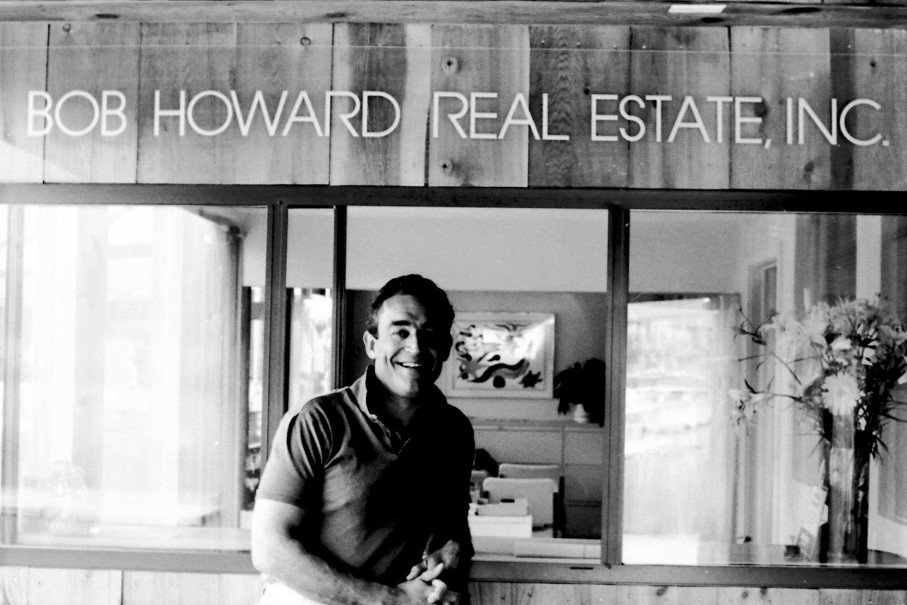
Bob Howard. Photo credit: Unknown.
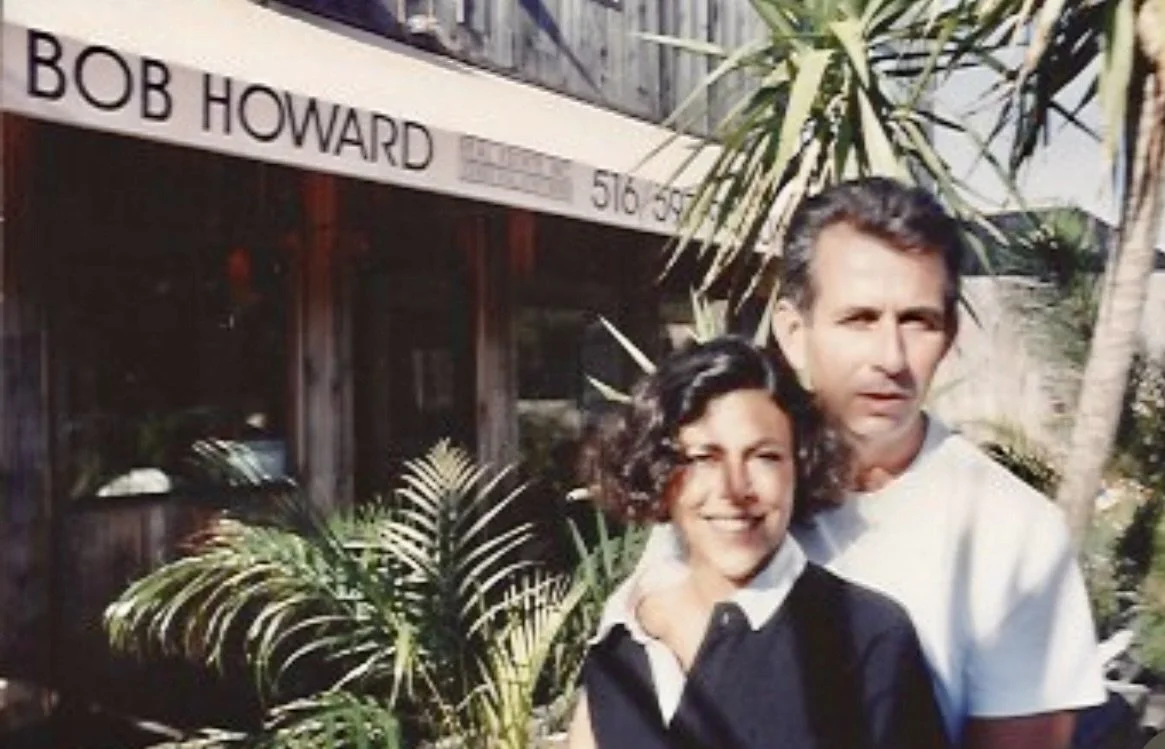
Leslie Mandel and Tony Casals. Photo courtesy of Bob Howard.
Although the AIDS crisis made it heavy slogging in Pines real estate, with creativity and attention to detail, Bob Howard Real Estate took off. Bob developed a legendary client list, catering to celebrities and wealthy people seeking to find a place in the Pines. He developed an encyclopedic knowledge of Pines houses and built a reputation for his creativity and attention to detail. He knew, and was known by virtually every homeowner and tenant, whether he was their broker or not. On any walk he always was greeted with a familiar “Hi Bob ” His celebrity client list included Julia Roberts, Calvin Klein, Jerry Herman, Raquel Welsh, David Geffen, Scott Bessent, “John Reid”, Felice Picano, Edmund White, Vito Russo, Jacques Morali, Claude Montana, Dan Hartman, Jean-Paul Gauthier, Howard Rosenman, Michael Kors, Peter Rogers, Gustavo Novoa, Egon Von Fursteinberg, Jason Gould, Dr. Ruth Westheimer, David Hockney, Jack Rosenberg, and many others. .
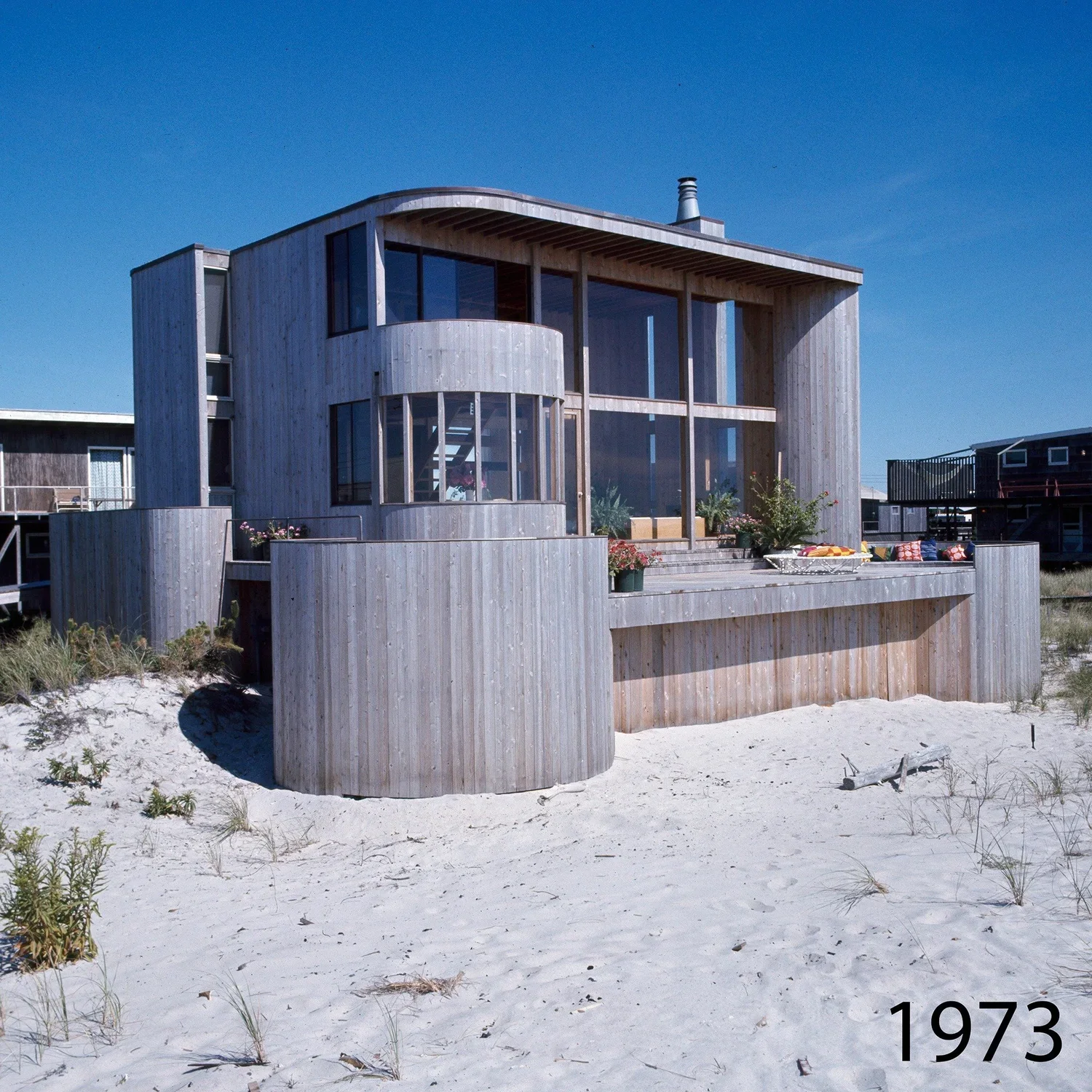
The “Calvin Klein” House. Circa: 1973. Photo credit: Unknown.
The AIDS crisis was severe and prolonged, and by 1987 four of the six partners who created the Pines Pavilion had passed and a fifth was ill. In this time, Bob also noticed a shift in the community and saw that the time was right for a change. He struck a deal with the lone survivor, Charles de Rohan Chabot to lease the Pavilion and introduced a new concept: “High Tea”.
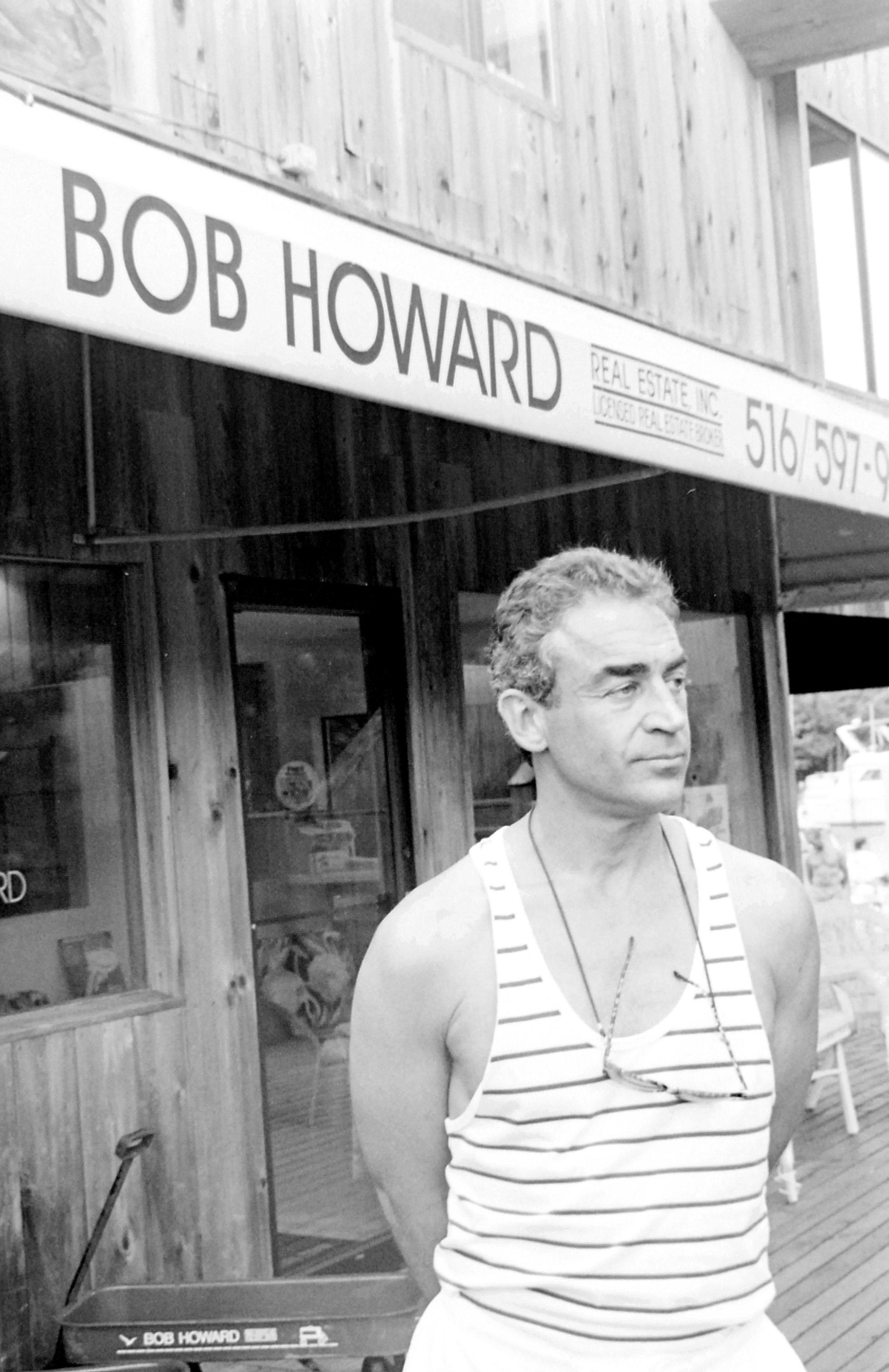
Bob Howard outside his office in the Pavilion. Photo credit: Unknown
Bob had often joked that the Pavilion was the most underutilized piece of real estate on the planet. The dance floor was only open after 11PM. With the model of “a healthier option” in mind, Bob opened the building at 6pm and High Tea was born. He also opened the doors from the disco to the outer deck which he decorated with hanging plants, potted palms and comfortable wicker furniture. He installed a half dozen oversized skylights in the roof over the dance floor transforming the dark, black pit that was the Pavilion into a tropical paradise. It was an instant hit. High Tea continued well into the evening. The only criticism was that no one knew when to eat dinner anymore!
At the Pavilion Bob made changes that were ahead of their time. He hired the first and only female bartender, Alexandra Akira, to serve cocktails at the 50-foot entrance bar. She became a local legend, and she and Bob remain friends to this day.
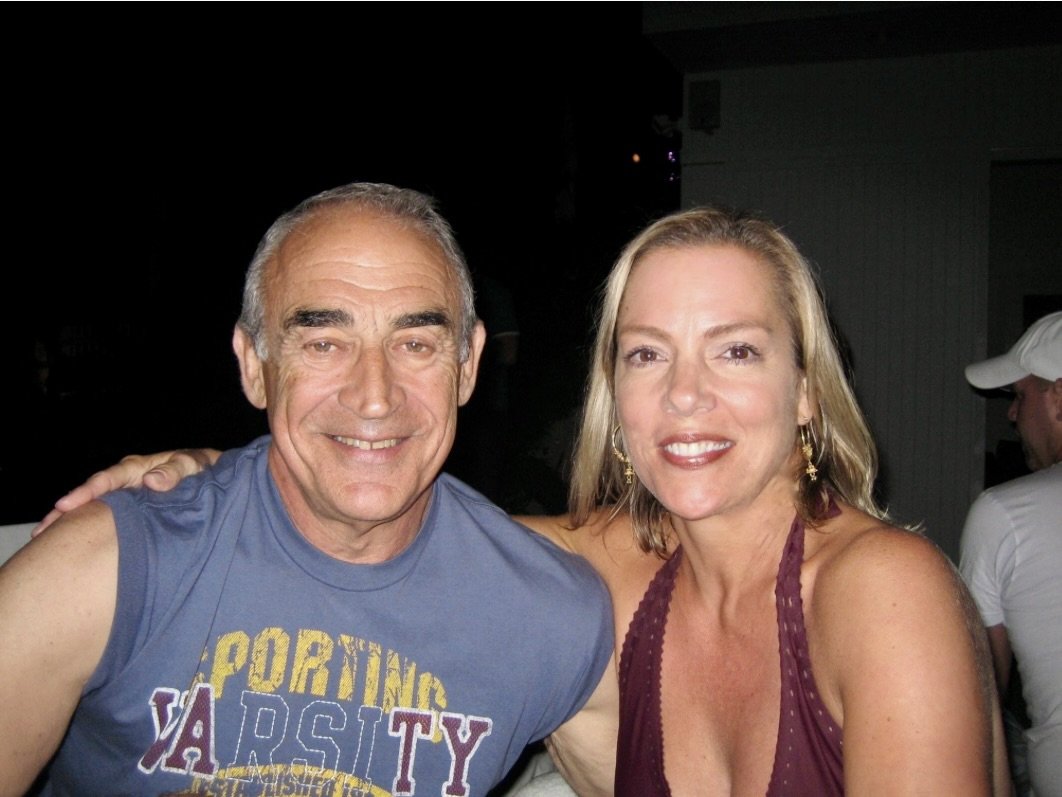
Bob Howard and Alexandra Akira. Photo courtesy of Bob Howard.
Bob also broke another glass ceiling, introducing DJ Susan Morabito (now known as Morabito) to the delight of the dancers on the floor below. A special talent, Susan soon developed a dedicated following and became an international star. Another real estate agent, Jon Wilner — who had previously worked in the theatre — described the first time the balcony doors overlooking the dance floor swung open onto the outer deck as feeling like a curtain rising on a Broadway show you knew, instantly, would be a hit.
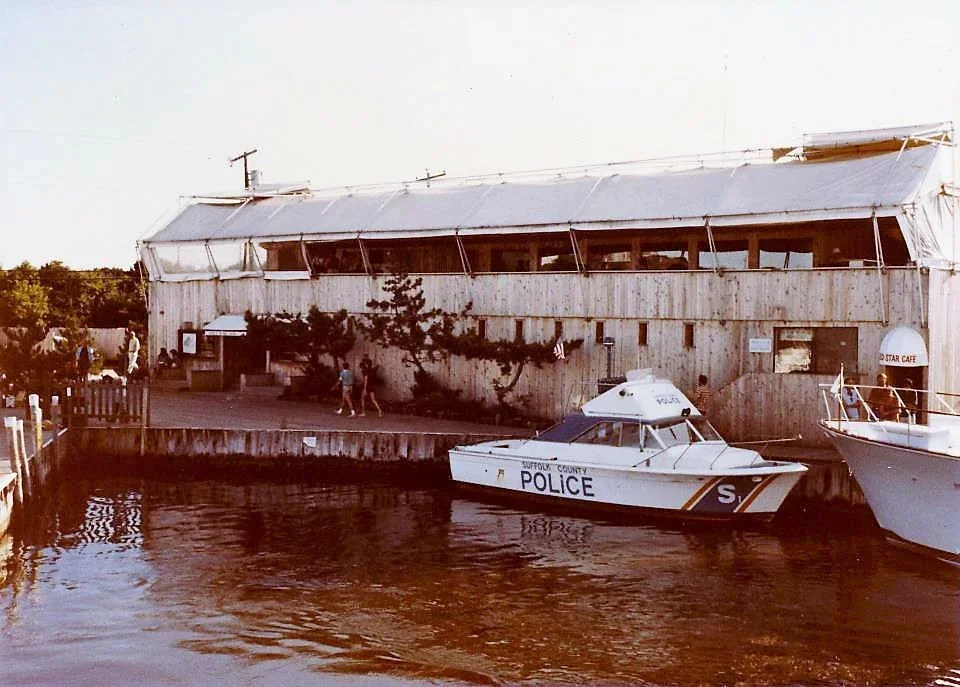
The Pavilion, circa 1982. Photo credit: Unknown
High Tea was transformative to the Pines culture. For many, it became the preferred pre-dinner venue. The setting was enchanting. Perched above the harbor, glowing in the light of the setting sun, the ambiance was relaxed and welcoming. The later start time was also appealing to people who wanted to linger longer on the beach before gathering for cocktails. The benches overlooking the harbor quickly became the most prized seats, with housemates splitting duties, some staking out spots, others fetching drinks. Inside, booths and benches filled just as quickly, and soon a new ritual emerged: the “fruit loop,” a lively circuit where people walked one aisle down and another back, meeting and mingling as they went.
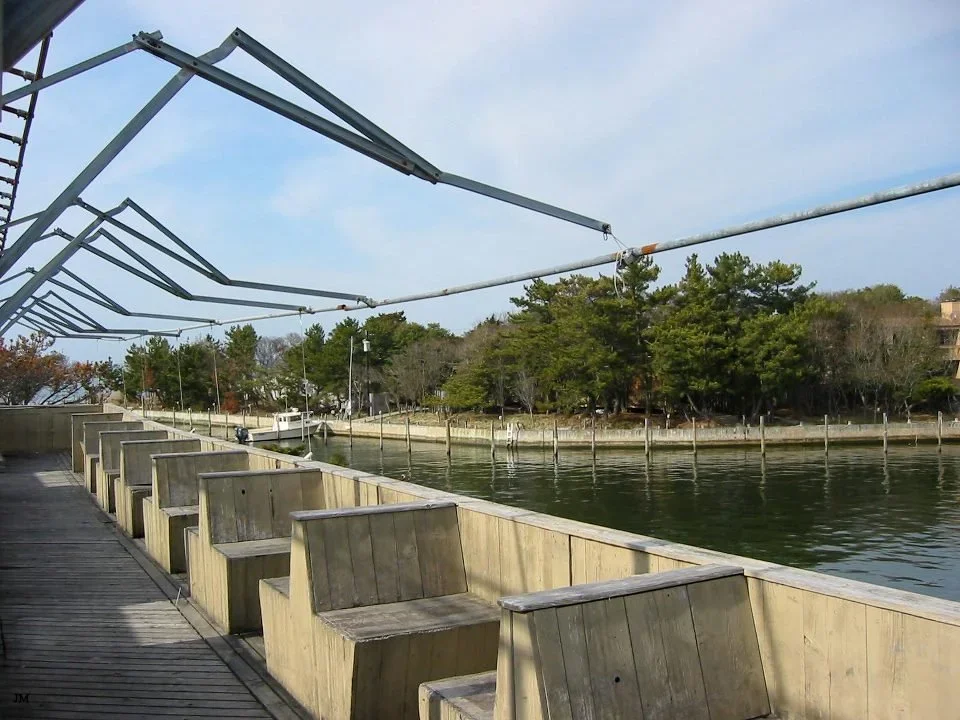
The Much Prized Pavilion Perches overlooking the Harbor. Photo credit: Unknown.
The concept proven, Bob asked Charles to sell him the building. They negotiated the contract and Bob secured financing. Just as he was about to close – indeed with a signed contract in hand and a check in his pocket – Bob sat down with Charles who broke the news. He had received a better offer from an undisclosed party. Bob was angry, having invested so much to get the deal to the table, but he recognized his options were limited. He declined to raise his bid, unsure if there was indeed another offer. Soon after Charles sold the Pavilion to John Whyte.
High Tea had impacted Whyte’s business at the Blue Whale and so the move was both defensive as well as offensive. As Bob later noted, his anger at Charles probably prevented him from seeing this angle, a lesson he took to heart. In any event, Whyte’s purchase of the Pavilion meant that Bob had to quickly find alternative office space. He was also forced to watch as Whyte took his concept, High Tea, and made it a fixture on the Pines Social Calendar.
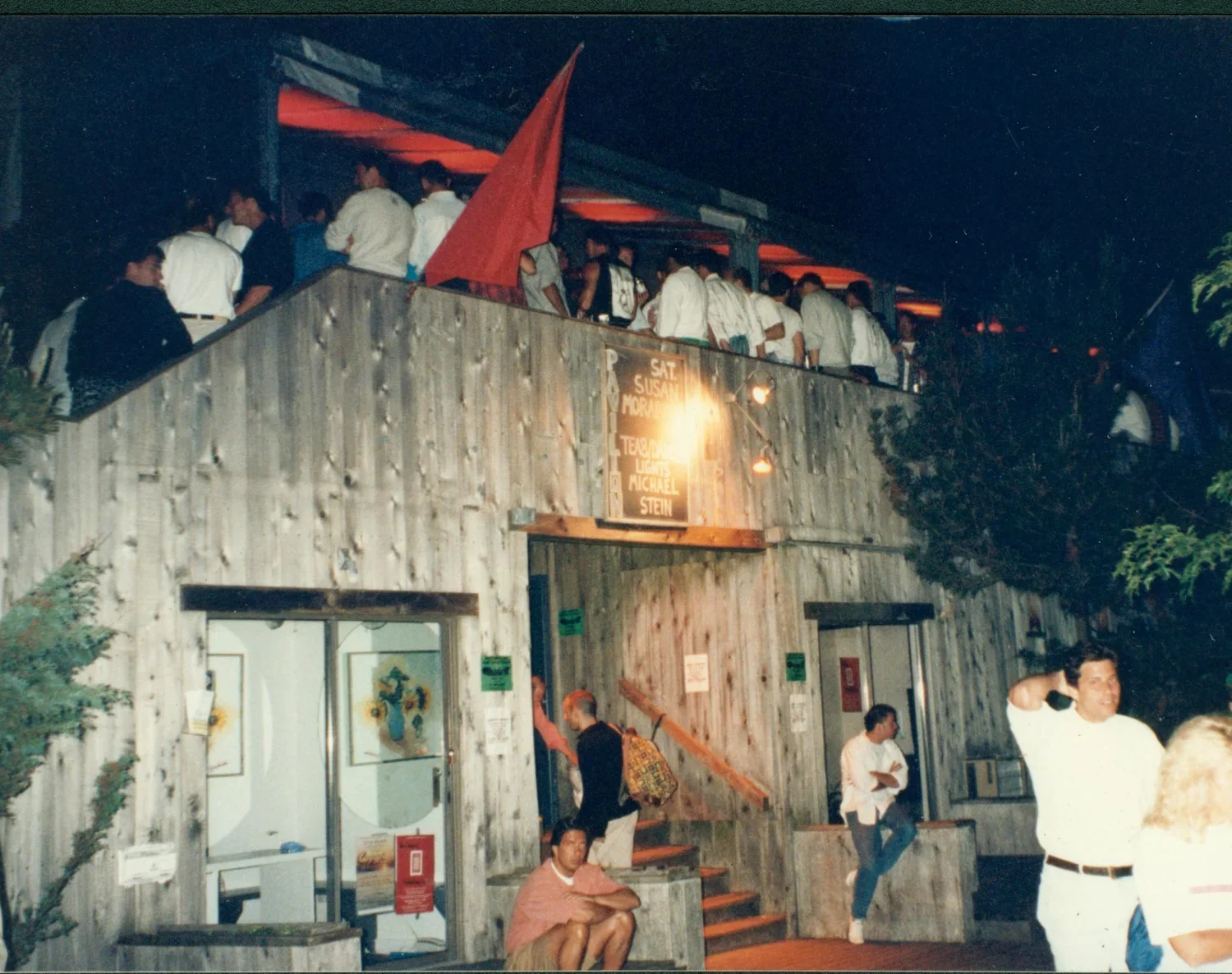
High Tea at the Pavilion circa 1993. Photo credit: Unknown
It was a bitter pill to swallow, but Bob had enough experience to realize resentment is a cancer and refocused himself on his real estate business and continued to build his brand in the community.
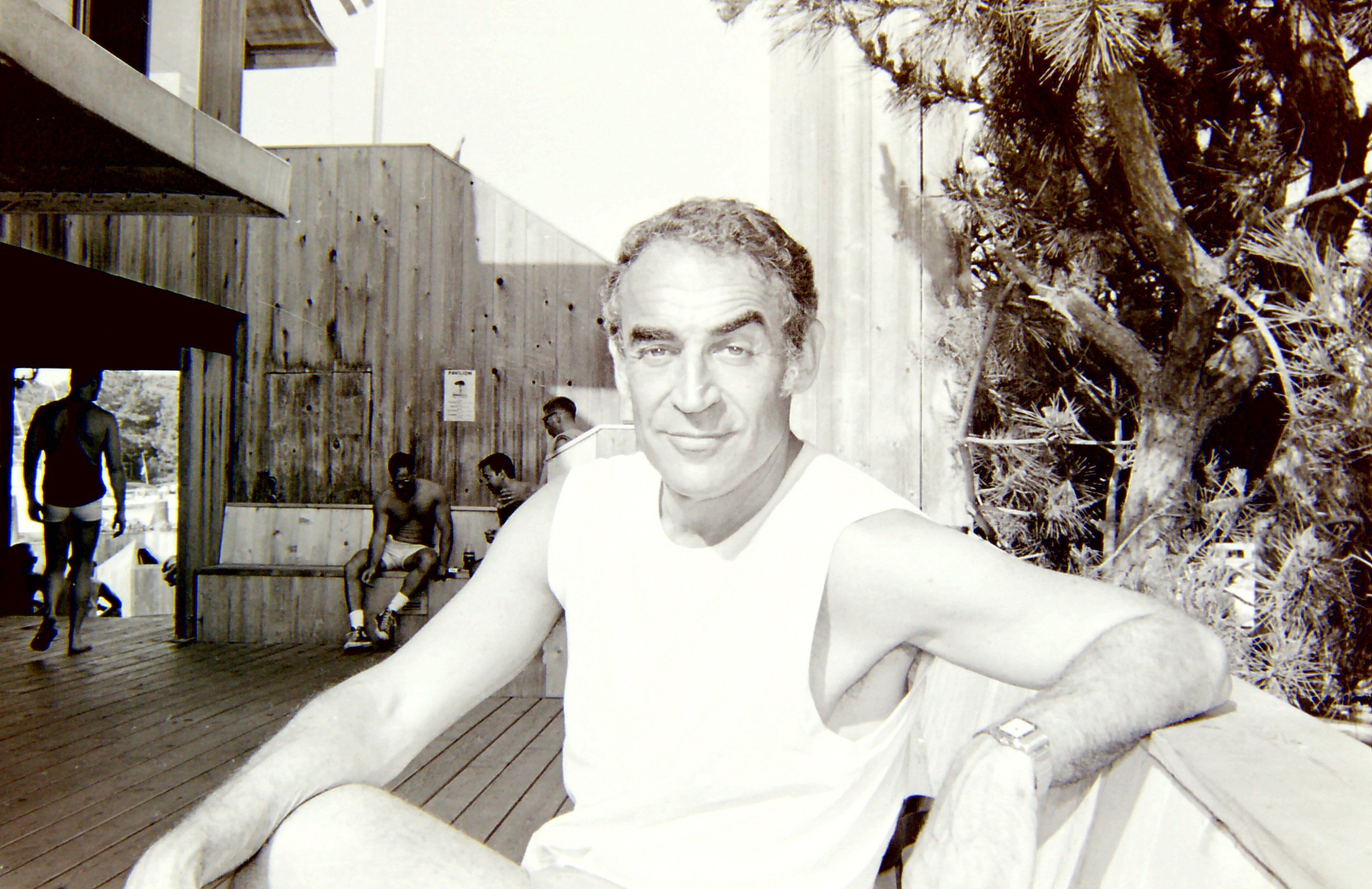
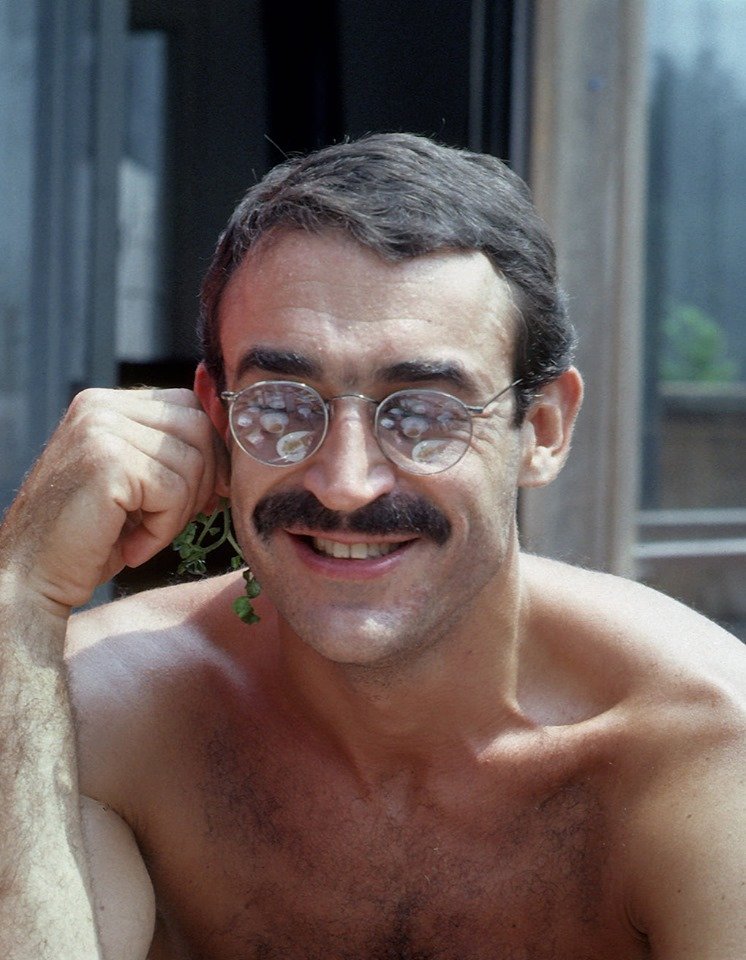
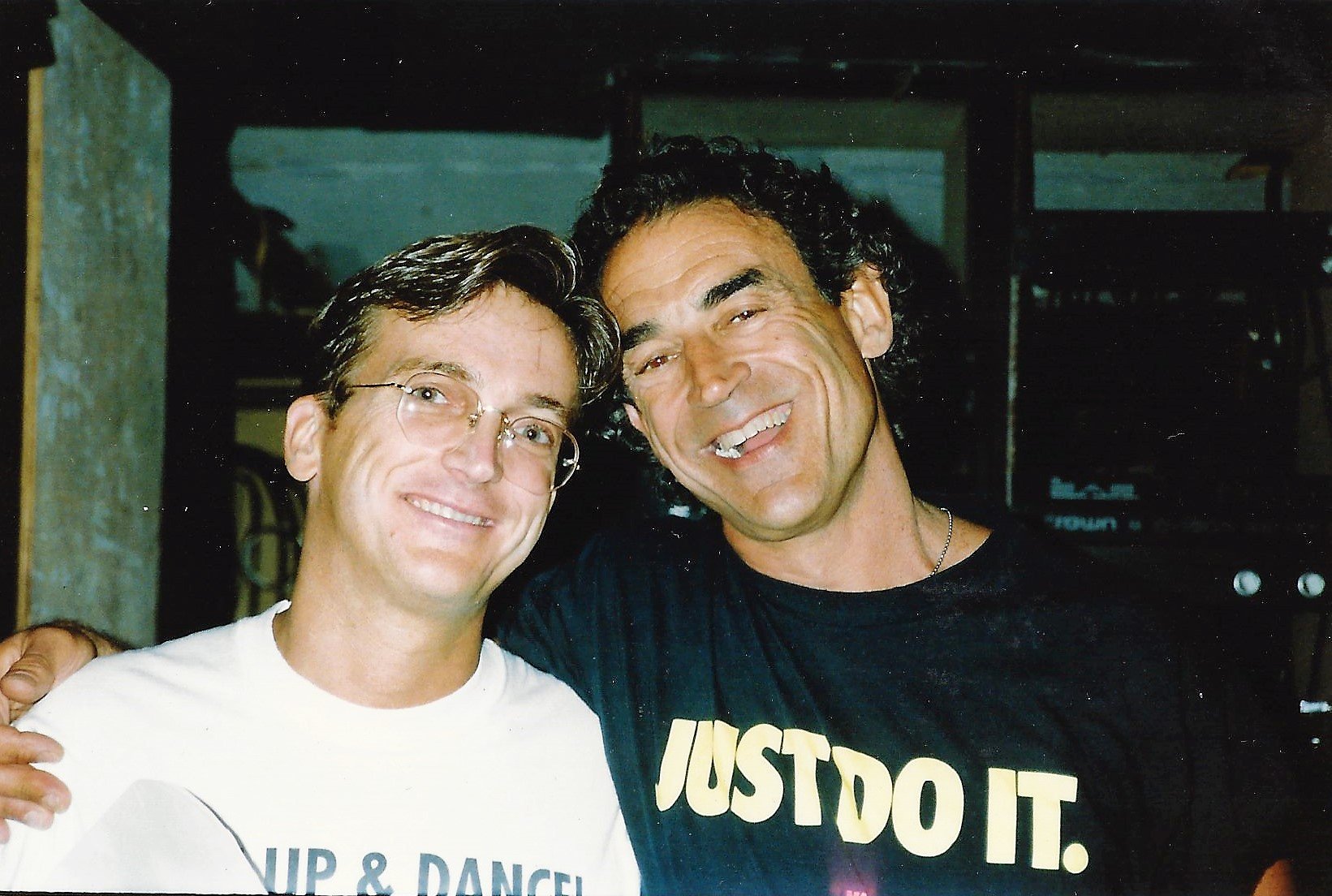

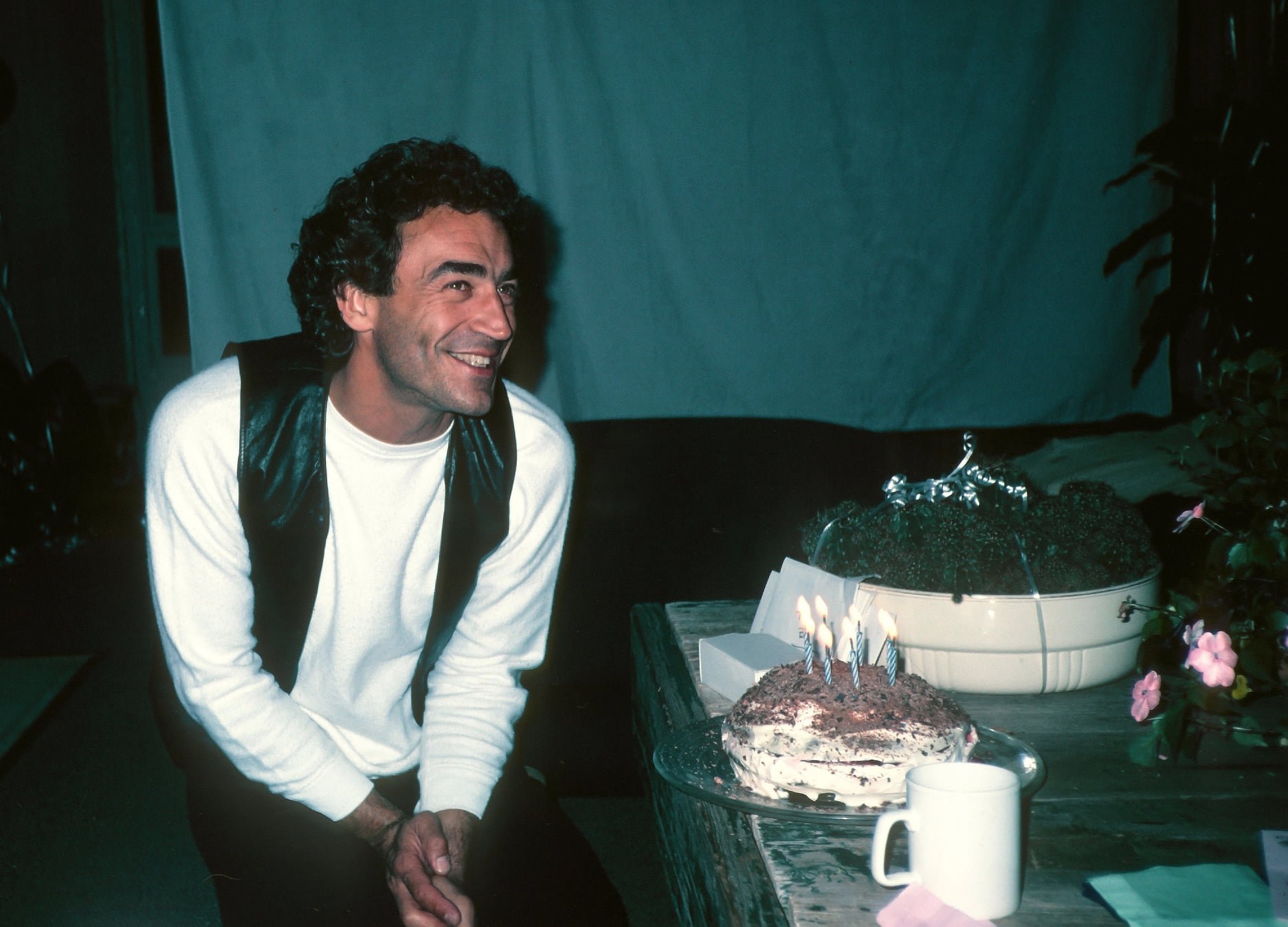
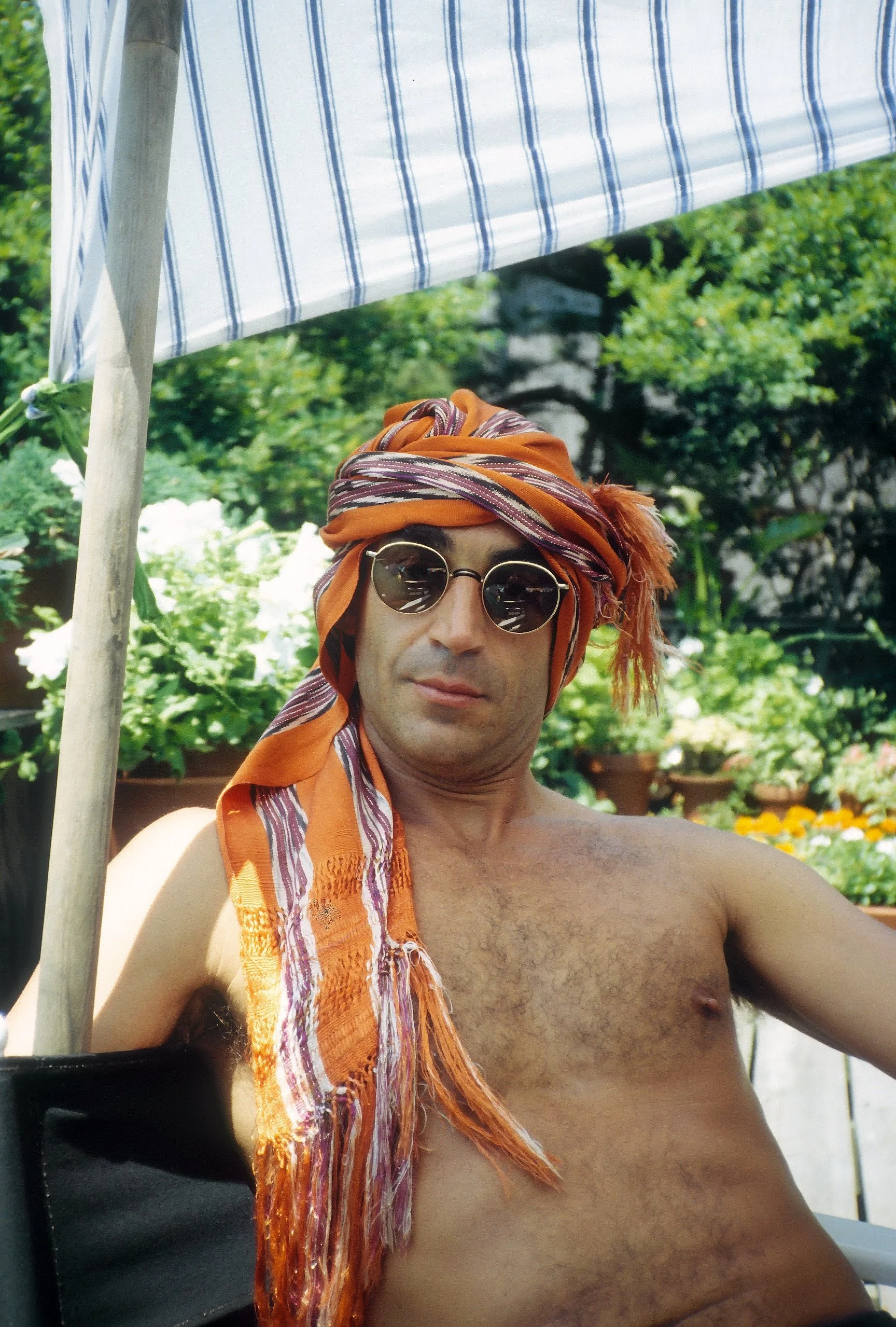
Bob’s 20th Century Pines Life. Photos courtesy of Bob Howard.
Many people in real estate, Bob among them, are outgoing and visible in the communities they serve. But for Bob it was more than backslapping and mingling at parties. The Pines was his home, and he took an active role with both civic and charitable organizations.
The Pines Community played a lead role in the fight against AIDS, with residents being active in groups like GMHC, AmFAR, ACT UP and other organizations. The Pines itself was a major source of fundraising, most notably via GMHC’s Morning Party. Initially, the event started as a house party, but it quickly grew to a size that the organizers wanted to transfer it to the beach. Bob played an instrumental role in helping the organizers in navigating the logistics of a beach party. The event, which would grow to several thousand people, became a Pines institution. When it ended in 1998, Bob worked with Jay Pagano and FIPPOA to establish its replacement, the Pines Party.
Bob’s involvement in community life went beyond parties. He joined the Fire Island Pines Fire Department at the suggestion of legendary Pines resident Clern LaFountaine, who had designed and built the infrastructure to support fire fighting in the Pines. With his numerous other commitments in the community, including running his own real estate business, Bob elected not to go complete the extensive certification process to become a full fledged fireman and served primarily by handling radio dispatches.

Pines Fire Department. Photo credit: David Herzenson
Bob’s commitment to the Pines environment extended well beyond fire prevention. He served on the board of the Pines Conservation Society (PCS), including two decades as President, where he championed environmental stewardship. As a leader, he wasn’t afraid of debate—indeed, he often welcomed it—while also remaining open to fresh ideas and new directions.
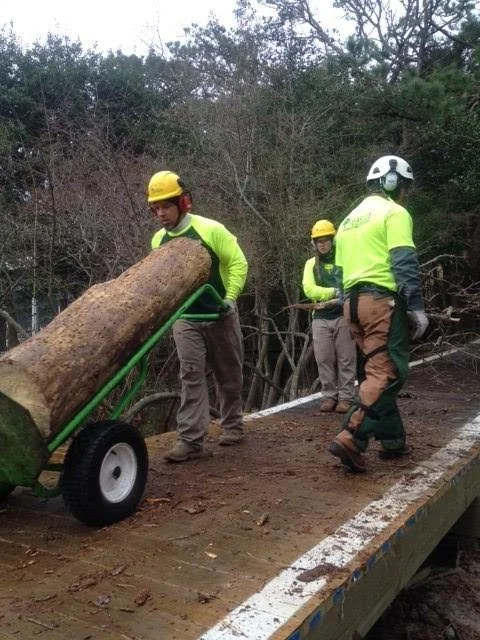
During this time, PCS, with board member Scott Ahlborn taking the lead, partnered with FIPPOA to rid the Pines of an infestation of the dreaded Southern Pines Beetle and replenish the pines trees it had destroyed. These efforts ensured that the Pines would, quite literally, continue to have pines.
Clearing Away Dead Trees. Photo credit: Pines Conservation Society
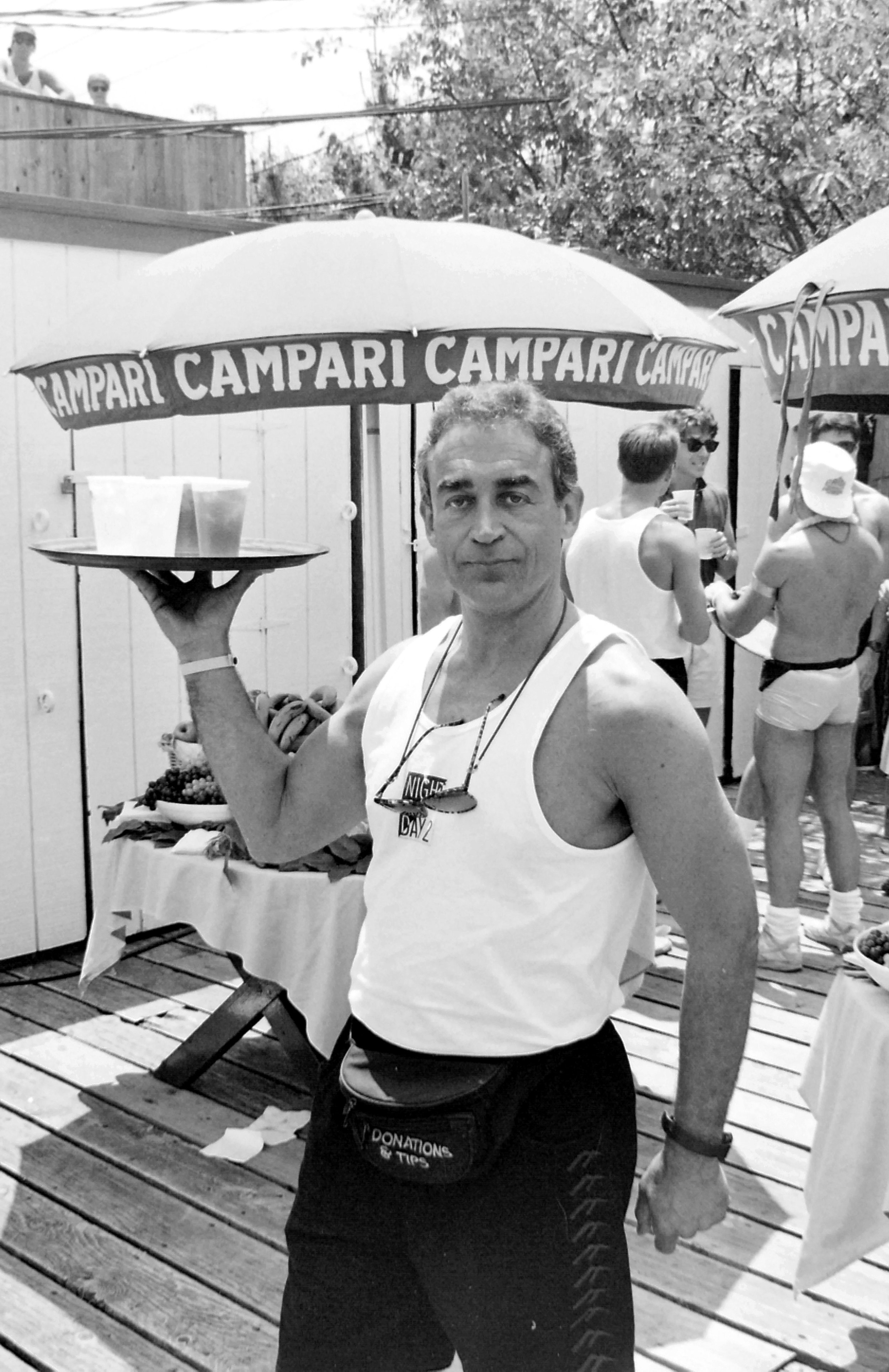
Bob also played an active role in Pines culture. Although he left a career in theatre a long time prior, Bob joined the Fire Island Pines Arts Project and even appeared in some of the annual Labor Day plays. He also famously volunteered as a waiter at the Night & Day benefit in 1992, supported the Hollywood Shore Leave USO Party in 1994, and even appearing in drag on the cover of Fire Island News.
Deeply involved in the community he calls home he not only supported events, carried on traditions , but held them. Like the Hollywood Shore Leave USO Party in 1994.
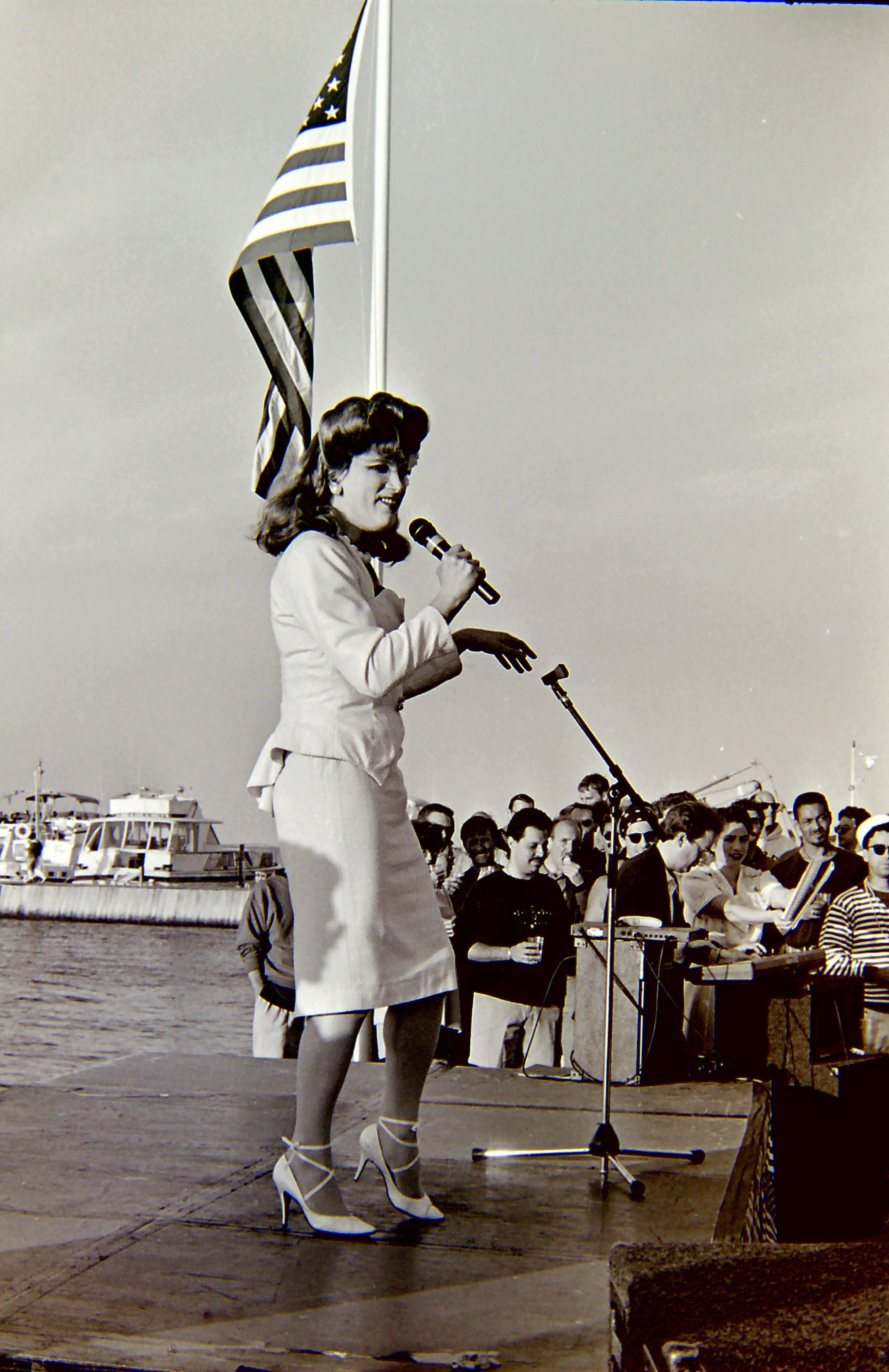
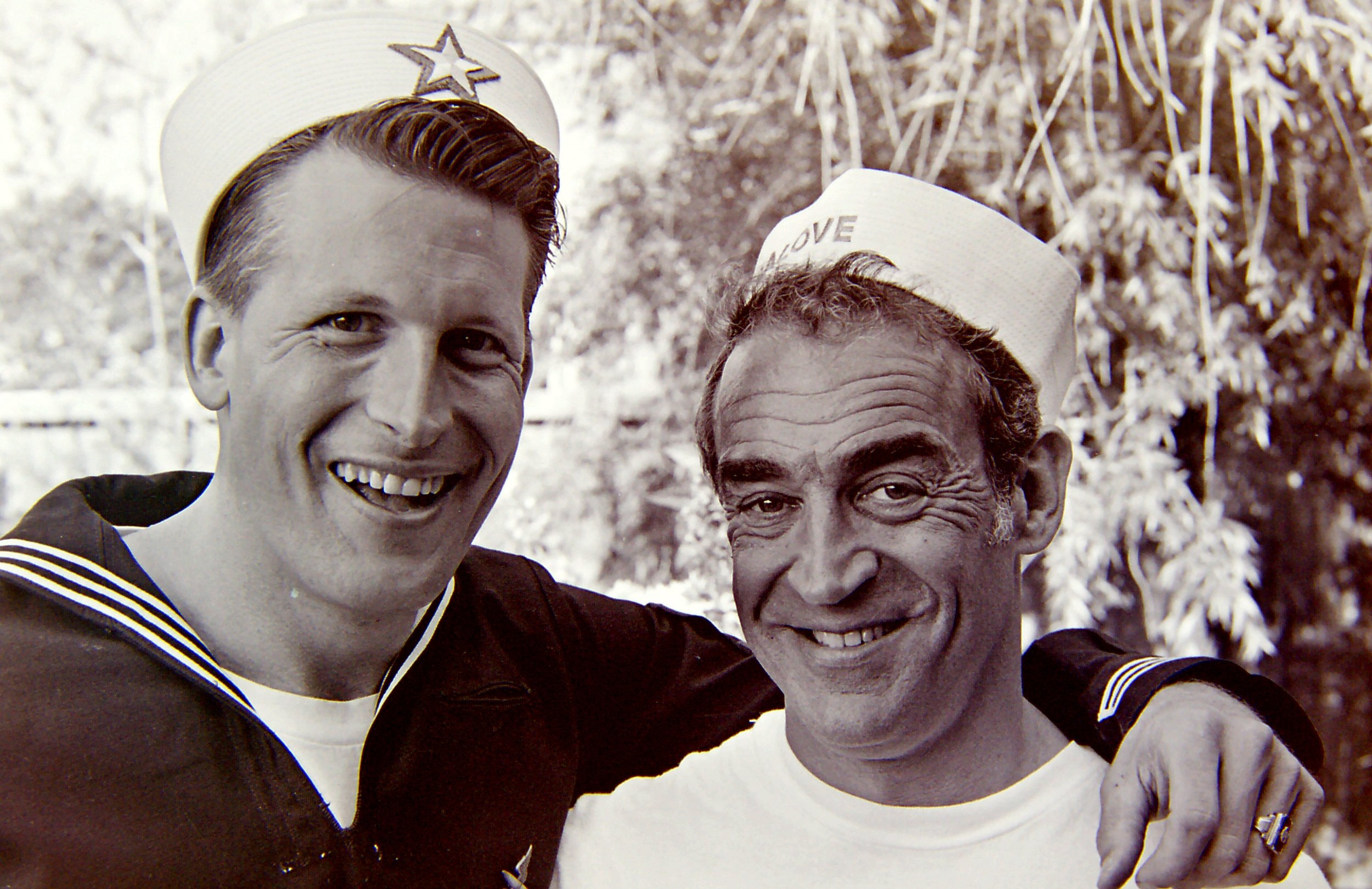
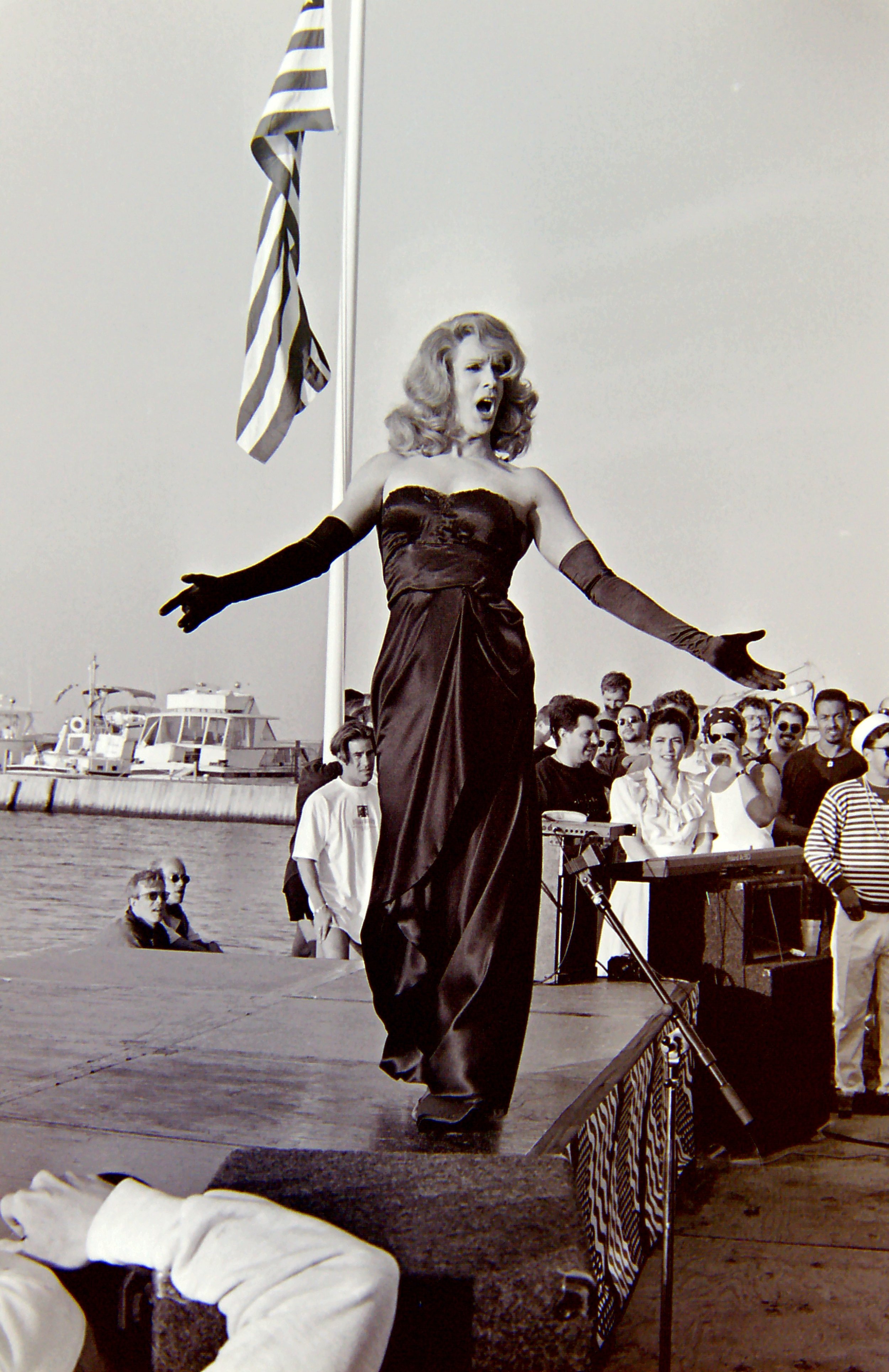
He supported many charity events. Seen here as a volunteer waiter at the Night & Day benefit in 1992 with Robin Byrd.


Bob on the cover of Fire Island News in drag.
Over the years, Bob’s work and support of the community made him one of the best known people in the Pines and a major presence on the social circuit. A talented chef and gracious host, his parties at his home at 61 Bay were legendary, and he sponsored all the major events throughout the season. In recognition of his extensive support of the Pines, SAGE awarded him the Community Leadership Award in 2005.
For someone as busy as he was, Bob was regarded as a teacher by many. Vinnie Petrarca, who started off working for Bob and went on to become one of the premier real estate agents in the Pines, had this to say:
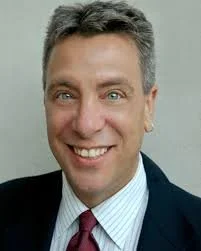
“Bob taught me the real estate business. The only thing I knew about real estate when I went to work for him is I had lived in a house. He was a patient teacher and really helped me get my footing in the business.”
Vinnie Petrarca. Photo VIP Real Estate
One of Bob’s most notable traits is that he doesn’t hold a grudge. If a client elected to go with one of his competitors, there was no bitterness or acrimony. He simply wished them well and made sure they knew he would continue to be available to them. When later Vinnie started his own business he was very supportive, and they continue to be close friends today.
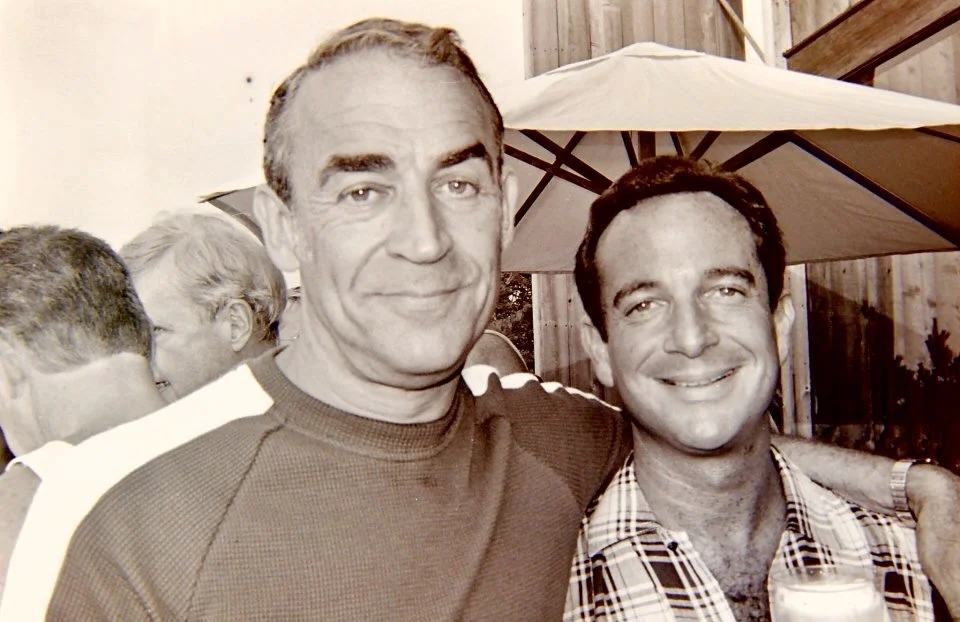
Bob Howard and Jon Wilner. Photo credit: Jon Wilner
One of the major people in Bob’s life is Jon Wilner. They met in 1983 when Jon rented a coop and later bought a house. They were friends for ten years before becoming romantically involved. Jon owned his own theatrical advertising agency and Bob by then was the ‘Dean of Real Estate’ in the Pines. Together they were a visible presence in both New York City and the Pines. Indeed, NEXT Magazine, a now defunct gay publication, dubbed them the ‘Power Couple’ in a cover feature.
In 2002, after 27 years in the business, Jon closed his agency and a couple of years later went to work for Bob in Pines real estate. It was not a good fit. His presence created tensions especially with other staff members, which led to a brief break in their relationship. Subsequently, Jon purchased a competing business Island Properties and, as unlikely as it might seem, their relationship rekindled. Jon described it this way:
“We were what I call ‘Pillow Competitors’. By day we competed in the same marketplace, but after work we set that aside because we were committed to the relationship. We had mutual respect for each other’s abilities and sometimes would co-broker deals. It may sound strange, but for a long time we made it work.”
Like all relationships Bob and Jon had good times and difficult ones. After twelve years, they called it quits but remain good friends today. As they both agree, they had a good run and are glad to be in each other’s lives.
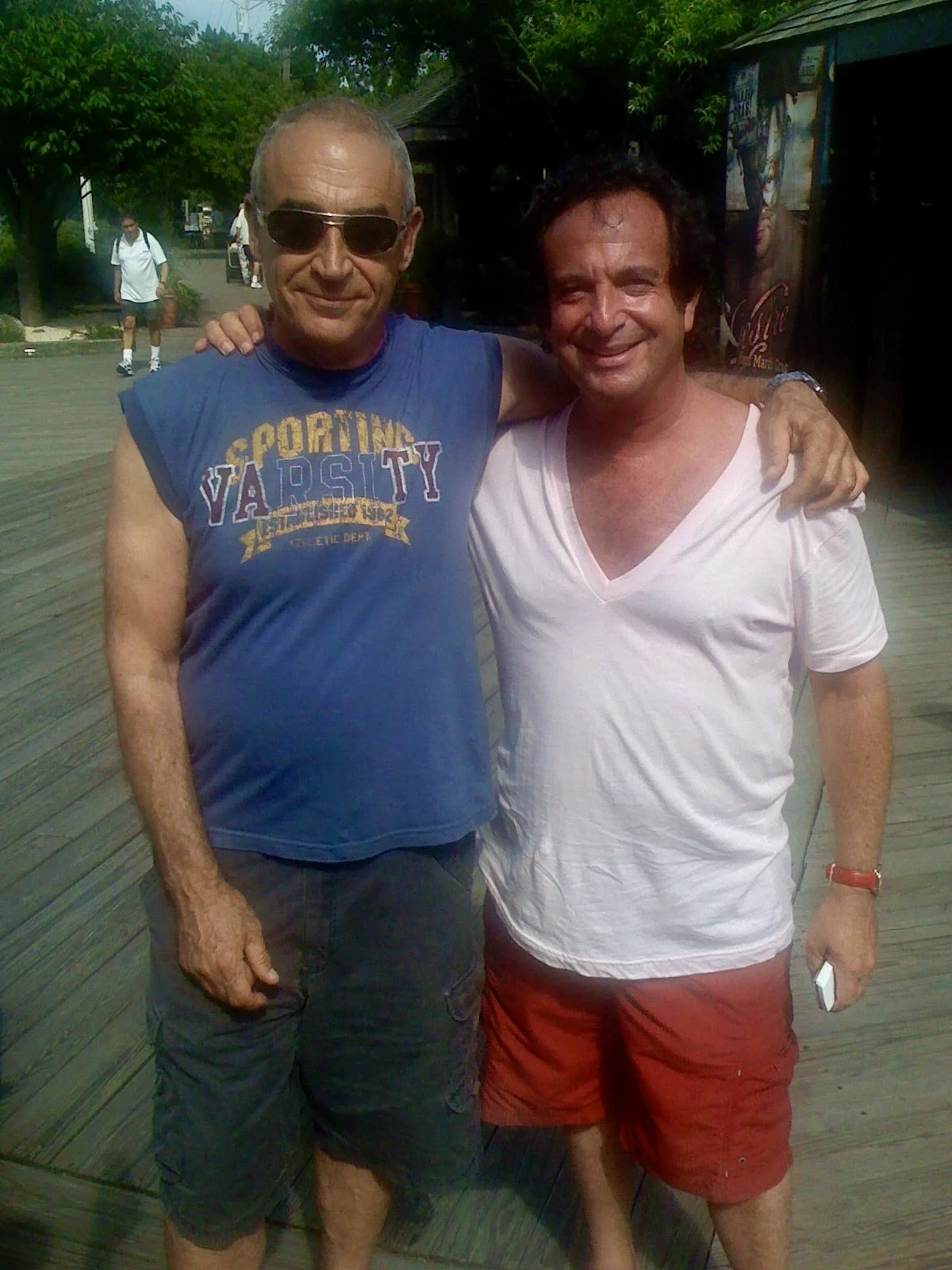
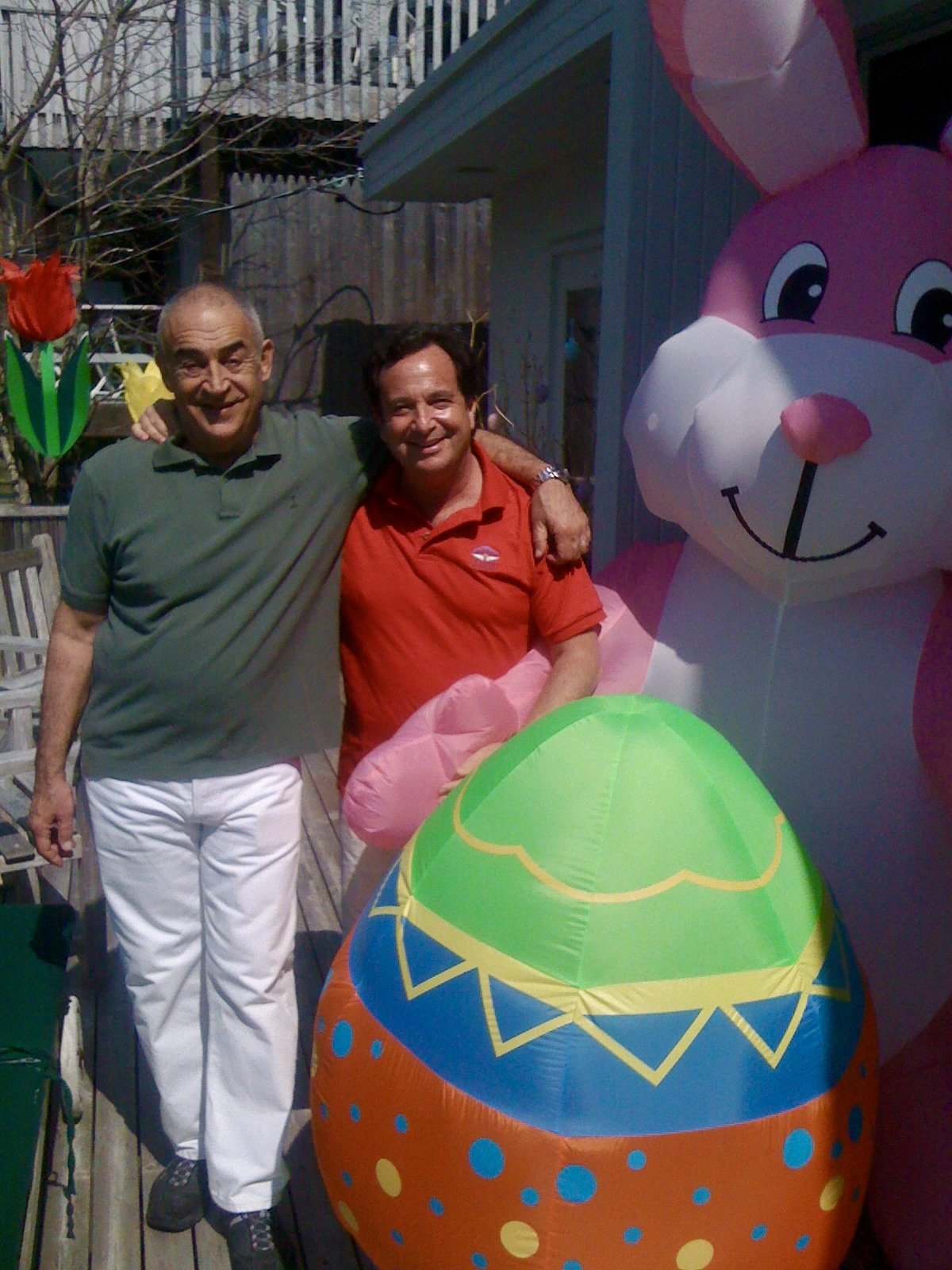
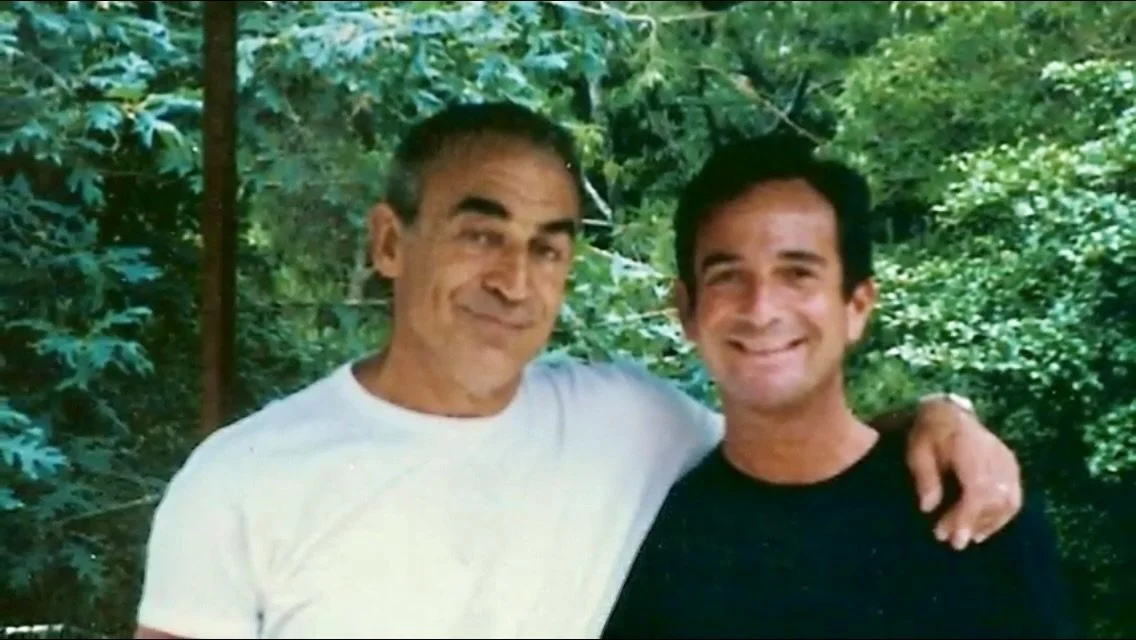
Bob Howard and Jon Wilner through the years. Photo courtesy of Jon Wilner
Over the years, Bob demonstrated that he is nothing if not resilient. No one is surprised that after ending things with Jon, he moved forward in life and business. Today, he and his husband, Ailton Rodrigues Howard, spend summers in the Pines and winters in South Beach or Brazil. He still runs his real estate business, taking advantage of the flexibility offered by modern technology, and is a visible and active presence in the community, including continuing to serve in the Pines Fire Department.
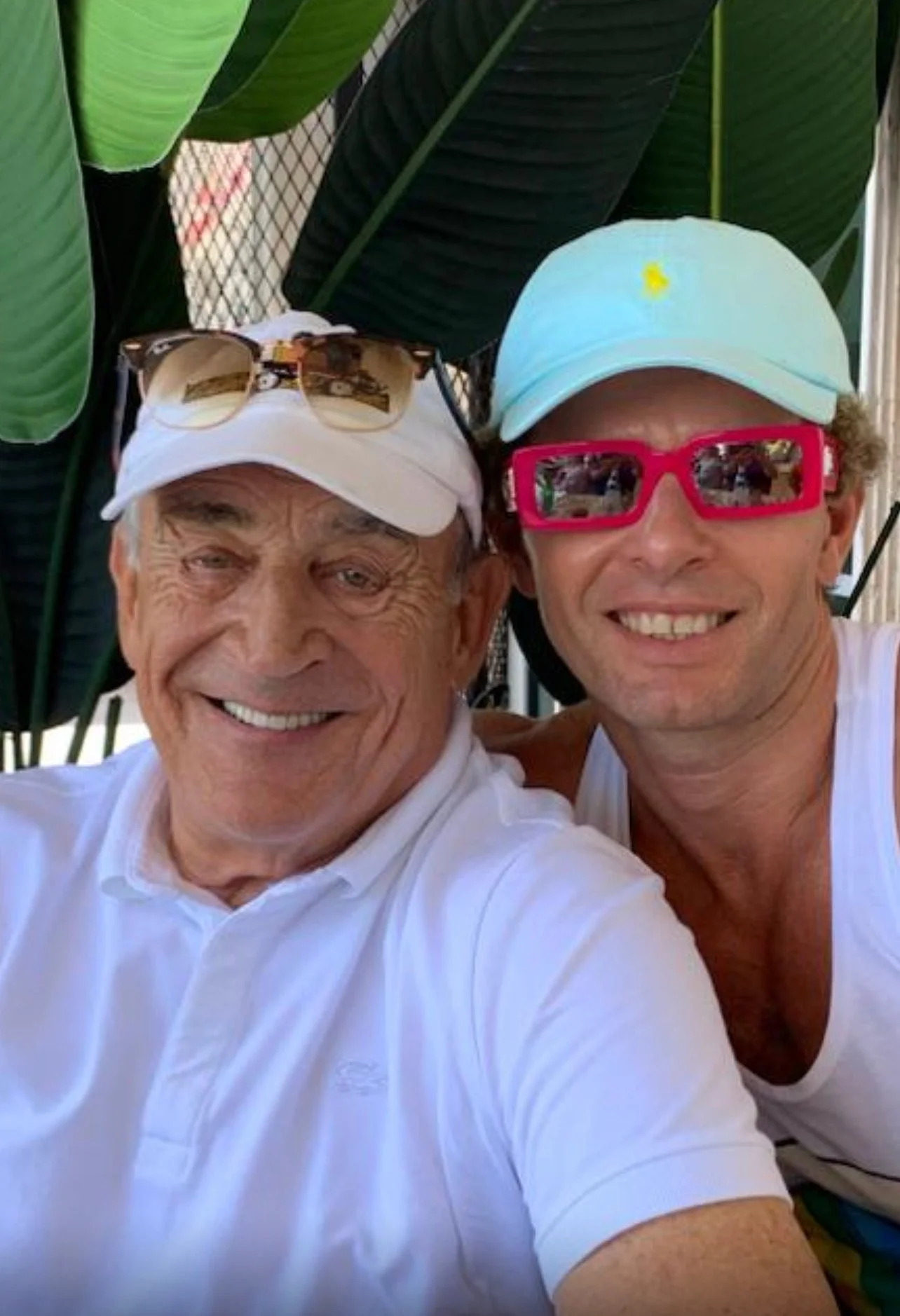
Bob Howard and Ailton Rodrigues Howard. Photo courtesy of Bob Howard.
As Nick Politis says: “Bob is survivor. He has had his share of ups and downs, but has always found a way resolve challenging issues, all the while maintaining the vivaciousness that was present when we met on the dance floor over fifty years ago.”
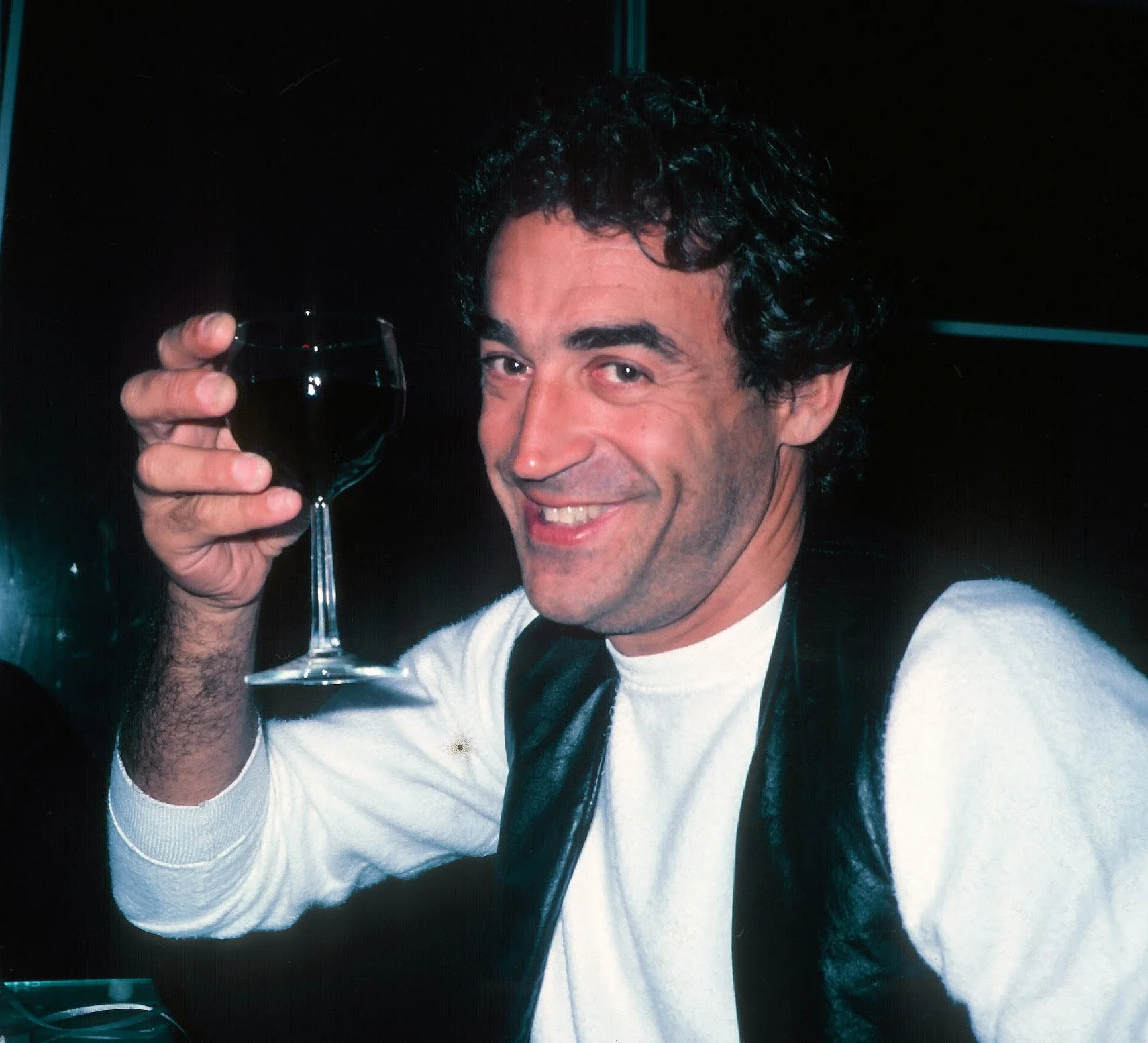
Bob Howard. Photo courtesy of Nick Politis
In 2025, forty years after founding Bob Howard Real Estate and fifty since his first visit with Nick, Bob’s reflections on his life in the Pines are simple: gratitude. In the Pines he found his calling and he got from it more than he gave. It’s a place that still fills him with happiness, although he can get emotional when recalling friends he lost along the way.
Bob Howard in the Pines circa 2024. Photo courtesy of Bob Howard.
He lived through AIDS to witness the emergence of the cocktail and PreP. He’s been through boom times and the Great Recession. He has seen more than his share of hurricanes and Nor’easters, and helped fight some major fires, even one in 2011 that destroyed his office and many irreplaceable belongings. As he notes, in some ways, the community had changed dramatically in his time. Many of his friends, including the realtors he started alongside—Dorothy Levy, Cappy Hanlon, Carole Weismann, and Doris Taussig—are gone. Technology, particularly the advent of social apps, have changed how people interact. And homes evolved from rustic shacks to glamorous beach houses, equipped with all modern conveniences. But in another, perhaps more important way, he says the Pines has remained the same -- it is today the same freedom loving, gay paradise that he fell in love with. It is still a place people can be their authentic selves safely and comfortably. Most importantly, the core tenets of community have endured. Over the years the Pines has always had a core group of people committed to its betterment and future. Disagreements and disputes are inevitable, but when it comes to the welfare of the community people have always put aside differences and done what’s right. From his perspective, this is a defining characteristic of the Pines, and he hopes it will never change.
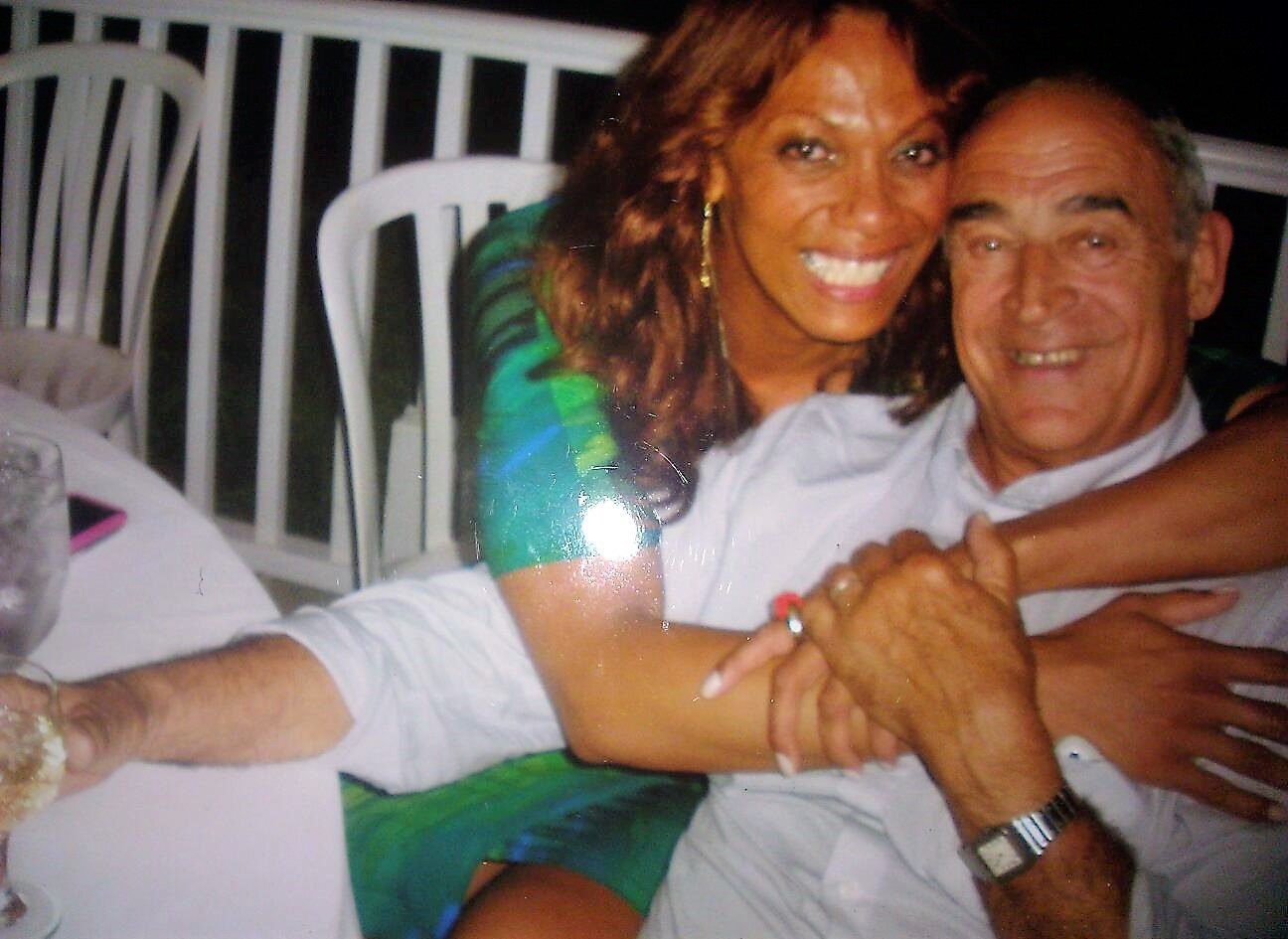
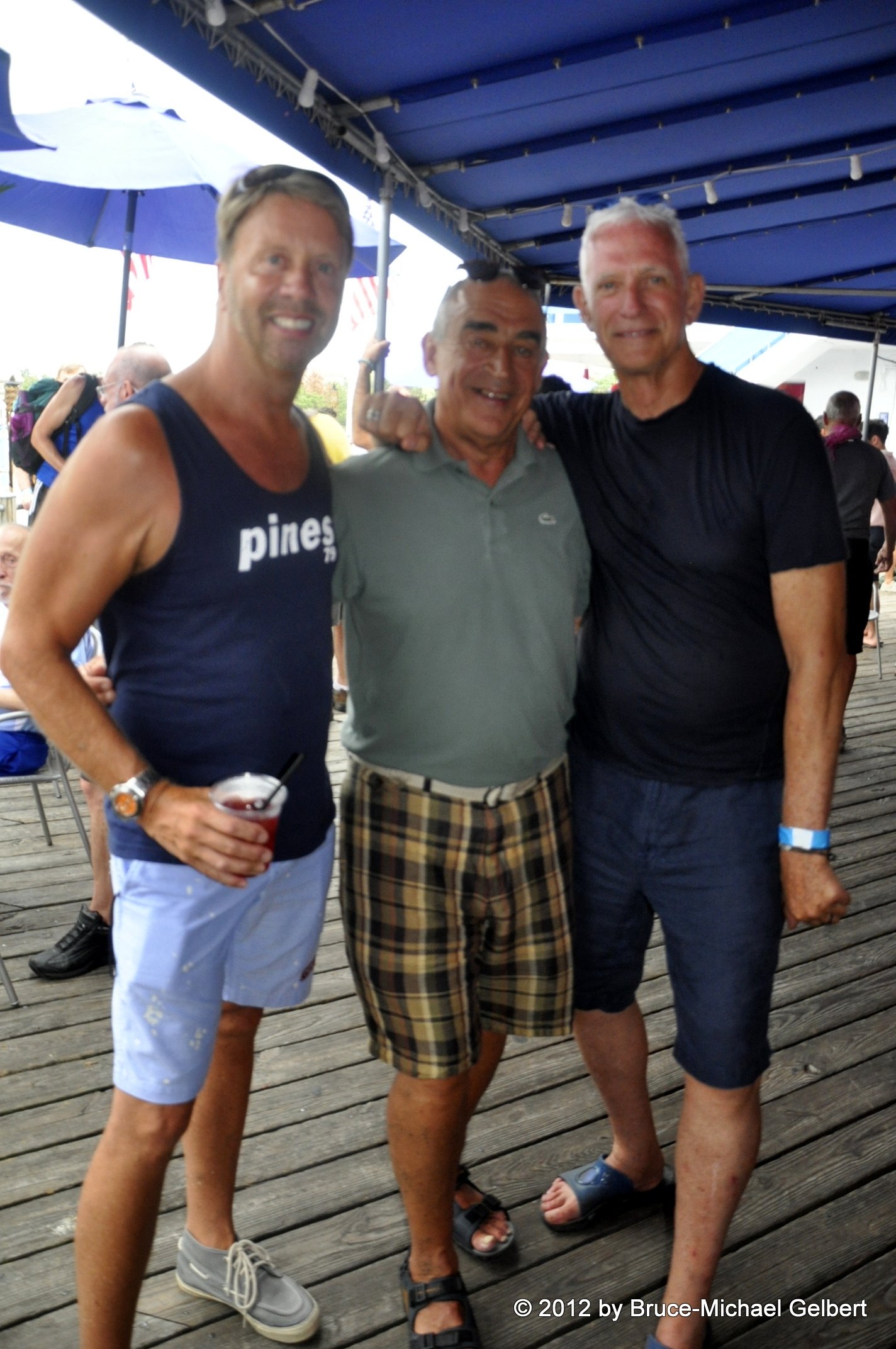
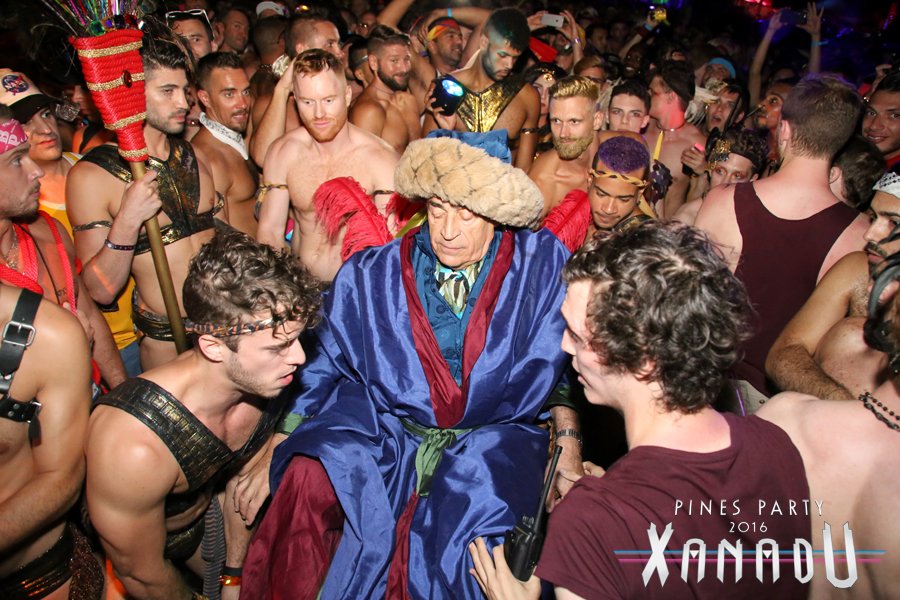
Bob’s Pines life (L-R): With DJ Lina; with Bobby Bonanno and Scott Bromley at the Blue Whale; at the Pines Party
When asked about the future he expresses deep concern about the toxic political atmosphere and the impact of climate change — including the possibility that the Pines won’t exist one day. As he points out there are efforts underway to create “alternative Pines” locations, in places that don’t have the same environmental risks. That said, in his mind Fire Island Pines, with its unique blend of location, environment, people, and culture, is irreplaceable
Bob exemplifies that the Pines is a community that is now spread beyond Fire Island; today ‘Pines people’ live everywhere, connected by shared values, experiences and a deep love for the small, but special community across the Great South Bay.
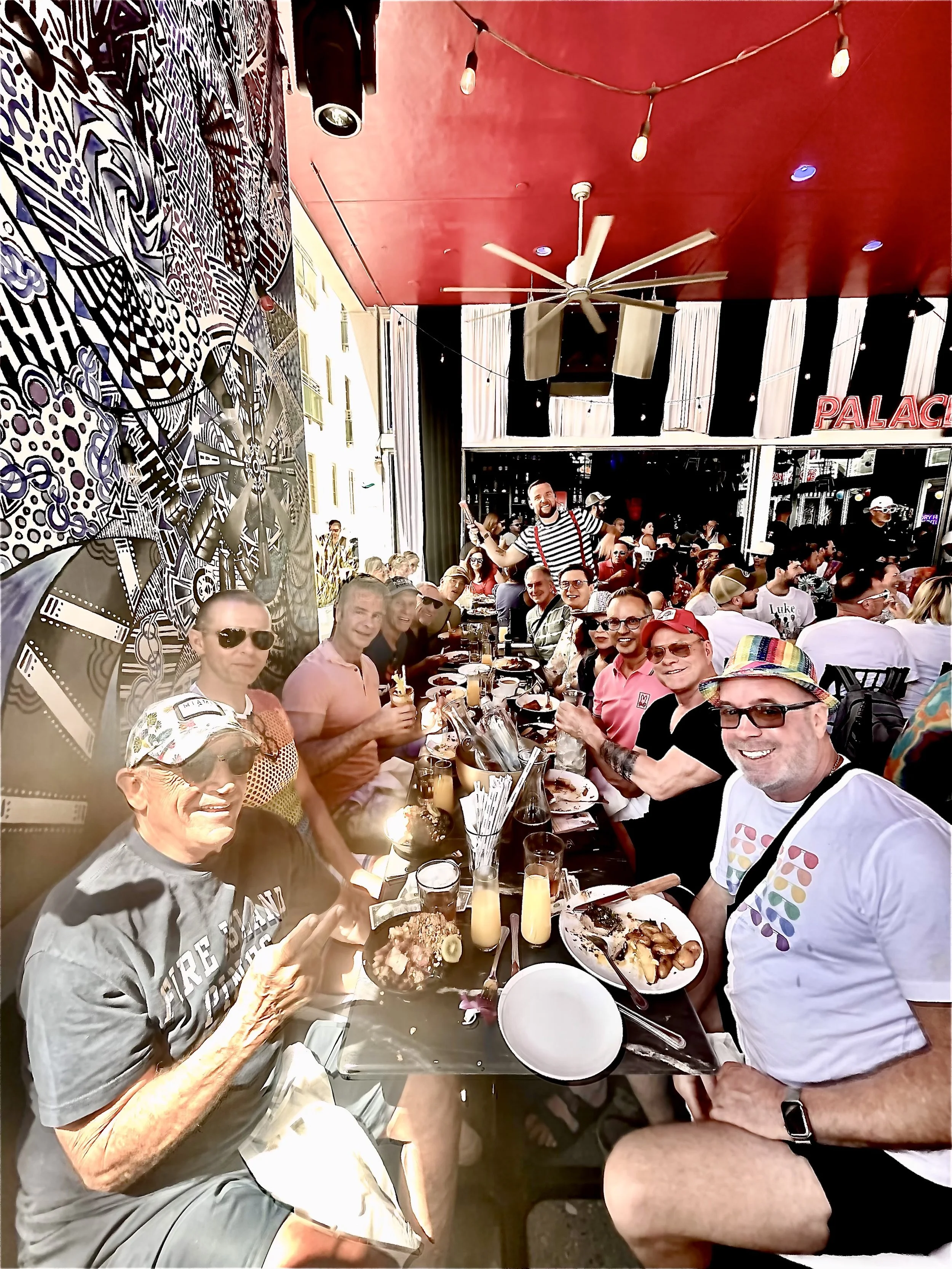
Although he did not get to join in the first Stonewall confrontation, Bob has celebrated that event marching in or attending many gay pride parades since, both in Manhattan and Miami Beach. One of his proudest moments was to accept an invitation to ride on a Trans Rights float in the 50th anniversary of NYC’s Gay Pride Parade with Trans-Activist Iman Le Caire, and for the past six years he has hosted a table at Miami Beach’s famed Palace for the Pines Diaspora to participate in their Pride Parade
Bob’s table at the Palace over Miami Beach Pride. Photo courtesy of Bob Howard.
Fifty years later Bob admits his path to the Pines was a bit random, even unlikely. But he is certain it was his destiny.
“It took me a while to find my way here,” he says, “But once I did, I stayed. And I have no plans to be anywhere else!”